“Mars is a stone. It is a world of rock and dust and ice, and it has been waiting for us.”
— Early in the novel, setting the stage for human colonization.


Kim Stanley Robinson (1992)
Genre
Fantasy / Science Fiction
Reading Time
19 hours 4 minutes
Key Themes
See below
Sign in to track this book
A hundred colonists set out to terraform Mars, battling the hostile planet and their own clashing ideas, ambitions, and loyalties as they try to build a new world.
In 2026, the Ares arrives, carrying the first one hundred colonists to Mars. Among them are the American John Boone, the Russian engineer Arkady Bogdanov, the Japanese politician Maya Toitavna, and the American diplomat Frank Chalmers. They establish their first habitat, Underhill, near the Candor Chasma. The diverse group, from various nations, immediately faces the harsh realities of Mars's environment. Initial tasks include setting up life support, exploring their surroundings, and starting scientific research. Tensions build as different ideas about Martian development emerge, especially between those wanting minimal intervention and those pushing for rapid terraforming.
As the First Hundred settle into their routines, initial camaraderie gives way to ideological differences. Arkady Bogdanov supports 'Areophany,' a philosophy that advocates preserving Mars's natural state and slowly adapting to it, while Sax Russell, a physicist, pushes for aggressive terraforming. John Boone, first seen as a unifying figure, struggles to mediate. Frank Chalmers subtly manipulates relationships and politics, often pitting individuals against each other to gain influence. The colonists begin to establish more permanent settlements, drill into the planet, and conduct experiments, but the underlying philosophical conflicts grow, setting the stage for future confrontations.
Years into the colonization, John Boone, the beloved leader of the First Hundred, is assassinated. The murder happens during a time of increasing political unrest and disputes over resource allocation between factions and Earth-based corporations. The immediate aftermath is chaotic, sending Martian society into a crisis of leadership and trust. Frank Chalmers is quickly implicated and arrested, though the evidence is circumstantial. The assassination acts as a catalyst, deepening existing divisions and forcing the colonists to confront their fractured governance and the true cost of their utopian dreams.
Following Boone's death, Earth's influence over Mars grows significantly. Powerful corporations, driven by the demand for Martian resources and new scientific discoveries, begin to assert their authority more forcefully. They establish their own settlements and operations, often overriding the First Hundred's decisions. This corporate expansion worsens resource scarcity and social tensions, leading to a clear division between the original colonists and the newly arriving corporate personnel. The First Hundred find their autonomy shrinking as Mars becomes a pawn in Earth's economic and political games, further fueling the desire for Martian independence.
Amidst the political infighting and Earth's increasing control, the First Hundred and later waves of colonists continue to develop Martian infrastructure. Large projects are undertaken, including deploying orbital mirrors to increase surface temperature, building subterranean cities, and starting atmospheric modifications. Sax Russell leads many of these terraforming efforts, passionately pursuing the goal of making Mars habitable. These major engineering feats show human ingenuity but also highlight the growing environmental impact on the planet, intensifying the debate between the 'Red' (preservationist) and 'Green' (terraforming) factions.
During their extensive explorations and drilling operations, the colonists find an enigmatic geological anomaly deep within the Martian crust. This discovery, first studied by Sax Russell and other scientists, suggests an ancient, non-biological phenomenon or structure. The nature of this anomaly becomes a subject of intense scientific debate and speculation, captivating some while alarming others. It adds another layer of complexity to the colonization effort, raising questions about Mars's true history and potential for indigenous life, further supporting the 'Red' faction's argument against aggressive terraforming and exploitation.
As Earth's corporations tighten their grip on Mars, Arkady Bogdanov becomes a prominent figure in the growing resistance movement. He advocates for Martian independence and a more sustainable, less exploitative approach to colonization, rallying those who feel disenfranchised by Earth's policies. Arkady envisions developing a unique Martian culture and society, free from Earth's political and economic dominance. His words resonate with many, especially younger generations born on Mars, leading to the formation of underground networks and a growing desire for revolution against perceived colonial rule from Earth.
The simmering discontent and political tensions finally erupt into open conflict. The resistance, led by Arkady and supported by many of the First Hundred and subsequent Martian-born generations, launches a full-scale revolution against the corporate and U.N. authorities. This conflict involves sabotage, armed confrontations, and widespread civil disobedience. The revolution is brutal and costly, with significant casualties on both sides. The First Hundred find themselves caught in the middle, forced to choose sides or navigate the dangerous political landscape, as Mars descends into chaos in its fight for self-determination.
During the height of the Martian Revolution, Arkady Bogdanov, a leader of the independence movement, is killed in a violent incident. His death is a devastating blow to the revolutionaries and leaves a significant power vacuum. The revolution, while initially successful in disrupting Earth's control, becomes fractured without his unifying presence. The aftermath is marked by continued instability, power struggles among the remaining factions, and a desperate search for a new direction for Martian society. The First Hundred, now older and scarred by the conflicts, deal with the profound changes and the uncertain future of the planet they helped colonize.
After the revolution and Arkady's death, the surviving members of the First Hundred, now aged and weary, continue to influence Mars. Their initial dreams and later conflicts have shaped the planet's destiny. The political landscape remains volatile, with ongoing debates about terraforming, independence, and the relationship with Earth. The novel ends with the long-term consequences of their pioneering efforts becoming clear, hinting at the future struggles and transformations Mars will undergo. The First Hundred's legacy is a complex mix of scientific achievement, political strife, and the enduring human spirit of exploration and adaptation.
The Protagonist
From revered hero and unifier, Boone becomes a tragic figure whose assassination shatters the fragile Martian peace and exposes the deep-seated conflicts.
The Antagonist/Protagonist
Chalmers evolves from a shrewd political operator to a figure implicated in a major crime, his influence shifting but his manipulative nature enduring.
The Protagonist
Maya transforms from an ambitious politician navigating early Martian society to a powerful, resilient leader grappling with the consequences of revolution and leadership.
The Protagonist
Arkady evolves from an outspoken idealist to the revolutionary leader of the Martian independence movement, ultimately sacrificing himself for his cause.
The Protagonist
Sax transitions from a brilliant but naive scientist to a central, often controversial, figure in the terraforming effort, grappling with the ethical implications of his work.
The Supporting
Nadia evolves from a pragmatic engineer to a vital leader within the resistance, demonstrating her unwavering commitment to Martian independence.
The Supporting
Ann remains a steadfast advocate for Martian preservation, becoming a central figure in the 'Red' movement and a moral compass against unchecked exploitation.
The Supporting
Phyllis maintains her ambitious and utilitarian approach to Martian geology, often aligning with corporate interests and clashing with preservationists.
This is the main ideological conflict of the novel, seen in the 'Green' (terraforming) and 'Red' (preservationist) factions. Characters like Sax Russell passionately support terraforming Mars to make it Earth-like, believing it is humanity's destiny and a solution to Earth's overpopulation. Conversely, Arkady Bogdanov and Ann Clayborne argue for preserving Mars's unique environment, seeing its intrinsic value and warning against human arrogance. This theme explores the ethical implications of altering an entire planet, the definition of 'wilderness,' and humanity's relationship with nature. The debate is not just scientific but deeply philosophical, shaping political alliances and leading to violent conflict, such as the First Martian Revolution, where the very identity of Mars is at stake.
“What is Mars? It is not Earth. It is a new world, a new beginning. We should not make it into something it isn't, or something it used to be. We should let it be Mars.”
Red Mars deeply explores colonialism as Earth's corporations and political bodies gain control over the Martian colony. The First Hundred, initially pioneers, gradually find themselves under the thumb of Earth-based powers, leading to exploitation of Martian resources and suppression of local autonomy. This sparks an independence movement, championed by figures like Arkady Bogdanov, who advocate for a distinct Martian identity and self-governance. The novel mirrors historical colonial struggles, examining the quest for freedom, the right to self-determination, and the violence often involved in breaking free from an imperial power, culminating in the First Martian Revolution.
“Mars for the Martians! Not for Earth's corporations, not for its governments! For us, the ones who live here, who built this world!”
The novel carefully examines different forms of leadership and how power corrupts. John Boone represents charismatic, unifying leadership, but his idealism is not enough against the harsh realities of Martian politics. Frank Chalmers embodies manipulative power, driven by personal ambition and Earth's corporate interests. Maya Toitavna shows adaptable, pragmatic leadership, often making difficult choices for survival and influence. The struggles for power among the First Hundred and between Mars and Earth reveal the complexities of governance, the fragility of consensus, and how personal flaws and ideological differences can undermine even the most ambitious projects. Boone's assassination is a stark reminder of the deadly stakes involved.
“Power is not given, it is taken. And once taken, it must be held, by whatever means necessary.”
Red Mars explores the fundamental question of humanity's future beyond Earth and its ability to adapt, both physically and culturally. The First Hundred are pioneers, facing extreme challenges in an alien environment. The novel looks at the scientific and technological innovations needed for survival and terraforming, but also at the psychological and social transformations of the colonists. The emergence of a distinct Martian culture, with its own values and political aspirations, highlights humanity's ability to evolve and create new societies. This theme considers whether humanity can overcome its destructive tendencies to build a truly sustainable and equitable future on a new world.
“We are the first. We are the ones who will make Mars live. And in doing so, we will become something new ourselves.”
A diverse group of 100 pioneering scientists and engineers who are the initial colonists of Mars.
The First Hundred serve as a microcosm of humanity, representing diverse nationalities, ideologies, and scientific disciplines. Their interactions, alliances, and conflicts drive the narrative, illustrating the challenges of building a new society from scratch. Their individual stories and relationships form the emotional core of the book, as they grapple with leadership, love, betrayal, and the immense responsibility of shaping a new world. They embody both humanity's greatest hopes and its enduring flaws, making their journey a central focus of the novel.
Advanced scientific and engineering methods used to transform Mars into a habitable planet.
Terraforming technology, including orbital mirrors, atmospheric processors, and geothermal drilling, is a crucial plot device. It not only provides the scientific backdrop for the novel but also fuels the central conflict between the 'Green' (pro-terraforming) and 'Red' (anti-terraforming) factions. The progress and consequences of these technologies drive much of the plot, from the initial establishment of bases to the eventual planetary-scale changes, constantly raising ethical and environmental questions about humanity's right to alter another world.
A mysterious geological structure discovered deep within Mars, hinting at an unknown history.
The Martian Anomaly serves as a plot device to introduce an element of cosmic mystery and to further deepen the 'Red' faction's arguments against aggressive terraforming. Its discovery raises profound questions about Mars's past, potential indigenous life, and humanity's place in the universe. It adds a layer of scientific intrigue and philosophical depth, suggesting that Mars holds secrets beyond human understanding and reinforcing the idea that the planet should be respected and studied, not simply remade in humanity's image.
The murder of John Boone, a pivotal event that shatters the fragile peace and accelerates conflict.
The assassination of John Boone is a critical turning point in the novel. It serves as a powerful catalyst, immediately plunging the Martian colony into political chaos and accelerating the ideological conflicts that had been simmering beneath the surface. The mystery surrounding the killer and the subsequent implications for Frank Chalmers create intense drama and distrust, fundamentally altering the power dynamics and relationships among the First Hundred. This event underscores the brutal realities of power struggles and the fragility of utopian dreams.
“Mars is a stone. It is a world of rock and dust and ice, and it has been waiting for us.”
— Early in the novel, setting the stage for human colonization.
“The secret to terraforming Mars is not to make it like Earth. It is to make it like Mars, but better.”
— A philosophical point made during discussions about terraforming strategies.
“We are not just building a colony; we are building a new humanity.”
— Frank Chalmers reflecting on the larger implications of the Mars mission.
“The first generation on Mars will be the most important. They will set the tone for everything that follows.”
— Michel Duval considering the psychological and social impact on the first settlers.
“You can't have a revolution without a theory of revolution.”
— Arkady Bogdanov, a key 'Red' character, discussing political action.
“The wind is the most Martian thing. It is always there, shaping everything.”
— Nirgal contemplating the constant presence and power of the Martian environment.
“To live on Mars is to live with the knowledge that you are changing it, and it is changing you.”
— A general observation on the symbiotic relationship between humans and Mars.
“There are two kinds of people on Mars: those who want to make it like Earth, and those who want to make it Mars.”
— Representing the fundamental ideological split between the 'Greens' and 'Reds'.
“The long view, Arkady always said, was the only view that mattered on Mars.”
— Remembering Arkady's emphasis on long-term planning and vision.
“Every breath you take here is a miracle, a testament to human ingenuity.”
— Sax Russell reflecting on the artificiality and fragility of life support on Mars.
“History is not what happened, but what we say happened.”
— A comment on the subjective nature of historical narratives, especially in a new society.
“The greatest freedom is to choose your own environment.”
— A belief held by some colonists, justifying their efforts to reshape Mars.
“We are the First Hundred. We are the beginning of something new, something vast.”
— Frank Chalmers articulating the self-perception and destiny of the initial Martian settlers.
“To live on Mars is to be constantly aware of the thinness of the line between life and death.”
— A pervasive feeling among the early colonists, highlighting the dangers of their new home.
Ready to see how well you understood this book? Take our interactive quiz with 10 questions.
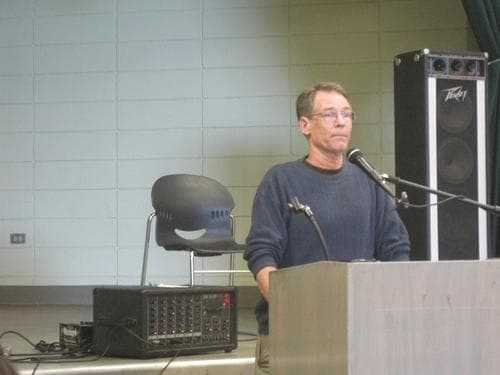
Biography coming soon.







