“When you're a detective in Personville, you learn to expect anything.”
— The Op's initial observations upon arriving in the corrupt town of Personville, also known as Poisonville.


Dashiell Hammett (2022)
Genre
Fantasy / Science Fiction
Reading Time
182 min
Key Themes
See below
Sign in to track this book
In the corrupt town of Personville, a detective systematically dismantles a criminal enterprise by turning its ruthless members against each other, leaving a trail of betrayal and murder.
The Continental Op, a detective, arrives in Personville, a mining town known as 'Poisonville' because of its widespread crime. Donald Willsson, the son of the town's powerful industrialist, Elihu Willsson, called him. But before the Op can meet Donald, he finds him dead in his home, shot. The local police, especially Chief Noonan, quickly call it a suicide, which the Op doubts. He starts his investigation, feeling a duty since Donald hired him. He finds a town deep in crime, where Elihu Willsson's attempts to 'clean up' have backfired, leading to many rival gangs.
The Op soon learns that Donald Willsson was engaged to Dinah Brand, a manipulative woman connected to many of Personville's criminals. Noonan tries to frame Max Thaler, known as Whisper, a local gangster, for Donald's murder. But the Op finds that the bullet that killed Donald came from a different gun than the one Thaler supposedly used. He realizes the police are corrupt and that Dinah Brand is a key figure, seemingly playing different groups against each other. The Op finds himself in a dangerous situation where trust is rare, and everyone seems to have a hidden plan.
Elihu Willsson, upset by his son's murder and the obvious corruption, offers the Op a blank check to 'clean up' Personville. He admits his earlier attempts to bring in outside gangsters to fight each other failed and caused Donald's death. The Op accepts the challenge, knowing the huge task ahead. His plan is not to enforce law and order in the usual way, but to use the existing rivalries among the town's criminal groups: Max Thaler's gang, Pete the Finn's gang, and Lew Yard's gang, along with the corrupt police. The Op wants these groups to destroy each other, a process he calls 'poisoning the poisoners.'
The Op sets up a bank robbery, planting false information to turn the gangs against each other. The robbery is chaotic, causing more deaths and making the animosity between Thaler's and the Finn's gangs worse. The Op subtly guides events, making sure each gang suspects the other of betrayal or involvement in the heist's failures. This incident starts open warfare in Personville. The Op watches the rising violence calmly, knowing the town must reach a breaking point before any real change can happen, even if it means more bloodshed.
Dinah Brand continues to play a central, manipulative role, seemingly allied with various criminals, including Whisper Thaler and Noonan. She gives information to different groups, causing more distrust and confusion. The Op realizes she is dangerous, important to understanding the town's power, but also a constant threat. He confronts her, trying to understand her reasons and who she is truly loyal to. Their talks are tense and show her cynical view and her will to survive in a town where loyalty is short-lived. Her actions accidentally help the Op's goal of escalating the gang war, even as she tries to protect herself.
The Op's manipulation works as the rival gangs fight openly. Shootouts become common, and many more people die. Pete the Finn's gang and Whisper Thaler's gang clash violently, with losses on both sides. The corrupt police, led by Noonan, are either useless or involved in the crimes, adding to the chaos. The Op, while not directly fighting, is the hidden hand guiding the destruction, making sure the warring groups wear themselves out. He moves through the bloody streets, gathering information, spreading rumors, and subtly influencing the destruction, becoming a shadowy figure of revenge.
Suddenly, Dinah Brand is found murdered in her apartment, stabbed with an ice pick. The Op finds her body and, because he is there, is immediately framed for the crime by Noonan and his corrupt officers. This makes the Op's mission much harder, as he now has to clear his name while still trying to break up the criminal empire. The Op suspects Dinah's death is due to her many lies and that one of her enemies finally caught her. He realizes he must find her killer to prove his innocence and further expose the town's decay.
The Op, with some unexpected help and his own detective skills, works to clear his name for Dinah's murder. He carefully examines the evidence and the reasons of everyone involved in Dinah's life. He finds that several people had reasons to kill her, including Whisper Thaler, who felt she betrayed him, and others she had manipulated. The Op eventually figures out that the killer is likely someone close to Dinah, someone whose secrets she knew and who felt threatened by her. His investigation leads him deeper into the town's underworld, revealing layers of betrayal and hidden plans.
Through constant questioning and strategic moves, the Op corners Dinah Brand's true killer: her housemaid, who acted on the orders of a powerful, seemingly respected citizen, likely to stop Dinah from revealing a deeper secret. This discovery also links back to Donald Willsson's murder, showing a complex conspiracy. The Op sets up a final confrontation that brings down the remaining corrupt figures, including Chief Noonan, who is exposed for his involvement in the town's crimes. The truth, though harsh, finally comes out, showing how deeply corrupt the town was and what people did to protect their interests.
In the end, Personville is a shadow of its former self. The Op's brutal plan of letting criminals destroy each other worked, but at a huge cost. Most of the main gang leaders are dead, the police force is ruined, and the town is left in ruins. Elihu Willsson is left with nothing. The Op, having finished his grim task, feels the effects of his actions, admitting the 'red harvest' he has reaped. He leaves Personville, a town purged of its corruption through self-destruction, carrying the heavy burden of the lives lost and the moral compromises made.
The Protagonist
The Op descends into the moral quagmire of Personville, becoming increasingly ruthless and desensitized, but ultimately achieves his goal of purging the town's corruption.
The Supporting
Dinah's manipulations intensify, leading to her inevitable demise as she becomes entangled in her own web of deceit.
The Supporting
Elihu descends into despair as his attempts to fix Personville only lead to more destruction, ultimately losing everything.
The Antagonist
Noonan's corruption is steadily exposed by the Op, leading to his eventual downfall and the collapse of his authority.
The Supporting
Whisper's power is steadily eroded by the Op's schemes, leading to his eventual violent demise in the escalating gang war.
The Supporting
Pete the Finn's gang is systematically weakened and destroyed as he is drawn into the Op's orchestrated gang war.
The Supporting
Lew Yard's gang is caught in the crossfire of the escalating gang war, leading to its eventual decimation.
The Mentioned
Deceased early in the narrative, Donald's legacy is the catalyst for the Op's 'red harvest'.
The novel shows how power, whether from industry or crime, always corrupts. Elihu Willsson's first use of gangsters to end a strike starts a chain reaction of corruption that takes over the whole town, including the police force under Chief Noonan. The Op's job is not to fix a clean system but to clean a rotten one, showing that even attempts to 'clean up' can be corrupted by the power they use. The town itself, 'Poisonville,' represents this widespread corruption, where no one is truly clean.
“I could have gone on living to a ripe old age and not have seen a place as thoroughly poisoned as Personville.”
The Continental Op acts outside normal legal and moral rules, using a kind of vigilante justice that is both effective and disturbing. His method of 'poisoning the poisoners' involves making criminals destroy each other, leading to many deaths. This idea explores whether, in a truly rotten system, extreme and morally questionable actions might be the only way to get some order, questioning what 'justice' means. The Op himself admits the cost, hinting at the moral burden of his actions.
“I'm going to see that the game is played out to a finish.”
Personville is stuck in a cycle of violence, growing from Elihu Willsson's first strike-breaking to the full gang war started by the Op. Each violent act leads to another, creating a self-feeding system of destruction. The novel suggests that once this cycle begins, it is very hard to stop, often leading to everyone involved being destroyed. The 'red harvest' refers not just to the bloodshed but to the unavoidable, bitter result of such constant violence, leaving a town empty and exhausted.
“It was a red harvest. I had been too sure of myself.”
Elihu Willsson repeatedly tries to control the criminals he brings in, first by hiring them, then by trying to turn them against each other. Each try only causes more chaos, ending in his son's death and the complete destruction of his town. Similarly, Dinah Brand thinks she can manipulate everyone for her own gain, only to become a victim of the very forces she plays with. The Op, while seemingly in control, is also caught up in the brutal reality he unleashes, showing how useless it is to truly control chaos once it starts.
“You can't have a city full of murderers and think you can control them.”
Enhances the Op's archetypal nature and detachment.
The Continental Op's lack of a specific name reinforces his role as an archetypal figure rather than a fully fleshed-out individual. It allows readers to focus on his actions and methods rather than his personal background, emphasizing his professional detachment and the brutal efficiency of his work. This device also contributes to the noir atmosphere, where characters often embody roles within a corrupt world rather than having deep personal identities, making him a mirror for the grim reality of Personville.
Dinah Brand's manipulative charm drives plot complications.
Dinah Brand serves as the quintessential femme fatale. Her beauty, intelligence, and moral ambiguity draw men to her, only for her to manipulate them for her own survival and gain. She is a source of both information and complication, constantly shifting allegiances and creating distrust. Her presence is crucial to the plot, as her intricate web of relationships and secrets fuels the escalating conflicts and ultimately leads to her own demise, further entangling the Op in Personville's deadly game.
The setting itself becomes a character, embodying moral decay.
Personville, quickly dubbed 'Poisonville,' is more than just a backdrop; it functions as a character in itself, embodying the pervasive corruption and moral decay that drives the narrative. The town's atmosphere of lawlessness, its compromised institutions, and its inhabitants' cynical outlook reflect the 'poison' that has seeped into every aspect of its existence. This device amplifies the stakes and justifies the Op's extreme methods, as the environment itself is beyond conventional redemption.
Symbolizes unlimited power and moral carte blanche.
Elihu Willsson's offer of a 'blank check' to the Continental Op is a powerful symbolic device. It represents not just financial freedom but also a moral carte blanche, giving the Op permission to use any means necessary, no matter how violent or unethical, to achieve his goal. This device highlights the desperation of Elihu Willsson and the extreme nature of the problem in Personville, freeing the Op from conventional constraints and allowing him to fully embrace his ruthless 'poisoning the poisoners' strategy.
“When you're a detective in Personville, you learn to expect anything.”
— The Op's initial observations upon arriving in the corrupt town of Personville, also known as Poisonville.
“Poisonville, that's what the natives call it. They've got a right. It's poisoned.”
— The Continental Op's internal narration, reflecting on the pervasive corruption and violence in the town.
“I was tired of it all. Tired of the killing, tired of the double-crossing, tired of the whole damn poisonous mess.”
— The Op's weariness and disillusionment after being embroiled in the town's conflicts for an extended period.
“I've got a notion that if I stir things up enough, the scum will rise to the top and maybe somebody can skim it off.”
— The Op explaining his strategy to Dinah Brand, intending to expose the various criminal elements by creating chaos.
“It was a nice job, and I was doing it well. But it was a dirty job.”
— The Op's internal conflict about his role in cleaning up Personville, acknowledging the morally compromising nature of his methods.
“You can't do a good job of cleaning up a town without getting your hands dirty.”
— The Op's pragmatic justification for his often ruthless and manipulative actions in Personville.
“There was no good side in this fight. Just bad and worse.”
— The Op's realization that all factions in Personville are deeply corrupt, making it impossible to side with any 'good' party.
“I was going to see it through, no matter how many people got killed.”
— The Op's grim determination to complete his mission, even as the body count rises around him.
“Death was a common thing in Personville. It walked the streets like a citizen.”
— The Op's observation on the pervasive and normalized violence in the town.
“I had a headache like a personal enemy.”
— The Op's physical and mental exhaustion from the constant stress and violence.
“Murder is a game of skill, not chance.”
— A statement reflecting the Op's analytical and detached approach to solving crimes, viewing them as puzzles.
“He looked as if he had just been scraped off a wall.”
— A vivid description of a character's disheveled and worn appearance, typical of Hammett's gritty style.
“I was getting to be as rotten as the rest of them.”
— The Op's self-awareness of the corrupting influence of Personville and his methods on his own character.
“It takes a thief to catch a thief, and sometimes it takes a killer to catch a killer.”
— The Op's internal thought process, justifying his willingness to use morally ambiguous or violent tactics.
Ready to see how well you understood this book? Take our interactive quiz with 10 questions.
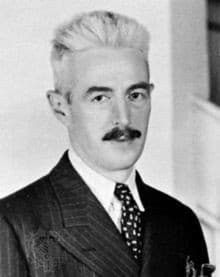
Samuel Dashiell Hammett was an American writer of hard-boiled detective novels and short stories. He was also a screenwriter and political activist. Among the characters he created are Sam Spade, Nick and Nora Charles, The Continental Op and the comic strip character Secret Agent X-9.







