“The past isn't a straight line. It's a jumble, a collection of moments and emotions, and you can change them, reshape them, if you know how.”
— Helena Smith explaining the nature of memory and time.

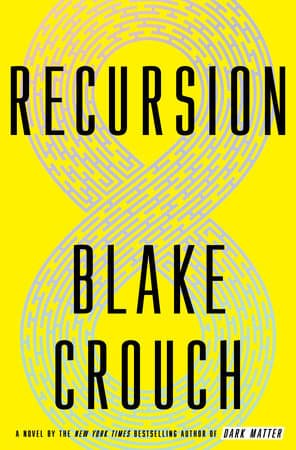
Blake Crouch (2019)
Genre
Thriller / Fantasy / Mystery / Science Fiction
Reading Time
6 hours
Key Themes
See below
Sign in to track this book
A detective and a neuroscientist race to stop a plague of false memories from unraveling reality, making them question if their past ever truly existed.
NYPD detective Barry Sutton responds to a woman, Ann Voss, who jumped from a building. She had False Memory Syndrome (FMS), a mysterious illness where victims experience vivid memories of a life they never lived, often leading to psychosis and suicide. Ann was convinced she had a son named Adam, despite all evidence. Barry, still grieving his own daughter, Rachel, who died years ago, feels empathy for Ann and wants to understand FMS. He investigates the case, finding other FMS victims and realizing how widespread the problem is across New York City.
In 2007, eleven years before Barry's investigation, neuroscientist Helena Smith works on a project: a chair designed to record and replay human memories with perfect clarity. Her motivation comes from watching her mother develop Alzheimer's. She believes this technology could preserve moments and help re-engage lost minds. Helena struggles with funding until she is approached by tech billionaire Marcus Slade, who offers unlimited resources at his remote facility, the 'Arc,' in exchange for control and secrecy over her research. Helena accepts, driven by the promise of her vision, despite reservations about Slade's true intentions.
Helena, with Slade's resources, perfects her memory chair. She successfully records and replays her own memories, experiencing the past as if it were the present. However, during an experiment, a test subject named Paul experiences a side effect: he briefly believes he lived a different life, one where he was married to another woman. Helena dismisses it as a fluke, attributing it to the brain's complexity. Slade, however, is interested in this anomaly, pushing Helena to explore its potential. He subtly manipulates her, hinting at grander applications beyond simple memory preservation, guiding her research towards something more dangerous.
Barry's search for the truth behind FMS leads him to a classified government task force under the Department of Defense. He learns that FMS is not a disease but a result of technology that allows people to 'dive' back into their past, altering it and creating alternate timelines. Each dive creates a new timeline that overwrites the previous one, and those with FMS are 'remembering' lives from overwritten timelines. Barry is horrified to learn that this technology, the 'memory chair,' was developed by Helena Smith with Marcus Slade's support, and that Slade is altering timelines for his own purposes.
Barry, now aware of the memory chair and its effects, tracks down Helena Smith. He confronts her with the reality of FMS and the chaos her invention has caused. Helena, initially resistant, is convinced by Barry's evidence and her own growing unease about Slade. She reveals Slade's ultimate plan: to initiate a massive 'reset' of the timeline, diving back to 2007 to prevent a global pandemic he believes will decimate humanity. This 'reset' would erase the current timeline, including everyone in it. Barry and Helena realize they must stop Slade, despite his immense power and the moral complexities of their mission.
To stop Slade, Barry and Helena decide to use the memory chair themselves. Their plan is to dive back to 2007, before Slade's first major timeline alteration, and prevent him from acquiring Helena's technology or initiating the 'reset.' Their first dive is disorienting; they wake up in a slightly altered 2007, where subtle changes have already occurred due to previous shifts. They struggle to navigate this new reality, remembering their 'original' timeline while living in a subtly different one. This experience gives Barry a firsthand understanding of FMS, solidifying his resolve.
Barry and Helena make a series of recursive dives, each time trying to stop Slade's plans in 2007. However, their interventions are never perfect. Each dive creates a new timeline, often with unintended and worse consequences. They find themselves in futures where their allies are dead, where the world is ravaged by different disasters, or where Slade's power is even greater. The process is mentally and emotionally exhausting, as they deal with the loss of loved ones from previous timelines and the constant erosion of their own memories, struggling to hold onto the 'original' reality they are fighting for.
In one bleak recursive timeline, Barry and Helena find themselves in a world ravaged by the very pandemic Slade had tried to prevent. This reality shows the irony of Slade's actions: his attempts to save humanity inadvertently led to its destruction through different means. This timeline also reveals more about Slade's motivations, painting him not as purely evil, but as a man driven to extreme measures by a misguided desire to protect. The pandemic timeline becomes a turning point, pushing Barry and Helena to consider new strategies and the ethical implications of their own timeline alterations.
After many failed attempts and the relentless degradation of reality, Helena realizes that stopping Slade is not enough; the memory chair itself is too dangerous. She plans a final, irreversible dive back to 2007, not to alter events, but to prevent the chair's creation entirely. This would mean erasing her work, her life's purpose, and potentially her existence. Barry, witnessing her pain and resolve, understands the immense sacrifice she is willing to make. This final, desperate act is their last hope to restore a stable reality, even if it means a world without the memory chair and its potential benefits.
Helena makes the ultimate dive, going back to 2007 and destroying her research and the initial prototypes of the memory chair, ensuring it is never created. This act changes the timeline, creating a new reality where False Memory Syndrome never existed. Barry wakes up in a subtly different 2007, where his daughter Rachel is still alive, and his life is happier. He has no memory of the struggle or Helena. Helena, however, retains fragmented memories of the struggle and her sacrifice, living a quieter life as a professor. The world is stable, but the cost of that stability is known only to a few, and echoes of what was remain in Helena's mind.
The Protagonist
Barry transforms from a grief-stricken, disillusioned detective into a resilient protector of reality, ultimately finding peace in a stable timeline, albeit unknowingly.
The Protagonist/Innovator
Helena evolves from an ambitious scientist to a self-sacrificing hero, choosing to erase her life's work and her own 'true' memories to save reality.
The Antagonist
Slade remains steadfast in his belief that his actions are justified, even as he causes immense chaos, never truly wavering from his initial, albeit misguided, mission.
The Mentioned/Motivator
Rachel's existence shifts with the timelines, her fate serving as a personal barometer for the success or failure of Barry and Helena's mission.
The Supporting
Ann's story serves as a tragic introduction to the FMS phenomenon, her fate motivating Barry's journey.
The Supporting
Paul's brief appearance highlights the nascent danger of Helena's invention, serving as an early warning.
The Supporting
The Admiral provides exposition and guidance to Barry, representing the official, albeit overwhelmed, response to the crisis.
The Supporting
Dr. Aris functions as a technical support character, illustrating the scientific infrastructure behind Slade's plans.
The core of "Recursion" explores how memory shapes our perception of reality, and what happens when those memories are unstable or false. False Memory Syndrome illustrates that if our personal histories are rewritten, our present identity crumbles. The recursive dives force characters, and the reader, to question which timeline is 'real' and whether a subjective experience of reality is more valid than an objective one. This theme appears in Barry's struggle to remember Rachel in shifting timelines and Helena's ultimate sacrifice to stabilize a single, consistent reality, even if it is not the one she originally knew.
“Memory makes reality. That’s what New York City cop Barry Sutton is learning as he investigates the devastating phenomenon the media has dubbed False Memory Syndrome.”
The novel deeply questions the moral implications of groundbreaking technology, particularly when it grants power over fundamental aspects of existence like time and memory. Helena's initial intent to cure Alzheimer's is corrupted by Marcus Slade's ambition to 'fix' the past, leading to catastrophic consequences. The story asks whether humanity is responsible enough to wield such power, and at what cost progress should be pursued. Each recursive dive highlights the unforeseen and often devastating ripple effects of even well-intentioned alterations, showing that some knowledge or power might be too dangerous for humanity to possess.
“Just because we can do something, does it mean we should?”
Grief is a powerful motivator throughout the story, driving both protagonists and antagonists. Barry is consumed by the loss of his daughter Rachel, making the allure of a timeline where she lives almost unbearable. Marcus Slade's motivation comes from his own experience with a devastating pandemic, leading him to believe that he must rewrite history to prevent future suffering. This theme explores the human desire to correct past mistakes or reverse personal tragedies, and the perilous consequences of trying to fulfill that desire, suggesting that true healing comes from acceptance, not alteration.
“He understood what drove these people, this desperate hunger to return to a life that had been snatched away from them.”
The narrative builds towards acts of sacrifice as characters deal with the consequences of their actions. Helena, initially responsible for creating the memory chair, seeks redemption by dedicating herself to undoing its damage, ending in her ultimate sacrifice to erase her life's work and stabilize reality. Barry, too, makes personal sacrifices, repeatedly losing loved ones and enduring mental anguish in the recursive struggle. These sacrifices highlight the idea that true heroism often involves letting go of personal desires for the greater good, and that redemption can be found in selfless acts, even if those acts are forgotten by the world they save.
“The greatest good for the greatest number. But at what cost?”
A device capable of recording, replaying, and ultimately, altering memories and timelines.
The Memory Chair is the central technological marvel and plot driver of the novel. Invented by Helena Smith, it initially allows for perfect recall of memories. However, its true, and more dangerous, capability is to send a person's consciousness back in time to their own past, allowing them to alter events and create new timelines. This power is the source of False Memory Syndrome and the recursive chaos that engulfs the world. The chair serves as both a tool for salvation and destruction, embodying the novel's ethical dilemmas regarding scientific advancement.
A neurological condition where individuals experience vivid memories of lives they never lived, caused by timeline shifts.
False Memory Syndrome is the mysterious affliction that kickstarts the plot. It's initially presented as a disease but is later revealed to be a side effect of the memory chair's ability to alter timelines. FMS victims are essentially 'remembering' overwritten realities, causing profound disorientation, psychosis, and often suicide. It functions as a terrifying manifestation of the instability of reality, a concrete symptom of the larger, unseen changes happening to the world. FMS drives Barry's initial investigation and provides a constant, harrowing reminder of the stakes involved.
The narrative structure involving characters repeatedly traveling back in time, creating new, branching realities.
The novel's structure is defined by its recursive timeline jumps. Barry and Helena repeatedly use the memory chair to travel back to 2007, each attempt creating a new, subtly (or drastically) altered present. This device allows for exploration of 'what if' scenarios and highlights the unpredictable nature of time travel. It creates a sense of escalating tension and desperation, as each jump carries the risk of making things worse. The recursive nature also emphasizes the theme of memory's unreliability, as characters struggle to remember which reality is 'real' and which memories belong to which timeline.
The concept that small changes in the past can lead to massive, unpredictable consequences in the future.
The Butterfly Effect is a constant underlying principle governing the recursive timeline jumps. Even seemingly minor alterations made by Barry and Helena in the past lead to dramatically different and often worse futures. This plot device reinforces the danger and unpredictability of tampering with time. It explains why their attempts to fix the past often backfire, creating new pandemics, different forms of global chaos, or empowering Slade even further. It underscores the novel's message about the interconnectedness of events and the hubris of attempting to control complex systems like time and causality.
“The past isn't a straight line. It's a jumble, a collection of moments and emotions, and you can change them, reshape them, if you know how.”
— Helena Smith explaining the nature of memory and time.
“Every choice you make, every path you choose, creates a new reality. A new you.”
— A philosophical musing on the multiverse theory inherent in the recursion.
“Grief is a ghost. It clings to you, whispers in your ear, reminds you of what you're missing.”
— Barry Sutton reflecting on the loss of his daughter.
“What if you could go back? What if you could fix it?”
— The central question driving the plot, often posed by characters considering the ramifications of the chair.
“The human mind is a fragile thing. Easy to break, even easier to reshape.”
— A reflection on the psychological impact of repeated memory alterations.
“Sometimes, the only way to save the future is to let go of the past.”
— A difficult realization made by characters trying to prevent further temporal collapse.
“Memory isn't a recording. It's a reconstruction. Every time you recall something, you're rebuilding it.”
— Helena explaining the fluid nature of memory before the memory alterations become widespread.
“We're all just trying to find our way back to something that felt real.”
— A character's observation on the universal human desire for authenticity amidst the chaos of changing realities.
“The universe doesn't care about your regrets.”
— A stark reminder of the impersonal forces at play when characters attempt to manipulate time.
“How many lives can one person live before they cease to be themselves?”
— Barry's internal struggle with his fractured identity after experiencing multiple timelines.
“Love isn't a memory you can erase. It's a part of who you are.”
— A powerful statement on the enduring nature of love, even when memories are altered.
“Chaos is the natural order of things. We just pretend it isn't.”
— A pessimistic but realistic view on the unraveling of reality due to the recursion.
“Sometimes the best thing you can do is just survive. Live to fight another day.”
— A pragmatic piece of advice given during a desperate situation.
“Every time you go back, you risk losing a piece of yourself.”
— A warning about the psychological toll of repeatedly using the memory chair.
Ready to see how well you understood this book? Take our interactive quiz with 10 questions.

Blake Crouch is a celebrated author known for his mind-bending thrillers that blend speculative fiction with high-stakes action. His notable works include the 'Wayward Pines' trilogy, 'Recursion,' and 'Dark Matter,' all praised for their intricate plots and compelling characters. Crouch's writing often explores complex scientific concepts and their profound impact on humanity.







