“It isn't as if I hadn't always been used to being poor.”
— Rebecca reflecting on her family's financial situation.

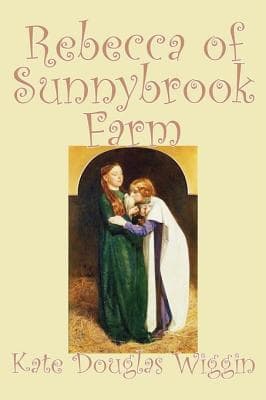
Kate Douglas Wiggin (1965)
Genre
Children's / Historical Fiction / Young Adult
Reading Time
240 min
Key Themes
See below
Sign in to track this book
A lively and imaginative young girl changes her stern spinster aunts' household with her optimism and kindness, growing into a beloved young woman in early 20th-century rural New England.
Ten-year-old Rebecca Rowena Randall, a lively and imaginative girl, leaves her poor family home at Sunnybrook Farm in Maine to live with her two spinster aunts, Miranda and Jane Sawyer, in the nearby village of Riverboro. Her mother, Aurelia, hopes her aunts will give Rebecca a good upbringing and education, easing the family's financial strain. When she arrives, Rebecca's high spirits and unusual ways immediately clash with Aunt Miranda's strict, practical nature. Aunt Jane, however, likes Rebecca's charm and sees the good in her, often helping to bridge the gap between the strong-willed girl and her rigid sister. Rebecca's first experiences in Riverboro involve both homesickness and a growing interest in her new surroundings and the people she meets.
Rebecca attends the district school in Riverboro, where her vivid imagination and poetic style set her apart from her classmates. She quickly becomes friends with Emma Jane Perkins, a loyal but shy girl, and forms a strong bond with the kind teacher, Miss Dearborn. However, she also meets Minnie Smellie, a jealous and critical girl who often tries to undermine Rebecca. Rebecca's unusual ideas and dramatic flair, often shown in her writings and recitations, at first confuse and sometimes amuse her teachers and peers. Despite some early misunderstandings and occasional punishments from Aunt Miranda, Rebecca's intelligence and natural goodness begin to show, slowly winning over those around her.
Rebecca, always resourceful and wanting to help her family, decides to make and sell soap to earn money. She asks Emma Jane for help, but their amateur efforts result in soap that is not perfect. Her business idea, though well-meaning, is strongly disapproved of by Aunt Miranda, who sees it as silly and unladylike. Miranda believes Rebecca should focus on her studies and chores, not on such schemes. This event highlights the ongoing tension between Rebecca's free spirit and Miranda's strict adherence to proper behavior and practical work. Aunt Jane, as usual, tries to smooth things over, understanding Rebecca's good intentions even when Miranda sees her actions as wrong.
Rebecca's first Christmas away from her mother and siblings is hard, filled with a longing for her old home. However, she eventually gets to return to Sunnybrook Farm for the holiday. Her arrival brings much-needed joy to her poor family. Rebecca, having learned new skills and perspectives from her aunts, shares her experiences and helps lift their spirits. This visit strengthens her deep love for her family and her resolve to help them, even as she adapts to her new life in Riverboro. It is a reminder of the sacrifices she is making and the strong family bonds that continue to shape her.
Rebecca spends a lot of time and effort making a beautiful lamp-mat as a Christmas gift for Aunt Miranda, putting her heart and artistic talent into it. However, Aunt Miranda, always practical and seemingly without sentiment, does not appreciate the gift's artistic value or the love behind it. She dismisses it as impractical and even a bit foolish, preferring a more useful present. This rejection deeply hurts Rebecca, who struggles to understand her aunt's inability to see beauty and intention beyond mere function. It is a moment that shows the emotional distance between them and Rebecca's ongoing struggle for her aunt's true approval and affection.
Rebecca takes a significant trip to Augusta, the state capital, to visit a friend. This trip is a turning point because it lets her experience a world beyond Riverboro and Sunnybrook. During her travels, she meets various people, including the kind and influential Mr. Harrison, an eccentric but good-hearted old man who is charmed by Rebecca's bright spirit and unique view. Their conversation starts a friendship that will help Rebecca later. This journey shows Rebecca's growing independence, her ability to charm strangers, and her natural way of connecting with people from different backgrounds, broadening her horizons and hinting at her future potential.
Rebecca takes part in the local Minerva Program, a series of public readings and performances. Her dramatic flair and ability to put emotion into her readings captivate the audience. Among those impressed is Miss Maxwell, a wealthy and cultured woman who recognizes Rebecca's unusual talent and intelligence. Miss Maxwell becomes an important mentor and sponsor for Rebecca, offering her chances for more education and refinement. This event is important because it gives Rebecca a way to get a more advanced education, something her family could never afford, and confirms her artistic interests that Aunt Miranda often dismissed.
Thanks to Miss Maxwell's influence and her own proven abilities, Rebecca can attend the respected Sawyer Free Academy. Here, she does very well academically, showing herself to be an exceptionally bright and hard-working student. She excels in her studies, especially in literature and writing, and continues to develop her unique voice and perspective. Her time at the academy brings intellectual growth and deeper friendships, particularly with Emma Jane. This period solidifies her path toward becoming a teacher herself, a goal she embraces with excitement, seeing it as a way to help her family and make a positive impact.
As Rebecca grows into a young woman, Aunt Miranda becomes very ill. During this difficult time, Rebecca selflessly cares for her aunt, showing great patience, compassion, and maturity. In her weakened state, Aunt Miranda's stern outer shell finally breaks, revealing a hidden affection and respect for Rebecca. She acknowledges Rebecca's goodness, intelligence, and the joy she has brought into their lives. This time of shared vulnerability allows for a deep, unspoken reconciliation between them, closing the emotional gap that had existed for years. It is a touching moment where Miranda's true feelings for her niece are finally, if subtly, expressed.
After Aunt Miranda dies, her will reveals a surprising act of generosity: she leaves a large part of her estate, including Sunnybrook Farm, to Rebecca. This inheritance shows Miranda's deep, though often unexpressed, love and pride for her niece, and her wish to secure Rebecca's future. The inheritance eases Rebecca's family's financial struggles and ensures she can continue her education and pursue her dreams. Rebecca, now a young woman, takes on her responsibilities with grace and determination, ready to start her career as a teacher and fulfill her promise to help her family, carrying forward the lessons learned from both her aunts.
Rebecca gets her first teaching job in a rural school, eager to make a difference. She approaches her new role with her usual enthusiasm, creativity, and real love for children. Despite initial challenges, including managing unruly students and meeting community expectations, Rebecca uses her unique teaching methods, inspired by her own experiences and empathetic nature. She tries to build a love of learning and encourages her students' individuality, much as Miss Dearborn and Miss Maxwell encouraged her. This experience further strengthens her character, showing her resilience and her strong commitment to her profession.
After successfully completing her first year of teaching, Rebecca returns to Sunnybrook Farm, now her own, and reunites with her mother and siblings. The family is in a much better financial situation, thanks to Aunt Miranda's legacy and Rebecca's efforts. Rebecca, now a confident and accomplished young woman, thinks about her journey, appreciating her growth and the love around her. With her family secure and her career established, Rebecca looks forward to a future with purpose, continuing to spread her unique optimism and kindness wherever she goes, always embodying the 'Rebecca of Sunnybrook Farm' spirit.
The Protagonist
Rebecca transforms from a somewhat wild and naive girl into a poised, educated, and compassionate young woman who embraces her responsibilities and finds her calling.
The Supporting/Antagonist
Miranda's initial disapproval of Rebecca slowly shifts to a grudging respect, culminating in a silent acknowledgement of love and a profound act of generosity.
The Supporting
Jane remains a consistent source of love and support for Rebecca, her gentle nature providing a stable emotional anchor.
The Supporting
Mr. Harrison consistently recognizes and nurtures Rebecca's unique talents, providing crucial encouragement.
The Supporting
Emma Jane remains a consistent and devoted friend to Rebecca throughout her growth.
The Supporting
Miss Maxwell provides the practical means for Rebecca to pursue her academic and personal development.
The Supporting
Aurelia's role is primarily that of the loving mother who initiates Rebecca's journey, her circumstances improving through Rebecca's eventual success.
The Supporting
Minnie remains a consistently envious figure, serving as a minor obstacle to Rebecca's social integration.
Rebecca's most defining trait is her endless imagination and steady optimism. She turns everyday tasks into adventures and finds beauty in ordinary things. For example, she imagines the 'river of life' or creates detailed stories from simple observations. This theme sharply contrasts with Aunt Miranda's strict practicality and Riverboro's often dull reality. Rebecca's ability to dream and stay cheerful, even when facing strictness or disappointment (like Miranda's reaction to the lamp-mat), is what helps her succeed and influence those around her, bringing light into otherwise somber lives and inspiring others to see beyond the ordinary.
“What is the use of being alive if one isn't going to get into mischief?”
The novel is a classic coming-of-age story, following Rebecca's journey from a spirited but naive ten-year-old to a responsible and educated young woman. Her experiences living with her aunts, going to school, facing social challenges, and eventually becoming a teacher, all help her grow personally. She learns to balance her impulsiveness with good judgment, to understand different viewpoints (especially Aunt Miranda's), and to use her talents for a greater purpose. Her journey is about finding her place in the world, recognizing her strengths, and realizing her potential, ultimately shaping her into an independent and caring person ready to make her own way.
“There is nothing like a good education, Rebecca, nothing. It is a fortune in itself.”
The theme of family love, in its various forms, is central to the story. Rebecca's deep love for her poor mother and siblings drives her to succeed. Her relationship with Aunt Jane is one of unconditional warmth and understanding, providing a vital emotional refuge. Most complex is her bond with Aunt Miranda, which changes from conflict and misunderstanding to a deep, though often unspoken, love. Miranda's final act of leaving her estate to Rebecca shows the depth of her affection and pride, proving that love can appear in unexpected ways, even through strict discipline and sacrifice, ultimately connecting the family.
“Love is the only thing that matters, Rebecca. Love is the only thing that lasts.”
Education is a strong theme, representing not only personal learning but also a way out of poverty and into a meaningful life. Rebecca's initial move to Riverboro is driven by the desire for a better education. Her natural intelligence and eagerness to learn are consistently highlighted, and her success at the Sawyer Free Academy, helped by Miss Maxwell, shows how much educational opportunities can change a life. Rebecca's eventual decision to become a teacher further emphasizes this theme, showing her commitment to sharing the gift of learning and using her education to benefit others and improve her family's situation.
“Knowledge is power, Rebecca, and you have a mind to use it.”
The novel subtly explores class and the possibility of social mobility in early 20th-century America. Rebecca comes from a background of respectable poverty, but her natural intelligence, charm, and strong work ethic allow her to overcome her initial circumstances. Her journey to Riverboro, her education at the academy, and the support of people like Mr. Harrison and Miss Maxwell give her opportunities that would typically be unavailable to someone from her background. Her eventual inheritance from Aunt Miranda further secures her position, showing how individual merit and a bit of luck can lead to upward mobility and a secure future.
“It isn't what you have, but what you are, that counts in this world.”
A physical journey that symbolizes Rebecca's entry into a new life and the beginning of her coming-of-age.
Rebecca's initial journey from Sunnybrook Farm to Riverboro is more than just a change of location; it represents her departure from childhood innocence and her entry into a world of new expectations, challenges, and opportunities. The journey itself is filled with her characteristic imaginative observations, foreshadowing her unique perspective. It sets the stage for her transformation, as she leaves behind her familiar, albeit impoverished, home for the strictures of her aunts' house, marking the literal and metaphorical beginning of her coming-of-age story and her quest for a better future.
Two opposing personalities that create both conflict and balance in Rebecca's upbringing.
The stark contrast between Aunt Miranda's stern practicality and Aunt Jane's gentle empathy serves as a crucial plot device. Miranda's rigidity provides the primary external conflict for Rebecca, forcing her to learn discipline and resilience. Jane, on the other hand, offers unconditional love and understanding, acting as Rebecca's emotional anchor and buffer. This dynamic duality in Rebecca's upbringing allows her to develop a balanced character, learning both the value of hard work and the importance of compassion and imagination. Their opposing natures create dramatic tension while simultaneously fostering Rebecca's holistic development.
A narrative technique revealing Rebecca's inner thoughts and maintaining her connection to her family.
Rebecca's frequent letters to her mother and siblings serve as a key plot device. They not only provide insight into Rebecca's thoughts, feelings, and experiences in Riverboro from her own perspective, but they also maintain the emotional connection between her and her original family. These letters highlight her continued love and concern for her family's well-being, reinforcing her motivation to succeed. They also allow the reader to witness her growing maturity and her evolving understanding of her new life, often contrasting her initial impressions with later reflections, showcasing her development as a character.
A public display of Rebecca's talent that acts as a catalyst for her future opportunities.
Rebecca's participation in the Minerva Program, where she performs recitations, is a pivotal plot device. It serves as a public demonstration of her unique talent for dramatic expression and her intellectual capabilities. This event is crucial because it brings her to the attention of Miss Maxwell, a wealthy and influential patron who recognizes Rebecca's potential and subsequently offers her the opportunity to attend the Sawyer Free Academy. Without this public showcase of her abilities, Rebecca's path to higher education and social advancement would likely have been much more difficult, making it a significant turning point in her story.
“It isn't as if I hadn't always been used to being poor.”
— Rebecca reflecting on her family's financial situation.
“There is a great deal of difference between an angel and a goose, Rebecca, and I hope you will always bear it in mind.”
— Aunt Miranda giving Rebecca a stern lesson.
“What is the use of being good if you are not good for anything?”
— Rebecca questioning the practical application of goodness.
“The world is so full of a number of things, I'm sure we should all be as happy as kings.”
— Rebecca's optimistic outlook, borrowing from Robert Louis Stevenson.
“It takes a great deal of love to make a thing of beauty.”
— Rebecca's realization about the effort behind creation.
“Every day is a fresh beginning, every morn is the world made new.”
— Rebecca's hopeful perspective on new days.
“She was not beautiful, but she was radiant, and her radiance was beauty.”
— A description of Rebecca's inner and outer glow.
“If you just keep on being yourself, and don't try to be like anybody else, you'll be all right.”
— A piece of advice given to Rebecca about individuality.
“There are people who can't be good for anything but to do good.”
— Rebecca's observation about different types of helpfulness.
“It is not what we have, but what we enjoy, that constitutes our abundance.”
— Rebecca's mature reflection on true wealth.
“She had a way of looking at life that made it seem very interesting, even when it was not.”
— Description of Rebecca's imaginative and engaging perspective.
“The more you read, the more things you will know. The more that you learn, the more places you'll go.”
— Rebecca's enthusiasm for learning and books.
“Aunt Miranda always said that 'what can't be cured must be endured,' and Rebecca was learning to endure.”
— Rebecca internalizing a lesson in stoicism from her aunt.
“She never knew when she was beaten. That was her great strength.”
— A comment on Rebecca's indomitable spirit and perseverance.
Ready to see how well you understood this book? Take our interactive quiz with 10 questions.

Biography coming soon.

Dan Gemeinhart
4.5

Kate O'Hearn
4.4

Jeanne Birdsall
4.4

Jen Wang
4.4

Wendelin Van Draanen
4.3

John Marsden
4.3

Chris Van Allsburg
4.3
Jennifer A. Nielsen
4.2