“Last night I dreamt I went to Manderley again.”
— Opening line of the novel, setting a melancholic and haunted tone.

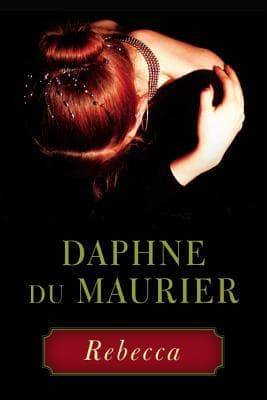
Daphne du Maurier (2038)
Genre
Thriller / Historical Fiction / Mystery / Romance
Reading Time
9-10 hours
Key Themes
See below
Sign in to track this book
A new bride fights a chilling psychological battle against the memory of her husband's first wife, Rebecca, whose perfection haunts the grand estate of Manderley and threatens her identity.
The story begins in Monte Carlo, where the young, unnamed narrator works as a paid companion to the wealthy Mrs. Van Hopper. She often meets Maxim de Winter, a rich English aristocrat recently widowed. Maxim, still mourning his beautiful first wife, Rebecca, initially seems distant. However, a connection slowly forms between him and the shy narrator. Mrs. Van Hopper, noticing their growing affection, plans to leave for America and take the narrator with her. This prompts Maxim to propose marriage to the narrator, an offer she accepts, feeling overwhelmed.
Maxim and the new Mrs. de Winter arrive at Manderley, Maxim's estate in Cornwall. The narrator is immediately struck by the house's grandeur and history, but also by an oppressive feeling. She meets the housekeeper, Mrs. Danvers, who had been devoted to Rebecca. Mrs. Danvers's cold manner and constant comparisons to Rebecca make the narrator feel inadequate. The house itself, with many untouched rooms and items belonging to Rebecca, seems to be a shrine to the former mistress, making the narrator feel like an intruder.
The narrator's first attempts to settle into her role as mistress of Manderley are constantly blocked by Rebecca's memory. Mrs. Danvers quietly undermines her confidence, suggesting the narrator can never match Rebecca's beauty, charm, or skill. Everything at Manderley, from household routines to social gatherings, seems guided by Rebecca's past choices. The narrator feels increasingly alone and inadequate, convinced Maxim still loves Rebecca and regrets marrying her. She becomes fixated on Rebecca, always comparing herself and feeling she falls short.
Maxim decides to bring back the annual Manderley costume ball, a tradition Rebecca loved. The narrator, wanting to please Maxim, asks Mrs. Danvers for costume advice. Mrs. Danvers slyly suggests she wear a replica of a white dress from a portrait of one of Maxim's ancestors, assuring her it would be a delightful surprise. However, when the narrator appears at the ball, Maxim is furious. Rebecca had worn that exact dress to her last Manderley ball, making the narrator's appearance a shocking imitation. This public humiliation further isolates the narrator and confirms her belief that she can never escape Rebecca's shadow.
After the costume ball disaster, the narrator retreats to her room, deeply upset. Mrs. Danvers, seeing her chance, enters and begins a chilling speech, praising Rebecca's beauty, intelligence, and spirit, and stressing the narrator's inferiority. She shows the narrator Rebecca's untouched bedroom, filled with her clothes and personal items, making Rebecca's presence almost real. Mrs. Danvers then subtly urges the narrator to commit suicide by jumping from the window, suggesting it would be an escape from her misery. The narrator is about to give in when a sudden noise from the beach below interrupts them.
The noise below is from a ship running aground in the cove. During the salvage operation, a diver finds the wreck of Rebecca's boat, the 'Je Reviens,' which Maxim had said was found empty after her supposed drowning. Inside the boat, to everyone's shock, is Rebecca's body. This discovery contradicts the official story of her death, which had been ruled an accidental drowning, and requires a new inquest. Maxim is clearly disturbed, and the narrator senses a deep change in him, hinting at a hidden truth.
Faced with Rebecca's body, Maxim finally tells the narrator the truth. He reveals that his marriage to Rebecca was a lie; she was a cruel, manipulative, and promiscuous woman who openly boasted of her affairs and tormented him. He admits he hated her and that her death was not an accident. Maxim explains that on the night she died, Rebecca told him she was pregnant with another man's child and would raise it as his heir, knowing it would drive him mad. In a rage, he shot her and then sank her body in the boat, making it look like an accidental drowning.
At the second inquest, Maxim sticks to his story that Rebecca's death was an accident, and the narrator supports him, now understanding his pain. However, a cousin of Rebecca's, Jack Favell, a crude character, appears and testifies that Rebecca was supposed to meet him on the night she died. He implies that Maxim murdered her and tries to blackmail him. Favell is convinced Rebecca would never have committed suicide and suspects foul play, blaming Maxim. The situation becomes dangerous for Maxim as evidence against him grows, despite his efforts to maintain the accidental drowning story.
Maxim and the narrator, wanting to clear his name and expose Favell's lies, travel to London to see Dr. Baker, a specialist Rebecca had secretly consulted before her death. They hope to find information that might explain Rebecca's behavior or her death. Dr. Baker's records show that Rebecca had been diagnosed with inoperable cancer and had only months to live. This information changes everything, suggesting a reason for Rebecca's actions on the night she died.
The discovery of Rebecca's terminal illness greatly changes how her death is understood. Maxim realizes that Rebecca, knowing she was dying, likely provoked him into killing her. She wanted a dramatic, violent end rather than a slow decline from cancer, and possibly aimed to frame him. The new evidence, presented to the authorities, suggests Rebecca's death was either an act by Maxim, provoked by her own suicidal intent, or a cleverly planned suicide by provoking him. The authorities rule her death a suicide, clearing Maxim of murder, though the ambiguity of the moment remains.
As Maxim and the narrator drive back to Manderley, relieved but exhausted, they see a strange red glow in the distance. They realize Manderley is on fire. It is implied that Mrs. Danvers, learning of Maxim's exoneration and the final defeat of Rebecca's memory, set the house ablaze out of loyalty to her former mistress. The grand estate, which had been a symbol of Rebecca's power and a prison for the narrator, is completely destroyed. The fire marks a clear end to Rebecca's shadow and the old life at Manderley.
The novel ends with Maxim and the narrator living a traveling life, never settling. Manderley is gone, and with it, Rebecca's presence. However, the narrator still carries the emotional scars of her experiences, and the memory of Manderley and Rebecca, though no longer a physical threat, remains a part of her. They are free from the past, but not entirely. The narrator finds quiet contentment with Maxim, but the grandeur and terror of Manderley, and the woman who ruled it, still haunt her dreams.
The Protagonist
She transforms from a timid, unnamed girl haunted by Rebecca's ghost into a more assertive woman who understands and supports her husband, finding her own identity.
The Protagonist/Love Interest
He transitions from a man burdened by a terrible secret and the ghost of his past to one who finds release and a genuine, if scarred, partnership with his second wife.
The Antagonist/Eponymous character
Her 'character arc' is revealed retrospectively; from an idealized figure to a monstrous, manipulative woman whose death was a form of self-engineered justice.
The Antagonist
She remains steadfast in her loyalty to Rebecca, ultimately destroying Manderley as a final act of devotion and revenge against those who 'wronged' Rebecca.
The Supporting
He remains a consistent source of support and kindness for the narrator throughout her ordeal at Manderley.
The Supporting/Antagonist
He attempts to capitalize on Rebecca's death but is ultimately thwarted by the revelations of Dr. Baker.
The Supporting
Her role is primarily in the opening, serving as a catalyst for the narrator's meeting with Maxim and her subsequent marriage.
The Supporting
She remains a consistent, if sometimes awkward, figure of family support for Maxim and the narrator.
The Supporting
He diligently investigates Rebecca's death, ultimately accepting the verdict of suicide based on the new medical evidence.
The past, represented by Rebecca, controls the present at Manderley. Rebecca's memory, made stronger by Mrs. Danvers and the untouched house, stops the narrator from finding her own identity or happiness. Every room, object, and social expectation seems set by Rebecca's choices. This theme shows in the narrator's constant feeling of inadequacy and her fixation on Rebecca's perceived perfection, as well as Maxim's deep emotional scars from his first marriage, which keep him from truly connecting with his new wife until the truth comes out. The fire at Manderley is a literal burning away of this oppressive past.
“Last night I dreamt I went to Manderley again.”
The narrator's fight to find her own identity is central to the novel. She remains unnamed, showing her initial lack of self and her existence only in relation to Maxim and Rebecca. Her deep insecurity is constantly made worse by Mrs. Danvers's comparisons to Rebecca, making her feel like an unworthy imposter. She tries to copy Rebecca, like with the costume ball, only to fail. Her journey is about shedding this borrowed identity and slowly building her own, especially after Maxim's confession and her decision to stand by him.
“I was like a guest in someone else's house, someone who had gone away but might return at any moment.”
The novel relies on a main deception: the perfect, beloved Rebecca is, in reality, a cruel and manipulative woman. Manderley itself, appearing as an ideal English estate, holds dark secrets. Maxim, first presented as a grieving widower, hides a terrible truth. This theme explores how outward appearances can hide deep inner turmoil. The narrator first judges everything by its surface, leading to her fear and insecurity, but eventually learns to see beyond the facade, discovering Rebecca's true nature and Maxim's suffering. The revealing of Rebecca's character is the core of this theme.
“It was not Rebecca's beauty that had made him hate her, but her soul.”
The novel explores different kinds of love and obsession. Mrs. Danvers's devotion to Rebecca borders on a pathological obsession, driving her to extreme actions like trying to make the narrator commit suicide and burning Manderley. Maxim's 'love' for Rebecca turned into deep hatred, a twisted emotional bond that continued even after her death. The narrator's love for Maxim is initially mixed with admiration and insecurity, but grows into a deeper, more realistic partnership formed through shared trauma. The story questions the nature of love when it becomes possessive, destructive, or based on false ideals.
“I suppose I loved Rebecca. I was obsessed by her, in a way.”
The large social gap between the unnamed narrator, a paid companion, and Maxim, an aristocrat, causes her constant insecurity. She feels out of place in Manderley's grand world and struggles to meet the expectations of a mistress of such a household. Her lack of social graces and experience contrasts with Rebecca's easy command. The novel highlights the strict class structure of early 20th-century England and the pressures it places on individuals, especially women, to fit into specific roles. The narrator's journey involves navigating and eventually overcoming these societal expectations.
“I was conscious of my own inferiority, of my shyness, my youngness.”
Emphasizes insecurity and allows readers to project onto her.
The narrator's lack of a first name is a powerful device. It highlights her initial lack of identity and self-worth, as she exists primarily in relation to others – first Mrs. Van Hopper, then Maxim, and most significantly, Rebecca. This anonymity allows the reader to more easily empathize with her feelings of inadequacy and her struggle to carve out her own space. It also underscores Rebecca's overwhelming presence, as Rebecca's name is constantly invoked, making the narrator's namelessness even more pronounced.
The estate acts as a living, breathing entity, embodying Rebecca's lingering presence.
Manderley is more than just a setting; it is a character in itself. Its grandeur, history, and the way it is maintained (or not maintained, in certain rooms) reflect the psychological state of its inhabitants and the enduring power of Rebecca. The house feels alive, oppressive, and serves as a constant reminder of Rebecca's reign. Its destruction by fire at the end symbolizes the final obliteration of Rebecca's physical and psychological hold, clearing the way for the narrator and Maxim to forge a new life, free from its shadows.
Foreshadows the narrative's themes and Rebecca's enduring psychological impact.
The novel famously opens with the line, 'Last night I dreamt I went to Manderley again,' immediately establishing the enduring psychological impact of the estate and Rebecca. Dreams often serve as a subconscious reflection of the narrator's fears and anxieties, particularly her feeling of being an intruder and her obsession with Rebecca. The recurring imagery of Manderley in her dreams signifies that even after its physical destruction, the emotional scars and memories of her experiences will forever be a part of her, suggesting that true escape from the past is never absolute.
Creates suspense, dread, and a sense of the supernatural.
Du Maurier employs classic Gothic elements to build suspense and dread. The isolated, decaying mansion (Manderley), the brooding, mysterious aristocrat (Maxim), the vulnerable heroine (the narrator), and the seemingly supernatural presence of the deceased first wife (Rebecca), all contribute to a chilling atmosphere. The dark secrets, Mrs. Danvers's menacing behavior, and the feeling of being haunted create a pervasive sense of unease, blurring the lines between psychological torment and genuine supernatural influence, keeping the reader on edge throughout the story.
“Last night I dreamt I went to Manderley again.”
— Opening line of the novel, setting a melancholic and haunted tone.
“A husband is not a lover, and I have never wanted a lover. I have always wanted a husband. Someone to be with always, someone to talk to, someone to share my life with.”
— The second Mrs. de Winter reflecting on her relationship with Maxim.
“I suppose sooner or later in the life of everyone comes the moment of reckoning.”
— The narrator contemplating past events and their inevitable consequences.
“We can't go on living in the past, Maxim. It's not right. It's not healthy.”
— The second Mrs. de Winter urging Maxim to move forward from Rebecca's memory.
“Men are simpler than you imagine, my dear. They can resist a pretty face and a good figure, but they cannot resist a woman who is a good listener.”
— Mrs. Van Hopper giving advice to the narrator.
“I wondered how many people there were in the world who suffered, and suffered in silence.”
— The narrator feeling isolated and burdened by her secrets.
“There was a curious sense of expectation, as if something was about to happen, something exciting and yet a little frightening.”
— The narrator's initial feelings upon arriving at Manderley.
“I had a sudden vision of myself, not as I was, but as I might be, if I let myself go, if I allowed the atmosphere of Manderley to engulf me.”
— The narrator's struggle with her identity and the overwhelming presence of Manderley.
“Happiness is not a possession to be prized, it is a quality of thought, a state of mind.”
— A philosophical reflection on the nature of happiness.
“I am Mrs. de Winter now, I thought, I am Maxim's wife. And I must behave as such.”
— The narrator trying to assert her new identity and role.
“No, I am not afraid. I am not afraid of anything. I have been afraid too long.”
— The narrator's moment of defiance and empowerment.
“She was not beautiful, not in the accepted sense, but she had a quality, a radiance, that drew all eyes to her.”
— Description of Rebecca, highlighting her captivating aura.
“The past is a foreign country; they do things differently there.”
— A reflection on how the past can seem alien and unchangeable. (Often misattributed, but fits the novel's themes perfectly).
“It was not a question of love any longer, but of possession.”
— Maxim's feelings towards Rebecca, revealing the true nature of their relationship.
“There was no going back. We had to go on, whatever the cost.”
— The couple's determination to face their future after the climactic events.
Ready to see how well you understood this book? Take our interactive quiz with 10 questions.
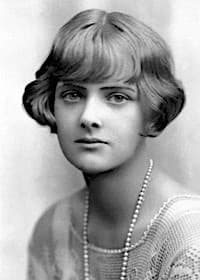
Daphne du Maurier was a celebrated English author renowned for her gothic suspense novels. Her most famous work, "Rebecca," is a classic of psychological suspense and mystery. Other notable works include "Jamaica Inn" and "The House on the Strand," solidifying her legacy as a master storyteller in the realm of atmospheric fiction.







