“The thing about the Internet is that it’s a meritocracy. The best idea wins. The best information rises to the top.”
— Early discussion about the nature of the internet and its perceived fairness.

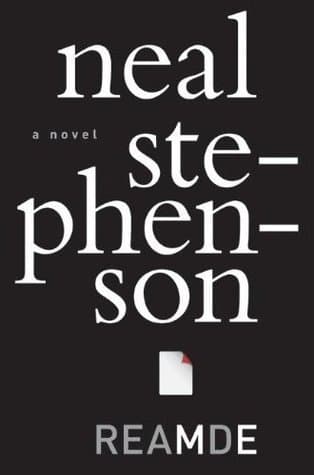
Neal Stephenson (2011)
Genre
Thriller / Mystery / Science Fiction
Reading Time
20-25 hours
Key Themes
See below
Sign in to track this book
A reclusive, marijuana-smuggling tech mogul's virtual empire ignites a real-world global chase when a digital MacGuffin accidentally triggers an international incident involving Russian mobsters, Islamic terrorists, and a quest for a mythical treasure.
Richard Forthrast, a reclusive billionaire who made his fortune first in marijuana smuggling and then with the popular MMORPG T'Rain, hosts a family reunion at his compound in British Columbia. Among the attendees is his niece, Zula Forthrast, a former intelligence analyst, and her boyfriend, Csongor Takács, a Hungarian hacker. Csongor, attempting to pay off a debt to a Russian mafioso named Ivan, uses a forged credit card to purchase a large sum of gold in T'Rain from a Chinese gold farming operation. This transaction, intended to be a simple digital exchange, inadvertently triggers a chain of events that links the virtual world of T'Rain with dangerous real-world criminal organizations and intelligence agencies, setting the stage for the global conflict that unfolds.
The gold farming operation, run by a man known as 'Fëanor' (real name Hu), operates under the protection of a Chinese Triad. One of Fëanor's employees, a young woman named Yuxia, inadvertently includes an encrypted file containing details of a money-laundering scheme within the gold transaction to Csongor. This file, intended for an internal audit, is discovered by Ivan's enforcers. Believing Csongor and Zula are attempting to defraud him or are working with rival intelligence, Ivan dispatches his ruthless operative, Abdallah, and a team to confront Csongor and Zula at Richard's compound. The confrontation quickly escalates into a violent shootout, leaving several dead and Zula and Csongor abducted.
Following the chaotic shootout at Richard's compound, Zula and Csongor are forcibly taken by Abdallah and his men. Richard, realizing the danger his niece is in, mobilizes his considerable resources, including his private security team and his vast network of contacts across various intelligence agencies and criminal underworlds. He deduces that the abduction is linked to the T'Rain gold transaction and the mysterious file. This event marks the true beginning of the global chase, as Richard dedicates himself to finding and rescuing Zula, setting his own rules of engagement in a world where digital and physical threats are intertwined.
As the chase unfolds, it becomes clear that the file Yuxia accidentally transmitted is not just a money-laundering ledger, but a sophisticated and dangerous computer virus known as 'Reamde.' This virus, developed by a shadowy group, encrypts all data on infected computers and demands ransom in virtual currency, specifically T'Rain gold. The various factions—the Russian mafia, Chinese intelligence, and even elements within the US government—are all desperate to either acquire or neutralize Reamde, making Zula and Csongor unwitting pawns in a much larger, global cyberwarfare struggle. Richard's mission to rescue Zula becomes complicated by this revelation, as the stakes rise dramatically.
Zula, drawing upon her past experience as an intelligence analyst and her innate resourcefulness, begins to plot her escape from Abdallah's group. She endures harsh conditions and close calls as she is transported across various remote locations, including a harrowing journey through the wilderness. Her understanding of surveillance, evasion, and psychological manipulation becomes crucial. She meticulously observes her captors, looking for weaknesses and opportunities, while also trying to communicate subtly with Csongor, who is also a captive. Her attempts at escape are fraught with peril, showing her resilience and determination to survive against overwhelming odds.
Richard's investigation into the Reamde virus and the gold transaction leads him to Fëanor's gold farming operation in China. Fëanor, a brilliant but ethically compromised programmer, finds himself caught between the demands of the Triads who protect his business and the escalating international crisis. He is forced to cooperate with various factions, including Chinese intelligence, as they all seek to understand and control Reamde. Richard dispatches a team, including his security chief and other operatives, to China, where they navigate the complex and dangerous world of Chinese organized crime and government agencies, attempting to trace the virus and find Zula.
The search for Reamde and its creators eventually leads all involved parties to a remote, heavily fortified island in the Philippines. This island is a haven for a collective of elite hackers and cybercriminals, including the enigmatic figure responsible for Reamde. The island becomes a focal point for a tense standoff and a multi-sided conflict, as the Russian mafia, Chinese intelligence, Richard's forces, and even elements of the US government converge, each with their own agenda regarding the virus and its potential. The environment is a mix of high-tech surveillance and brutal, old-school violence.
The various factions clash on the Filipino island in a prolonged and intense siege. This conflict is unique in its blend of traditional armed combat and sophisticated cyber warfare. Hackers on all sides launch digital attacks, attempting to cripple opponents' communications and systems, while ground forces engage in firefights. Richard, through his operatives, attempts to navigate this chaos, prioritizing Zula's rescue while also trying to contain the Reamde threat. The battle highlights the blurring lines between virtual and physical conflict, as real lives are lost due to digital actions and vice versa, creating a truly modern battleground.
Amidst the chaos of the island siege, Zula manages to confront the elusive mastermind behind the Reamde virus. This encounter is a turning point, as Zula must use her intelligence, negotiation skills, and even her understanding of the hacker's motivations to gain an advantage. She learns the full scope of the virus's capabilities and the creator's intentions, which are far more complex than simple greed. This confrontation forces Zula to make difficult moral choices, weighing the immediate danger to herself and Csongor against the broader implications of the virus's release and the potential for global catastrophe.
The climactic battle on the island eventually concludes, with the Reamde virus largely contained or neutralized, and Zula and Csongor rescued. However, the events have left a lasting impact on all involved. The various criminal and intelligence organizations have suffered significant losses, and the world has gained a stark realization of the dangers posed by sophisticated cyber threats. Richard Forthrast emerges as a reluctant hero, having leveraged his unique position to prevent a global catastrophe. The novel concludes with a sense of uneasy peace, as the characters grapple with the physical and psychological scars of their ordeal, acknowledging that the digital frontier will continue to present new and complex challenges.
The Protagonist
Initially detached from real-world conflict, Richard is forced to fully engage with it, becoming a decisive leader orchestrating a global rescue mission.
The Protagonist
From a relatively normal life, Zula is thrust into extreme danger, proving her resilience and intelligence as she navigates captivity and contributes to her own rescue.
The Supporting
Csongor learns the harsh consequences of his actions and the difference between digital and real-world threats, maturing under duress.
The Antagonist
Abdallah remains a consistent, relentless antagonist, driven by loyalty and a professional code, showcasing little personal development but serving as a powerful force.
The Antagonist
Ivan drives much of the initial conflict and remains a significant antagonist, adapting his strategies to the evolving cyber threat.
The Supporting
Fëanor navigates a dangerous web of allegiances, initially driven by self-preservation but eventually forced to make choices that impact the broader conflict.
The Supporting
Yuxia's role is primarily as a catalyst, her simple mistake having massive repercussions, but she gains a terrifying understanding of the real-world impact of digital actions.
The Supporting
Erlang navigates the complex international landscape, consistently working towards his nation's interests, adapting his tactics as the situation evolves.
The novel explores how the lines between online fantasy and tangible reality become dangerously indistinct. The entire plot is initiated by a transaction of virtual gold in the game T'Rain, which quickly escalates into real-world violence, abductions, and international conflict. The Reamde virus itself is a perfect manifestation of this theme, encrypting real data and demanding payment in virtual currency, thus collapsing the distinction. Characters like Richard Forthrast embody this blur, having made his fortune in both illegal real-world smuggling and digital empire-building. The game world is not merely a backdrop but an active, integral part of the narrative's driving force, demonstrating that digital actions have profound, often violent, real-world consequences.
““The game was just a game, until it wasn’t.””
Debt, both financial and moral, is a central driving force in 'Reamde.' Csongor's attempt to pay off a debt to Ivan sets the entire plot in motion. This initial financial obligation quickly spirals into a complex web of debts and obligations, including Richard's moral obligation to rescue his niece, the loyalty owed by Abdallah to Ivan, and Fëanor's precarious position between the Triads and his own survival. The novel examines how these obligations, whether freely chosen or forced, dictate character actions and lead to extreme measures. It highlights how even seemingly minor debts can have catastrophic ripple effects when intertwined with powerful, dangerous actors.
““A man’s word was his bond, even if that bond was to a Russian gangster.””
Characters' ability to adapt to rapidly changing and dangerous circumstances is a recurring theme. Zula, with her intelligence background, consistently demonstrates extraordinary resourcefulness in captivity, observing her captors and seeking opportunities for escape. Richard Forthrast leverages his vast and diverse network, built from years in both legitimate and illegitimate enterprises, to orchestrate a global rescue. Even characters like Fëanor, caught between powerful factions, must constantly adapt his strategies to survive. The novel celebrates human ingenuity and resilience in the face of overwhelming odds, whether the threat is physical combat or sophisticated cyber warfare.
““She had been trained for this, not in a classroom, but in the brutal crucible of real-world intelligence operations.””
'Reamde' portrays a world where criminal enterprises, intelligence agencies, and technological innovations are linked across continents. The plot spans from British Columbia to Eastern Europe, China, and the Philippines, demonstrating how a single digital transaction can connect disparate groups and trigger global events. The novel illustrates how advancements in communication, gaming, and cybernetics create new avenues for organized crime, money laundering, and international espionage. The various factions—Russian mafia, Chinese Triads, and government agencies—are all shown to be operating within the same interconnected digital and physical landscape, often in uneasy and shifting alliances.
““The internet had made the world smaller, and more dangerous, for everyone.””
The novel raises questions about the ethical implications of digital power, particularly in the context of the Reamde virus. The virus's ability to encrypt data and demand ransom in virtual currency showcases the destructive potential of technology when wielded without moral restraint. It forces characters to confront the responsibility that comes with creating and controlling such potent digital tools. The motivations of the virus's creators, and the responses of those trying to combat it, highlight the ongoing struggle to define ethical boundaries in an increasingly digital and interconnected world, where power can be wielded anonymously and globally with devastating effect.
““Who owned the data? Who owned the fear?””
The sophisticated ransomware virus that encrypts data and demands T'Rain gold.
The Reamde virus serves as the primary MacGuffin of the novel. It is the object of desire and conflict for nearly all factions involved: the Russian mafia wants to exploit it, Chinese intelligence wants to control or neutralize it, and Richard Forthrast's team wants to understand it to save Zula and prevent global catastrophe. While its technical details are intricate, its core function is to drive the plot forward, creating urgency and forcing characters into alliances and conflicts. Its nature as a digital threat that demands virtual currency payment perfectly encapsulates the novel's core themes.
Richard's illicit past provides him with the unique skills and contacts needed for the crisis.
Richard Forthrast's history as a marijuana smuggler, detailed early in the novel, acts as a Chekhov's Gun. This seemingly anecdotal background provides him with a deep understanding of criminal networks, black market operations, and the ability to operate outside conventional legal frameworks. Crucially, it also equipped him with a vast, unconventional network of contacts and the practical skills to navigate dangerous, off-the-grid situations. This 'gun' is fired when he leverages these very connections and skills to track Zula and combat the international criminal elements, proving indispensable in a way his legitimate tech empire alone could not.
The perceived safety and rules of the T'Rain game are constantly undermined by real-world dangers.
The novel uses the concept of the virtual world's narrative as a plot device. Players of T'Rain, and even its creator, initially perceive it as a separate, safe space governed by specific rules. However, this perception is repeatedly shattered as real-world violence intrudes directly from the virtual space. The 'rules' of the game (e.g., gold transactions) directly lead to real-world consequences (e.g., abduction, murder). This device highlights the dangerous naivete of assuming a clear boundary between digital and physical, creating suspense and demonstrating the pervasive reach of the conflict.
Characters are frequently placed in unfamiliar and dangerous environments, forcing adaptation.
The 'fish out of water' trope is used extensively. Csongor, a hacker, is thrust into a world of physical violence and forced survival. Zula, despite her intelligence training, is taken far from her comfort zone into remote, hostile terrains and cultures. Richard, the billionaire tech mogul, must re-engage with the gritty, dangerous world of his smuggling past. Even Fëanor, a digital mastermind, is caught between the brutal realities of Triad enforcement and international espionage. This device generates tension, showcases character resilience, and allows for the exploration of diverse settings and cultures as characters struggle to adapt.
“The thing about the Internet is that it’s a meritocracy. The best idea wins. The best information rises to the top.”
— Early discussion about the nature of the internet and its perceived fairness.
“It was one of those moments when the universe seemed to crack open and reveal a deeper, more intricate reality beneath the surface of the mundane.”
— Character experiencing a sudden revelation about a complex situation.
“The problem with being a genius is that you’re surrounded by people who aren’t.”
— Reflecting on the challenges faced by highly intelligent individuals.
“In the absence of a shared reality, people will invent their own.”
— Considering how different groups form their own truths, especially online.
“The world was full of people who knew how to make things work, and then there were people who knew how to make things break.”
— Contrasting builders with disruptors, a recurring theme.
“He had a mind like a steel trap, which was great for holding onto things, but not so great for letting go.”
— Describing a character's rigid and unyielding intellectual style.
“Money was just a tool, like a hammer or a wrench. It could build things, or it could smash them.”
— A character's pragmatic view on the power and neutrality of money.
“The future was not something that happened to you; it was something you made.”
— An optimistic and proactive perspective on agency and destiny.
“Every system, no matter how robust, had a point of failure.”
— Analyzing vulnerabilities in both digital and real-world systems.
“He felt like a character in a story that had suddenly veered off its intended plot.”
— A character's sense of disorientation as events unfold unexpectedly.
“The greatest trick the devil ever pulled was convincing the world he didn't exist. The greatest trick the internet ever pulled was convincing the world it was anonymous.”
— A cynical observation about online privacy and perceived anonymity.
“Sometimes the most dangerous thing you could do was nothing at all.”
— Highlighting the perils of inaction in a high-stakes situation.
“Truth was not a single, immutable thing; it was a constantly shifting landscape.”
— Discussing the subjective and evolving nature of truth, particularly in complex scenarios.
“The line between game and reality was not nearly as clear as most people liked to believe.”
— A central theme exploring the blurring boundaries between virtual worlds and real life.
Ready to see how well you understood this book? Take our interactive quiz with 10 questions.

Neal Town Stephenson is an American writer known for his works of speculative fiction. His novels have been categorized as science fiction, historical fiction, cyberpunk, postcyberpunk, and baroque.







