“All she had to do was win Little Miss Central Florida Tire and then her daddy would come home. She was sure of it.”
— Raymie's primary motivation for entering the pageant.

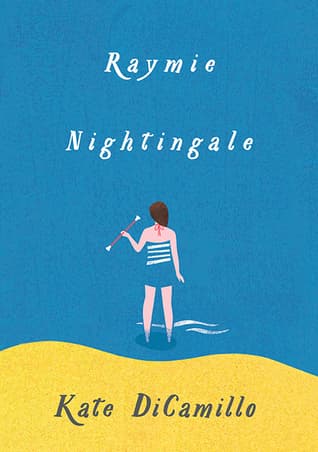
Kate DiCamillo (2016)
Genre
Children's / Historical Fiction / Young Adult
Reading Time
260 min
Key Themes
See below
Sign in to track this book
In 1970s Florida, a determined Raymie enters a peculiar beauty pageant, hoping to lure her runaway father home, only to find unexpected friendship and the true meaning of rescue alongside a fainting Louisiana and a rebellious Beverly.
Ten-year-old Raymie Clarke is dealing with her father's recent departure with a dental hygienist. Convinced that winning the Little Miss Central Florida Tire competition will make him see her picture in the newspaper and return, Raymie plans her strategy. She arrives at the preliminary auditions, held in a dusty community hall, with purpose. Here, she meets the other contestants, including the theatrical and fainting Louisiana Elefante, whose grandmother is a former performer, and the rebellious Beverly Tapinski, who openly dislikes the contest and plans to sabotage it. These initial interactions show the contrasting personalities of the three girls, setting the stage for their journey.
During the first practice session for the Little Miss Central Florida Tire competition, the girls learn baton twirling and perform good deeds. Raymie, earnest, struggles with the baton but focuses on her good deeds. Louisiana, despite her fainting spells and dramatic flair, shows a natural grace with the baton, inherited from her show-business background. Beverly, on the other hand, performs poorly, mocking the contest. As they spend more time together, their vulnerabilities emerge: Raymie's longing for her father, Louisiana's fragile health, and Beverly's anger and desire to escape her difficult home life. These shared moments begin to lessen their initial animosity.
One afternoon, after a draining practice, Louisiana Elefante tells Raymie and Beverly her deepest fear. She reveals that her grandmother, her only guardian, is aging and frail, and that social services workers have been visiting their home. Louisiana is terrified of being separated from her grandmother and placed in an orphanage, a fear that shows in her frequent fainting spells. This revelation changes the dynamic between the three girls. Raymie, initially focused on her own problems, feels empathy. Beverly, despite her tough exterior, also shows concern, recognizing a similar experience of instability. The shared secret deepens their bond.
Driven by the competition's requirement for good deeds, and perhaps by a desire to help Louisiana, the three girls decide to visit the local nursing home. Their attempts to cheer up the residents are awkward, highlighting their immaturity. However, this outing leads them to the local library, a place Raymie finds comfort in. While there, Raymie sees a notice about a lost cat, which sparks an idea for a more meaningful good deed. The library becomes a temporary haven and a catalyst for their next adventure, offering a brief break from the competition and their anxieties.
Raymie, wanting to perform a truly impactful good deed and perhaps unconsciously seeking to prove her worth, convinces Louisiana and Beverly to help her search for a lost cat advertised at the library. The search takes them far from their neighborhood, through unfamiliar and wild terrain, including an old, abandoned house and a swamp. This journey tests their physical endurance and their friendship. They face their fears together, offering support. During this adventure, Beverly, despite initial reluctance, proves resourceful, while Louisiana's dramatic pronouncements often lighten the mood. The shared experience strengthens their bond, shifting their focus from individual competition to collective survival and mutual care.
Deep in the swamp during their search for the lost cat, the girls encounter an alligator. This danger forces them to act quickly. Beverly, showing courage and quick thinking, distracts the alligator, drawing its attention away from Louisiana, who is vulnerable due to her fainting spells. Raymie also helps in the escape, her fear giving way to a protectiveness for her new friends. The close call leaves them shaken but bonded. It is a moment where their individual strengths come together, showing that their friendship is stronger than any competition or personal agenda.
After their escape from the alligator, the girls find refuge in a dilapidated shack. Exhausted and raw, Louisiana Elefante makes a confession. She reveals that her grandmother is not her biological grandmother and that she was 'taken' by her years ago, a secret that explains her grandmother's protectiveness and Louisiana's anxieties about social services. Louisiana also speaks of 'the Great Ga-Gap,' a feeling of loneliness. This revelation impacts Raymie and Beverly, who understand the depth of Louisiana's isolation and the unique circumstances of her life, further cementing their empathetic connection and sense of responsibility towards her.
As the three girls make their way back towards town, exhausted but united, they see a terrifying sight: Louisiana's house is on fire. Without hesitation, they rush towards the scene, their individual fears eclipsed by concern for Louisiana's grandmother. They help direct the firefighters and assist in the chaotic efforts, showing their maturity and sense of community responsibility. Miraculously, Louisiana's grandmother is rescued, shaken. The fire, while devastating, brings the community together and highlights the girls' bravery, solidifying their transformation from competitive rivals to true friends who care deeply for one another.
The day of the Little Miss Central Florida Tire competition arrives, but for Raymie, Louisiana, and Beverly, its significance has diminished. Their shared experiences and the recent fire have altered their priorities. Raymie, no longer focused on winning to bring her father back, performs her baton routine with a sense of self-possession rather than desperate ambition. Louisiana, despite her usual anxiety, performs with quiet dignity, her fears subdued by the trauma and the support of her friends. Beverly, true to her nature, continues to subtly disrupt the proceedings, but her actions now seem less about sabotage and more about an independent spirit. The competition becomes a backdrop for their enduring friendship, rather than the central event.
At the conclusion of the Little Miss Central Florida Tire competition, none of the three girls win. However, the outcome is largely irrelevant to them. Raymie feels a quiet peace, realizing that her father's return is not dependent on a beauty pageant, but on his own choices. Louisiana, despite not winning, has found a sense of belonging and security with her new friends. Beverly, while still outwardly cynical, has been softened by their bond. As they leave the stage, they walk away together, their hands linked, a sign of the powerful, unexpected friendship that has blossomed amidst their individual struggles. The true 'prize' is the enduring connection they've forged, promising a future of mutual support and understanding.
The Protagonist
Raymie transforms from a girl desperate for her father's return through external achievement to one who finds strength and belonging in friendship and self-acceptance.
The Supporting
Louisiana moves from a state of constant anxiety and secrecy to finding a sense of security and belonging through the steadfast friendship of Raymie and Beverly.
The Supporting
Beverly's arc sees her transform from an isolated, angry individual to a loyal and protective friend, finding a place where she belongs and is valued.
The Supporting
She remains relatively static, serving as a catalyst for Louisiana's fears and the girls' journey.
The Mentioned
N/A
The Mentioned
N/A
This is the central theme, exploring how three disparate girls find solace and strength in an unlikely bond. Initially rivals, Raymie, Louisiana, and Beverly discover that shared vulnerabilities, challenges, and acts of mutual support create a bond more valuable than any prize. Their journey through the swamp, facing the alligator, and assisting in the fire rescue, all show how their collective strength surpasses individual efforts. The competition becomes secondary to their loyalty, teaching them that belonging comes from acceptance and shared experience, not from external validation.
“And then Raymie felt it, a warm, bright thing that started in her chest and spread out to her arms and legs. She was not alone. She had Louisiana and Beverly. And they had her.”
Each of the main characters deals with forms of loss and abandonment. Raymie's father has left her and her mother, creating a void and a desperate need for his return. Louisiana lives in fear of being taken away from her grandmother, a fear rooted in her unknown past. Beverly hints at a difficult home life, implying a lack of parental support. These shared experiences of loss, whether actual or feared, draw the girls together and allow them to empathize with each other's pain, creating a foundation for their friendship.
“The Great Ga-Gap, Louisiana had called it. That space inside you that feels like nothing.”
The novel critiques the superficiality of external validation, especially through a beauty pageant, and instead champions an internal sense of worth. Raymie initially believes winning the competition is the key to her father's return and happiness. However, as her friendship with Louisiana and Beverly deepens, she realizes that true success is in courage, kindness, and genuine connection. By the end, the pageant's outcome is irrelevant; the girls' growth, bravery, and the strength of their bond are their real achievements. They learn that self-worth is not granted by a crown but earned through character and compassion.
“Maybe she didn't need to win a crown to get her father to come home. Maybe she just needed to be herself.”
The book explores what makes a family beyond traditional biological ties. Raymie's biological family is fractured, while Louisiana's family unit with her grandmother is unconventional and built on a secret. Beverly's home life is implied to be dysfunctional. Through their adventures, the three girls form a chosen family, providing each other with emotional support, safety, and belonging that their individual families might lack. Their bond shows that family is defined not by blood or legal status, but by love, loyalty, and support in times of crisis, creating a message about the strength of found families.
“They were three. And that was enough. More than enough.”
Despite their young age, the girls show courage and resilience in the face of challenges. Raymie faces her father's abandonment and the pressure of the pageant. Louisiana deals with her fear of separation and a traumatic past. Beverly contends with a difficult home life and her anger. Their journey into the swamp, facing an alligator, and helping during the house fire, shows their physical and emotional bravery. They learn to overcome their fears, support each other, and adapt to difficult circumstances, highlighting the strength and adaptability of children.
“It was true, Raymie thought. You could be afraid and still be brave. Maybe that was the whole point.”
A seemingly superficial beauty pageant that serves as the initial catalyst for the girls' meeting.
This competition functions as the inciting incident and initial framework for the story. It brings Raymie, Louisiana, and Beverly together, despite their vastly different personalities and motivations. While it initially represents Raymie's desperate hope and Beverly's target for rebellion, the competition quickly recedes in importance as the girls' friendship deepens. It becomes a symbol of the superficial external world that the girls ultimately transcend, highlighting that true value and connection lie beyond such accolades. Its rules, like the 'good deeds,' inadvertently push the girls towards their transformative adventures.
A minor plot point that becomes a catalyst for the girls' perilous journey and bonding.
The lost cat advertisement, discovered by Raymie in the library, serves as a crucial plot device. What begins as a simple 'good deed' for the competition quickly escalates into a challenging and dangerous expedition. The search for the cat takes the girls away from the familiar confines of town and into the wild, untamed swamp, forcing them to confront fears, rely on each other, and forge their deep friendship. The cat itself is less important than the journey it instigates, acting as a MacGuffin that drives the narrative and character development.
A recurring physical manifestation of Louisiana's anxiety and a signal of her vulnerability.
Louisiana's frequent fainting spells are a key plot device that highlights her fragility and the deep-seated anxieties she harbors. They serve as a constant reminder of her precarious physical and emotional state, drawing the concern and empathy of Raymie and Beverly. The spells often occur at moments of stress or revelation, underscoring the weight of Louisiana's secrets and fears. They also provide opportunities for the other girls to act protectively, further cementing their bond and developing their sense of responsibility towards Louisiana.
A dangerous natural setting that tests the girls' courage and solidifies their bond.
The swamp functions as a symbolic and literal crucible for the girls' friendship. It is an unfamiliar, wild, and dangerous environment, representing the unpredictable challenges and fears they face in their lives. Their journey through the swamp, culminating in the alligator encounter, forces them to shed their individual facades and work together. The shared experience of navigating its perils and confronting its dangers accelerates their bonding, transforming them from rivals into a cohesive, mutually supportive unit. It is a place of both fear and profound connection.
“All she had to do was win Little Miss Central Florida Tire and then her daddy would come home. She was sure of it.”
— Raymie's primary motivation for entering the pageant.
“Every person had a story. And every story had a beginning and a middle and an end.”
— Raymie reflecting on the lives around her, especially during her library visits.
“She needed to win. She needed to be good. She needed to be somebody else.”
— Raymie's internal struggle with her identity and her desire to change her circumstances.
“Sometimes you had to be brave even when you didn't feel brave at all.”
— Raymie contemplating the challenges she faces and the courage required.
“The world was full of terrible things, but it was also full of wonders.”
— Raymie's evolving understanding of life's complexities.
“It was just a breath, but it was a whole lot of breathing.”
— Raymie describing a significant moment or feeling, emphasizing its depth.
“Friendship was a complicated thing. It was full of joy and full of sorrow and full of almost everything in between.”
— Raymie's observations on her relationships with Beverly and Louisiana.
“You couldn't save everyone. But you could save someone.”
— A realization about the limits of one's ability to help, yet the importance of trying.
“The past was always there. It was just waiting for you to find it.”
— Raymie's reflections on the history of people and places.
“Maybe what you wanted wasn't what you needed.”
— Raymie's growing wisdom as she re-evaluates her initial goals.
“She was a person, just like everyone else. And she had a story, just like everyone else.”
— Raymie finding common ground and understanding her place in the world.
“Sometimes the things you were looking for were right in front of you.”
— A moment of epiphany for Raymie, realizing the value of her immediate surroundings and relationships.
“It was a good thing to be alive. It was a very good thing.”
— Raymie's ultimate appreciation for life, despite its challenges.
“The world was full of people who were trying to make sense of things.”
— Raymie's observation about the universal human condition.
Ready to see how well you understood this book? Take our interactive quiz with 10 questions.

Biography coming soon.
Dan Gemeinhart
4.5

Kate O'Hearn
4.4

Jeanne Birdsall
4.4

Jen Wang
4.4
Wendelin Van Draanen
4.3

John Marsden
4.3

Chris Van Allsburg
4.3
Jennifer A. Nielsen
4.2