“A boy is better off with a dog than with a father.”
— Sterling reflecting on his unconventional upbringing with his father.

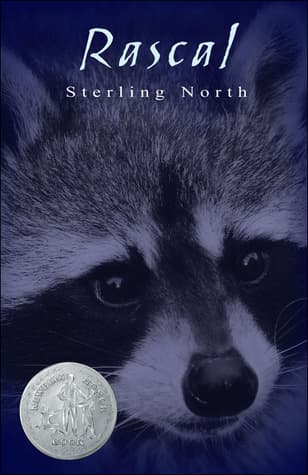
Sterling North (1963)
Genre
Children's / Historical Fiction / Young Adult
Reading Time
210 min
Key Themes
See below
Sign in to track this book
In 1918 Wisconsin, a boy named Sterling finds a companion in a baby raccoon named Rascal. Their bond grows through a changing world, leading to an inevitable, bittersweet farewell as Sterling grows up.
The story begins in summer 1918 in Edgerton, Wisconsin. Eleven-year-old Sterling North lives with his eccentric, nature-loving father, Willard. Sterling, a naturalist, finds a litter of baby raccoons whose mother has died. He takes one home, a tiny, blind creature he names Rascal. His older sister, Jessica, disapproves at first, but Rascal quickly charms Sterling and even gains acceptance from Willard. Rascal is bottle-fed and becomes Sterling's constant companion, sleeping in his bed and joining him on daily adventures around their farm and the nearby woods and lakes. Their bond begins an extraordinary year.
As Rascal grows, his personality shows. He is intelligent, curious, and mischievous. He learns to open doors and cupboards, often raiding the kitchen for treats, especially sugar. Sterling builds him a special high chair at the kitchen table, where Rascal washes his food before eating, amusing visitors. Their adventures include canoe trips on Lake Koshkonong, fishing, and exploring the countryside. Rascal often rides on Sterling's shoulder or sleeps in his pocket. Despite his wild instincts, Rascal is affectionate towards Sterling, forming a unique companionship that blurs the lines between pet and wild animal.
As autumn turns to winter, Sterling knows Rascal needs a proper den for hibernation. He builds a small, insulated house for Rascal in the barn, with a straw bed. However, Rascal prefers to sleep in Sterling's bed, curled up next to him. The harsh Wisconsin winter brings new challenges. Food becomes scarce, and Sterling must make sure Rascal is well-fed. One incident involves Rascal's interest in a neighbor's prize-winning corn, leading to a comical chase. Sterling's father, Willard, despite his own struggles with rheumatism and farm upkeep, supports Sterling's bond with Rascal, often sharing his love for nature with his son.
Willard North, an inventor, buys a bright yellow Model T Ford, a symbol of progress and adventure. This car brings new experiences for Sterling and Rascal. They take a memorable trip to Milwaukee, a bustling city. Rascal, at first overwhelmed by the city's sights and sounds, eventually adapts, riding on Sterling's shoulder as they navigate the streets. The trip is a bonding experience, showing Rascal's adaptability and Sterling's devotion. It also shows Willard's parenting style, giving Sterling freedom and exposure to the world.
Sterling's friend, Ollie, visits, and his reaction to Rascal gives an outside view of the raccoon's wildness. Ollie is fascinated and amused by Rascal's antics, such as his food-washing ritual and clever escapes. During Ollie's stay, Rascal's mischief grows, including an incident where he tries to raid a neighbor's chicken coop, leading to a comical confrontation. These episodes, though sometimes inconvenient, reinforce Rascal's wildness and the constant negotiation needed to keep him as a pet. They also show Sterling's growing understanding of his pet's natural instincts.
With spring, Rascal's wild instincts become stronger. He grows restless, spending longer periods away from the house exploring the woods and fields. He shows interest in other raccoons, a clear sign of his maturing. Sterling sees these changes with understanding and sadness. He realizes their bond is nearing a natural turning point. He knows Rascal, despite his domestication, is a wild creature and must return to his natural habitat to find a mate and live as a raccoon should.
A serious threat appears when a distemper epidemic sweeps through the local raccoon population, causing widespread illness. Sterling worries for Rascal's safety. He tries to keep Rascal isolated and safe, but the danger is always present. This crisis forces Sterling to consider if keeping Rascal confined for protection is the best long-term solution. The fear of losing Rascal to disease weighs on Sterling, emphasizing the fragility of wild life and his responsibility for his pet.
Faced with Rascal's increasing wildness, the threat of distemper, and the understanding that Rascal needs to live a natural life, Sterling makes the difficult decision to release him. He talks with his father, who, with his wisdom of nature, supports Sterling's choice. It is a moment of maturity for Sterling, recognizing that love sometimes means letting go. He builds a special canoe for Rascal, a symbolic vessel for his journey back to the wild. The decision is hard but driven by respect for Rascal's nature and a selfless desire for his well-being.
On a quiet morning, Sterling takes Rascal to a remote part of the lake, near a wooded island, a place where he believes Rascal will do well. With a heavy heart, he gently places Rascal in the canoe he built, with food. He watches as Rascal hesitates, then paddles away towards the island, eventually disappearing into the trees. It is a bittersweet farewell, a moment of sadness mixed with the understanding that he has done what is best for his friend. Sterling returns home, changed by his year with Rascal, carrying memories of their adventures and lessons learned about love, nature, and letting go.
After Rascal leaves, Sterling thinks about the impact the raccoon had on his life. He cherishes memories of their adventures, laughter, and quiet companionship. The experience taught him about nature's beauty and harshness, the complexities of human-animal bonds, and the nature of growing up. He realizes that while Rascal is no longer by his side, the lessons and love will remain with him. The story ends with Sterling, older, looking back on this year with wonder and gratitude for his friendship with a wild raccoon.
The Protagonist
Sterling transforms from a young boy seeking companionship to a mature individual capable of making selfless, difficult decisions out of love and respect for nature.
The Protagonist (animal)
Rascal grows from a dependent kit into a mature wild animal, ultimately returning to his natural environment.
The Supporting
He remains a consistent source of wisdom and support for Sterling, demonstrating resilience and a deep connection to nature.
The Supporting
Jessica moves from initial disapproval to a grudging acceptance and eventual fondness for Rascal, showcasing her underlying kindness.
The Supporting
He serves as a catalyst for some of Rascal's antics and a witness to Sterling's unique life, without a significant personal arc.
The Mentioned
He has no significant arc, serving primarily as a plot device to illustrate Rascal's mischief.
The Supporting
Boomer maintains his role as a loyal family dog, adapting to Rascal's presence.
The Supporting
Wowser remains a consistent background presence, adapting to the household's dynamic.
The book shows the deep bond between Sterling and Rascal, how humans and wild animals can connect. Sterling understands and respects Rascal's natural instincts, even as he domesticates him. This shows a harmonious relationship with nature. This theme appears in their adventures, Rascal's place at the North family table, and Sterling's choice to release him, recognizing Rascal's need for freedom. The North household, with its many animals and Willard's love for the outdoors, highlights this theme.
“He was a wild creature, but he was also my friend, and I knew that to truly love him meant to let him go.”
Sterling's year with Rascal is a period of growth. He learns about love, loss, and responsibility. From feeding a tiny kit to making the hard choice to release a pet, Sterling's journey includes growing self-awareness and a deeper understanding of the world. Caring for a wild animal forces him to face ethical dilemmas, shaping him into a thoughtful young man. His father's guidance helps this development, giving Sterling freedom to learn from his experiences.
“A boy who has a pet raccoon can never be quite the same again.”
This theme explores the tension between Rascal's wild nature and his domesticated life with Sterling. Despite his tamed behaviors, Rascal's instincts for foraging, climbing, and eventually mating, pull at him. The book shows how a wild animal can adapt to human companionship, but cannot deny its true nature. Sterling's struggle to balance these two aspects of Rascal's identity ends with his selfless act of releasing him, acknowledging that some creatures belong free. This dynamic is a constant part of Rascal's mischief and growing independence.
“He was a pet, yes, but he was also a wild creature, and the wild was calling him home.”
The story paints a picture of the Wisconsin landscape, showing its beauty and bounty, and its unforgiving sides. Sterling and Rascal's adventures show the joys of exploring forests, lakes, and fields, observing wildlife, and experiencing the seasons. However, the story also addresses the realities of nature, such as the death of Rascal's mother, the threat of distemper, and the need for hunting. This balanced portrayal shows the complex cycle of life in the wild, which Sterling comes to understand and accept.
“Nature was both cruel and beautiful, and Rascal was a living embodiment of both.”
The North household, with its absent mother, inventor father, and many animals, is different from conventional families. Willard North's tolerant parenting allows Sterling freedom and encourages his connection to nature. This setting provides an environment for a pet like Rascal to thrive. The family embraces the unusual and finds joy in their simple, nature-centered life. This offers a new perspective on what makes a loving home.
“Our house was always full of strange and wonderful creatures, and Rascal fit right in.”
The story is told from the adult Sterling North's perspective, looking back on his childhood.
The entire narrative is framed as a memoir, with the adult Sterling North recounting his experiences from the vantage point of many years later. This allows for a reflective and often philosophical tone, as the narrator can imbue childhood events with deeper meaning and understanding gained through time. It also creates a sense of nostalgia and poignancy, as the reader knows from the outset that this extraordinary companionship will eventually end. The adult voice provides context, wisdom, and emotional depth to the boy's adventures and decisions.
The canoe represents freedom, independence, and the transition back to the wild.
Sterling building a special canoe for Rascal's release is a powerful symbolic act. The canoe, a vessel for journey and exploration, signifies Rascal's impending independence and his return to his natural element – water and the wild. It represents Sterling's selfless act of love, providing Rascal with the means to embark on his own life's journey, free from human constraints. It's a tangible manifestation of Sterling's understanding that true love sometimes means letting go, and it marks the final, physical separation between boy and raccoon.
A symbol of Rascal's unique blend of domestication and wildness.
The high chair Sterling builds for Rascal at the kitchen table is a potent symbol. It highlights Rascal's unusual integration into the human family, treating him almost as a child. Yet, even in this domesticated setting, Rascal meticulously washes his food, a primal instinct that underscores his inherent wildness. The high chair thus embodies the constant tension and fascinating blend of wild behavior adapted to a human environment, a microcosm of the entire book's central theme regarding the balance between nature and nurture.
The progression of seasons mirrors Rascal's growth and the evolution of his relationship with Sterling.
The narrative unfolds over the course of a year, moving through summer, autumn, winter, and spring. This seasonal cycle acts as a natural progression, mirroring Rascal's growth from a tiny kit to a mature raccoon ready for the wild. Each season brings new challenges and observations, subtly hinting at the inevitable separation. Winter, for instance, highlights Rascal's need for a den, while spring awakens his mating instincts. The changing landscape reflects the changing nature of their bond and the cyclical nature of life itself.
“A boy is better off with a dog than with a father.”
— Sterling reflecting on his unconventional upbringing with his father.
“I was a boy who lived in a world of animals and books.”
— Sterling describing his solitary but imaginative childhood.
“Rascal was the only living thing that belonged to me.”
— Sterling expressing his deep bond with his pet raccoon.
“The world is full of obvious things which nobody by any chance ever observes.”
— Sterling musing on the wonders of nature often overlooked.
“I learned more from that raccoon than from any teacher I ever had.”
— Sterling reflecting on the lessons Rascal taught him about life.
“Sometimes the best thing a boy can do is to be still and listen.”
— Advice Sterling recalls from his father about appreciating quiet moments.
“We were two wild creatures, free in a world that didn't understand us.”
— Sterling describing his adventures with Rascal in the Wisconsin woods.
“A raccoon's curiosity is both its greatest gift and its greatest danger.”
— Sterling observing Rascal's mischievous and inquisitive nature.
“Home isn't a place, it's a feeling you carry with you.”
— Sterling realizing this after moving and missing his old life with Rascal.
“The sweetest berries are always just out of reach.”
— Sterling using a metaphor from berry-picking with Rascal to describe life's challenges.
“In the eyes of a child, every day is an adventure waiting to happen.”
— Sterling reminiscing about his youthful perspective.
“You can't tame wild things without losing a little of their magic.”
— Sterling reflecting on the bittersweet reality of domesticating Rascal.
“The truest friends are the ones who accept you, whiskers and all.”
— Sterling thinking about his unconditional bond with Rascal.
Ready to see how well you understood this book? Take our interactive quiz with 10 questions.
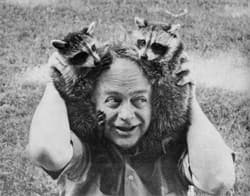
Biography coming soon.
Dan Gemeinhart
4.5

Kate O'Hearn
4.4

Jeanne Birdsall
4.4

Jen Wang
4.4
Wendelin Van Draanen
4.3

John Marsden
4.3

Chris Van Allsburg
4.3
Jennifer A. Nielsen
4.2