“The wind was a living thing, a giant's breath across the plains, carrying the scent of rain and the promise of change.”
— Describing the sensory experience of the prehistoric world.

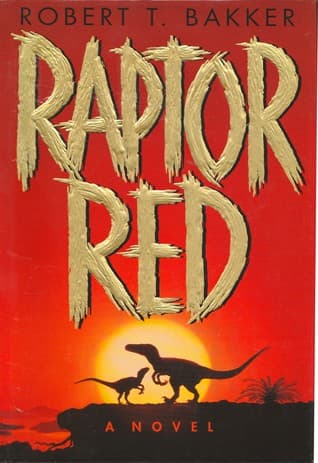
Robert T. Bakker (1995)
Genre
Fantasy / Historical Fiction / Science Fiction
Reading Time
250 min
Key Themes
See below
Sign in to track this book
In prehistoric Utah 120 million years ago, a female raptor named Raptor Red faces loss, struggles for survival, and undertakes a dangerous migration, all seen through her intelligent, predatory eyes.
The story begins with Raptor Red, a female Utahraptor, and her mate hunting Iguanodon in prehistoric Utah's conifer forests. A large Acrocanthosaurus, a much bigger theropod, suddenly appears. The Acrocanthosaurus ambushes and kills Red's mate, leaving her shocked. Red's sister, also in their pack, sees this happen. This event changes Red, forcing her to face survival and the grief of losing her partner, a bond important for a social predator. The sisters must now rely only on each other for protection and hunting in a dangerous world.
After her mate's death, Raptor Red and her younger sister must learn to hunt and survive as a pair. They create new strategies, focusing on smaller prey and using their coordinated movements and communication. They face various problems, including territorial fights with other predators and scavenging alongside larger carnivores. Red, wanting to protect her sister and ensure their survival, takes on a more leading role. This time is marked by constant alertness and a stronger sisterly bond, as they navigate their dangerous environment, always seeking food and safety.
While hunting, Raptor Red and her sister find an old, solitary male Utahraptor, scarred from many fights. The sisters watch him carefully, seeing him as a possible threat or ally. The male, despite his age, shows skill and experience, especially in hunting. Red, wanting to form a pack, carefully approaches him. No new pack forms immediately, but his presence changes their understanding of their species' social rules. He shows them a different way to survive, which Red might consider for herself and her sister. His quiet wisdom subtly influences Red's planning.
A new, terrifying predator, a large Giganotosaurus, enters the Utahraptors' territory. This new arrival is bigger, more aggressive, and more dangerous than any threat Raptor Red and her sister have met, even more so than the Acrocanthosaurus. The Giganotosaurus quickly takes control, changing the predator-prey balance and making hunting much riskier for the raptors. Its presence makes Red constantly rethink their survival plans, as their usual hunting grounds become too dangerous. The sisters see the power of this new beast, understanding that staying in their territory means almost certain death. This event starts their desperate migration.
Because of the Giganotosaurus, Raptor Red decides to leave their territory and begin a dangerous migration west. Her sister follows, trusting Red's leadership. Their journey is full of danger, as they cross unknown lands, including vast plains and old forests. They meet new dinosaur species, some peaceful, others aggressive, and must constantly adapt their hunting and defense. The migration tests their endurance, pushing the sisters to their limits. Red's intelligence and instincts are most important in navigating the unknown and keeping them both alive.
During their hard migration, Raptor Red and her sister face many problems. Food becomes scarce in some areas, leading to hunger and desperate hunting. They encounter aggressive packs of other dromaeosaurs, leading to tense standoffs and fights. Environmental dangers also plague their journey, including dangerous river crossings and navigating through volcanic ash. Red's leadership is tested as she makes important decisions about when to fight, when to run, and where to find food and shelter. Her sister, though younger, is a loyal and capable companion, strengthening their bond through shared hardship. Each challenge overcome makes them more determined to reach their goal.
While migrating, Raptor Red and her sister enter the territory of a smart and opportunistic pack of Troodon. These smaller, night-hunting dromaeosaurs are known for their cleverness and pack hunting, posing a different kind of threat than larger predators. The Troodon try to ambush and outsmart the Utahraptors, using their numbers and stealth. Red, seeing their intelligence and coordinated attacks, must use her own strategic thinking to defend herself and her sister. This encounter shows the diverse predatory challenges of their world and forces Red to adapt her defense against a smaller, but equally dangerous, foe. They escape, but it is a close call.
After months of difficult travel, Raptor Red and her sister finally reach their destination: the vast Pacific Ocean. The sight of the endless water and the different coastal environment is a new experience for them. The landscape is very different from the forests and plains they left, bringing new challenges and chances. They must learn to hunt marine prey and adapt to the coastal ecosystem. This new environment offers an escape from the Giganotosaurus, but also brings new, unknown dangers. The ocean is both a safe place and a new frontier, marking the end of their journey and the start of a new part of their lives.
Settling by the Pacific coast, Raptor Red and her sister begin to adapt to their new environment. They learn to hunt along the shore, preying on marine reptiles, fish, and coastal birds, a big change from their previous land hunting. They also meet new dinosaur species unique to the coast. Red's intelligence helps her develop new hunting strategies for the ocean's rich resources. Coastal life is different, with fewer large land predators, offering a sense of peace and plenty. This period focuses on their cleverness and resilience in building a new life away from their old home's dangers.
As Raptor Red and her sister thrive in their new coastal home, the old, solitary male Utahraptor they met earlier reappears. He has followed their path, drawn by instinct or their faint scent. His arrival changes things, as he begins to court Red, wanting to form a new pack and mate. Red, having recovered from her mate's loss and now secure in her territory, is careful at first but eventually considers him. This suggests a new beginning for Red, fulfilling her biological need to continue her species and perhaps rebuild a larger social group.
After a time of courtship and careful interaction, Raptor Red accepts the old male Utahraptor as her new mate. With her sister, they begin to form a new pack along the Pacific coast. This marks an emotional and social recovery for Red, as she again experiences the group bonds of a larger unit. The old male brings his experience and strength to the pack, adding to Red's intelligence and leadership. The focus shifts to this new family's dynamics, their hunting together, and defending their territory, promising a future of continuity and survival for their species in this new, rich environment.
The Protagonist
Red transforms from a grieving mate into a resilient leader, ultimately finding a new partner and re-establishing her pack.
The Supporting
She grows from a dependent sibling into a capable hunter and supportive pack member alongside Red.
The Mentioned
His death catalyzes Red's journey and growth.
The Supporting
He transitions from a solitary existence to a new role as mate and pack leader with Red.
The Antagonist
Functions as an initial catalyst for Red's journey through its destructive act.
The Antagonist
Serves as the primary driver for Red's migration, pushing her to seek a new home.
The Supporting
Provides a temporary, intelligent obstacle for Red during her migration.
The Mentioned
Represents the ongoing cycle of life and death as a primary food source.
The main theme is the constant struggle for survival in a harsh, unforgiving prehistoric world. Raptor Red always faces threats from larger predators, hunger, environmental dangers, and rivals. Her intelligence and ability to adapt help her overcome these challenges, whether it's creating new hunting strategies after losing her mate, migrating to escape a stronger predator, or learning to hunt in a new coastal environment. The story shows the constant need for cleverness and resilience to survive.
“The world was a place of endless hunger, and only the cleverest, the swiftest, the most savage, could survive.”
The story starts with Raptor Red's mate's death, an event that deeply affects her. Her grief is shown as a real emotion, guiding her actions and her initial need to protect her sister and secure their future. This theme explores how even intelligent dinosaurs feel emotional pain and how they deal with such losses. Red's journey is partly about healing and moving forward while remembering her lost companion, eventually leading to the chance for new bonds.
“The emptiness where his presence had been was a cold ache in her chest.”
The importance of social structures and family bonds is central to the Utahraptors' survival. Raptor Red's relationship with her sister is a key part of the story, showing their need for each other for hunting, defense, and emotional support. The loss of her mate highlights how vulnerable a lone raptor is, reinforcing the need for pack formation. The eventual rebuilding of a pack with the old male shows the final success of this theme, proving that cooperation and kinship are vital for both individuals and their species against big challenges.
“Alone, a raptor was vulnerable. Together, they were a force.”
The novel looks at the complex mix of natural predatory instincts and learned intelligence in dinosaurs. Raptor Red is shown as very intelligent, able to plan, solve problems, and change her behavior based on experience. Her intelligence helps her outsmart prey and predators, navigate unknown areas, and make careful decisions. However, her actions are also guided by strong instincts, like the drive to hunt, protect her family, and reproduce. This theme explores the complexity of dinosaur thought, blurring the lines between raw instinct and conscious thinking.
“Her mind, a complex tapestry of instinct and learned wisdom, whirred, calculating every variable.”
The prehistoric world is shown as a brutal but balanced ecosystem where life and death are always interacting. Predator-prey relationships are central, with raptors hunting Iguanodon, and larger carnivores hunting raptors. The story does not avoid the violence and harshness of this cycle, presenting it as a natural and necessary part of existence. Every creature has a role, and death fuels new life. This theme shows the raw, unfiltered reality of nature, where every moment is a part of the ongoing, connected struggle for existence.
“The forest was a vast, breathing stomach, consuming and creating, endlessly.”
Attributing human-like thoughts and emotions to dinosaurs.
The novel utilizes limited anthropomorphism to allow readers to connect with Raptor Red's internal world. While Bakker is a paleontologist and grounds the behavior in scientific theory, Red's experiences of grief, strategizing, and her bond with her sister are presented in a way that evokes human empathy. This device makes the dinosaurs relatable and their struggles compelling, translating complex scientific understanding of animal behavior into an accessible narrative without fully humanizing them. It provides insight into what a highly intelligent, social predator's 'mind' might entail, based on current paleontological understanding.
Raptor Red's migration as a physical and emotional quest.
The central plot is structured around Raptor Red's arduous migration westward to the Pacific Ocean. This journey serves as a classic quest narrative, driven by the need to escape a deadly threat (the Giganotosaurus) and find a new home. It is not just a physical movement across the landscape but also an emotional and developmental journey for Red, as she faces numerous challenges, learns new skills, and ultimately finds a path to recovery and renewal. The journey allows for encounters with diverse environments and species, expanding the scope of the prehistoric world depicted.
Subtle hints of a greater threat before its full reveal.
While the Acrocanthosaurus is an immediate and devastating threat, the narrative subtly foreshadows the arrival of an even larger, more dangerous predator – the Giganotosaurus. This is done through observations of unusual behavior in other animals, changes in the ecosystem, or unexplained disturbances that hint at a truly colossal presence. This builds suspense and dread, making the eventual appearance of the Giganotosaurus even more impactful and solidifying its role as the ultimate catalyst for Red's migration, justifying the extreme measures she takes.
Experiencing the world through a dinosaur's senses.
The novel consistently places the reader within Raptor Red's sensory experience. Descriptions often focus on scents, sounds, and visual cues as perceived by a Utahraptor, such as the detailed tracking of prey by smell, the interpretation of distant roars, or the distinctive visual patterns of different species. This device immerses the reader in the prehistoric environment from a unique, non-human perspective, enhancing the realism and allowing for a deeper understanding of how these creatures navigated and understood their world. It highlights their acute senses and their reliance on them for survival.
“The wind was a living thing, a giant's breath across the plains, carrying the scent of rain and the promise of change.”
— Describing the sensory experience of the prehistoric world.
“Every creature, from the smallest beetle to the greatest Tyrannosaur, lived under the shadow of the unknown.”
— Reflecting on the constant dangers and uncertainties of the Cretaceous period.
“A good hunt was not just about the kill; it was about the dance, the pursuit, the testing of limits.”
— Raptor Red's philosophy on hunting and the challenge it presents.
“The pack was more than just individuals; it was a single mind, a collective will, bound by blood and instinct.”
— Explaining the intricate social dynamics and intelligence of the dromaeosaurid pack.
“Fear was a tool, a sharpened claw, to be used against the weak and to hone the strong.”
— Raptor Red's pragmatic view of fear in the context of survival.
“The world was a vast, sprawling tapestry of life and death, woven with threads of struggle and triumph.”
— A broad philosophical observation about the ecosystem.
“To hesitate was to die. To charge was to live, or to die gloriously.”
— Emphasizing the immediate, decisive nature of survival in the wild.
“The scent of blood was a language, understood by all, speaking of victory and loss.”
— Highlighting the primal communication through scent in the animal kingdom.
“Even the mightiest predator could be brought low by a careless step, a moment of inattention.”
— A reminder of the ever-present danger and the unforgiving nature of the environment.
“The sky was a canvas, painted with the endless migrations of clouds, mirroring the endless migrations of life below.”
— Observing the cyclical patterns of nature both above and on the ground.
“Memory was a treasure, a collection of hunts, of triumphs, of shared warmth in the den.”
— Raptor Red's internal reflection on the importance of past experiences.
“The roar of a Tyrannosaur was not just sound; it was a physical blow, a wave of terror that vibrated through the very bones.”
— Describing the overwhelming power and intimidation of a T. rex.
“There was no cruelty in nature, only necessity. The land demanded its due, and life paid the price.”
— A stark, unsentimental view of the natural world's harsh realities.
“The warmth of a sister's flank in the night was a comfort stronger than any fear.”
— Illustrating the deep familial bonds and sense of security within the pack.
“To understand the prey was to become the prey, to anticipate its every move, its every desperate hope.”
— Raptor Red's insight into the mind of her quarry, a key to successful hunting.
Ready to see how well you understood this book? Take our interactive quiz with 10 questions.
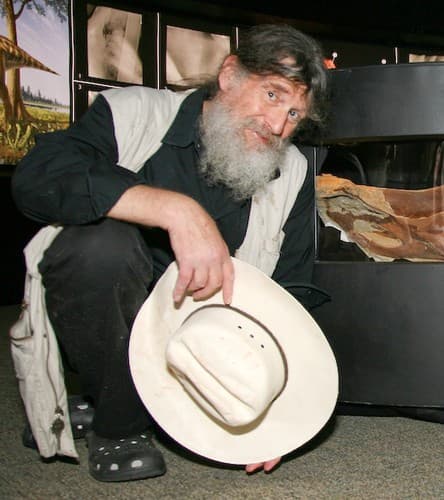
Biography coming soon.







