“Your life is a work of art that you are creating.”
— Spoken by Rant's father, a recurring theme.

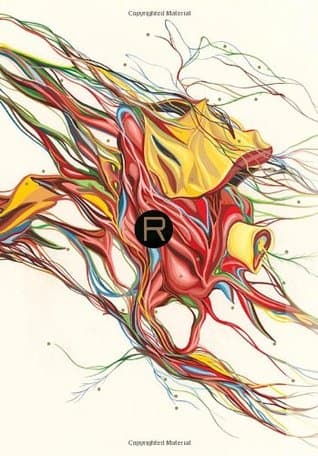
Chuck Palahniuk (1998)
Genre
Thriller / Science Fiction
Reading Time
450 min
Key Themes
See below
Sign in to track this book
In a world near a viral apocalypse, the oral history of Buster 'Rant' Casey, a rebel who turned urban demolition derbies into biological terrorism, reveals the truth behind his highway death and the pandemic he may have started.
The story begins as an oral history, gathering interviews about Buster 'Rant' Casey, a figure both admired and disliked after his death. Rant's early life in Middleton, Ohio, is marked by strange and dangerous habits. From a young age, Rant intentionally contracted and spread diseases, including rabies, believing it created immunity and connection. He engaged in rituals, such as eating poisonous spiders and letting venomous snakes bite him, seeing these acts as 'immunization.' His parents, especially his mother, struggled to understand or control his extreme behaviors. His childhood friend, Shot Dunyun, describes Rant's ability to attract animals and his resilience to illness, setting the stage for his later, more destructive actions.
As a teenager, Rant's oddities grow. He becomes a social outcast, known for his unsettling behaviors. His interest in diseases turns into a fascination with the body's limits and the idea of 'time zones' within human experience. The end of his Middleton period is the 'Middleton Massacre,' an event with conflicting accounts. Some believe Rant was responsible for violent attacks on townspeople, while others suggest he was framed or that the events were not as they seemed. The incident involves multiple victims and much chaos, solidifying Rant's reputation as a dangerous force and leading to his departure from Middleton.
After the events in Middleton, Rant moves to a sprawling city, seeking a new life. Here, he discovers 'Party Crashing,' an urban demolition derby where participants intentionally crash their cars at night. This activity is divided into 'Daytimers' and 'Nighttimers,' with a social hierarchy and unspoken rules. Rant, with his disregard for safety and his understanding of risk, quickly succeeds as a 'Nighttimer.' He becomes a known figure, his reckless abandon and survival instincts earning him a legendary status among the Party Crashers. His actions begin to attract a devoted following, drawn to his charisma and the thrill he embodies.
The interviews describe the social structure of Party Crashing. Daytimers crash during the day, often for sport or to relieve frustration, following rules to reduce serious injury. Nighttimers operate with greater intensity and danger, often resulting in severe injuries or death. For Nighttimers, Party Crashing is more than a game; it is a ritualistic pursuit of a higher state of consciousness, a way to manipulate time and experience. Rant's unique approach to crashing, his ability to survive and thrive in these deadly encounters, establishes his reputation as a legend among the Nighttimers, who see him as a messianic figure.
Rant forms a relationship with Echo Fanning, a fellow Party Crasher and one of his followers. Their bond is intense and unusual, based on their shared understanding of Party Crashing's deeper meanings. Through Echo and other Nighttimers, the true purpose of the crashes is revealed: they are not just random destruction but attempts to manipulate time. By crashing at specific speeds and angles, Nighttimers believe they can create 'time zones' or 'time slips,' allowing them to experience moments outside the normal flow of time. Rant, with his connection to these temporal anomalies, is seen as the key to unlocking this potential.
The oral history gradually uncovers an ancient conspiracy involving the 'Royal Family' — a group that controls the city and time. It is revealed that the Royal Family has manipulated human genetics for generations, creating 'time worms' or individuals with the ability to travel through time. Rant, it turns out, is a direct descendant of this Royal Family, predisposed to these temporal abilities. His mother, Carla, and his father, Shot Dunyun (who is revealed to be Rant's future self), are part of this lineage and the time-traveling scheme. Party Crashing is not just a subculture; it is a controlled experiment, a mechanism used by the Royal Family to identify and cultivate individuals like Rant.
The central revelation of the book is Rant's mission: to travel back in time to impregnate his own mother, becoming his own father, Shot Dunyun. This paradox is the core of the Royal Family's plan, designed to continue a specific genetic line capable of controlling time. Rant's entire life, from his childhood to his involvement in Party Crashing, has been orchestrated to prepare him for this act. Echo Fanning is also part of this design, as she is destined to be Rant's mother, Carla, in the past. The crashes are about generating the temporal energy for Rant to make this jump. His 'death' in the present is a transition point for his journey into the past.
The book ends with detailed accounts of Rant's 'spectacular highway death.' This event, which appears to be a tragic accident, is Rant's calculated, final act of Party Crashing. It is the moment when he generates enough temporal energy to jump back in time. The testimonies describe the chaos and devastation of the crash, but also hint at the strange circumstances surrounding it. Rant does not truly die; he transcends, becoming Shot Dunyun, his own father. The crash is not an end but a beginning, fulfilling the cyclical prophecy of the Royal Family and ensuring the continuation of their time-traveling lineage.
The oral history concludes with the understanding that Rant's life, death, and transformation are part of an endless, self-sustaining loop. His existence as Rant Casey is a precursor to his role as Shot Dunyun, who then fathers Rant, ensuring the cycle continues. The interviews reflect on the implications of this temporal paradox, leaving readers to ponder free will versus predestination. The survivors and chroniclers of Rant's story are left to deal with the reality that their memories and experiences are part of a meticulously planned scheme. Rant's legacy is not just violence and rebellion, but a manipulation of time and identity, shaping the past and future.
The Protagonist
Rant evolves from a peculiar, rebellious child into a legendary figure whose 'death' is actually a transition to becoming his own father, completing a temporal loop.
The Supporting/Antagonist (initially perceived)
Shot's arc is a revelation, transforming from a supporting narrator to the ultimate embodiment of Rant's destiny, completing the time loop.
The Supporting/Love Interest
Echo's journey reveals her as a pivotal figure in the time-traveling scheme, transitioning from Rant's lover to his future mother.
The Supporting
Carla's story highlights her role as a vessel in the grand time-traveling scheme, her identity linked to Echo Fanning.
The Supporting
Green's arc is primarily observational, detailing her perspective on Rant's eccentricities and their family's struggle to understand him.
The Supporting
Chet's journey reveals his true identity as Shot Dunyun, an unwitting participant in his own son's paradoxical existence.
The Antagonists/Controlling Force
The Royal Family's arc is one of gradual revelation, moving from a rumored entity to the ultimate orchestrators of the entire plot.
The Supporting
Ivy's role is primarily observational, detailing her experiences and impressions of Rant within the Party Crashing subculture.
The book explores how identity is constructed, particularly through the idea of Rant becoming his own father. Rant's self-infection, his embrace of Party Crashing, and his temporal journey are acts of self-creation. They challenge linear ideas of lineage and individuality. The oral history format fragments Rant's identity, showing how each narrator perceives him differently, creating a mosaic rather than a single self. The revelation that Shot Dunyun is Rant's future self forces a re-evaluation of who Rant 'is' and how his identity is linked to his past and future actions.
““If you don’t know what you want, you’ll never find it. If you don’t know what you deserve, you’ll always settle for less. You will become what you believe.””
A central theme is the manipulation of time and the resulting paradoxes. Party Crashing is a ritualistic method for creating 'time zones' or 'time slips,' letting characters experience moments outside linear chronology. The plot depends on the temporal loop where Rant Casey travels back in time to become his own father, Shot Dunyun, who then fathers Rant. This cyclical structure challenges how we understand cause and effect, suggesting a deterministic universe where past, present, and future are intertwined. The 'Royal Family' orchestrates these temporal manipulations, showing hidden control over destiny.
““Time is not a line, but a series of now-points, each with its own gravity, its own pull.””
Rant's life is an act of rebellion against societal norms. From his childhood interest in disease, which he sees as 'immunization' against the mundane, to his leadership of the Party Crashing subculture, Rant chooses paths that challenge established order. Party Crashing itself is a violent, anti-establishment activity that rejects the safety and predictability of 'Daytimer' society. This theme explores the allure of danger, the thrill of breaking rules, and the formation of alternative communities that find meaning outside mainstream acceptance, often through self-destruction or extreme experiences.
““It’s not enough to be a rebel. You have to be a martyr. You have to die for your cause.””
From a young age, Rant is interested in disease, deliberately contracting and spreading rabies and other illnesses. He sees this as 'immunization,' believing that exposure to danger makes one stronger and more connected to life. This theme extends beyond literal disease to metaphorical contagion, where Rant's ideas and behaviors 'infect' those around him, especially the Party Crashers. His actions suggest a philosophy where embracing risk and even sickness is a path to enlightenment or a deeper understanding of existence, challenging the societal obsession with sterility and safety.
““You can’t be truly alive unless you’re prepared to die. You can’t be truly healthy unless you’re prepared to get sick.””
The unnamed city is a backdrop for the novel's exploration of urban decay and the emergence of extreme subcultures. The sprawling, neglected urban environment provides the setting for Party Crashing, a dangerous activity that thrives in the anonymity and abandoned spaces of the city. The division between 'Daytimers' and 'Nighttimers' reflects a broader societal stratification and the hidden lives lived outside mainstream view. The city itself is a character, a place where rules are fluid and identities are made in the shadows. It shows the contrast between sterile societal expectations and the raw, often violent, realities of its underbelly.
““The city was a wound, festering and beautiful, and we were the maggots, feasting on its rot.””
The entire novel is constructed as a collection of interviews and testimonies.
The novel is presented entirely as an oral history, compiled after Rant's death. This means the reader experiences Rant's life through the fragmented, often contradictory, and highly subjective accounts of various characters who knew him. This device creates an unreliable narrator effect, forcing the reader to piece together the 'truth' from conflicting viewpoints. It also mirrors the theme of fragmented identity and the idea that no single person can fully grasp Rant's complex nature. The multiple perspectives build suspense, gradually revealing the larger conspiracy and the true nature of Rant's existence, making the final revelations more impactful.
Rant becomes his own father, creating a self-sustaining time loop.
The core plot device is the bootstrap paradox, specifically the 'ontological paradox' where Rant Casey travels back in time to become Shot Dunyun, who then fathers Rant. This creates a closed causal loop where Rant is both his own ancestor and descendant, with no clear origin point for his existence. This paradox is not merely a plot twist but the central mechanism driving the entire narrative, explaining Rant's unique genetic predispositions and the Royal Family's intricate scheme. It challenges linear notions of time and causality, making Rant's entire life a preordained cycle.
Hints and clues about the temporal paradox are scattered throughout the early testimonies.
The oral history format allows for extensive use of foreshadowing and retrospection. Narrators often allude to strange events or Rant's peculiar insights into time from his childhood, which only make sense in light of the later revelations. Details about Shot Dunyun's past, Rant's 'immunization' theories, and the nature of Party Crashing are subtly introduced, building a sense of mystery. As the story progresses, these seemingly innocent details are recontextualized, revealing their true significance and the intricate planning behind Rant's life, making the reader re-evaluate everything they've learned.
A pseudo-scientific explanation for temporal manipulation through Party Crashing.
The concept of 'time zones' or 'time slips' is a pseudo-scientific device used to explain how Party Crashing functions as a means of temporal manipulation. Nighttimers believe that by crashing at specific speeds, angles, and with certain mental states, they can create localized distortions in time, allowing them to experience moments outside the normal flow. This device provides a mystical, yet somewhat rationalized, framework for the extreme behaviors of the Party Crashers and their pursuit of temporal travel, tying their dangerous sport directly to the overarching plot of time manipulation and the Royal Family's agenda.
“Your life is a work of art that you are creating.”
— Spoken by Rant's father, a recurring theme.
“Every generation has its own ways of rebelling.”
— Reflecting on the different forms of rebellion across generations.
“We are all just a collection of memories and experiences.”
— Exploring the nature of identity and existence.
“The only way to truly live is to embrace chaos.”
— Rant's perspective on life and the rejection of order.
“History is a game of telephone played across centuries.”
— Discussing the distortion of historical truth over time.
“Sometimes the best way to get what you want is to not want it at all.”
— A paradoxical piece of advice about desire and attainment.
“We are all just passengers on a runaway train.”
— A metaphor for the lack of control over one's life and destiny.
“The future is just a series of present moments that haven't happened yet.”
— A contemplation on the nature of time and the present.
“You can't truly know someone until you've seen them at their worst.”
— Insight into human nature and the revelation of character.
“Every ending is just a new beginning in disguise.”
— A hopeful perspective on change and cycles.
“To truly understand something, you must first disassemble it.”
— Rant's approach to knowledge and understanding.
“The greatest freedom is the freedom from fear.”
— Exploring the concept of true liberation.
“Life is a constant process of becoming, never truly arriving.”
— A philosophical view on personal growth and evolution.
Ready to see how well you understood this book? Take our interactive quiz with 10 questions.
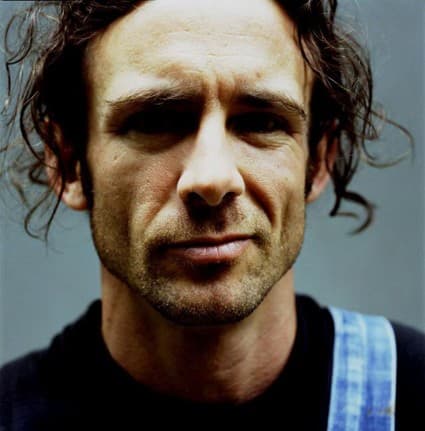
Chuck Palahniuk is a highly influential contemporary author, best known for his debut novel "Fight Club." His works, including "Haunted" and "Guts," are characterized by their transgressive themes, dark humor, and often shocking narratives. Palahniuk's distinctive style has earned him a significant cult following and cemented his reputation as a master of postmodern fiction.







