“‘Rani? What’s wrong?’ I asked, but she just stared at me, her eyes wide and full of tears. It was like she was seeing a ghost.”
— Sukh's initial encounter with Rani, hinting at her troubled past.

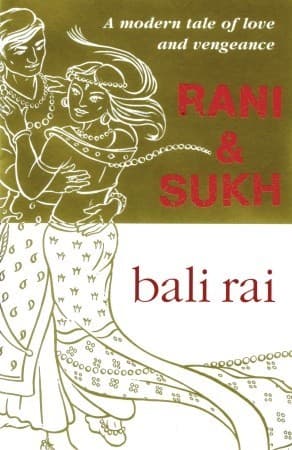
Bali Rai (2004)
Genre
Young Adult / Romance
Reading Time
360 min
Key Themes
See below
Sign in to track this book
In a modern-day Leicester romance, Rani and Sukh unknowingly rekindle a fated love story, their families' ancient Punjabi feud threatening to repeat a tragic cycle of violence and heartbreak.
The story starts in rural Punjab in 1960, showing a passionate, secret love affair between Ajit, a young man from the Dhillon family, and Jaswinder, a girl from the Johal family. Their families are neighbors with a long-standing rivalry. Despite the dangers, Ajit and Jaswinder meet secretly, fall in love, and plan to elope. Jaswinder’s brother, Jagmohan, discovers their secret. Enraged, Jagmohan and other Johal family members brutally attack Ajit, leaving him for dead. Jaswinder, shamed and heartbroken, takes her own life by drowning herself in the village well. This event starts a bitter, violent feud between the Dhillon and Johal families, scarring future generations.
The story moves to present-day Leicester, England, where Sukh Dhillon, a charismatic and popular young man, lives a carefree life with his friends. He is Ajit's grandson. Across town, Rani Johal, a bright and independent girl, lives with her family. She is the granddaughter of Jaswinder’s brother, Jagmohan. They meet by chance at a local community center during a youth event. There is an immediate spark between them. They are attracted to each other, unaware that their surnames, Dhillon and Johal, represent a deep-seated, violent animosity passed down through their families for generations, from the tragic events in Punjab.
Sukh and Rani continue to meet, their initial attraction quickly becoming a heartfelt romance. They spend time together, sharing dreams and enjoying each other’s company, often meeting secretly or with trusted friends. Both start to notice tension whenever the other family’s name is mentioned at home. Sukh's grandfather, Ajit, often becomes withdrawn or visibly upset, while Rani’s father, Rajinder, and uncle, Jagmohan, react with coldness or anger. The young couple attributes these reactions to typical parental overprotectiveness or old prejudices, not understanding the true depth of the historical animosity.
The tensions finally erupt during a public community gathering. Both the Dhillon and Johal families are present. When Sukh and Rani are seen together, Rani's uncle, Jagmohan, recognizes Sukh and confronts him and his family with furious accusations, bringing up the history of Jaswinder's death and Ajit's perceived role. The public confrontation is explosive, with insults and threats. Sukh and Rani are shocked and devastated to learn the full extent of the animosity and the tragic story of their grandparents' generation. The revelation shatters their romance and forces them to confront the grim reality of their families' intertwined, painful past.
After the public exposure, Sukh and Rani are under intense pressure from their families. The Dhillon family, especially Ajit, warns Sukh against any further contact with the Johals, recounting their version of the past and emphasizing 'dishonor' and 'betrayal.' The Johal family, led by Jagmohan and Rani's father, Rajinder, is more vehement, forbidding Rani from ever seeing Sukh again, citing Jaswinder's 'murder' and the 'shame' brought upon their family. Sukh and Rani are in an impossible situation, torn between their love for each other and their loyalty and duty to their families, who demand an end to their relationship.
Sukh, unwilling to accept his family's one-sided story, decides to investigate the past himself. He talks to his grandfather, Ajit, who, after much prodding, reluctantly shares his painful memories of Jaswinder, their love, and the brutal attack by the Johals. Ajit reveals his grief and guilt over Jaswinder's suicide, saying he never intended for her to die and was left for dead himself. Sukh also seeks out other elder community members and family friends who were alive then, putting together a more complete picture of the events in Punjab, recognizing that both families have suffered and told their own versions of the truth.
Rani also searches for the truth. She confronts her father, Rajinder, and her uncle, Jagmohan, who initially refuse to discuss it, maintaining that Jaswinder was murdered by the Dhillons. Rani persists, sensing there is more to the story. She eventually finds an old aunt who knew Jaswinder and Ajit. This aunt, with sadness, reveals Jaswinder's deep love for Ajit and the immense pressure she faced, leading to her desperate act of suicide, not murder. Rani begins to understand the grief and shame that drove her uncle's lifelong vendetta, but also the distorted truth her family has kept.
Having uncovered the complexities and shared tragedy of their families' past, Sukh and Rani realize that neither family is entirely blameless, and both have suffered greatly. They understand that the feud is based on generations of misunderstanding, grief, and a distorted sense of honor. Rather than separating, they decide to challenge the hatred. They plan to bring their families face-to-face, not to fight, but to confront the truth, share their individual pains, and hopefully, start reconciliation. They believe their love can start healing.
Sukh and Rani arrange a tense, emotional meeting between key members of both families, including Ajit, Jagmohan, and Rajinder. At first, old resentments flare, and accusations fly. However, Sukh and Rani, with support from some younger family members and friends, bravely present the full, true story they have uncovered, including details of Jaswinder's love, Ajit's attack, and the circumstances of her suicide. Ajit, with tears, expresses his lifelong regret and sorrow over Jaswinder's death. Jagmohan, confronted with the truth and his sister's suffering, is visibly shaken, his rigid facade cracking under the weight of decades of guilt and misdirected anger. The raw emotions are overwhelming, but a step towards understanding is taken.
The meeting does not immediately end decades of hatred, but it plants the seeds of forgiveness. Jagmohan, though still scarred, acknowledges the pain he caused and his family's part. Ajit expresses his desire for peace. The younger generations, seeing the devastating impact of the feud, want to move forward. Slowly, tentatively, the families begin to acknowledge their shared humanity and the suffering caused by their unresolved conflict. Sukh and Rani's love, once a source of contention, becomes a symbol of hope and a bridge between the two families. While healing will be long, the cycle of violence is finally broken, making way for a future where love can triumph over inherited hatred.
The Protagonist
Sukh transforms from an oblivious teenager into a courageous advocate for peace, actively seeking truth and challenging deeply ingrained family hatred.
The Protagonist
Rani evolves from a spirited but uninformed young woman into a courageous truth-seeker, challenging her family's narrative and advocating for peace.
The Supporting
Ajit moves from a silent, guilt-ridden figure to one who finally shares his pain and contributes to breaking the cycle of hatred.
The Antagonist/Supporting
Jagmohan transitions from a vengeful, unyielding antagonist to a man forced to confront his past actions and the true nature of his sister's tragedy.
The Supporting/Tragic Figure
Her story is primarily one of tragic love and sacrifice, setting in motion the central conflict of the book.
The Supporting
Rajinder, initially bound by inherited prejudice, slowly opens to the possibility of truth and reconciliation through his daughter's efforts.
The Supporting
They move from traditional adherence to a more open-minded perspective, supporting their son's pursuit of peace.
The Supporting
She serves as a bridge within her family, gradually becoming more open to healing and her daughter's choices.
The novel shows how unresolved conflicts, grief, and a distorted sense of honor from one generation can harm subsequent generations. The feud between the Dhillon and Johal families, from a tragic love story in 1960s Punjab, lasts for decades, affecting social interactions and threatening the new love between Sukh and Rani. Characters are constantly reminded of the past, with elders upholding old grievances, showing how hatred, if not dealt with, continues suffering.
““The past was a monster, lurking in the shadows, waiting to devour their future.””
At its heart, 'Rani And Sukh' shows the power of love in the face of great adversity. The forbidden romance between Ajit and Jaswinder in the past, though tragic, sets the stage for the equally challenging love between Sukh and Rani in the present. Their relationship is tested by deep family hatred, threats, and societal expectations. Their commitment to each other, and their belief that their love can cross the historical divide, drives the story towards a hopeful, though difficult, resolution.
““Their love was a fragile flame, flickering in the howling wind of family hatred, but it refused to be extinguished.””
A central theme is finding the complete, unbiased truth to heal old wounds. Sukh and Rani both search for the true events of 1960s Punjab, realizing that their families' stories are incomplete and biased. Their efforts to piece together the full story, confronting both the pain and the misinterpretations, are important for breaking the cycle of hatred. The novel suggests that true reconciliation can only begin when all parties are willing to acknowledge their own roles and the suffering of others.
““To truly move forward, they first had to look back, not with anger, but with an open heart ready to understand.””
The novel explores family honor ('izzat') and shame ('be-izzat') in a South Asian cultural context. Jaswinder's suicide is linked to the shame she feels for her affair and the dishonor it brings to her family, as well as the brutal attack on Ajit. The feud is fueled by a need to defend family honor and avenge perceived slights. Sukh and Rani struggle with their individual identities versus the collective identity and expectations of their families, showing the intense pressure to follow traditional values even in a modern setting.
““Honor was a heavy cloak, passed down through generations, suffocating those who dared to step outside its weave.””
Alternating between 1960s Punjab and present-day Leicester to reveal the origins and consequences of the feud.
The novel employs a dual timeline structure, seamlessly shifting between two distinct periods: the tragic love story of Ajit and Jaswinder in 1960s Punjab and the budding romance of Sukh and Rani in contemporary Leicester. This device is crucial for gradually revealing the historical roots of the family feud, allowing readers to understand the depth of the animosity and the specific events that shaped it. It builds suspense as the reader, like Sukh and Rani, slowly uncovers the dark past, drawing parallels between the forbidden loves and highlighting the enduring impact of history on the present.
The central conflict arises from romantic relationships that defy family and societal norms.
Both the past and present storylines revolve around the trope of forbidden love. Ajit and Jaswinder's romance is forbidden due to unspoken family rivalries and the cultural implications of an illicit affair. Decades later, Sukh and Rani's love is forbidden due to the violent, inherited feud between their families. This device immediately establishes high stakes and creates inherent conflict, as the characters must choose between personal happiness and loyalty to their families and traditions. It underscores the novel's exploration of love's power to challenge ingrained prejudice.
Characters piece together the past through fragmented family stories and personal testimonies.
Sukh and Rani's journey to understand the family feud largely relies on piecing together oral histories. They don't find written records but must coax reluctant elders, like Ajit, and other community members to share their memories. This device highlights the subjective nature of truth, as each family holds its own biased version of events. It also emphasizes the importance of listening to multiple perspectives to gain a complete understanding and for younger generations to actively seek out their heritage, rather than passively accepting inherited narratives.
Represents both life-giving sustenance and tragic death, and the weight of the past.
The village well in Punjab serves as a powerful symbol. Initially, it represents a vital source of life and community gathering. However, it becomes the site of Jaswinder's tragic suicide, transforming it into a symbol of profound loss, shame, and the genesis of the family feud. It represents the dark secret buried in the past, a constant reminder of the tragedy that haunts both families. Its presence in the historical narrative underscores the deep-seated nature of the conflict and the lasting impact of that singular, devastating event.
“‘Rani? What’s wrong?’ I asked, but she just stared at me, her eyes wide and full of tears. It was like she was seeing a ghost.”
— Sukh's initial encounter with Rani, hinting at her troubled past.
“‘My dad’s got a temper. He doesn’t like me talking to boys. Especially not English boys.’”
— Rani explaining the strict rules she lives under.
“‘It’s not fair, Sukh. Why can’t I just be normal? Why can’t I choose who I want to be with?’”
— Rani expressing her frustration with her family's expectations.
“‘You can’t run from who you are, Rani. But you can choose what you do with it.’”
— Sukh offering advice to Rani about her heritage and future.
“‘Love isn’t always easy. Sometimes it means fighting for what you believe in, even when everyone else tells you it’s wrong.’”
— Sukh reflecting on the challenges of his relationship with Rani.
“‘The hardest thing is not knowing if you’ll ever see them again. That’s what kills you inside.’”
— Rani's internal struggle with the potential loss of Sukh.
“‘We’re from different worlds, Sukh. And sometimes, those worlds just don’t mix.’”
— Rani's realistic view of the obstacles facing their relationship.
“‘He looked at me as if I was the most important thing in the world, and for a moment, I believed him.’”
— Rani's feelings during a tender moment with Sukh.
“‘Sometimes you have to make a stand. For yourself, and for the people you love.’”
— Sukh's resolve to support Rani against her family's wishes.
“‘The silence between us was heavy, filled with unspoken words and the weight of everything we couldn’t say.’”
— A moment of tension and unspoken emotion between Rani and Sukh.
“‘You can’t change the past, but you can definitely change the future.’”
— A hopeful message about overcoming past difficulties.
“‘It wasn’t just about us anymore. It was about what we represented, what we stood for.’”
— The broader implications of Rani and Sukh's relationship.
“‘Every day felt like a battle, and sometimes I wondered if we’d ever win the war.’”
— Rani's weariness from constantly fighting for her relationship.
“‘He wasn't just a boy; he was my escape, my future, and everything I never thought I'd have.’”
— Rani's deep feelings for Sukh and what he represents to her.
Ready to see how well you understood this book? Take our interactive quiz with 10 questions.