“Being gay is not a choice. It’s a fact. Like being a lefty or having blue eyes.”
— Ramona's internal thoughts on her sexuality.

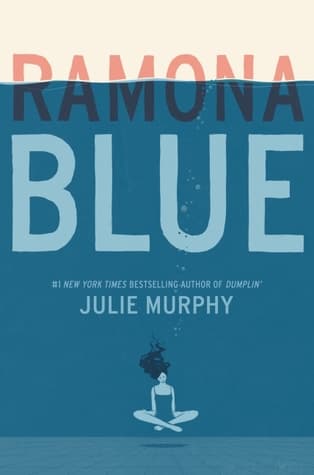
Julie Murphy (2017)
Genre
Young Adult / Romance
Reading Time
8 hours 10 min
Key Themes
See below
Sign in to track this book
A six-foot-tall, blue-haired force, Ramona navigates family duty, post-Katrina life in rural Mississippi, and an unexpected attraction to her childhood friend Freddie that challenges her understanding of love and herself.
Ramona Blue, a tall girl with blue hair, lives in a trailer in Eulogy, Mississippi. She still feels the effects of Hurricane Katrina from her childhood. She works multiple jobs, including at the local donut shop and a seafood restaurant, to help support her family. Her mother, Rosie, is often absent or unreliable, and her father, Earl, struggles to find steady work. Ramona's older sister, Hattie, is pregnant and due soon, adding to Ramona's responsibilities. Ramona is openly gay and has a crush on a local girl named Grace, though their interactions are mostly limited to brief conversations. She feels deep loyalty and protectiveness towards her family, often sacrificing her own desires for their well-being.
Freddie, Ramona's childhood best friend, returns to Eulogy with his family after years away. Freddie, a former competitive swimmer, is optimistic and immediately seeks out Ramona. Their friendship quickly re-establishes its easygoing dynamic, filled with playful banter and shared history. Freddie encourages Ramona to join him at the local pool, hoping to reignite his own passion for swimming and introduce her to the sport. Initially resistant due to self-consciousness about her height and lack of swimming experience, Ramona eventually agrees, drawn by Freddie's enthusiasm and the promise of a new activity. This marks the start of a shift in Ramona's routine and relationships.
Ramona starts swimming with Freddie, initially struggling but quickly discovering a natural talent and enjoyment for the water. The pool becomes a sanctuary, a place where she feels free and unburdened by responsibilities. During their swimming sessions and subsequent hangouts, Ramona and Freddie spend more time together, their bond deepening. Ramona finds herself increasingly drawn to Freddie's kindness, humor, and support. She begins to notice him in a new, unexpected way, questioning her long-held belief that she only likes girls. This growing attraction creates internal conflict and confusion, challenging her established identity.
Hattie goes into labor, and Ramona is by her side, providing support. Hattie gives birth to a baby girl, whom she names Magnolia. The baby brings joy but also adds financial and emotional strain to the struggling family. Ramona finds herself taking on more responsibilities, helping Hattie with the baby and continuing to work multiple jobs. Pressure mounts as Rosie's unreliability persists, and Earl's efforts to find work often fall short. Ramona feels the weight of her family's future on her shoulders, making her personal journey of self-discovery feel like a luxury she can barely afford.
One evening, after a close moment, Ramona and Freddie share a kiss. This unexpected intimacy throws Ramona into further disarray. The kiss is not unpleasant; it sparks a confusing mix of emotions she did not anticipate. She grapples with the implications of this new physical attraction, wondering if it means she is bisexual, pansexual, or if her attraction to Freddie is an isolated incident. Her long-standing crush on Grace fades as her focus shifts to understanding her evolving feelings for Freddie. This moment forces Ramona to confront the fluidity of her sexuality and identity, challenging her previous certainties.
Conflicted and unsure, Ramona confides in her best friend, Chloe, about her feelings for Freddie and their kiss. Chloe, who is also gay, listens patiently and offers Ramona support and understanding, but no easy answers. Chloe reminds Ramona that identity can be fluid and that it is okay not to have all the answers right away. This conversation helps Ramona feel less alone in her confusion, but it does not resolve her internal struggle. She continues to ponder what this means for her identity and her future, realizing that self-discovery is a complex and ongoing process, especially when it challenges long-held beliefs about oneself.
Ramona, Freddie, and Chloe embark on a spontaneous road trip to the Gulf Coast. During the trip, Ramona spends time with both Freddie and Chloe, observing their interactions and reflecting on her own feelings. The relaxed atmosphere and distance from her daily responsibilities allow Ramona to gain perspective. While she cares for Freddie and enjoys his company, she begins to understand that her feelings for him, while real and strong, are not the same as the romantic attraction she experiences towards girls. She realizes that her affection for Freddie is more akin to a loving friendship than romantic love, and that her core identity as a lesbian remains intact.
After the road trip, Ramona knows she needs to be honest with Freddie. She gently explains to him that while she cares for him deeply, she does not feel a romantic attraction towards him. Freddie, though initially disappointed, understands and respects Ramona's honesty. Their conversation is difficult but ultimately strengthens their bond, solidifying their relationship as a powerful, platonic friendship. This moment is important for Ramona, as it allows her to affirm her sexual identity while also maintaining a connection with someone she loves. It also shows Freddie's maturity and his genuine care for Ramona beyond romantic expectations.
With her internal conflict resolved, Ramona feels a renewed sense of clarity and confidence. She finally gathers the courage to approach Grace, who reciprocates Ramona's interest. They begin to explore a romantic relationship, which excites Ramona. Concurrently, Ramona's family situation shows signs of improvement. Her father, Earl, finds a more stable job, and her mother, Rosie, begins to take more responsibility, even if inconsistently. Hattie is settling into motherhood, and Ramona finds herself less burdened by being the family's sole anchor. This newfound stability allows Ramona to focus more on her own happiness and future.
Ramona continues to thrive in her swimming, seeing it as a potential path to a scholarship and a way out of Eulogy. She embraces her identity, understanding that self-discovery is an ongoing journey and that love and life are fluid. She recognizes that her experiences with Freddie, while confusing, ultimately helped her solidify her understanding of herself. With Grace by her side, a stronger family unit, and the possibility of a future beyond her current circumstances, Ramona feels hopeful and empowered. She understands that her strength comes not just from her resilience, but from her willingness to explore and accept all facets of who she is.
The Protagonist
Ramona begins as certain of her identity but burdened by responsibility; she explores the fluidity of love and identity, ultimately affirming her core self while embracing new possibilities and finding a path forward.
The Supporting
Freddie re-enters Ramona's life, sparking a period of romantic confusion, but ultimately accepts Ramona's true feelings, cementing their strong platonic friendship.
The Supporting
Hattie becomes a new mother, increasing Ramona's responsibilities, but eventually begins to navigate motherhood and her own path with Ramona's support.
The Supporting
Rosie remains largely unreliable but shows small, hopeful signs of increasing responsibility towards the end of the story.
The Supporting
Earl struggles with unemployment, but by the end, he finds more stable work, providing some relief for the family.
The Supporting
Chloe consistently provides support and a listening ear to Ramona, helping her navigate her identity crisis without undergoing a significant personal arc of her own.
The Supporting
Grace remains a steady romantic interest for Ramona, eventually becoming her girlfriend, symbolizing Ramona's reaffirmed identity.
The novel directly addresses the idea that sexual identity is not always fixed and can evolve. Ramona, initially certain of being a lesbian, experiences romantic confusion when she develops feelings for her male childhood friend, Freddie. Her journey shows that attraction can be complex and that self-discovery is ongoing. Ultimately, Ramona reaffirms her lesbian identity, but her experience highlights that the path to understanding oneself can involve unexpected detours, as seen when she questions if she likes 'girls and guys' or if it is 'just a fluke' with Freddie.
“Maybe love was like the ocean. Maybe it was something that came in waves, changing and shifting, but always there, always a part of you.”
Ramona's life is defined by her sense of responsibility towards her family, particularly her unreliable mother, struggling father, and pregnant sister. The lingering effects of Hurricane Katrina, both economically and emotionally, weigh heavily on the Blue family, forcing Ramona to take on an adult role. Her multiple jobs and constant vigilance for her family's well-being often overshadow her personal desires and dreams, as depicted by her constant juggling of work and her sister Hattie's needs. This theme explores the sacrifices made for loved ones and the burden of being the family's anchor.
“It was Ramona and her family against the world. And sometimes, Ramona felt like she was fighting the world all by herself.”
The novel explores Ramona's desire to find a future beyond her small, economically depressed town of Eulogy, Mississippi. Her love for swimming becomes a symbol of this aspiration, offering a potential path to a college scholarship and a life outside her current circumstances. Ramona's journey is not just about sexual identity, but also about forging her own destiny amidst socioeconomic challenges. The town, still recovering from Katrina, represents a past she is tied to but also hopes to transcend, showing the struggle of young people to envision and achieve a different future.
“She wanted something bigger than the trailer she called home in Eulogy, Mississippi.”
Friendship plays a role in Ramona's journey, providing both support and a catalyst for self-discovery. Her bond with Freddie, initially a childhood friendship, evolves into romantic confusion and ultimately settles into a deeper, more mature platonic love. Her best friend, Chloe, serves as a confidante, offering non-judgmental advice and understanding during Ramona's identity crisis. These friendships provide Ramona with emotional anchors and help her navigate the complexities of her feelings, showing that different types of love can be equally profound and supportive.
“Sometimes the best kind of love wasn't the kind that made your heart race, but the kind that made you feel safe.”
The lasting impact of the hurricane on Eulogy and Ramona's family.
The lingering effects of Hurricane Katrina serve as a pervasive backdrop, shaping Ramona's family's economic struggles and her sense of responsibility. It explains their trailer park living, her parents' difficulties, and the general sense of hardship in Eulogy. This historical event grounds the story in a specific reality, providing a tangible reason for the characters' circumstances and Ramona's intense drive to protect her family and seek a better future. It's not just a past event, but a continuous force influencing their present.
Swimming represents freedom, escape, and self-discovery for Ramona.
Swimming, initially an activity Freddie introduces to Ramona, quickly becomes a powerful metaphor for her personal journey. In the water, Ramona feels unburdened by her responsibilities and self-consciousness, experiencing a sense of freedom and weightlessness. It is a space where she can literally and figuratively 'float,' allowing her to explore her feelings and identity. The act of learning to swim and finding strength in the water mirrors her journey of self-discovery and empowerment, offering a potential path to a future beyond Eulogy through a scholarship.
A visual representation of Ramona's individuality and defiance.
Ramona's distinctive blue hair is a recurring visual motif that symbolizes her individuality, her defiance of norms, and her strong sense of self. In a small, conservative town like Eulogy, her vibrant hair makes her stand out and immediately communicates her non-conformist spirit and self-acceptance. It's a physical manifestation of her identity, particularly her queer identity, even before her internal questioning begins. The hair reinforces her unique presence and her refusal to blend in, mirroring her internal strength and eventual embrace of her true self.
A symbol of socioeconomic struggle and Ramona's humble origins.
The trailer park in Eulogy, Mississippi, is more than just a setting; it's a symbol of the socioeconomic challenges Ramona and her family face. It represents their humble origins, the lingering effects of poverty, and the limited opportunities available in their town. For Ramona, the trailer park is both home and a place she longs to escape. It underscores her fierce protectiveness of her family and her ambition for something greater, highlighting the contrast between her aspirations and her current circumstances.
“Being gay is not a choice. It’s a fact. Like being a lefty or having blue eyes.”
— Ramona's internal thoughts on her sexuality.
“Sometimes you just gotta do what feels right, even if it’s not what everyone expects.”
— Ramona considering her feelings for Freddie, despite her previous assumptions about her sexuality.
“Love isn't a straight line, or a curved one. It's more like a tangled mess of yarn, sometimes beautiful, sometimes frustrating.”
— Ramona reflecting on the complexities of love and relationships.
“It’s okay to change your mind. It’s okay to not know everything right away.”
— Ramona grappling with her changing feelings and identity.
“Sometimes the people who are supposed to protect you are the ones who hurt you the most.”
— Ramona's feelings about her absent father.
“The world doesn't stop just because your heart is breaking.”
— Ramona experiencing heartbreak and the continuation of life.
“You don’t have to put yourself in a box for anyone. Not even yourself.”
— A realization Ramona has about societal and self-imposed labels.
“Mississippi might be slow, but it’s home. And sometimes home is all you need.”
— Ramona's connection to her small-town roots.
“Maybe the best kind of love is the kind that surprises you.”
— Ramona's evolving understanding of her romantic feelings.
“You can’t control what other people think, but you can control how you react.”
— Ramona dealing with gossip and judgment in her community.
“Hope is a tricky thing. It can lift you up, and it can let you down hard.”
— Ramona's reflections on the nature of hope.
“Sometimes the bravest thing you can do is admit you’re scared.”
— Ramona facing her fears about her future and relationships.
“Family isn't always blood. Sometimes it's the people who show up for you, no matter what.”
— Ramona's appreciation for her chosen family and friends.
“It’s not about finding the right person, it’s about being the right person.”
— Ramona's growth and self-improvement throughout the story.
Ready to see how well you understood this book? Take our interactive quiz with 10 questions.

Biography coming soon.