“Ramona did not want a new baby. She wanted everything to stay the same.”
— Ramona's initial reaction to the news of her mother's pregnancy.

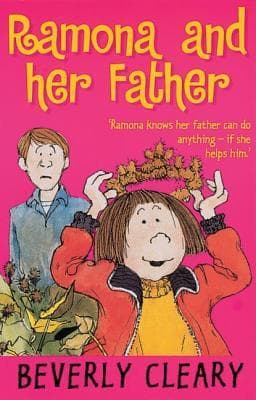
Beverly Cleary (1977)
Genre
Children's / Young Adult
Reading Time
160 min
Key Themes
See below
Sign in to track this book
When her father loses his job, eight-year-old Ramona, with her imagination and mischievous spirit, tries to bring back joy and normalcy to her struggling family.
The story begins with Ramona Quimby, now in second grade, noticing a change in her father, Robert. He is often tired and irritable after work, and the family's evening conversations lessen. One evening, Mr. Quimby announces he has been laid off from his job as a commercial artist. The news causes anxiety in the family. Mrs. Quimby, though supportive, immediately starts calculating finances and discussing cutting expenses. Ramona and her older sister, Beezus, are confused and worried, sensing their parents' stress. The sudden loss of income forces the family into an uncertain period of adjustment, affecting everyone's mood and daily routines.
With Mr. Quimby out of work, he struggles to find a new job. He spends his days sending out resumes and making phone calls, often without success. The strain of unemployment shows, as he becomes more withdrawn and easily frustrated. He tries to help around the house, but his efforts sometimes clash with Mrs. Quimby's routines, leading to minor arguments. Ramona observes her father's growing sadness, sensing his loss of purpose and the pressure he feels to provide for his family. This period highlights the psychological cost of job loss, not just the financial impact, as Mr. Quimby deals with his identity and worth.
Troubled by her father's sadness and the general gloom, Ramona decides she must do something. She first tries to earn money by making a 'commercial' for her father, hoping to get him a job, but it is not well-received. Later, she tries to become a child star, believing that if she earns a lot of money, her father will not have to work. She imagines herself performing in commercials and movies, but adults often misunderstand or dismiss her dramatic expressions. Ramona's childlike logic and her desire to fix the family's problems lead to several comical but ineffective schemes, showing her innocent view of adult issues.
One evening, while Mrs. Quimby is working at her part-time job and Mr. Quimby is still searching for work, Ramona decides to make dinner to surprise and help her family. She chooses to make a tuna fish casserole, a dish she believes is simple. However, without proper cooking experience, she makes a big mess, spilling ingredients and using too many dishes. When Mrs. Quimby returns home, tired, she finds the kitchen in disarray and the casserole not quite edible. While Ramona meant well, her cooking adds more stress to her mother's already burdened day, showing the gap between Ramona's desire to help and her actual abilities.
Beezus, the older sister, feels the weight of the family's situation differently. She is expected to be more responsible, help more around the house, and often supervise Ramona. The money problems mean fewer new clothes and less freedom. She also deals with Ramona's sometimes annoying attempts to help, which often create more work. Beezus often finds herself caught between her parents' stress and Ramona's childish behavior, leading to moments of resentment and frustration. She wants things to return to normal, and her own artistic endeavors, like drawing, become a quiet escape from the household tension.
Amidst his job search, Mr. Quimby starts spending time drawing and writing, initially to pass the time and express his frustration. He begins to develop a children's book based on his childhood memories of a place called Klickitat. This creative outlet becomes a source of comfort and renewed purpose for him. He shares his illustrations and stories with Ramona and Beezus, who become his first audience. The project provides a needed distraction from his unemployment worries and allows him to use his artistic talents in a new, meaningful way, shifting his focus from what he has lost to what he can create.
Driven by her desire to be a child star and earn money, Ramona performs a spirited, if exaggerated, television commercial in front of her second-grade class during show-and-tell. She acts out a commercial for a breakfast cereal, with dramatic gestures and loud words. Her teacher, Miss Griggs, misunderstands Ramona's enthusiastic performance, believing she is being disruptive and showing off. This incident shows Ramona's imagination and her difficulty following expected classroom behavior, especially when her intentions come from a genuine desire to help her family. It also shows the difference between her inner world and how adults see her actions.
Despite the ongoing financial difficulties and stress, the Quimby family finds joy and connection. One evening, Mrs. Quimby prepares a special dinner, and the family gathers to eat together. The conversation flows more easily, and the usual tension is briefly gone. Mr. Quimby shares some progress on his Klickitat book, and Ramona and Beezus contribute to the discussion. This scene shows the family's resilience and their ability to find comfort and strength in each other's company, even when faced with hard times. It is a reminder that love and support are important during difficult times.
Mr. Quimby continues to work on his Klickitat book. He eventually sends samples of his illustrations and manuscript to a publisher. After waiting, he receives a positive response. While it is not an immediate solution to all their financial problems, the publisher expresses interest in his work, offering a contract and the possibility of publication. This breakthrough is a significant boost for Mr. Quimby, giving him a renewed sense of purpose and confirming his artistic talent. The news brings relief and excitement to the entire Quimby family, suggesting that a new, more positive chapter might begin.
As the story progresses, Ramona, though still a child, begins to understand the deeper implications of her father's unemployment. She realizes that her simple solutions are not always effective and that adult problems are more complex than she first thought. Her attempts to help, while often clumsy, come from a genuine love for her family. By the end of the book, she does not fully grasp the details of financial hardship, but she understands the emotional toll it takes on her parents. This subtle shift in her understanding marks a step in her emotional development, showing her growing empathy and awareness of the world beyond her immediate desires.
With the prospect of Mr. Quimby's book being published, the family begins to adjust to their new reality. While he still has to find a more stable income, the book offers a promising new direction. Mrs. Quimby continues her part-time work, and the family keeps their frugal habits. The emotional atmosphere in the house lightens significantly, as the burden of uncertainty is somewhat lifted. The Quimbys learn to adapt to change and find strength in their unity. The story ends with the family looking forward to the future, accepting that life will continue to present challenges, but confident in their ability to face them together.
The Protagonist
Ramona learns that adult problems are complex and not easily solved by childish schemes, developing greater empathy and a subtle understanding of her family's struggles.
The Supporting Character / Central Figure of Conflict
He transitions from despondency and frustration over unemployment to finding a new sense of purpose and hope through pursuing his artistic passion for children's books.
The Supporting Character
She demonstrates remarkable resilience and adaptability, shouldering increased responsibilities while maintaining a supportive and stable home environment.
The Supporting Character
Beezus learns to cope with increased household responsibilities and her sister's antics while quietly nurturing her own artistic interests as an escape.
The Supporting Character / Mentioned
Her arc is largely static, serving primarily as a foil for Ramona's classroom experiences.
The main theme explores how losing a parent's job affects every family member, financially and emotionally. Mr. Quimby's unemployment leads to increased tension, irritability, and a sense of hopelessness for the adults. The children, Ramona and Beezus, struggle to understand and cope with the sudden changes. Scenes like the family cutting expenses, Mrs. Quimby taking a part-time job, and Mr. Quimby's withdrawal show the widespread stress. The story shows how financial struggles can strain relationships and change daily routines, forcing a family to adapt and find new ways to support each other.
“Money was on everyone's mind, and it hung in the air like a cloud.”
Ramona's imagination is a core element, often clashing with her family's difficult reality. She believes she can solve complex adult problems through simple, childlike schemes, such as becoming a child star or making a 'commercial' for her father. Her elaborate inner world, where she is a successful actress, contrasts with the family's growing financial worries. This theme highlights childhood innocence and the difficulty children have in fully grasping adult life's complexities, while also showing how imagination can be a way to cope, even if not practical. Her 'commercial' in class is a prime example of this clash.
“She would be a child star, and her father would not have to worry about money anymore. It was so simple.”
Mr. Quimby's journey after losing his job is an exploration of identity. His work as a commercial artist was tied to his self-worth, and unemployment leaves him feeling lost. His irritability and withdrawal come from this identity crisis. The turning point is when he rediscovers his passion for art by creating a children's book based on his childhood memories of Klickitat. This creative project allows him to find a new sense of purpose and confirm his artistic talent outside of commercial demands, showing that identity can be redefined even in challenging circumstances.
“He discovered that drawing for himself was different from drawing for a trucking company.”
Despite the significant challenges, the Quimby family shows resilience and a strong bond. Even when stressed and irritable, they ultimately rely on each other. Mrs. Quimby's practical support, Beezus's quiet responsibility, and even Ramona's misguided attempts to help, all contribute to the family's ability to handle their crisis. Moments of shared laughter, like a rare pleasant family dinner, highlight their lasting love and unity. The story emphasizes that while external circumstances can be devastating, the internal strength of family connections can provide the necessary foundation for coping and moving forward.
“They were a family, and families stuck together, even when things were hard.”
Mr. Quimby's artistic endeavors symbolize his search for purpose and emotional well-being.
Initially, Mr. Quimby's drawings for the trucking company represent his unfulfilling job. After losing it, his artistic talent is dormant, reflecting his despondency. However, when he begins to draw and write his children's book about Klickitat, his art transforms into a symbol of hope, self-expression, and renewed purpose. The act of creating something purely for himself, rather than for commercial gain, becomes his path to rediscovering his identity and finding joy amidst unemployment. The illustrations he creates for the book are not just pictures; they are a visual representation of his emotional journey and eventual breakthrough.
Ramona's internal thoughts and imaginative scenarios provide insight into her childlike perspective and coping mechanisms.
Throughout the story, Ramona frequently engages in vivid inner monologues and elaborate fantasies, such as imagining herself as a famous child star or devising a 'commercial' for her father. These internal narratives serve as a crucial plot device, allowing the reader to understand Ramona's innocent yet determined approach to complex adult problems. They highlight her difficulty in distinguishing between fantasy and reality in her pursuit of solutions, while also providing comic relief and emphasizing the innocence of her intentions. This device contrasts her inner world with the often harsh external reality.
The dinner table serves as a recurring setting that reflects the family's emotional state and evolving dynamics.
The dinner table is more than just a place to eat; it's a barometer for the Quimby family's emotional climate. At the beginning, the quiet, strained dinners reflect Mr. Quimby's stress and the overall tension from his job loss. Later, Ramona's disastrous attempt to make dinner highlights her well-intentioned but clumsy efforts to help. A subsequent, more pleasant family dinner, where Mr. Quimby shares his book progress, symbolizes a return to connection and hope. This setting effectively illustrates the ebb and flow of their emotional journey, showing how shared meals can either amplify or alleviate family stress.
“Ramona did not want a new baby. She wanted everything to stay the same.”
— Ramona's initial reaction to the news of her mother's pregnancy.
“Mr. Quimby, who was an artist, said that a father's job was to earn money and a mother's job was to take care of the house and children. He was wrong.”
— Ramona's internal thoughts about her father's initial struggles with unemployment and gender roles.
“She was not a baby. She was Ramona, and she was going to be a big sister, whether she liked it or not.”
— Ramona grappling with her identity and the impending arrival of a sibling.
“It was not fair that her father was home all day and still did not have time to play with her.”
— Ramona's frustration with her father's preoccupation with job searching.
“Being a grown-up was much harder than it looked.”
— Ramona observing her parents' struggles.
“She wanted to be a good girl, but sometimes it was so hard.”
— Ramona's internal conflict when facing temptations or frustrations.
“Her father was not a failure. He was just a man who had lost his job.”
— Ramona defending her father against her own earlier judgments.
“Ramona decided that she would not be a baby anymore. She would be a big girl, and she would help her family.”
— Ramona's resolution to mature and contribute during a difficult time.
“A father's job, Ramona decided, was to love his children, not just to earn money.”
— Ramona's revised understanding of her father's role.
“The world was full of interesting things, and Ramona was going to see all of them.”
— Ramona's enduring sense of curiosity and adventure.
“She liked her father best when he was being himself, not when he was trying to be someone else.”
— Ramona's observation of her father's struggles with his identity during unemployment.
“It was hard to be brave when you were little and the world was big.”
— Ramona feeling overwhelmed by the challenges her family faced.
“Sometimes grown-ups needed cheering up, too.”
— Ramona realizing that her parents also experience sadness and need comfort.
Ready to see how well you understood this book? Take our interactive quiz with 10 questions.

Beverly Cleary was a beloved American children's author, celebrated for her realistic and humorous portrayal of childhood. Her iconic characters, including Ramona Quimby and Henry Huggins, resonated with generations of readers. Cleary's extensive body of work, featuring titles like 'The Mouse and the Motorcycle' and 'Ramona the Brave,' earned her numerous accolades, including the Newbery Medal and the National Medal of Arts.

Dan Gemeinhart
4.5

Kate O'Hearn
4.4

Jeanne Birdsall
4.4

Jen Wang
4.4

Wendelin Van Draanen
4.3

John Marsden
4.3

Chris Van Allsburg
4.3

Jennifer A. Nielsen
4.2