“There are no 'friends' in the intelligence business, just people whose interests coincide with yours for a while.”
— Clark reflecting on the nature of international espionage.

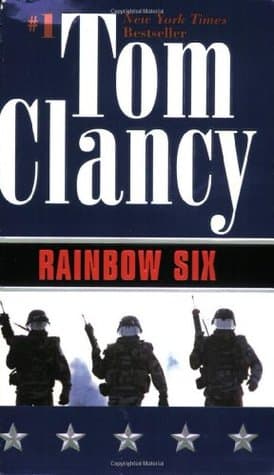
Tom Clancy (1998)
Genre
Thriller / Mystery
Reading Time
1200 min
Key Themes
See below
Sign in to track this book
John Clark leads an elite international counter-terrorism unit in a desperate race against a shadowy eco-terrorist group whose plot to unleash a global pandemic threatens to reset humanity's existence.
John Clark, now a senior intelligence officer, is tasked by NATO with creating a new, specialized multinational counter-terrorism unit named Rainbow. Based at Hereford, UK, Rainbow consists of two primary assault teams led by Domingo 'Ding' Chavez and Peter Covington, supported by intelligence and logistics. The unit is immediately tested. Their first major operation involves rescuing hostages from a Swiss bank taken by German Red Army Faction terrorists. This is followed by a raid in Austria to recover the family of a kidnapped German industrialist, and an assault on a Spanish amusement park by Basque separatists. Each mission is successful, showing Rainbow's effectiveness, but the increasing frequency and random nature of these high-profile terrorist attacks make Clark and his intelligence chief, Alistair Stanley, uneasy. They suspect a deeper, more coordinated threat.
Rainbow is deployed to the Sydney Olympic Village where Irish Republican Army (IRA) terrorists have taken athletes hostage. The operation is complex and dangerous, but Rainbow's teams, led by Chavez and Covington, execute a precise assault, neutralizing the terrorists and saving the hostages with minimal casualties. While the world celebrates their successes, Clark and Stanley analyze the intelligence gathered from these incidents. They notice peculiar details: the terrorists, though from different groups, seem unusually well-equipped and trained, and their motives sometimes feel less about political ideology and more about causing maximum chaos. The scale and coordination suggest a hidden hand, but the 'why' remains elusive, prompting Clark to push his intelligence teams for deeper analysis.
Unknown to Rainbow, a radical environmentalist organization, 'The Six,' led by Dr. John Brightling, a brilliant but fanatical scientist and CEO of Horizon Corporation, is behind many of the recent terrorist attacks. Brightling and his inner circle, including Dr. Carol Brightling, Dr. Bill Henriksen, and Dr. Ben Farmer, believe humanity is a plague on the Earth and plan to reduce the global population to save the planet. Their strategy involves creating a highly contagious, weaponized strain of the Ebola virus, code-named 'Shiva,' and releasing it globally. They use the seemingly random terrorist attacks as a smokescreen, testing security protocols and diverting attention, while simultaneously funding and manipulating various extremist groups to sow chaos and weaken societal structures, preparing the world for their 'cleansing' event.
As Rainbow continues to neutralize terrorist cells, the intelligence collected by Alistair Stanley's team, especially from the Olympic Village incident, begins to paint a disturbing picture. They discover financial links between seemingly unrelated terrorist groups and a mysterious shell corporation. Further investigation leads them to Horizon Corporation and its CEO, John Brightling, a prominent figure in the environmental movement. The pieces slowly fall into place, showing that the recent attacks were not isolated but orchestrated by a single, powerful entity. The motive, however, remains incomprehensible: why would a wealthy corporation fund global terrorism? Clark realizes they are facing an enemy unlike any they have encountered before, one with vast resources and a terrifying agenda.
Rainbow's intelligence operatives, including the CIA's Dr. Mary Bannister, intensify their investigation into Horizon Corporation. They uncover evidence of a clandestine biological weapons program, specifically the development of a highly virulent and engineered strain of Ebola. This revelation shocks Clark and his team, as it elevates the threat from conventional terrorism to a global biological catastrophe. They learn that Brightling's group, driven by an extreme Malthusian ideology, intends to unleash this virus, 'Shiva,' upon the world. The realization that the previous terrorist attacks were merely diversions for this ultimate goal galvanizes Rainbow, shifting their focus from reactive counter-terrorism to proactive prevention of an apocalypse. The race against time begins to locate the virus and its release mechanism.
Through meticulous intelligence gathering, including analysis of satellite imagery, intercepted communications, and financial trails, Rainbow's analysts narrow down the location of Brightling's primary operational base. They pinpoint a heavily fortified, isolated compound deep within the Amazon rainforest, disguised as an environmental research facility in Brazil. This remote location provides the perfect cover for Project ODIN's biological weapon development and the planned release of the Shiva virus. The discovery confirms the scale of the threat and the fanaticism of the conspirators. Clark and Stanley begin planning a complex, high-risk assault operation, knowing that failure would mean the extinction of most of humanity.
Rainbow deploys its two assault teams, led by Ding Chavez and Peter Covington, to the Amazon. The insertion is covert and challenging, navigating the dense jungle terrain. Their mission is to infiltrate the heavily guarded compound, neutralize the 'Six' leadership, and secure or destroy the Shiva virus. The Rainbow operators face heavily armed and well-trained security forces loyal to Brightling. The initial phases of the assault involve stealth and precision, but as they penetrate deeper, intense firefights erupt. Chavez and Covington's teams show their elite training and coordination, systematically breaching defenses and overcoming resistance, pushing towards the central research facility where the virus is housed and Brightling is believed to be.
As Rainbow's teams close in, they encounter the key members of 'The Six.' Dr. John Brightling, Dr. Carol Brightling, Dr. Bill Henriksen, and Dr. Ben Farmer are cornered within their control center, attempting to initiate the final stages of the Shiva virus release. A tense standoff occurs, but Rainbow's superior tactics and overwhelming force lead to their capture. The operators secure the vials of the Shiva virus, preventing its deployment. The operation is a success, ending the world's most dangerous ecoterrorist plot. The captured conspirators are taken into custody, their plans for global genocide thwarted at the last minute by the bravery and skill of Rainbow.
In the aftermath of the Amazon raid, the Shiva virus is secured and safely contained, and its existence is kept a top-secret international secret to prevent widespread panic. The captured members of 'The Six' are held and interrogated, facing justice for their plot. The public is largely unaware of the apocalyptic threat that was averted, attributing the cessation of terrorist attacks to Rainbow's previous successes. John Clark reflects on the immense danger they faced and the fragility of humanity. Rainbow continues its operations, remaining a silent guardian against future threats, knowing that while this specific danger was neutralized, the world will always have new shadows for them to fight. The novel concludes with the team's quiet return to duty, forever changed by their encounter with such extreme fanaticism.
The Protagonist
Clark evolves from a field operative to a complex leader, balancing tactical command with strategic oversight, ultimately preventing global genocide.
The Supporting
Chavez solidifies his role as an elite team leader, demonstrating exceptional combat and leadership skills in high-stakes operations.
The Supporting
Stanley's relentless intelligence work is key to uncovering the global conspiracy, validating the critical role of analysis in counter-terrorism.
The Supporting
Covington demonstrates his unwavering professionalism and combat expertise as a key tactical leader within Rainbow.
The Antagonist
Brightling's character arc descends from respected scientist to a cold, calculating genocidal maniac, ultimately being captured and exposed.
The Supporting
Carol Brightling progresses from a covert conspirator to a captured antagonist, revealing the depth of the ecoterrorist network.
The Supporting
Henriksen's arc is one of scientific genius perverted for mass destruction, culminating in his capture and the neutralization of his deadly creation.
The Supporting
Farmer's arc involves his deep involvement in the bioweapon project, leading to his capture alongside the other conspirators.
The Supporting
Bannister's arc is defined by her critical contribution to uncovering the Project ODIN conspiracy through diligent intelligence work.
The novel explores different forms of terrorism, from traditional political and separatist groups (Red Army Faction, IRA, Basque separatists) to the ultimate, unprecedented threat of ecoterrorism. It looks at the motivations behind such acts, how ideology, whether political or environmental, can be twisted into a justification for mass violence. 'The Six' group shows extreme ideological fanaticism, where a perceived 'greater good' (saving the planet) justifies genocide, pushing the boundaries of what is traditionally understood as terrorism. The book contrasts these with Rainbow's pragmatic, focused counter-terrorism efforts.
“"These weren't just terrorists, Stanley realized. These were something new, something worse. They wanted to kill the world, not just change it."”
A central theme is the dangerous potential of advanced scientific knowledge and technology when used by individuals with malicious intent. Dr. Brightling and his team, brilliant scientists, pervert their expertise in genetics and epidemiology to create a devastating biological weapon, the Shiva virus. The novel forces the reader to confront how scientific progress, intended for human betterment, can be weaponized for mass destruction. It shows the moral responsibility that comes with scientific power and the catastrophic consequences when that responsibility is abandoned for an extremist agenda.
“"He was a scientist, not a philosopher. But the implications of his work were philosophical in the extreme, and his philosophy was simple: humanity was a plague."”
The plot shows how interconnected the modern world is, both in terms of global threats and the multinational response needed to combat them. Terrorist attacks in Switzerland, Spain, and Australia are linked by a single, global conspiracy. Conversely, the formation of Rainbow, an international task force comprising elite operators from various nations, shows the necessity of global cooperation to address transnational threats. The Shiva virus itself represents the ultimate global threat, capable of spreading rapidly across borders and impacting all of humanity, showing the shared vulnerability of the world's population.
“"Terrorism, like disease, knew no borders. And like disease, it had to be fought globally."”
John Clark's leadership is a key element, showing the qualities needed to command an elite unit against unprecedented threats. He operates with a strong moral compass, making difficult decisions under extreme pressure while maintaining the trust and loyalty of his diverse team. His authority is earned through experience, tactical brilliance, and a deep sense of justice, contrasting sharply with John Brightling's manipulative and self-serving leadership. The novel explores the burden of command and the personal sacrifices demanded by such a role, showing Clark's unwavering dedication to protecting innocent lives.
“"A leader had to be willing to do the unpleasant things, to make the hard calls. That was the price of command."”
The novel draws a stark line between legitimate environmental concerns and extremist ecoterrorism. While acknowledging the importance of environmental protection, it exposes the dangerous radicalization that can occur when environmentalism becomes a genocidal ideology. John Brightling and 'The Six' represent this perversion, using environmental rhetoric to justify the mass murder of humanity. The book implicitly argues that true environmentalism seeks to protect life, not destroy it, and that any ideology that advocates for mass death, regardless of its initial premise, is inherently evil.
“"They called themselves environmentalists. Clark called them murderers. There was a difference, a vast and bloody difference."”
Initial terrorist attacks serve as a cover for the true global threat.
The novel cleverly uses a series of seemingly disparate terrorist attacks by various known extremist groups (Red Army Faction, IRA, Basque separatists) as a major plot device. These incidents, while real and dangerous, serve as red herrings, distracting Rainbow and the reader from the true, overarching conspiracy. John Clark and Alistair Stanley's growing unease about the lack of clear motivation and the unusual coordination among these groups eventually leads them to look beyond the surface, ultimately uncovering Project ODIN. This device effectively builds suspense and highlights the cunning of the antagonists.
The impending release of the Shiva virus creates intense urgency.
The development and imminent deployment of the Shiva virus by 'The Six' creates a powerful ticking clock scenario. Once Rainbow discovers the nature of the biological threat, the race against time becomes paramount. The narrative frequently emphasizes the dwindling window of opportunity to locate the virus and its perpetrators before a global pandemic is unleashed. This device heightens the tension, accelerates the plot, and underscores the high stakes of Rainbow's mission, driving the characters to their limits to prevent a worldwide catastrophe.
Detailed descriptions of advanced weaponry, intelligence gathering, and bioweaponry.
Tom Clancy is renowned for his meticulous attention to detail regarding military hardware, intelligence operations, and scientific concepts. In 'Rainbow Six,' this manifests through realistic portrayals of Rainbow's specialized weapons, tactics, communication systems, and intelligence gathering methods. Crucially, the detailed description of the Shiva virus, its engineering, and its potential effects lends a chilling plausibility to the biological threat. This technological realism grounds the fantastical premise of global ecoterrorism in believable operational and scientific frameworks, making the threat feel more immediate and terrifying.
Contrasting the pragmatic heroism of Rainbow with the fanatical extremism of 'The Six.'
The novel constantly juxtaposes the clear-cut, duty-driven pragmatism of John Clark and Rainbow with the twisted, fanatical ideology of John Brightling and 'The Six.' Rainbow fights to protect innocent lives and uphold order, using force only when necessary. 'The Six,' however, believes humanity itself is the enemy and seeks to cleanse the planet through mass murder. This contrast highlights the moral battle at the heart of the story, emphasizing the stark difference between those who protect and those who destroy, and underscoring the inherent evil of Brightling's genocidal vision.
“There are no 'friends' in the intelligence business, just people whose interests coincide with yours for a while.”
— Clark reflecting on the nature of international espionage.
“The price of freedom is eternal vigilance.”
— A general theme throughout the book, often implicitly stated through the actions of Rainbow.
“They were the good guys, and they were supposed to win. That was how it worked in the movies.”
— Ding Chavez's early perspective on their mission, contrasting with the harsh reality.
“Killing people for a living was a strange thing, but somebody had to do it.”
— Clark's internal monologue about his profession.
“Terrorists were like snakes. You had to cut off their heads, or they'd just keep biting.”
— A tactical mindset adopted by the Rainbow team.
“The problem with being a good guy was that sometimes you had to do bad things.”
— Clark grappling with the ethical dilemmas of their operations.
“The world was a dangerous place, and getting more so every day.”
— A recurring sentiment that justifies the existence of Rainbow.
“Professionals were simply people who did what had to be done, regardless of how unpleasant it was.”
— Reflecting on the dedication and resolve of the Rainbow operators.
“You can't negotiate with people who want to kill you.”
— A core principle guiding Rainbow's direct action approach.
“The worst kind of evil was the kind that thought it was doing good.”
— A commentary on the environmental terrorists' misguided motivations.
“Sometimes the only way to save lives was to take them.”
— A justification for lethal force in critical situations.
“Fear was a tool, like any other, and it could be used against you or for you.”
— Ding Chavez learning to manage his own fear and use it to his advantage.
“The mission was everything. Personal feelings had to be put aside.”
— The strict discipline required for Rainbow operatives.
“The most dangerous thing in the world was a man with nothing left to lose.”
— A reflection on the desperation of the antagonists.
“It wasn't about hate, it was about doing the job.”
— Clark''s pragmatic view on engaging the enemy.
Ready to see how well you understood this book? Take our interactive quiz with 10 questions.

Biography coming soon.







