“I am Rose Howard, and I have Asperger's syndrome, and I am obsessed with homonyms.”
— Rose introduces herself and her unique perspective early in the story.

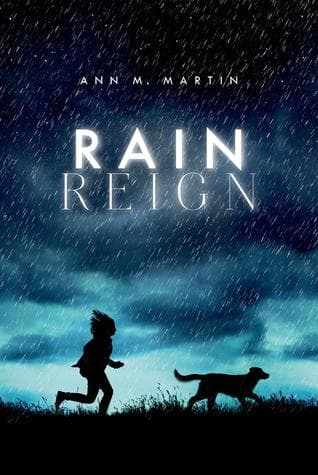
Ann M. Martin (2014)
Genre
Children's / Young Adult
Reading Time
240 min
Key Themes
See below
Sign in to track this book
A young girl with Asperger’s, who loves homonyms and her dog Rain, navigates a storm-damaged town and human connections when her dog is lost and found by his original owners.
Rose Howard, an elementary school student with Asperger's syndrome, lives in a small town with her father, Wesley. Rose lives by a strict set of rules and an interest in homonyms, which she writes in a notebook. Her closest friend is her dog, Rain, a stray her father found years ago. Rose named Rain after the homonyms 'reign' and 'rein,' making the name special to her. Rain gives Rose comfort and stability, often sleeping in her room and following her. Rose's father, a rough and often impatient man, has trouble understanding Rose, often leaving her alone to go to a local bar.
A powerful hurricane, Hurricane Susan, approaches Rose's town. As the storm rages, Rain becomes upset and needs to go outside. Despite Rose's requests to keep Rain inside, her father, annoyed by the dog's whining and the storm, lets Rain out into the yard, saying the dog will be fine. However, Rain does not come back. The next morning, as the storm lessens, Rose finds Rain is gone. Her father's first search is short and fails, leaving Rose to deal with the loss and the change to her ordered world.
Sad about Rain's disappearance, Rose decides to find her. She starts her search by checking familiar places, including the local library, where she often spends time. Her uncle Weldon, her father's brother, comes to help after the storm. Unlike her father, Weldon is kind and patient with Rose, understanding her routines and her way of seeing the world. He helps Rose search, driving her around the neighborhood and listening to her ideas. The community, affected by the hurricane, also starts to look for lost pets, which gives Rose some hope.
Rose wants to visit the local animal shelter, which is full of displaced pets after the hurricane. The noise, smells, and many animals are overwhelming for Rose, but her will to find Rain keeps her focused. She looks at each cage carefully, using her sharp observation skills. While Rain is not there, Rose notices a small, distinct scar on the ear of a dog that somewhat looks like Rain, and she remembers a talk about a dog named Rain found by a family. This detail, though not a perfect match, points their search in a new direction.
Following the small clue from the shelter, Rose and Weldon drive to a different neighborhood, one new to Rose, to check on the Veltmann family. The trip is hard for Rose, as it takes her out of her comfort zone and changes her routines. As they get close to the Veltmanns' house, Rose feels more anxious and hopeful. They learn that the Veltmanns did find a dog like Rain shortly after the hurricane. The idea that Rain might be with another family is both a relief and a source of deep sadness for Rose, who cannot imagine life without her.
Rose and Weldon arrive at the Veltmanns' home, where the family greets them, including their young daughter, Margaret. Margaret immediately shows them a dog she calls 'Regina,' which is Rain. Rain, though at first confused, recognizes Rose, wagging her tail and showing affection. The Veltmanns explain that they found Rain sheltering during the hurricane and, thinking she was a stray, took her in. They have grown attached to Rain, and Margaret sees her as her own pet. This meeting gives Rose a hard problem: Rain is safe, but she is now part of another loving family.
As Rose tries to understand seeing Rain with another family, the Veltmanns show clear proof that Rain was their dog, lost several years before. They show photos of Rain as a puppy with their family and provide vet records, including details about a specific scar on Rain's ear that Rose had noticed at the shelter. They explain that Rain had run away during an earlier storm and they had looked for her widely, never giving up hope. This news upsets Rose, as she realizes that Rain was not her father's find but a loved pet who had been missing from her true home.
The truth of Rain's original ownership puts Rose in a tough spot. Despite her love for Rain and her strong wish to keep her, Rose understands that Rain belongs to the Veltmanns. Her inner rules, which call for fairness and honesty, make her accept their claim. Her father, at first not wanting to give up the dog, eventually understands how serious the situation is. Weldon helps Rose deal with her strong feelings. With sadness, Rose decides to let Rain stay with the Veltmanns, knowing it is the right thing to do, even though it hurts her.
Rose spends a last, tearful hour with Rain at the Veltmanns' house. She pets Rain, whispers to her, and tells her how much she loves her. It is a very hard moment, full of grief and a strange sense of calm, knowing that Rain is safe and loved. Rose understands that Rain has found her way back home, an idea she deeply grasps. As she leaves the Veltmanns' house, Rose carries the weight of loss but also a new maturity and understanding. The experience, though painful, makes her face complex feelings and adapt to an unexpected change.
In the days and weeks after Rain goes back to the Veltmanns, Rose struggles with the emptiness. Her routines are changed, and her grief is clear. However, the experience also brings changes. Her father, seeing Rose's maturity and heartbreak, shows more patience and understanding. He tries harder to connect with her, even helping her with her homonym collection. Rose starts to make new rules for her changed world, finding strength in her own ability to recover and the quiet support of her uncle Weldon. She learns that while some losses are lasting, life goes on, and she can adapt and find new comforts.
The Protagonist
Rose learns to cope with profound loss and adapt to unexpected change, demonstrating resilience and a growing understanding of complex emotions beyond her rigid rules.
The Central Figure
Rain's journey from Rose's pet to her original family's pet highlights the theme of true ownership and the pain of letting go.
The Supporting
Wesley moves from impatience and misunderstanding to a greater degree of empathy and support for Rose.
The Supporting
Weldon consistently provides unconditional support and understanding for Rose, serving as a stable presence.
The Supporting
Margaret experiences the joy of reunion with her long-lost dog, 'Regina.'
The Supporting
Mrs. Veltmann experiences the joy of being reunited with her long-lost family pet.
The Mentioned
Remains a consistent, supportive presence in Rose's structured life.
Rose's identity includes her Asperger's, her rules, and her connection with Rain. Losing Rain, and learning about Rain's true identity, makes Rose rethink her idea of belonging and ownership. She learns that identity is not just about fixed rules but also about being able to adapt and recover emotionally. Her journey of letting go helps her discover herself, showing her ability for selfless love and emotional growth beyond her strict systems.
“My rules are what keep me safe.”
The main theme is Rose's love for Rain and the loss she feels when Rain goes missing and then goes back to her original owners. The book shows how strong a child's bond with a pet can be, especially for a child like Rose who finds comfort and consistency in that relationship. Rose's grief is real, but her choice to let Rain go shows a mature understanding of love that goes beyond wanting to own, showing the bittersweet side of true affection.
“I loved Rain. More than anything. But I knew she wasn't mine.”
The novel explores the challenges and successes of acceptance, both for Rose's Asperger's and for the hard truths she faces. Rose wants understanding from her father, who struggles with her condition. Uncle Weldon, however, shows acceptance. The biggest act of acceptance comes when Rose accepts that Rain belongs to another family, a choice based on her rules of fairness and a growing emotional maturity. This theme also includes the community's efforts to help during the hurricane, showing group acceptance and support.
“Dad doesn't always understand my rules, but sometimes he tries.”
Rose's life is carefully structured by her rules and routines, which give her comfort and predictability. The hurricane, and Rain's disappearance, change this order, putting Rose into a chaotic world. The story shows how Rose handles this, making her adapt and create new rules for a changed reality. Her struggle to balance her need for order with life's unpredictable nature is a main conflict, leading to her growth.
“Rules are very important. They keep things in order.”
The story looks at family relationships. Rose's bond with her father is strained but becomes stronger through the crisis, as he learns to be more patient and understanding. Her relationship with Uncle Weldon shows unconditional support. Finding Rain's original family, the Veltmanns, broadens the idea of 'family' and shows the deep connections that can exist, even between different homes, through a shared love for a pet. The hurricane also shows the wider community acting like a temporary family.
“Uncle Weldon always knew how to talk to me.”
Rose's special interest and a narrative motif reflecting her unique perspective.
Homonyms are Rose's central obsession and a recurring motif throughout the book. Her meticulous collection of homonyms in a notebook provides insight into her structured mind and her literal interpretation of language. The very name 'Rain' (reign, rein) is a homonym, making the dog's identity doubly significant to Rose. Homonyms also subtly highlight the idea of things appearing similar but having different meanings or origins, foreshadowing the revelation about Rain's true identity and the layers of meaning in 'ownership' and 'home.'
A catalyst for the plot, symbolizing chaos and disruption.
Hurricane Susan serves as the primary inciting incident, directly leading to Rain's disappearance. Beyond its literal role, the hurricane functions as a symbol of uncontrollable chaos and the disruption of order, mirroring Rose's internal struggle when her carefully constructed world is shattered. The storm forces characters out of their routines and safe spaces, pushing Rose to confront her fears and engage with the outside world in her desperate search for Rain. It also provides the context for Rain to be found by her original owners.
A coping mechanism and a structural element defining Rose's world.
Rose's self-imposed rules are a fundamental plot device, offering a window into her Asperger's syndrome and providing structure to her otherwise overwhelming world. These rules dictate her behavior, her understanding of fairness, and her emotional responses. The narrative frequently references these rules, showing how she applies them and how they are challenged by the unforeseen events surrounding Rain's disappearance. Ultimately, the necessity of adapting or creating new rules reflects her growth and ability to cope with change.
A key piece of evidence for Rain's true identity.
The small, distinctive scar on Rain's ear functions as a crucial plot device for identification. Rose first notices a similar scar on a dog at the shelter, sparking her initial lead. Later, the Veltmanns confirm this specific scar as a distinguishing mark on their lost dog, 'Regina,' providing irrefutable proof of ownership. This detail underscores Rose's keen observational skills and serves as a concrete, undeniable piece of evidence that resolves the central mystery of Rain's identity and ownership.
“I am Rose Howard, and I have Asperger's syndrome, and I am obsessed with homonyms.”
— Rose introduces herself and her unique perspective early in the story.
“Rain, reign, rein. They all sound the same, but they mean different things.”
— Rose explains her fascination with homonyms, which is central to the plot.
“My dog's name is Rain, and I named her that because she came to me on a rainy day.”
— Rose describes how she named her beloved dog, highlighting their bond.
“Rules are important. They keep things from getting out of control.”
— Rose reflects on her need for structure and order in her life.
“Sometimes I think my father doesn't understand me at all.”
— Rose expresses frustration with her father's lack of empathy.
“I have to find Rain. She's my best friend.”
— Rose is determined to search for her lost dog during a storm.
“Homonyms help me make sense of the world when it feels confusing.”
— Rose explains how her obsession with homonyms provides comfort.
“Not everyone follows the rules, and that's when things go wrong.”
— Rose observes how others' actions can lead to chaos.
“I miss my mother, even though I don't remember her very well.”
— Rose shares her feelings about her absent mother.
“Rain is more than just a dog to me; she's my anchor.”
— Rose describes the deep emotional significance of her dog.
“People think I'm weird because of the way I act, but I'm just being me.”
— Rose addresses the social challenges she faces due to her Asperger's.
“Finding Rain taught me that sometimes you have to break the rules to do what's right.”
— Rose learns a lesson about flexibility and morality during her search.
“Homonyms are like puzzles, and I love solving puzzles.”
— Rose compares her interest in homonyms to a enjoyable challenge.
“Even when things are hard, I have to keep going for Rain.”
— Rose shows resilience and dedication in her quest.
Ready to see how well you understood this book? Take our interactive quiz with 10 questions.

Ann M. Martin is a celebrated children's author, best known for the beloved 'The Baby-Sitters Club' series. She has also penned critically acclaimed novels such as 'A Corner of the Universe' and the 'Doll People' series, showcasing her versatility in writing for young readers. Her works often explore themes of friendship, family, and resilience.
Dan Gemeinhart
4.5
Kate O'Hearn
4.4

Jeanne Birdsall
4.4

Jen Wang
4.4
Wendelin Van Draanen
4.3

John Marsden
4.3

Chris Van Allsburg
4.3
Jennifer A. Nielsen
4.2