“The end of the world is not a single event, but a series of small, almost imperceptible changes.”
— Reflecting on the slow decay and transformation rather than an abrupt apocalypse.

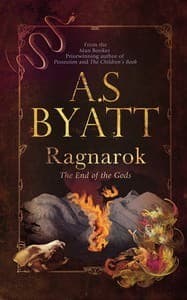
A.S. Byatt (2011)
Genre
Literary Fiction / Fantasy / Historical Fiction
Reading Time
180 min
Key Themes
See below
Sign in to track this book
During World War Two, a young girl's world falls apart and is remade when she discovers the Norse myth of Ragnarok, finding a reflection of her own wartime experience and the power of stories to face ultimate destruction.
The story introduces a 'thin child,' a young girl evacuated from bombed London to a rural English house during World War II. She is a quiet child, observant but often overwhelmed by her new surroundings and the constant fear of war. Her new home is cold and unwelcoming, with a strict, practical host family who do not understand her curiosity or her need for stories. She feels alone and longs for meaning or escape from the bleakness of her life, often retreating into her imagination to cope with wartime rationing and her parents' absence.
Amidst her feelings of displacement, the thin child finds a green book of Norse myths in her new home's library. This book, with its illustrations and tales of gods, giants, and monsters, becomes her most prized possession and a source of comfort and wonder. The myths, with their stories of creation, conflict, and destruction, contrast sharply with the ordinary and fearful reality of her daily life. She reads the stories eagerly, drawn to the dramatic and often violent images, finding in them a structure and importance that her own world seems to lack.
As the thin child reads, the Norse myths begin to shape how she sees reality. The characters and events of Asgard, Midgard, and Jotunheim become more than stories; they are a vivid mental world she can enter. She starts to see the English countryside through the myths: trees are Yggdrasil, the world-tree; the cold, grey skies are Fimbulwinter; and distant war sounds echo the coming Ragnarok. This immersion provides both an escape and a way to understand the chaos and destruction of the war, making the incomprehensible more manageable through the symbolic power of the old tales.
The girl learns about the Norse gods. She understands Odin's wisdom and his sacrifice for knowledge, Thor's strength and his hammer Mjolnir, Freya's beauty and her tears of gold. Most importantly, she deals with the trickster Loki and his monstrous children—Fenrir, the wolf; Jörmungandr, the world serpent; and Hel, ruler of the underworld. She understands their individual stories, how they connect, and the path leading them to their fate. Their struggles and flaws connect with her own sense of vulnerability and life's unpredictable nature.
The idea of Fimbulwinter, the three-year winter before Ragnarok, makes a strong impression on the thin child. She sees the cold, grey, rationed life of wartime England as this mythical winter. The scarcity, the constant chill, the lack of joy, and the feeling of an ending all match the descriptions of Fimbulwinter in her book. This connection helps her process the war's hardships not just as random suffering, but as part of a grand, terrifying cosmic story. The bleakness of her outside world is mirrored and explained by the mythic prelude to destruction.
Loki's children, especially the wolf Fenrir and the world serpent Jörmungandr, hold a powerful, frightening grip on the girl's imagination. Fenrir, bound but destined to break free and eat Odin, represents unstoppable destruction. Jörmungandr, encircling the world, represents the unseen threat that holds existence. These monstrous figures symbolize the destructive forces of the war—the bombs, the fear, the hunger—that threaten to consume her world. She understands their roles in Ragnarok, foreshadowing the final cataclysm.
As the thin child reads, Ragnarok, the Twilight of the Gods, seems inevitable. She internalizes the prophecies: the breaking of bonds, the release of monsters, the final battle on the plain of Vigrid where gods and giants will clash. This apocalyptic vision, while frightening, also offers a strange sense of closure. It mirrors the escalating tensions and destruction of the actual war, suggesting a climactic end to the current suffering. She understands that Ragnarok is not just an ending, but a necessary purification, a prelude to rebirth.
The girl vividly imagines Ragnarok unfolding: the sun and moon eaten by wolves, stars falling, giants attacking, gods meeting their fated deaths. Odin swallowed by Fenrir, Thor falling to Jörmungandr's venom, Loki battling Heimdall. Fire and flood consume the world, a complete annihilation. This imagery of total destruction connects with news of bombed cities and the constant threat of annihilation in her own world. It is a terrifying yet cathartic visualization of the ultimate results of conflict, both mythical and real.
Crucially, the myths do not end with total destruction. After Ragnarok, a new, green world emerges from the waters. Balder returns from the dead, and new gods and humans populate the earth. This promise of renewal after disaster gives the thin child a sense of hope. It suggests that even after the most devastating losses and terrible wars, life continues and begins anew. This cyclical understanding of existence provides a vital contrast to the despair of her wartime experience, giving meaning to suffering.
By the end, the Norse myths are more than stories for the thin child; they are a basic part of her inner world and her way of understanding. They have given her a language and a structure to grasp the horrors of war and the inevitability of change and loss. The myths provide both a refuge and a tool for survival, allowing her to face the realities of her evacuation and the ongoing conflict with perspective and a glimmer of hope for a future rebirth, mirroring the cyclical nature of Norse cosmology.
The Protagonist
She transforms from a displaced, fearful child into one who finds resilience and understanding through the power of myth, internalizing ancient stories to process modern trauma.
The Supporting/Mentioned (mythical figure)
His arc is pre-determined within the myths: a journey of acquiring knowledge and power, leading to his fated demise in Ragnarok.
The Supporting/Mentioned (mythical figure)
His mythological arc involves numerous battles and acts of protection, culminating in his mutual destruction with Jörmungandr during Ragnarok.
The Antagonist/Supporting (mythical figure)
Loki's arc is one of escalating mischief and malevolence, leading to his imprisonment and eventual release to lead the forces against the gods at Ragnarok.
The Antagonist/Supporting (mythical creature)
His arc is predetermined: to grow, be bound, and eventually break free to fulfill his role in Ragnarok.
The Antagonist/Supporting (mythical creature)
His arc is to grow to immense size, encircle the world, and participate in Ragnarok, where he and Thor mutually destroy each other.
The Supporting
They remain largely static, serving as a backdrop to the child's internal journey, representing the 'real world' she seeks to escape or interpret.
The main theme is the power of myth to transform and redeem. The Norse legends give the thin child a way to understand, interpret, and cope with the horrors of World War II. The stories offer a grand narrative where chaos and destruction (Ragnarok) are part of a larger, cyclical process that eventually leads to renewal. This allows her to move past the immediate, meaningless suffering of war and find order and hope. The myths become a vital psychological tool, a 'green book' that opens up a richer, more meaningful inner world, as seen when she describes the English countryside through Asgard or Fimbulwinter.
“She needed to know how it would all end. She needed to know what would come after the end.”
The novel looks at how a young mind processes collective trauma (war) and personal loss (separation from family, displacement). The thin child's deep dive into Ragnarok is a metaphor for her own psychological struggle. The myths allow her to externalize and process her fears of destruction, death, and the unknown. By seeing the fated demise of gods and the world, she gains a sense of control and understanding over the unpredictable violence of her reality. The cyclical nature of the myths, promising rebirth after destruction, offers a crucial psychological comfort against despair, allowing her to face the 'end' with a glimmer of hope for a 'new beginning.'
“The stories were a kind of armour, a way of holding the world at bay and making sense of it.”
The book shows the destructive forces of both nature and war, and how they connect. The brutal parts of the Norse myths—Fimbulwinter, the sun being swallowed, the world burning—find echoes in the bombed cities, rationing, and bleak landscapes of wartime England. Nature's forces, often personified by monsters like Fenrir and Jörmungandr, represent an ancient, primal destructive power that mirrors the man-made destruction of war. Yet, the theme also highlights nature's resilience, with the promise of a new, green world emerging from Ragnarok's ashes, suggesting that life will continue despite disasters.
“The grey light of the Fimbulwinter was the grey light of England at war.”
The novel contrasts a child's imagination with the harsh realities of her outside world. The thin child's inner life, fueled by the Norse myths, is rich, complex, and full of meaning, contrasting with her ordinary, often cold existence with her host family and the grim backdrop of war. Her imagination is not just an escape; it is a tool for survival and understanding. She actively reshapes her perception of reality through myth, showing how children use fantasy to process difficult experiences and build an inner world that supports them.
“She lived inside the stories, and the stories lived inside her.”
The physical book of Norse myths that acts as a portal and lens for the protagonist.
The 'green book' of Norse myths serves as the central framing device. It is not just a prop but an active catalyst for the thin child's internal journey. The physical act of reading and the tangible presence of the book provide a concrete link between her mundane reality and the epic mythic world. Its discovery marks a turning point, and its contents dictate the structure and thematic development of her narrative. The book literally and metaphorically gives her a 'text' through which to read and interpret her own life and the larger world at war.
The Norse myths function as an allegorical framework for understanding WWII and personal trauma.
The entire retelling of Ragnarok functions as an extended allegory for the experience of World War II and the thin child's personal trauma. Fimbulwinter represents the bleakness of wartime England, the monsters (Fenrir, Jörmungandr) symbolize the destructive forces of war, and Ragnarok itself is a metaphor for the war's apocalyptic scale and the promise of a new world post-conflict. This device allows the author to explore complex historical and psychological themes through the accessible and powerful narrative of ancient mythology, making the abstract horrors of war comprehensible on a symbolic level.
The story is filtered through the highly imaginative and myth-infused perspective of a child.
The narrative is presented through the subjective and highly imaginative lens of the thin child. Her interpretations of events and her blurring of the lines between myth and reality mean that the reader experiences her world as she does—infused with the symbolism and drama of the Norse myths. This device allows for a rich, poetic, and often surreal description of her experiences, emphasizing the power of her inner world. It highlights how children construct meaning from chaos, and how personal perception can reshape objective reality, making the narrative deeply personal and emotionally resonant.
The narrative mirrors the cyclical nature of destruction and rebirth found in the Ragnarok myth.
The novel's structure implicitly follows the cyclical pattern of the Ragnarok myth: creation, a period of flourishing, inevitable destruction, and subsequent rebirth. This mirrors the trajectory of the war—a period of peace, the onset of conflict and devastation, and the eventual hope for a renewed world. This device provides a sense of cosmic order and meaning to seemingly random chaos, suggesting that even the most catastrophic endings are part of a larger, ongoing cycle of existence. It offers a profound sense of hope and continuity beyond immediate destruction.
“The end of the world is not a single event, but a series of small, almost imperceptible changes.”
— Reflecting on the slow decay and transformation rather than an abrupt apocalypse.
“She read because she was alive, and reading was a way of knowing more about being alive.”
— The young girl's deep immersion in books as a means of understanding existence.
“The gods were not perfect. They were just bigger, more powerful versions of humans, with all their flaws writ large.”
— A realization about the anthropomorphic nature of the Norse gods and their imperfections.
“There was a world inside the book, and a world outside, and sometimes they blurred.”
— Describing the immersive experience of reading and how it can affect one's perception of reality.
“Every story, however ancient, has a new life when it is told again.”
— Emphasizing the enduring power and adaptability of myths and narratives.
“The silence of the war was not empty, but full of unspoken fears and unacknowledged grief.”
— Reflecting on the psychological impact of wartime, particularly for those on the home front.
“To be alone with a book was to be in the best company.”
— The girl's preference for books over human interaction, finding solace and companionship in stories.
“The world was always ending, in small ways, for small people, all the time.”
— A poignant observation on personal losses and changes mirroring the larger concept of Ragnarok.
“She learned that magic was not about spells and wands, but about seeing the world differently, making connections others missed.”
— A broader definition of magic, linked to perception and insight rather than supernatural powers.
“The fire was not just destruction; it was also cleansing, a preparation for what was to come.”
— Considering the dual nature of destruction, particularly in the context of the world's end and rebirth.
“Even the gods had their moments of doubt, their moments of despair, just like mortals.”
— Further humanizing the divine figures by attributing very human emotions to them.
“The past was not dead; it was merely sleeping, waiting to be reawakened by a curious mind.”
— Emphasizing the enduring relevance of history and myths, and the power of inquiry.
“What was a myth, after all, but a way to make sense of things too vast and terrible to comprehend otherwise?”
— Defining the function of myth as a narrative framework for understanding complex and overwhelming realities.
“The world was full of signs, if only one knew how to read them.”
— The idea that deeper meanings and patterns exist within reality, awaiting interpretation.
Ready to see how well you understood this book? Take our interactive quiz with 10 questions.
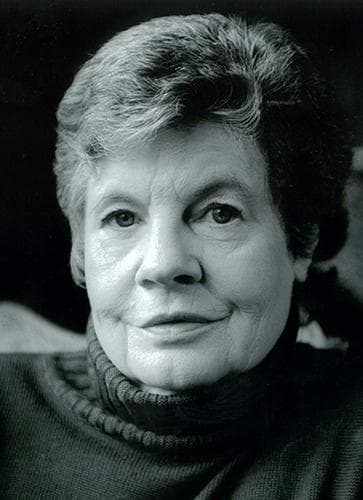
A.S. Byatt is a Booker Prize-winning author celebrated for her intricate and intellectually rich novels. Her most acclaimed works include 'Possession,' a complex exploration of literary history and romance, and 'Ragnarok,' a vivid retelling of Norse mythology. Byatt's writing is characterized by its deep engagement with literature, history, and the natural world, earning her a reputation as one of contemporary Britain's most significant novelists.







