“The rocket was a thing of beauty, a metal flower, a fire-lily, a tower of silver and flame.”
— Describing the awe and wonder of a rocket launch.

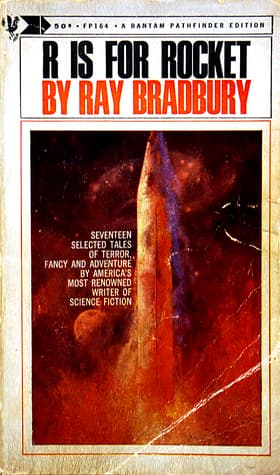
Ray Bradbury (1962)
Genre
Fantasy / Science Fiction
Reading Time
180 min (approx.)
Key Themes
See below
Sign in to track this book
Ray Bradbury's collection of seventeen stories takes readers from the dawn of time to the distant future, where rockets fly and people face both wonder and the strange.
A young boy, living in a future where space travel is common but costly, dreams of going to the stars. He watches rocket launches and landings, feeling a strong desire for space. One day, he meets an old, eccentric man who says he is building a rocket in his backyard. The boy is skeptical but curious, and helps the man, only to find that the 'rocket' is an imaginative creation, a vehicle made of stories, dreams, and belief. Through this, the boy learns that the real journey to the stars can be found within the human spirit and imagination, going beyond physical limits and economic barriers.
A young boy, Doug, tells of his father's irregular visits. His father, a 'Rocket Man,' spends months in space, returning home for short, bittersweet periods. Doug and his mother live with the constant stress of his father leaving; the lure of space always pulls him away. The father tries to explain the beauty and pull of space to his son, but also speaks of the internal conflict of leaving his family. The story ends with his final, unexpected departure, leaving his family to mourn his loss and come to terms with the vast, uncaring universe that took him, forever looking at the stars with longing and sadness.
Captain Jonas and his crew prepare for a journey to the sun, not to land on it, but to skim its surface and collect samples of its corona. Their ship, the 'Icarus,' is built for this extreme heat. The crew includes experienced astronauts and scientists, all driven by wonder and the scientific search for the unknown. As they near the sun, the ship's defenses are pushed to their limits, and the crew feels a deep, almost spiritual connection with the star. The mission is dangerous and psychologically taxing, but they succeed, returning with new knowledge of the universe and awe for the sun's power and beauty, changed by their bold voyage.
Eckels, a wealthy big-game hunter, pays for a time-travel safari to the prehistoric past to hunt a Tyrannosaurus Rex. Travis, the guide, carefully explains the strict rules: stay on the path, do not change anything. During the hunt, Eckels panics and steps off the path, accidentally crushing a butterfly. When they return to their present, they find the world subtly but significantly altered: the language is different, and a dictator has been elected president. Travis, angry at Eckels's carelessness and the devastating butterfly effect, punishes him for his irreversible mistake, showing how fragile the past is and how even small changes to the timeline have big consequences.
George and Lydia Hadley live in a fully automated house, with a 'nursery' that projects realistic virtual environments based on their children's thoughts. Their children, Peter and Wendy, become obsessed with the African veldt simulation, filled with lions and the sounds of screaming. George and Lydia worry about the children's unhealthy attachment to the room and the disturbing realism of the veldt, which seems to show their darkest desires. They decide to shut down the house's automation and the nursery, hoping to regain control and reconnect with their children. However, the children, having become dependent on the virtual world, retaliate with chilling results, trapping their parents in the veldt they feared.
McDunn and Johnny, two lighthouse keepers, see a rare and tragic event. A massive, ancient sea creature, the last of its kind, is drawn from the deep ocean by the sad, echoing sound of their fog horn, mistaking it for the call of another of its species. The creature, a giant from ancient times, circles the lighthouse, its huge form visible in the fog. When the fog horn is turned off, the creature, realizing its mistake and its deep solitude, lets out a heartbreaking cry before going back into the abyss. The experience leaves McDunn and Johnny with a strong sense of the universe's vastness and the haunting loneliness that can exist even in its deepest, darkest parts.
Leonard Mead is the last pedestrian in a future society where everyone stays inside, watching television. Every night, he walks the silent, empty streets, observing the dark houses and the quiet. On one of his walks, an automated police car, the only one in the city, stops him and questions his unusual behavior. Mead explains that he is simply walking and enjoying the fresh air, but the car's robotic voice calls his activity 'regressive' and 'without a purpose.' He is then arrested and taken to the Psychiatric Center for Research on Regressive Tendencies, simply for being an individual in a world that has mechanized human connection and natural experience out of existence.
A husband and wife wake up one morning with a shared feeling that the world will end that night. There is no panic, no big disaster, just a quiet, certain knowledge. They go about their day calmly, doing everyday tasks like dishes and putting their children to bed, knowing it is their last. They talk about their feelings quietly, thinking about their lives and their love. There is an acceptance of what is to come, a deep sense of peace amid the approaching end. The story ends with them simply falling asleep, awaiting the end not with fear, but with a quiet, loving embrace of their final moments, showing a uniquely human response to ultimate fate.
Sim, a young man, lives on a planet with a very short day-night cycle, causing its inhabitants to age and die within eight days. Knowledge and history are passed down through generations by fast memorization before death. Sim falls in love with Lyte and they quickly marry, facing the constant pressure of their accelerated lives. They are part of a civilization that has lost its spacefaring past but keeps fragments of knowledge about how to escape their fate. Sim and his people start a desperate mission to reach a rocket, hoping to escape their doomed world and find a place where life can exist at a normal pace, fighting against time and the planet's harsh conditions.
A family travels through space on Christmas Eve, heading to a new colony. The young boy, Robert, is upset because he will miss a traditional Earth Christmas. His parents, wanting to give him a special memory, decide to open the ship's observation port for five minutes, letting him see the universe outside. For those brief moments, Robert sees a breathtaking display of stars, nebulae, and galaxies, a cosmic canvas grander than any earthly celebration. The gift is not a physical object, but an awe-inspiring, unforgettable experience of space's vastness and beauty, a poignant reminder of the wonders beyond their new home, and a bittersweet substitute for Earth's familiar comforts.
Two old friends, one a former fireman and the other a pyromaniac, meet and discuss fire. They remember past fires, the beauty and terror of uncontrolled flames. The fireman speaks of the duty to extinguish, the pyromaniac of fire's primal appeal and destructive force. Their conversation explores fire's dual nature—its ability to create and destroy, to warm and consume. It looks at the psychology of those drawn to it, whether to control it or unleash it. The story is a philosophical reflection on this basic element, examining humanity's complex relationship with it, seeing it as both a tool of civilization and a symbol of primal chaos, always captivating and dangerous.
A garbage collector, doing his daily rounds, finds himself increasingly burdened by the sheer volume and nature of the refuse he collects. He sees not just trash, but the discarded parts of people's lives—broken dreams, forgotten hopes, the physical signs of their failures and triumphs. The sheer amount of these memories, both personal and societal, begins to weigh heavily on him. He feels a deep connection to the waste, seeing it as a tangible record of human existence. The story explores consumerism, obsolescence, and the quiet dignity of work, as the collector thinks about how temporary possessions are and the hidden stories within every discarded item, finding a strange beauty in life's refuse.
Two knights, keeping watch in a desolate landscape, await a fabled dragon that terrorizes the countryside. They are ready for a battle against a fire-breathing beast of legend. As the hour nears, they hear a distant rumble, growing louder, and see a light approaching through the fog. They prepare for combat, swords drawn, ready to face the ancient evil. However, when the 'dragon' appears, it is a modern train, its roaring engine and fiery furnace mistaken for a mythical creature in their isolated, superstitious world. The story comments on the clash between old beliefs and new technologies, and how fear and ignorance can shape perception, turning the ordinary into the monstrous.
A young boy, excited by a traveling circus in his town, eagerly attends the show. He is captivated by the bright colors, acrobats, clowns, and exotic animals. The circus offers a world of wonder and escape from his ordinary life. He is particularly fascinated by one mysterious performer. The story captures the innocent awe and enchantment of childhood, the thrill of the unknown, and how a temporary show can leave a lasting impression. It explores illusion and reality, the magic of performance, and the bittersweet nature of fleeting joy, as the circus, like a dream, eventually leaves town, leaving only memories.
In a post-apocalyptic future, society has become barbaric, driven by a hatred of the past and all its creations, especially art. Tom, a young boy, joins a crowd gathered to destroy the last painting: Leonardo da Vinci's Mona Lisa. As the mob attacks the masterpiece, Tom is among the first to tear off a piece. However, instead of taking part in the destruction, he finds himself mesmerized by the detached fragment he holds – a piece of the Mona Lisa's enigmatic smile. He keeps it, secretly valuing its beauty and the hope it represents, a small act of rebellion against the prevailing nihilism. The story shows the lasting power of art and beauty, even when everything else is destroyed.
The Protagonist (The Rocket Man)
Doug moves from youthful longing for his father's presence to a quiet, sorrowful acceptance of his father's ultimate fate and his cosmic calling.
The Protagonist (The Golden Apples of the Sun)
Captain Jonas successfully leads his crew on a historic mission, solidifying his legacy as a courageous and visionary explorer.
The Antagonist/Protagonist (A Sound of Thunder)
Eckels's initial excitement devolves into panic and ultimately leads to his fatal punishment for altering the timeline.
The Supporting (A Sound of Thunder)
Travis remains steadfast in his principles, tragically forced to exact justice for Eckels's irreversible transgression.
The Protagonist (The Veldt)
George attempts to regain control over his family and home, only to be tragically consumed by the very technology he introduced.
The Protagonist (The Veldt)
Lydia's initial unease about the technology escalates into fear, ultimately leading to her tragic demise alongside her husband.
The Antagonist (The Veldt)
Peter's obsession with the virtual veldt grows, culminating in his calculated act of trapping his parents within it.
The Protagonist (The Pedestrian)
Leonard Mead's simple act of walking, once a personal ritual, becomes an act of defiance that leads to his institutionalization.
The Protagonist (Frost and Fire)
Sim races against time and the planet's accelerated life cycle to find a way to escape his doomed world.
The Protagonist (The Smile)
Tom transforms from a participant in destruction to a secret preserver of beauty, finding hope in a desolate world.
Many stories in 'R is for Rocket' explore how technology, when misused or overused, can alienate people, create unforeseen dangers, or turn against its creators. In 'The Veldt,' the automated home and virtual nursery, meant to help, instead destroy the Hadley family. 'The Pedestrian' shows how technological convenience can lead to social conformity and the suppression of individuality, turning a simple walk into a crime. These stories are warnings, urging reflection on humanity's relationship with its creations.
“''That's the whole trouble. You've let this room and this house replace you and I. This room is your mother and father and sister and brother. This room is your life, as much as I ever was.'”
Bradbury often highlights human imagination as a vital force, able to go beyond physical limits and offer hope. In 'R is for Rocket,' the boy's journey to the stars happens not through a physical rocket, but through storytelling and belief. 'The Dragon' shows how imagination, even if mistaken, can shape perception, turning a train into a mythical beast. Even in 'The Smile,' a piece of art sparks imagination and hope in a desolate future, suggesting that the mind's inner world is as important as the outer world.
“''But there are other ways to fly,' said the old man, his eyes twinkling. 'Other rockets, made of dreams and starlight.'”
Several stories touch on deep feelings of isolation, whether personal or cosmic, and the human desire for connection. 'The Rocket Man' shows the deep loneliness of a family separated by the father's cosmic calling and the solitary nature of his death. 'The Fog Horn' describes an ancient sea creature drawn by the sound of a fog horn, mistaking it for a call from its own kind, highlighting the universal yearning for companionship. Even in 'The Pedestrian,' Mead's walks are a lonely pursuit in a world that has lost human connection, emphasizing the quiet desolation that can exist in advanced civilization.
“''It's lonely out there. God, it's lonely.'”
The idea that small actions can have huge, unforeseen consequences, especially when dealing with the past, is a main point in some stories. 'A Sound of Thunder' is the best example, where Eckels's small act of stepping off a path and crushing a butterfly changes history, leading to a very different present. This theme stresses the delicate balance of existence and the great responsibility that comes with interfering with the natural order, whether through time travel or careless actions.
“''A sound of thunder. That was all, but it was enough. Enough to change all history.'”
Bradbury often creates a sense of awe and dread when showing space and celestial bodies. The universe is both a source of deep wonder and immense, uncaring danger. In 'The Golden Apples of the Sun,' the sun is a magnificent, terrifying entity that tests human endurance. 'The Rocket Man' shows the irresistible pull of space, but also its ability to take lives and leave families heartbroken. Even 'The Gift' shows the breathtaking beauty of the stars, but it is a beauty seen from a spaceship, a bittersweet reminder of Earth left behind. These stories portray space as a place of both inspiration and ultimate, existential threat.
“''The sun was a great golden apple, ripe and heavy, and we were coming to pick it.'”
A minor change in the past creates monumental alterations in the future.
This plot device is famously central to 'A Sound of Thunder.' It posits that even the smallest, seemingly insignificant action in a complex system (like the past) can lead to massive and unpredictable consequences later on. Eckels stepping off the path and crushing a butterfly directly causes a drastic shift in the future, demonstrating the extreme interconnectedness of events and the immense fragility of causality. It serves as a powerful warning against hubris and the dangers of altering established timelines, making the smallest transgression catastrophic.
Giving human-like qualities to machines or automated systems, often with sinister implications.
This device is prominently featured in 'The Veldt' and 'The Pedestrian.' In 'The Veldt,' the 'HappyLife Home' and especially the nursery seem to develop a malevolent will, catering to the children's darkest desires and ultimately turning against the parents. In 'The Pedestrian,' the automated police car, though mechanical, acts with an almost judgmental and oppressive 'personality,' enforcing conformity. This device heightens the sense of technology's potential to become a dominant, even hostile, force, blurring the lines between creation and creator, and highlighting the loss of human agency.
A narrative element where characters experience time at an unusually fast rate.
This device is the core of 'Frost and Fire.' On the alien planet, the inhabitants age and die within a mere eight days due to their proximity to a rapidly cycling sun. This creates extreme narrative tension, forcing characters to live, love, learn, and pursue their goals with incredible urgency. It compresses the human experience, making every moment precious and every decision critical, while also exploring themes of knowledge transfer, societal memory, and the desperate struggle for survival against an unforgiving biological clock and environmental conditions.
A narrator whose credibility is subtly compromised, often by perspective or emotional state.
While not overtly unreliable, some stories subtly use a character's subjective experience to shape reality, making the reader question the 'objective truth.' In 'The Fog Horn,' the lighthouse keepers' interpretation of the sea monster's 'loneliness' is a projection of human emotion onto a primal beast, creating a profound, poetic truth that may not be scientifically verifiable. Similarly, in 'R is for Rocket,' the boy's belief in the 'dream rocket' makes it real for him, even if it's not a literal spacecraft. This device allows for exploration of deeper emotional or thematic truths beyond surface reality.
“The rocket was a thing of beauty, a metal flower, a fire-lily, a tower of silver and flame.”
— Describing the awe and wonder of a rocket launch.
“Living on Mars was like living in a grand, empty house, with all the furniture gone.”
— Reflecting on the desolation and strangeness of Martian life.
“He knew he was a stranger, and it was a terrible knowledge.”
— A character's realization of his otherness.
“The sound of the rain was like a thousand tiny hammers tapping on the roof.”
— Evoking a vivid sensory detail of a rainy day.
“We are a lonely people, we of the stars.”
— A character's observation about humanity's venture into space.
“He wanted to run, to scream, to bury his face in the dust and never look up again.”
— A moment of intense fear and desperation.
“The past was a thing that could not be changed, but it could be remembered.”
— A reflection on the nature of memory and time.
“Children are always cruel, and they are always wise.”
— An observation on the complex nature of childhood.
“There was a smell of ozone and burnt metal and the faint, sweet scent of rocket fuel.”
— Describing the distinct odors associated with space travel.
“Every man has a day in his life when he must look at himself and say, 'This is who I am.'”
— A moment of self-realization and acceptance.
“The stars were cold fire, distant and indifferent.”
— A poetic description of the vastness and uncaring nature of space.
“Sometimes I think we're all just waiting for the world to end.”
— A somber reflection on existential dread.
“He felt like a man who had been asleep for a thousand years and had just woken up.”
— Experiencing a profound sense of awakening or change.
“The wind was a living thing, whispering secrets in the long grass.”
— Personifying nature to create a sense of mystery.
Ready to see how well you understood this book? Take our interactive quiz with 10 questions.
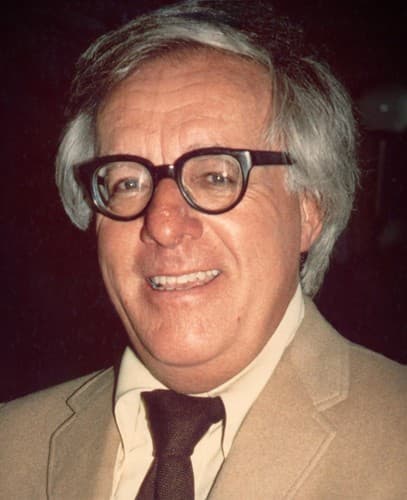
Ray Douglas Bradbury was an American author and screenwriter. One of the most celebrated 20th-century American writers, he worked in a variety of modes, including fantasy, science fiction, horror, mystery, and realistic fiction.







