“Christians are like the sands of the sea. You can scatter them, but you cannot destroy them.”
— Spoken by Petronius, reflecting on the resilience of Christians despite persecution.


Henryk Sienkiewicz (1999)
Genre
Historical Fiction / Spirituality / Romance
Reading Time
1200 min
Key Themes
See below
Sign in to track this book
In Nero's Rome, a Roman patrician's love for a Christian hostage starts a dangerous journey of faith and sacrifice, as an empire declines and a new religion begins.
The story begins in Rome. Marcus Vinicius, a wealthy and important patrician, returns from military service. He visits his uncle, Petronius, a sophisticated and cynical man in Nero's court. At the house of Aulus Plautius, a respected former consul and general, Vinicius meets Lygia Callina. She is a Lygian princess held as a hostage by Rome, living with Aulus Plautius and his Christian wife, Pomponia Graecina. Vinicius is immediately drawn to Lygia's purity and grace, which contrasts with Rome's decadence. He wants her and, with Petronius's cynical advice, plans to make her his mistress, not knowing she is Christian.
Petronius uses his influence with Nero to arrange for Lygia to be officially claimed by the emperor and then given to Vinicius. Lygia, upset at the idea of becoming Vinicius's concubine and being exposed to the court's depravity, is brought to the imperial palace. During a feast, her loyal Lygian bodyguard, Ursus, and other Christians rescue her. They lead her through Rome's alleys, leaving Vinicius angry and determined to find her. This event starts Vinicius's search, which also connects him with the growing Christian community.
Vinicius, wanting to find Lygia, hires Chilo Chilonides, a cunning and immoral Greek philosopher, to track her. Chilo finds the Christian community in Trastevere. Vinicius, in disguise, tries to kidnap Lygia from a Christian gathering but is stopped by Ursus, who, defending Lygia, badly injures Vinicius. Instead of leaving him, Lygia and her Christian friends, including the physician Glaucus, nurse him back to health. While recovering, Vinicius sees the Christians' compassion and selflessness. This confuses and challenges his Roman view, especially Lygia's faith and kindness to him.
While recovering among the Christians, Vinicius starts to see Lygia as more than an object of desire; she is a woman of deep spiritual conviction. He observes their simple, loving community and their teachings of forgiveness and charity. The Apostle Peter, a respected Christian leader, visits Vinicius and Lygia, explaining Christian beliefs further. Vinicius begins to question his own values and the emptiness of Roman pleasure-seeking. He tells Lygia he loves her, now wanting a relationship based on mutual respect and faith, a change from his first intentions.
Nero, wanting to rebuild Rome more grandly and inspired by Troy's destruction, arranges the Great Fire of Rome. The city burns, causing widespread destruction and suffering. Vinicius, now truly worried about Lygia, searches for her in the chaos. The Roman people, seeing the emperor's indifference, become restless and angry. To shift blame and calm the public, Tigellinus, Nero's prefect of the Praetorian Guard, suggests blaming the Christians for the fire.
After Nero's order, a harsh persecution of Christians begins. They are rounded up in large numbers, imprisoned, and tortured. Vinicius, now a convert in all but baptism, uses his influence to try and protect Lygia and her community. But his efforts fail against the Roman state. Many Christians, including Glaucus and Crispus, are killed. Prisons overflow. The Roman public, initially swayed by propaganda, starts to feel uneasy at the extreme cruelty of the persecutions, especially as Christians face death with faith and dignity.
Despite Vinicius's efforts, Lygia is captured and imprisoned in the Mamertine Prison, awaiting her death in the arena. Vinicius falls into despair. His Roman powerlessness contrasts with the Christians' calm acceptance of their fate. He sees many acts of martyrdom, which strengthen his faith. The Apostle Peter baptizes him, and he fully embraces Christianity, finding comfort in his new belief, even as Lygia's death nears. His love for Lygia becomes part of his love for Christ.
Lygia is sentenced to be killed by a wild bull in the arena, a show for the Roman crowd. She is tied to the back of the large bull. Ursus, her loyal protector, must fight it bare-handed. In an amazing show of strength and devotion, Ursus wrestles the bull to the ground and breaks its neck. The Roman crowd, moved by Ursus's bravery and Lygia's innocence and beauty, demands their release. Nero, under public pressure and Petronius's subtle influence, reluctantly grants them mercy, a rare event.
Petronius, having lost favor with Nero due to his critical views and refusal to flatter the emperor, receives an order to kill himself. Instead of dying by Nero's hand or in disgrace, Petronius holds a grand farewell feast. Surrounded by friends and his slave, Eunice, he calmly opens his veins, dying with dignity. Before his death, he dictates a letter to Nero. It is not a plea, but a harsh critique of the emperor's artistic lack and moral depravity, a final act of defiance.
After their escape, Vinicius and Lygia, now married, leave Rome for a life of peace and Christian devotion. The Apostles Peter and Paul, having spread faith throughout Rome, also prepare to leave. Peter, at first hesitant, is convinced by a vision of Christ (the 'Quo Vadis?' encounter) to return to Rome to face his death. Paul, too, understands his fate. Nero's reign continues its decline, marked by paranoia, tyranny, and public unhappiness. The novel hints at Nero's eventual downfall and Christianity's triumph over pagan Rome.
The Protagonist
From a self-centered Roman patrician driven by lust and power, he transforms into a compassionate and devout Christian, finding true love and spiritual fulfillment.
The Protagonist
She remains steadfast in her Christian faith and purity, inspiring Vinicius's conversion and ultimately finding love and freedom.
The Supporting
He maintains his sophisticated cynicism and aesthetic values, ultimately choosing a dignified death as an act of defiance against Nero's tyranny.
The Antagonist
He descends further into madness and tyranny, culminating in his downfall and the widespread hatred of his subjects.
The Supporting
He remains Lygia's steadfast protector, his physical strength serving his unwavering Christian faith.
The Supporting
From a cynical, opportunistic betrayer, he undergoes a profound spiritual conversion, becoming a devout Christian and ultimately a martyr.
The Supporting
He guides the nascent Christian community and inspires conversions, ultimately fulfilling his destiny as a martyr in Rome.
The Supporting
She remains a steadfast example of Christian piety and virtue throughout the trials, offering spiritual guidance and comfort.
The Supporting
He maintains his position as Nero's cruel confidant, driving the persecution and perpetuating the emperor's tyranny.
This is the main theme, showing the conflict of two different views. Pagan Rome, represented by Nero's court, shows pleasure-seeking, cruelty, power, and art without morals. Christianity, represented by Lygia, Peter, and the Christian community, champions love, forgiveness, sacrifice, and spiritual purity. The novel details Rome's moral decay and the new faith's strength, showing how Christian values challenge and begin to replace the pagan order. The persecution scenes highlight this conflict through the contrast between Roman brutality and Christian resolve.
“For the first time, Vinicius understood that there was a power in the world which was able to overcome all others, and that was the power of love, of truth, and of suffering for the truth.”
The theme of love is shown in several ways. Vinicius's initial desire for Lygia changes into a deep, spiritual love, reflecting his conversion to Christianity. Lygia's purity and the Christian idea of unconditional love drive this personal change. The novel suggests that true love, based on spiritual connection rather than physical desire or possession, can redeem and change people. This contrasts with the fleeting and often cruel 'love' in Nero's court. The love between Vinicius and Lygia becomes a symbol of Christian values winning.
“He understood that what he had felt for her before was not love, but a desire of the senses, while now he loved her with his whole soul, and that this love was not of the earth but of heaven.”
The book shows martyrdom as proof of strong faith. During the Great Persecution, many Christians choose death over giving up their beliefs, facing tortures with calm and even joy. Figures like Glaucus, Crispus, and Peter and Paul, show the ultimate sacrifice for their faith. This theme emphasizes spiritual conviction's power to overcome physical suffering and death. It shows the effect of Christian witness on both believers and non-believers, including Chilo's conversion and the Roman crowd's sympathy for Lygia.
“They died not for Rome, but for Christ, and in their death, they conquered Rome.”
Sienkiewicz details the moral and political decline of Imperial Rome under Nero. The feasts, the artistic pursuits, the casual cruelty, and the desire for shows and pleasure all paint a picture of a society nearing collapse. Nero's tyranny, his court's corruption, and the common people's suffering show the flaws of a system built on power, greed, and idolatry. This decadence contrasts with the purity and moral strength of the growing Christian community, hinting at the Roman Empire's eventual fall.
“Bread and circuses! That was all they asked, and with that, they were content, while Rome was perishing.”
The theme of redemption is shown through Vinicius's and especially Chilo Chilonides's character changes. Vinicius, at first arrogant and cruel, finds redemption through his love for Lygia and his acceptance of Christianity. Chilo, a truly bad character, experiences a change after seeing Glaucus's forgiveness and the martyrs' steadfastness. This leads to his own redemption and martyrdom. This theme shows the Christian belief that past sins can be forgiven and that faith can transform even the most morally compromised people.
“He who had once betrayed them, now cried out their name, and for them, he died.”
A historical event serving as a catalyst for the Christian persecution and a symbol of Roman destruction.
The Great Fire of Rome is a pivotal plot device. Historically accurate, it serves as the catastrophic event that Nero exploits to blame the Christians, thus initiating the widespread persecutions. Symbolically, the fire represents the destructive nature of Nero's megalomania and the moral decay of pagan Rome, literally cleansing the old order to make way for the new. It also forces characters like Vinicius to confront the true horror of Nero's reign and compels Lygia and other Christians into hiding, increasing their vulnerability and highlighting their resilience.
A legendary encounter that reinforces the theme of martyrdom and divine will.
This legendary encounter, where Saint Peter, fleeing Rome, meets a vision of Christ walking towards the city, is a crucial spiritual and symbolic moment. Christ's reply, 'I am going to Rome to be crucified a second time,' convinces Peter to return and face his own martyrdom. This device emphasizes the theme of sacrifice, divine purpose, and the foundational role of martyrdom in early Christianity. It reassures the reader of the eventual triumph of faith, even in the face of apparent defeat, and highlights the spiritual authority of the Apostles.
A setting for both Roman cruelty and Christian steadfastness, culminating in a miraculous reprieve.
The arena serves as a powerful plot device, representing the pinnacle of Roman brutality and entertainment. It is where Christians are publicly tortured and executed, showcasing the depths of pagan cruelty. However, it also becomes a stage for Christian steadfastness and miracles, most notably when Ursus saves Lygia from the bull. This event, witnessed by the Roman populace, demonstrates the moral power of Christian faith and love, even swaying the cruel Roman crowd, thus turning a place of death into a site of unexpected mercy and a turning point for the public's perception of Christians.
A literary device used for social commentary and character insight.
Petronius's witty remarks, cynical observations, and particularly his final letter to Nero, serve as a device for social commentary. Through his sharp intellect, Sienkiewicz critiques the excesses and artistic pretensions of Nero's court. Petronius's epigrams and letters offer an insider's view of the imperial circle, highlighting its absurdity and moral emptiness. His final, scathing letter to Nero is a powerful act of defiance, revealing the emperor's true character and providing a philosophical counterpoint to the Christian message, representing a certain noble paganism.
“Christians are like the sands of the sea. You can scatter them, but you cannot destroy them.”
— Spoken by Petronius, reflecting on the resilience of Christians despite persecution.
“O, Caesar, to what a pass hast thou brought us, that we must needs be saved by the very men whom we have condemned to the beasts!”
— A Roman citizen's lament during the burning of Rome, realizing the Christians' innocence.
“For the blood of martyrs is the seed of the Church.”
— A reflection on how Christian persecution ultimately strengthens their faith and numbers.
“Love is stronger than death, and the truth will set you free.”
— A core theme of the book, expressed through the transformation of Vinicius and Lygia's love.
“The world belongs to the strong, but the future belongs to the just.”
— A philosophical observation on the fleeting nature of worldly power versus enduring moral principles.
“He who has seen the truth cannot again find peace in falsehood.”
— Vinicius's internal struggle after encountering Christian teachings and comparing them to his former life.
“The greatest evil is not to commit a sin, but to be unaware of it.”
— A Christian teaching that emphasizes self-awareness and repentance.
“Even a beast, when it loves, becomes human.”
— Reflecting on the transformative power of love, even in the most brutal of characters.
“To die for Christ is not a loss, but a gain.”
— The unwavering faith of the Christian martyrs facing death in the arena.
“The world changes, but human nature remains the same.”
— A timeless observation on the enduring aspects of human character despite societal shifts.
“There are two kinds of gods: those who demand sacrifices, and those who make them.”
— A subtle distinction between pagan deities and the Christian God, who sacrificed himself.
“Caesar is great, but Christ is greater.”
— A declaration of faith, asserting the spiritual power of Christ over temporal imperial power.
“Only the pure of heart can see God.”
— A Christian teaching emphasizing inner purity and spiritual vision.
“Life is a dream, and love is its interpreter.”
— A poetic reflection on the meaning and significance of life and love within the narrative.
Ready to see how well you understood this book? Take our interactive quiz with 10 questions.
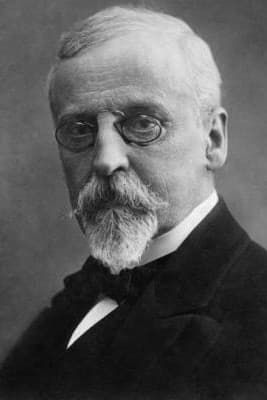
Henryk Adam Aleksander Pius Sienkiewicz, also known by the pseudonym Litwos, was a Polish writer. He is best remembered for his historical novels, such as the Trilogy series and especially for his internationally known best-seller Quo Vadis (1896).







