“There is no road for a man who has lost his way, save to return to the place from which he has strayed.”
— Mitsu's reflection on her predicament and inability to escape the tangled relationships.


Jun'ichirō Tanizaki (2010)
Genre
Historical Fiction
Reading Time
192 min
Key Themes
See below
Sign in to track this book
In 1920s Osaka, a respectable married woman's life unravels into a thrilling, dangerous obsession when she falls for a beautiful, manipulative artist, pulling her into a dark labyrinth of passion, jealousy, and deceit.
Sonoko Kakiuchi, a well-to-do Osaka housewife, recounts her story in a confession written to her husband, Kakiuchi. Feeling unfulfilled by her mundane life and her husband's lack of passionate engagement, she decides to take a sketching class. There, she meets Mitsuko, a strikingly beautiful and mysterious young woman who immediately captures her attention. Sonoko is drawn to Mitsuko's elegance, her unusual allure, and the air of melancholy that seems to surround her. Despite the social norms of the time, Sonoko finds herself increasingly obsessed with Mitsuko, leading her to seek out opportunities to interact with her outside of the classroom, driven by a burgeoning fascination that she barely understands.
Sonoko's initial fascination with Mitsuko quickly escalates into an intense obsession. She begins to follow Mitsuko, arranging meetings and desperately seeking her attention. During one such encounter, Sonoko learns that Mitsuko is engaged to a young man named Watanuki, who is a student. This revelation initially brings Sonoko a pang of jealousy and despair, but it also fuels a more complex desire to understand Mitsuko's life and her relationships. Sonoko finds herself increasingly entangled in Mitsuko's world, driven by a powerful, almost magnetic attraction that transcends conventional boundaries and societal expectations, pulling her deeper into an emotional maze.
Sonoko's pursuit culminates in a private meeting with Mitsuko, where their unspoken desires begin to manifest. Mitsuko, initially reserved, eventually reciprocates Sonoko's intensity, leading to a profound, intimate moment between them. This shared experience solidifies Sonoko's conviction that their connection is unique and powerful. However, the shadow of Watanuki, Mitsuko's fiancé, looms large. Sonoko, now deeply committed to Mitsuko, finds herself drawn into Mitsuko's existing relationship, setting the stage for a complex and emotionally charged love triangle. This initial intimacy marks a point of no return for Sonoko, binding her inextricably to Mitsuko and her intricate personal life.
Watanuki, Mitsuko's fiancé, eventually discovers the intimate relationship between Sonoko and Mitsuko. Instead of outright rejection or anger, Watanuki exhibits a peculiar response, showing a deep, almost masochistic devotion to Mitsuko. A tense confrontation ensues, but rather than dissolving the relationships, it leads to an unexpected and morally ambiguous pact. Mitsuko, with her manipulative charm, convinces both Sonoko and Watanuki that they must all remain together, bound by their shared love for her. This agreement transforms the traditional love triangle into a more complicated, multi-faceted entanglement, where each party is both lover and rival, driven by their individual obsessions with Mitsuko.
As the situation with Mitsuko and Watanuki intensifies, Sonoko's husband, Kakiuchi, begins to suspect his wife's increasingly erratic behavior and her clandestine meetings. Through a series of carefully orchestrated revelations and manipulations by Mitsuko, Kakiuchi is gradually drawn into the bizarre arrangement. Mitsuko, with her uncanny ability to charm and ensnare, manages to captivate Kakiuchi as well, transforming the love triangle into a precarious quadrangle. Kakiuchi, initially bewildered and hurt, finds himself unable to resist Mitsuko's allure, succumbing to her influence and further blurring the lines of conventional morality and marital fidelity within their intertwined lives.
Mitsuko's manipulative genius comes to the forefront as she masterfully orchestrates the emotions of Sonoko, Watanuki, and Kakiuchi. She skillfully plays each person against the others, fanning the flames of jealousy and insecurity, ensuring that each remains desperately bound to her. Sonoko, in particular, finds herself in a constant state of emotional turmoil, torn between her love for Mitsuko and her resentment towards Watanuki and Kakiuchi for also being under Mitsuko's spell. The relationships become a convoluted dance of desire and rivalry, with Mitsuko at the center, controlling every step and deepening the psychological grip she holds over all three.
In a climactic turn, Mitsuko proposes that all four of them – Sonoko, Kakiuchi, Watanuki, and herself – retreat to a secluded villa in the countryside. This isolation intensifies their already volatile emotional states. Away from societal constraints, their desires become more unbridled and their interactions more dangerous. Mitsuko's manipulations reach their peak, pushing Sonoko and Watanuki to the brink of despair. The atmosphere becomes charged with jealousy, suspicion, and a pervasive sense of doom, as the boundaries of sanity and morality erode, leading them deeper into a shared psychological abyss from which escape seems increasingly impossible.
During their time at the villa, the emotional intensity reaches its breaking point. Mitsuko, in a shocking act of cruelty or desperation, poisons Watanuki. The discovery of Watanuki's poisoning throws Sonoko and Kakiuchi into a panic. Despite their complex feelings, they are united in their desperate attempt to save Mitsuko from the consequences, highlighting their profound, albeit twisted, devotion to her. This event marks a critical turning point, as the facade of their strange arrangement begins to crumble, revealing the destructive core of Mitsuko's influence and the devastating impact it has had on all their lives.
In the aftermath of Watanuki's poisoning, Sonoko and Kakiuchi, driven by a mixture of love, fear, and a twisted sense of loyalty, attempt to protect Mitsuko from the legal repercussions. They concoct a plan to conceal the truth, further entangling themselves in Mitsuko's web of deceit. However, the situation spirals out of control, culminating in a tragic and ambiguous ending. The narrative leaves the precise details of the final moments shrouded in mystery, emphasizing the psychological torment and moral decay that have consumed Sonoko and the others, leaving them in a state of profound despair and irreversible ruin, forever marked by their entanglement with Mitsuko.
Sonoko brings her lengthy confession to her husband, Kakiuchi, to a close. She reflects on the entire tumultuous affair, detailing the psychological torment, the moral compromises, and the ultimate tragedy that resulted from their entanglement with Mitsuko. Despite the devastation, Sonoko reveals that Mitsuko's enigmatic allure continues to hold a powerful, almost spiritual, grip on her. The confession serves not only as an explanation of past events but also as a demonstration of the enduring, destructive power of obsession and the way a single charismatic individual can unravel the lives of those around them, leaving behind a trail of ruin and unanswerable questions about love, desire, and identity.
The Protagonist
Sonoko transforms from a docile housewife into an obsessed, morally compromised individual, losing her sense of self in the pursuit of Mitsuko.
The Antagonist/Catalyst
Mitsuko remains a consistent force of manipulation and destruction, her enigmatic nature never fully yielding to understanding.
The Supporting
Watanuki descends from a devoted fiancé to a desperate, manipulated figure, ultimately becoming a victim of Mitsuko's schemes.
The Supporting
Kakiuchi transforms from an oblivious, conventional husband into a bewildered but ultimately captivated participant in Mitsuko's destructive game.
The novel explores the destructive nature of obsessive love, particularly Sonoko's infatuation with Mitsuko. This theme manifests as an all-consuming force that overrides rationality, morality, and social conventions. Sonoko's entire existence becomes centered around Mitsuko, leading her to make increasingly desperate and compromising choices, such as accepting the bizarre quadrangle arrangement. The desire is not merely physical but deeply psychological, a yearning for an ideal that Mitsuko embodies, even as Mitsuko herself proves to be a source of torment and manipulation. The characters are willing to sacrifice everything for this love, highlighting its powerful and dangerous grip.
“From the moment I first saw her, I knew my life would never be the same.”
Mitsuko is the embodiment of manipulation and deceit, expertly weaving a web of lies and emotional blackmail to control those around her. She plays Sonoko, Watanuki, and Kakiuchi against each other, exploiting their individual desires and jealousies to maintain her central position. This theme is evident in how Mitsuko orchestrates confrontations, feigns illness, and uses emotional pleas to bend others to her will, as seen when she convinces all three to participate in the bizarre living arrangement at the villa. The narrative itself, presented as Sonoko's confession, also touches on the unreliability of memory and perspective when driven by overwhelming emotion.
“She was like a spider, spinning a web of beauty and deceit, and we were all caught within it.”
As the characters become increasingly entangled in Mitsuko's web, their conventional moral compasses and individual identities steadily erode. Sonoko, initially a respectable housewife, descends into a state of moral ambiguity, condoning and participating in increasingly perverse acts. The boundaries of marriage, fidelity, and even sanity blur, as seen when Kakiuchi, Sonoko's husband, also falls under Mitsuko's spell. The characters lose their sense of self, their actions dictated by their overwhelming desire for Mitsuko, leading to a profound loss of personal integrity and a descent into a shared psychological abyss. The ultimate tragedy stems from this complete dissolution of ethical and personal boundaries.
“We were no longer ourselves, but mere extensions of her will, puppets in her twisted play.”
Mitsuko's extraordinary beauty and enigmatic allure are central to the novel's themes. Her physical attractiveness is not merely aesthetic; it is a powerful, almost supernatural force that mesmerizes and enslaves. The narrative constantly emphasizes her captivating eyes, her delicate features, and her graceful movements, which are inextricably linked to her manipulative power. This beauty is presented as both a source of immense pleasure and profound destruction, demonstrating how an irresistible facade can mask a dangerous interior. The characters are drawn to her not just for her looks, but for the promise of an intense, transcendent experience that her beauty seems to offer, regardless of the cost.
“Her beauty was a poison, sweet and irresistible, that slowly seeped into our souls.”
The entire story is presented as a subjective confession, coloring the truth.
Sonoko Kakiuchi narrates the entire story through a written confession addressed to her husband. This makes her an inherently unreliable narrator, as her perspective is deeply colored by her intense obsession, jealousy, and guilt. Her emotional state and her desire to justify her actions likely distort the 'objective' truth of events. This device creates suspense and forces the reader to question Sonoko's interpretations, adding layers of psychological complexity to the narrative and highlighting the subjective nature of memory and desire.
A complex and morally ambiguous relationship structure involving four individuals.
Initially a love triangle between Sonoko, Mitsuko, and Watanuki, the dynamic evolves into a quadrangle with the inclusion of Sonoko's husband, Kakiuchi. This intricate relationship structure is a central plot device, intensifying the themes of jealousy, obsession, and manipulation. Mitsuko actively orchestrates and exploits this quadrangle, playing each person against the others to maintain her control. The complexity of these intertwined desires and rivalries drives much of the plot's psychological drama and moral decay, pushing the boundaries of conventional relationships to their breaking point.
The story is framed as a long, detailed confession written by Sonoko.
The novel's structure as a lengthy confession written by Sonoko to her husband, Kakiuchi, significantly shapes its tone and narrative flow. This epistolary-like format allows for deep introspection and a subjective recounting of events, immersing the reader directly into Sonoko's tormented psyche. It also creates a sense of intimacy and urgency, as Sonoko attempts to explain and perhaps atone for her actions. The act of confessing itself becomes a part of her ongoing psychological struggle, highlighting her inability to escape the past and the enduring grip of her obsession.
The title itself symbolizes the inescapable, sinking nature of the characters' entanglement.
The title 'Quicksand' serves as a powerful metaphor for the inescapable and destructive nature of the relationships depicted in the novel. As Sonoko and the others become more deeply involved with Mitsuko, they find themselves sinking further into a moral and psychological morass from which they cannot escape. Each attempt to pull away only draws them deeper, much like quicksand. This device effectively conveys the suffocating, insidious progression of their obsession and the irreversible ruin it brings, highlighting the characters' helplessness in the face of their own desires and Mitsuko's manipulations.
“There is no road for a man who has lost his way, save to return to the place from which he has strayed.”
— Mitsu's reflection on her predicament and inability to escape the tangled relationships.
“The beauty of a woman is a dangerous thing, like a sharp sword that can cut both ways.”
— Sonoko's early observations about Mitsu's captivating allure and its potential for destruction.
“We were like two people who had fallen into a deep well, and instead of trying to climb out, we were pulling each other further down.”
— Sonoko describing her and Mitsu's escalating and destructive codependency.
“Love, when it is truly passionate, is always a kind of madness.”
— A general reflection on the intense and irrational nature of the characters' affections.
“The more we tried to escape, the more entangled we became.”
— Sonoko's realization about the futility of their attempts to break free from the quartet's grip.
“There are some secrets that are better left undisturbed, like a sleeping serpent.”
— The characters' initial reluctance to fully confront the true nature of their complex relationships.
“To surrender entirely to another's will is a strange form of freedom.”
— Sonoko grappling with her own submission and the paradoxical sense of liberation it brings.
“The most beautiful lies are often the ones we tell ourselves.”
— The characters' self-deception regarding the purity or sustainability of their unconventional arrangement.
“We were all trapped in a dream, a beautiful, terrifying dream from which we could not awaken.”
— Sonoko's perception of their collective delusion and the nightmarish quality of their shared existence.
“A woman's heart is a labyrinth, and only she holds the thread to its center.”
— Sonoko's attempts to understand Mitsu's true motivations and feelings.
“The desire to possess another completely can consume oneself.”
— The destructive nature of the characters' all-consuming jealousy and possessiveness.
“Even in the darkest despair, there is a perverse beauty in complete surrender.”
— Sonoko's final state of resignation and her acceptance of their doomed fate.
“To live for beauty alone is to live a life perpetually on the brink of ruin.”
— A reflection on Mitsu's existence and the consequences of her devotion to aestheticism.
“The past is a quicksand, and the more you struggle, the deeper you sink.”
— Sonoko's attempts to escape the memories and consequences of their shared history.
Ready to see how well you understood this book? Take our interactive quiz with 10 questions.
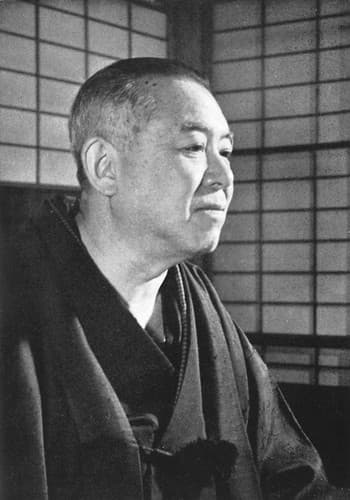
Biography coming soon.







