“I was left back when I was twelve because I had a baby for my fahver.”
— Claireece Precious Jones reveals the traumatic abuse she endured from her father.

Sign in to track this book
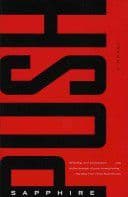
In Harlem, an illiterate, abused teenager finds her voice and a path to reclaiming her life through education, even as the world around her tries to silence her.
Clareece 'Precious' Jones, a sixteen-year-old, morbidly obese, illiterate Black girl living in Harlem, is pregnant with her second child by her father. Her first child, 'Mongo,' who has Down syndrome, lives with Precious's abusive mother, Mary. Precious endures relentless physical and emotional abuse from Mary, who often blames Precious for her own misfortunes and for the incest. The social worker, Ms. Weiss, visits the home. After seeing the dire conditions and Precious's clear distress, she recommends that Precious be transferred from her regular school to an alternative school called Each One Teach One. This change might offer Precious a chance at a different future and address her illiteracy. Precious feels a mix of fear and a faint flicker of hope at the prospect of leaving her current, oppressive environment.
Precious arrives at Each One Teach One, a small, unconventional alternative school. She is initially shy, withdrawn, and self-conscious about her appearance and inability to read or write. Her new teacher, Ms. Rain, is a compassionate yet firm Black woman who immediately recognizes Precious's potential and the deep trauma she carries. Ms. Rain introduces Precious to the other students – Jo Ann, Rhonda, Jermaine, and Rita – a diverse group of young women with their own struggles. The classroom environment is different from anything Precious has experienced; it is safe, supportive, and encourages open expression. Ms. Rain stresses the importance of learning to read and write as a way to gain control over their lives and voices.
Under Ms. Rain's patient guidance, Precious begins to learn to read and write. She struggles, often feeling frustrated and ashamed of her limitations, but Ms. Rain's unwavering belief in her keeps her going. A part of the curriculum involves journaling, where students are encouraged to write about their lives, thoughts, and feelings, regardless of grammar or spelling. Precious starts by drawing pictures and slowly progresses to writing simple words and then sentences. This journaling becomes a lifeline, a private space where she can articulate the horrors of her past and the confusion of her present. Her entries reveal the depths of her abuse and her inner world.
Precious goes into labor and gives birth to a healthy baby boy, whom she names Abdul. During the delivery, medical staff discover that Precious has advanced cervical cancer, likely a result of the ongoing sexual abuse she has endured. This medical diagnosis leads to a more thorough investigation by social services. It is confirmed that Precious's father is the perpetrator of the incest, not only of Precious but also of Mongo. The revelation is devastating, but it also provides evidence for authorities to intervene. Precious's mother, Mary, continues to deny her husband's culpability and blames Precious, further isolating her daughter.
Following the medical findings and Precious's testimony, her father is arrested and charged with sexual assault. This event is a significant turning point, bringing justice and an end to the direct abuse. Due to the confirmed abuse and Mary's complicity and continued neglect, Precious is removed from her mother's care by Child Protective Services. She is placed in a group home, a new environment that offers safety and stability she has never known. This separation, while necessary, is emotionally complex for Precious, who has been deeply involved in her dysfunctional family despite the suffering it caused her.
Settled in the group home with Abdul, Precious finds a sense of peace and security. She is able to focus more on her studies at Each One Teach One, her literacy skills improving rapidly. She begins to form bonds with the other girls in her class and with Ms. Rain, who becomes a maternal figure. Precious also starts to visit Mongo at the facility where he resides, slowly building a relationship with her first child. These visits are emotionally challenging but important, as Precious reclaims her role as a mother to both her children. She also starts to receive therapy, beginning to process her trauma with professional help.
As Precious's literacy progresses, her journaling evolves into powerful, raw narratives about her experiences. Her writing becomes a primary outlet for her anger, pain, and burgeoning hope. Ms. Rain recognizes the talent and emotional depth in Precious's work and encourages her to share it. Eventually, a public reading is organized for the Each One Teach One students, where Precious bravely stands before an audience and reads her story. This act of public vulnerability is a monumental step in her healing and self-empowerment. It shows her resilience and the strength of her voice. It signifies her transition from a silent victim to a courageous survivor.
By the end of the book, Precious has made remarkable strides. She is fully literate, articulate, and has begun to understand her self-worth. She is still living in the group home with Abdul, and her relationship with Mongo is growing stronger. She continues to attend Each One Teach One, now not just as a student but as a budding writer and a source of inspiration for others. While her past trauma will always be a part of her, Precious has developed the tools and the inner strength to confront it and build a meaningful life. She holds onto the hope of eventually living independently with both of her children, showing the power of education and self-discovery.
The Protagonist
Precious transforms from a silent, abused victim into an articulate, self-aware survivor who uses her voice to reclaim her narrative and build a new future.
The Supporting
Ms. Rain remains a steady, guiding force, embodying unwavering support and belief in her students' potential for transformation.
The Antagonist
Mary remains unrepentant and un-transformed, a static representation of the destructive forces Precious must escape.
The Antagonist
Carl's arc culminates in his arrest, representing the removal of a direct threat but not the erasure of his impact.
The Supporting
Mongo's arc is tied to Precious's, as he moves from a neglected child to one with a mother actively seeking to care for him.
The Supporting
Abdul's birth catalyzes crucial plot developments and becomes a central motivation for Precious's growth and self-sufficiency.
The Supporting
Ms. Weiss initiates the critical change in Precious's life by recommending her transfer, then continues to monitor her situation.
The Supporting
Jo Ann evolves from a classmate to a supportive friend, providing peer solidarity for Precious.
The novel shows how education, specifically literacy, gives Precious the tools to escape her abusive past and forge a new future. Learning to read and write allows Precious to articulate her trauma, understand her experiences, and develop a sense of self-worth and agency. Her journals become a space for self-discovery and a weapon against the silence imposed by her abusers. Ms. Rain's teaching methods, focused on self-expression and critical thinking, are central to this transformation. Education is not just about academics but about empowerment and liberation.
“I write down all the things that happen in my life. I write down what I think. I write down what I feel. I write down what I want. I write down what I need. I write down what I hate. I write down what I love. I write down what I want to be. I write down what I want to do. I write down what I want to have. I write down what I want to give. I write down what I want to change. I write down what I want to keep. I write down what I want to let go.”
The novel depicts the impact of severe child abuse, including incest, physical violence, and emotional neglect, on Precious's psyche and body. It explores the cycle of violence and the psychological effects of trauma, such as Precious's initial withdrawal, low self-esteem, and difficulty expressing herself. However, the book also highlights Precious's resilience and inner strength. Despite the horrific circumstances, she finds the will to survive, to protect her children, and to seek a better life. This shows the human capacity to endure and heal even from profound suffering.
“I don't know why I keep living. I don't know why I don't die. I don't know why I don't run away. I don't know why I don't fight back. I don't know why I don't scream. I don't know why I don't tell.”
Motherhood is a central and complex theme. Precious's own mother, Mary, represents a destructive, abusive form of motherhood that perpetuates a cycle of trauma. In contrast, Precious struggles to become a loving and protective mother to her own children, Mongo and Abdul, despite her young age and traumatic past. Her love for them motivates her to seek help, learn, and create a safer environment. The theme explores the possibility of breaking intergenerational cycles of abuse and neglect, as Precious actively chooses a different path for her children, striving to give them the love and care she never received.
“I want to be a good mother. I want to be a good mother to Mongo. I want to be a good mother to Abdul. I want to be a good mother to me. I want to be a good mother to myself.”
Precious's journey is one of identity formation and self-discovery. Initially, her identity is defined by her abuse, her illiteracy, and her mother's derogatory labels. Through learning to read and write, engaging in therapy, and forming supportive relationships, Precious begins to shed these imposed identities. She discovers her intelligence, her voice, her worth, and her capacity for love. Her writing becomes a mirror through which she sees and understands herself. She moves from invisibility to a strong sense of self, culminating in her ability to confidently share her story and claim her place in the world.
“I am Precious. I am smart. I am beautiful. I am strong. I am a survivor. I am a mother. I am a writer. I am a person. I am me.”
Provides direct access to Precious's thoughts and experiences in her own evolving voice.
The novel is told entirely through Precious's first-person perspective, primarily in the form of her journal entries. This device is crucial as it allows readers to witness Precious's internal world, her struggles with literacy, and her emotional development directly. The initial entries are often misspelled, grammatically incorrect, and fragmented, reflecting her illiteracy and trauma. As she learns, her writing becomes more articulate and coherent, mirroring her personal growth and empowerment. This narrative choice immerses the reader in her raw, unfiltered experience, making her journey of finding her voice incredibly impactful and authentic.
A symbolic and literal safe haven for Precious's transformation.
The alternative school, 'Each One Teach One,' functions as a crucial plot device by serving as a catalyst for Precious's transformation. It is not just a school but a sanctuary from her abusive home, offering a supportive community and a nurturing environment. Its name itself reflects its mission of mutual empowerment and learning. The school provides the physical space, the pedagogical methods (like journaling), and the compassionate figures (Ms. Rain, classmates) necessary for Precious to break free from her past, learn to read and write, and ultimately discover her self-worth. It represents hope, opportunity, and the possibility of a different future.
The act of learning to read and write directly correlates with Precious gaining control over her life.
Literacy in 'Push' is more than just an academic skill; it is a powerful metaphor for freedom, agency, and self-empowerment. Precious's inability to read or write initially renders her voiceless and trapped, unable to articulate her experiences or understand the world around her. As she gains literacy, she literally finds her voice, enabling her to write her story, comprehend legal documents, and communicate her needs. This growing ability to articulate and understand directly parallels her increasing control over her life, her body, and her future, symbolizing her liberation from the confines of her abuse and ignorance.
Motivators for Precious's survival and symbols of her capacity for love.
Precious's two children, Mongo and Abdul, serve as significant plot devices and symbols. They are both direct results of her father's abuse, representing the tangible and tragic consequences of her trauma. However, they also become the primary motivators for Precious's survival and her fierce determination to build a better life. Her love for them, particularly Abdul, fuels her desire to escape her abusive home, learn to read, and become a responsible mother. They symbolize her capacity for unconditional love and her hope for breaking the cycle of violence, pushing her towards self-preservation and transformation.
“I was left back when I was twelve because I had a baby for my fahver.”
— Claireece Precious Jones reveals the traumatic abuse she endured from her father.
“I'm gonna break through or somebody gonna break through to me.”
— Precious expresses her determination to overcome her circumstances through education.
“I want to be somebody. I want to be a person.”
— Precious reflects on her desire for identity and self-worth beyond her struggles.
“Sometimes I wish I was not alive. But I don't know how to die.”
— Precious shares a moment of deep despair and suicidal thoughts.
“The tesses. I see the tesses. The letters. I see the letters.”
— Precious describes her breakthrough in learning to read and write.
“I'm Precious. I'm Precious. I'm Precious.”
— Precious affirms her own name and identity in a moment of self-recognition.
“My name is Claireece Precious Jones. I can read. I can write.”
— Precious declares her literacy and newfound sense of self after progress in school.
“Love ain't done nothing for me but get me hurt.”
— Precious reflects on her experiences with abuse and betrayal in relationships.
“I got two babies by my father. One is Mongoloid.”
— Precious bluntly states the harsh reality of her life, including her children's conditions.
“I'm learning. And the world is opening up.”
— Precious describes the transformative power of education in her life.
“Sometimes I feel like I'm not here. Like I'm a ghost.”
— Precious expresses feelings of invisibility and dissociation due to trauma.
“I want to say I am somebody.”
— Precious reiterates her longing for recognition and humanity.
“My baby love me. She do.”
— Precious finds solace and unconditional love in her relationship with her daughter.
“I'm not dumb. I just never had no chance.”
— Precious defends her intelligence against societal judgments and lack of opportunity.
Ready to see how well you understood this book? Take our interactive quiz with 10 questions.
Biography coming soon.