“There are no rules in war, only outcomes.”
— Mitch Rapp's philosophy on achieving objectives.

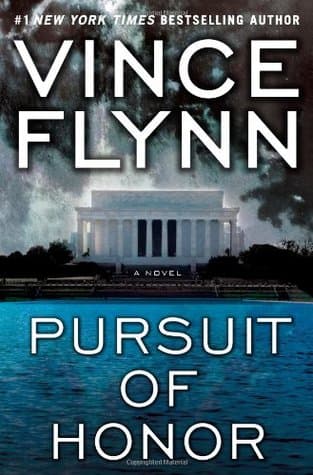
Vince Flynn (2009)
Genre
Thriller / Mystery
Reading Time
8-10 hours
Key Themes
See below
Sign in to track this book
After a D.C. terror attack, operative Mitch Rapp navigates political infighting and a friend's unraveling mind to hunt down terrorists, showing that honor sometimes requires a dangerous path between justice and ruthless violence.
Six days after a terror attack in Washington D.C. killed 185 people, including government and CIA staff, Mitch Rapp and his protégé, Mike Nash, deal with the aftermath. Al-Qaeda carried out the attack, leaving the nation and its intelligence community in disarray. CIA Director Irene Kennedy and National Security Advisor Marcus Dumond unofficially ask Rapp to hunt down the three remaining al-Qaeda terrorists responsible: Mullah Mansour and his two associates, Hakim and Karim. This mission is outside official channels due to political issues and the need for quick action, putting Rapp and Nash in a legally uncertain spot.
Mike Nash, who saw the horrors of the D.C. attacks firsthand, is struggling under extreme psychological pressure. He shows signs of severe trauma, including emotional outbursts and trouble focusing, which Rapp notices with growing worry. Rapp sees that Nash is not ready for the ruthless operation ahead, so he makes the tough choice to remove him from the active pursuit. Rapp understands the personal cost of such missions and fears Nash's state could risk both the mission and his friend's life. This decision is also partly to protect Nash from the political fallout of a 'black ops' mission.
Rapp, with his core team including Scott Coleman, starts tracking Mullah Mansour. Their intelligence leads them to Europe, where Mansour is believed to be planning more attacks. The hunt is hard because intelligence is scattered after the D.C. attack, and they must operate very discreetly to avoid international incidents. They follow a complex path of informants, safe houses, and terrorist cells, slowly piecing together Mansour's movements and plans. Rapp fights not only terrorists but also bureaucracy and the cautious approaches of European intelligence agencies.
As Rapp and his team get closer, they uncover a new plot: Mullah Mansour plans to detonate a dirty bomb in London. The target is a major economic summit with global leaders, including the American President. This discovery makes their mission much more urgent, changing it from a revenge hunt to a race against time to prevent another attack. The dirty bomb, though not nuclear, would cause widespread panic, contamination, and economic chaos, fulfilling Mansour's goal of destabilizing Western powers and spreading terror.
Feeling abandoned and dealing with his trauma, Mike Nash becomes a target for manipulation. A former CIA operative, angry and wanting to expose Rapp's 'extra-legal' operations and discredit the agency, approaches Nash. This operative uses Nash's fragile mental state and his feeling of betrayal by Rapp, convincing him that Rapp's methods are illegal and wrong. Nash, desperate for purpose and validation, and driven by a mistaken sense of justice, gets caught in a conspiracy that leads him to leak classified information, accidentally endangering Rapp's mission and team.
With the London summit approaching, Rapp and his team secretly infiltrate the city. They work quickly, using their skills in intelligence gathering, surveillance, and direct action. The team finds key operatives in Mansour's network in London and starts to disrupt their plans. The operation is very dangerous, as Mansour's cells are well-established and loyal. Rapp's goal is not just to stop the bomb but to capture or kill Mansour and his main associates, Hakim and Karim, to prevent future attacks.
The London operation ends with Rapp's team directly confronting Mansour's operatives as they try to deploy the dirty bomb. A brutal and intense shootout happens in London. Rapp, using his combat skills and strategic thinking, leads the attack. Several terrorists are killed, and important intelligence is found. The dirty bomb is located and disarmed just before it can explode, preventing a disaster. Mansour, however, escapes with Hakim and Karim during the chaos, despite Rapp's relentless chase.
Despite the success in London, Mansour's escape strengthens Rapp's resolve. Intelligence from the London operation, combined with new CIA efforts, indicates that Mansour and his remaining lieutenants, Hakim and Karim, fled to Pakistan's tribal regions. This moves the fight to a much more dangerous and politically sensitive area. Rapp and his team prepare for a secret operation in a region known for lawlessness and a strong al-Qaeda presence, knowing this will be the final confrontation with the person behind the D.C. attacks.
Mike Nash, realizing the seriousness of his actions and the danger he put Rapp in, tries to make amends. He attempts to warn Rapp about the rogue operative and the leaked information. However, his efforts are cut short. The rogue operative, fearing exposure, kills Nash. Nash dies in a violent confrontation, his death a sad reminder of war's psychological cost and the terrible results of betrayal, even when caused by trauma and manipulation. His sacrifice, though late, is a final act of loyalty to Rapp and his country.
Rapp and his team, deep in the Pakistani tribal areas, finally corner Mullah Mansour, Hakim, and Karim. The fight is brutal. Rapp, driven by a desire for justice for the D.C. attack victims and Nash's death, fights Mansour personally. After a fierce struggle, Rapp kills Mansour and his remaining associates. This ends the immediate threat from this al-Qaeda cell and brings some closure for the D.C. tragedy, though the cost has been immense.
After Mansour's elimination, Rapp returns to Washington D.C. to face the inevitable political uproar. His 'black ops' methods and the deaths of Mike Nash and the rogue operative draw intense scrutiny from politicians and the media. Despite the successes, Rapp's actions are seen as controversial, and he faces demands for accountability. However, with the support of Irene Kennedy and Marcus Dumond, Rapp navigates the political scene, understanding that his work, though morally ambiguous to some, is vital for national security. He remains committed to his role, ready for the next threat.
The Protagonist
Rapp grapples with the personal cost of his work and the impact on those around him, particularly Mike Nash, solidifying his resolve to continue his fight despite the political and emotional toll.
The Supporting/Tragic Figure
Nash descends from a loyal protégé into a state of severe trauma and unwitting betrayal, culminating in a futile attempt at redemption and his untimely death.
The Supporting
Kennedy continues to defend Rapp's methods and protect his operations, demonstrating her unwavering commitment to national security despite political pressures.
The Antagonist
Mansour plans and executes devastating terror attacks, evades capture multiple times, but is ultimately hunted down and eliminated by Mitch Rapp.
The Supporting
Dumond maintains his unwavering support for Rapp's methods, reinforcing the necessity of 'dirty' operations in the war on terror.
The Supporting
Coleman continues to be Rapp's steadfast right-hand man, executing critical operations with precision and loyalty.
The Antagonist
Hakim remains loyal to Mansour until his final confrontation and death at the hands of Rapp.
The Antagonist
Karim participates in Mansour's plots until his demise alongside his leader.
The Mentioned/Minor Antagonist
The rogue operative attempts to expose Rapp, inadvertently causing Mike Nash's death, and is ultimately silenced to prevent further damage.
The book explores the ethical challenges in fighting terrorism. Mitch Rapp often works in a morally gray area, using methods that are illegal by normal standards but seen as necessary for national security. The D.C. attack and the London dirty bomb plot show the extreme nature of the threat, forcing people like Irene Kennedy and Marcus Dumond to approve actions they would not normally. Mike Nash's internal struggle and betrayal come from his inability to accept Rapp's harsh effectiveness with his own morals, showing the deep psychological cost of this moral tightrope walk. The story suggests that 'honor' here is often found not in following strict laws, but in being willing to do what is needed to protect innocent lives, regardless of personal or political cost.
“He didn't care about the rules. He cared about saving lives.”
The psychological effects of violence and war are a major theme, mainly through Mike Nash's story. Nash's experience of the D.C. attacks leaves him deeply traumatized, hurting his judgment and making him easy to manipulate. His emotional weakness and inability to handle the horrors he saw lead him to make terrible choices, ultimately causing his death. This theme shows that even highly trained operatives are not immune to the psychological damage of their work. Rapp, while stronger, also carries the weight of past traumas, influencing his protective stance toward Nash and his relentless pursuit of justice.
“The horrors he had witnessed had broken something inside him.”
Loyalty is a core part of Rapp's world, both within his team and toward his country. Rapp's strong loyalty to his mission and trusted colleagues like Scott Coleman contrasts sharply with Mike Nash's tragic betrayal. Nash's actions, though caused by trauma and manipulation rather than malice, show how easily loyalty can break under extreme pressure and feelings of abandonment. The 'rogue operative' further demonstrates betrayal, driven by personal resentment rather than national interest. This theme highlights how fragile trust is and the devastating results when it is broken, especially in high-stakes intelligence operations.
“In this line of work, trust was everything. And sometimes, it was a luxury you couldn't afford.”
A constant tension in the book is the conflict between Washington D.C.'s political bureaucracy and the practical needs of counterterrorism. Politicians, often focused on public image and legal concerns, frequently stop Rapp from acting quickly. Irene Kennedy and Marcus Dumond act as go-betweens, understanding the need for Rapp's 'black ops' but constantly fighting scrutiny from Congress and media sensationalism. The D.C. attack highlights the disconnect: while politicians debate, Rapp is out neutralizing immediate threats. This theme criticizes the often slow nature of government during a crisis, arguing for decisive, even if unconventional, action.
“While they debated the fine print, the terrorists were planning their next move.”
Creates intense urgency and heightens the stakes of the mission.
The discovery of Mullah Mansour's dirty bomb plot in London, specifically targeting an upcoming economic summit, introduces a critical ticking clock. This device immediately elevates the tension, transforming the hunt for justice into a race against time to prevent another catastrophic attack. It forces Rapp and his team to operate with extreme speed and precision, making every decision and action carry immense weight. The impending detonation deadline significantly raises the stakes, impacting tactical choices and character motivations throughout the London sequence.
Initially points to a simpler revenge mission, masking a larger, more immediate threat.
Initially, the plot appears to be a straightforward hunt for the perpetrators of the D.C. attacks, a mission of retribution. However, this focus on past events serves as a subtle misdirection, concealing the immediate and greater danger of the planned London dirty bomb. The narrative establishes Rapp's pursuit of Mansour as a 'clean-up' operation, only to reveal a far more urgent, active threat. This device builds suspense by shifting reader expectations and demonstrating the constant, evolving nature of terrorist threats.
Uses a trusted character's downfall to explore trauma and highlight the personal costs of the fight.
The tragic trajectory of Mike Nash, Rapp's protégé, serves as a significant plot device. His severe trauma and subsequent manipulation highlight the immense psychological toll of counterterrorism work and the vulnerability even skilled operatives face. Nash's downfall and eventual death are not just a personal tragedy but also a catalyst for Rapp's renewed determination and a stark reminder of the personal sacrifices involved. This device deepens the emotional stakes and explores the human cost behind the high-octane action, preventing the narrative from becoming solely about external threats.
Justifies Rapp's unconventional and often illegal methods.
The 'black operation' mandate, unofficially given to Rapp by Irene Kennedy and Marcus Dumond, is a crucial plot device. It allows Rapp to operate outside legal and political constraints, providing the narrative justification for his brutal and effective methods. This device highlights the tension between conventional law enforcement and the exigencies of national security. It also creates a constant undercurrent of political risk, as Rapp's successes, while vital, always leave him vulnerable to exposure and condemnation, adding another layer of conflict beyond the immediate terrorist threat.
“There are no rules in war, only outcomes.”
— Mitch Rapp's philosophy on achieving objectives.
“The greatest weapon against terror is resolve.”
— Irene Kennedy reflecting on the ongoing fight against terrorism.
“Sometimes you have to do bad things to stop worse things.”
— A recurring theme in Rapp's line of work.
“Fear is a powerful motivator, but it can also blind you.”
— Observation about the behavior of adversaries and allies.
“Trust is a luxury few in their world could afford.”
— Describing the inherent paranoia and secrecy within intelligence operations.
“The enemy always thinks they're smarter than they are.”
— Rapp's assessment of his opponents' overconfidence.
“It wasn't about revenge; it was about preventing the next attack.”
— Clarifying the true objective behind their operations.
“Information, properly wielded, was more potent than any bullet.”
— Highlighting the importance of intelligence gathering.
“The world was a dangerous place, and someone had to stand in the gap.”
— Justifying the existence and actions of covert operatives.
“Loyalty was earned, not given, especially in their line of work.”
— Discussing the bonds and expectations within Rapp's team.
“The line between patriot and zealot was often blurred.”
— Reflecting on the motivations of various characters.
“He didn't seek trouble, but he was always ready for it.”
— Describing Mitch Rapp's constant state of preparedness.
“Sacrifice was not an option; it was a prerequisite.”
— Understanding the demands of their dangerous profession.
Ready to see how well you understood this book? Take our interactive quiz with 10 questions.

Biography coming soon.







