“The wind was blowing out of the west, a dry wind that smelled of dust and pine needles.”
— Setting the scene in rural Louisiana.

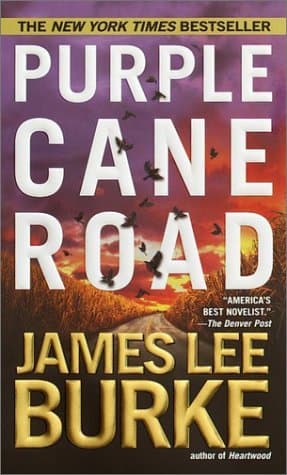
James Lee Burke (2000)
Genre
Thriller / Mystery
Reading Time
450 min
Key Themes
See below
Sign in to track this book
Haunted by a mother he never knew, Detective Dave Robicheaux unearths a decades-old murder, only to discover her violent past is linked to the corruption he faces in New Orleans.
Dave Robicheaux helps his old friend Father Jimmie Dolan with a troubled young woman, Tee Jolie Melton, which pulls him into New Orleans' criminal world. Tee Jolie's pimp, Johnny Shondell, recognizes Dave and says something unsettling: he asks if Dave is Mae Guillory's son, claiming Mae was a prostitute killed by corrupt police thirty years ago. This shatters Dave's belief that his mother simply left him and died naturally. Shondell hints that these same corrupt officers still hold power in the city, sending Dave on a dangerous search for the truth about his mother's death.
Dave's first questions lead him to his father, Big Aldous Robicheaux, who is unhelpful and dismissive, deepening Dave's anger. He also talks to his uncle, who offers fragmented memories but little solid information. The more Dave looks, the more he understands how involved his mother's past was with powerful and dangerous men. He begins to connect with people who knew Mae, including an old woman, Claudette, who paints a more understanding picture of Mae as a woman trapped by her situation. However, these connections also put him on the radar of those who want the past hidden, leading to threats and surveillance.
As Dave goes deeper, he uncovers a powerful crime organization, the 'Dixie Mafia,' which operated in New Orleans decades ago. This group, led by the mysterious 'Godot,' seems to be at the center of the conspiracy around Mae's death. Dave learns Mae was not just a prostitute but had information that could expose the group's illegal activities, including drug dealing and political corruption. The connection between police and organized crime becomes clear, making Dave's investigation very dangerous as he realizes he is up against a deeply rooted network.
Dave's investigation brings him to retired and current law enforcement officials who were either involved in or knew about the cover-up. He meets characters like the imposing 'Legs' Boutan, a former detective known for brutality, and other shadowy figures who try to stop him. These meetings are often tense and violent; Dave is physically attacked and threatened. He realizes that those who murdered his mother are not just old men but still have power and are willing to kill to keep their secrets buried, raising the personal stakes of his quest.
Tee Jolie Melton is a young woman Father Jimmie asks Dave to help, seemingly a separate story. However, as Dave's investigation continues, he finds Tee Jolie is connected to the same criminal world that took his mother. Her pimp, Johnny Shondell, is one of the first to mention Mae. Tee Jolie herself, despite her vulnerable position, has fragmented knowledge and links to the crime group. Her involvement in the current criminal scene mirrors Mae's tragic situation, creating a poignant link and making her a vital, though risky, source of information and a potential target for the same forces that killed Mae.
Through persistent investigation, Dave uncovers the truth: Mae Guillory, a beautiful but troubled woman, became involved with the Dixie Mafia. She fell in love with 'Legs' Boutan, a corrupt cop working for the group. Mae was killed not just because she was a witness, but because she tried to escape that life and take her son, Dave, with her. Her murder was a brutal act planned by the crime group and carried out by corrupt police officers, including Boutan, who then hid her body in the bayou. This discovery fuels Dave's rage and his resolve to bring her killers to justice, no matter the personal cost.
Armed with the truth, Dave confronts the remaining members of the crime group and the corrupt law enforcement officials responsible for his mother's death. This leads to violent and morally complex confrontations. Dave must make hard choices, blurring the lines between justice and revenge. He tracks down and confronts 'Legs' Boutan, the man who was both his mother's lover and her killer, leading to a brutal and final showdown. The justice Dave seeks is not always legal, but deeply personal, driven by his long-held grief and fury over his mother's lost life and violent end.
Even after confronting the killers, Dave carries the heavy emotional weight of his discoveries. The truth about his mother is more complex and tragic than he ever imagined, giving him a deeper understanding of her suffering and the forces that shaped her life. His actions, while bringing a form of closure, also come with a moral cost, forcing him to face his own capacity for violence and the unclear boundaries of justice. The ending is not neat or fully satisfying, but it allows Dave to finally reconcile with his mother's memory and accept his identity as 'Mae Guillory's son.'
Throughout his personal search, Dave remembers his initial promise to Father Jimmie to protect Tee Jolie Melton. Her vulnerability and involvement with the criminal world deeply affect him, reminding him of his mother's tragic fate. After dealing with the crime group, Dave makes sure Tee Jolie is safe from Johnny Shondell and her dangerous life. He helps her find stability, offering her a chance at a future his own mother was denied. This act of protection is a redemptive echo, allowing Dave to perhaps atone for a past he could not change.
By the end of his journey, Dave Robicheaux gains a deep and often painful understanding of his background. He no longer sees his mother as just an absent figure but as a victim of circumstance, passion, and brutal corruption. He confronts the dark side of his own family history, especially the legacy of violence and moral compromise. This understanding, though difficult, allows him to finally weave his mother's story into his own identity. He accepts that he is his mother's son, not just his father's, and that her strength, resilience, and vulnerabilities are part of who he is.
The Protagonist
Dave's arc sees him confront the long-buried trauma of his mother's past, leading to a painful but ultimately redemptive understanding of himself and his family legacy.
The Central Figure (Deceased)
Though deceased, her character is revealed through Dave's investigation, transforming from a shadowy memory into a fully realized, sympathetic victim whose strength and suffering profoundly impact Dave.
The Supporting
His character remains largely unchanged, serving as a reminder of Dave's difficult past and the enduring impact of childhood trauma, even as Dave seeks to understand his mother's story independently.
The Supporting/Antagonistic
He serves primarily as a plot device to initiate Dave's quest and later, through his association with Tee Jolie, reinforces the cyclical nature of exploitation.
The Supporting
Tee Jolie's arc moves from being a victim of circumstance to finding a path toward safety and a potential future, largely thanks to Dave's intervention.
The Antagonist
He remains a hardened, unrepentant villain whose past crimes finally catch up to him through Dave's relentless pursuit.
The Supporting
His role remains consistent as a supportive friend and moral guide, helping Dave navigate his internal conflicts.
This theme explores how past actions, especially those of parents and powerful groups, affect the present. Dave's entire quest begins with a past crime – his mother's murder – and the unresolved trauma from his childhood. The novel shows how corruption and violence, left unpunished, continue to cause problems and affect new generations, as seen in Tee Jolie's similar involvement in the criminal world. The past is not just history but an active force shaping characters' lives and Louisiana's moral landscape, forcing Dave to confront legacies of abuse, abandonment, and widespread corruption.
““The past is a phantom that comes to life when you least expect it, to remind you of who you are and where you came from.””
The novel deeply explores the fuzzy line between seeking legal justice and personal revenge. Dave Robicheaux is a lawman, but his investigation into his mother's murder becomes very personal, fueled by a lifetime of suppressed grief and anger. He often acts outside standard legal procedures, using violence and intimidation to get information and get even. The story questions whether true justice can ever be achieved through official channels when corruption runs deep, and whether personal retribution, even if morally complex, can bring a form of closure. His confrontations with Mae's killers, especially 'Legs' Boutan, show this inner struggle.
““There was a thin membrane between justice and vengeance, and I had pierced it many times.””
Dave's journey is a search to understand his own identity, which he realizes is directly linked to his mother's story. For years, he defined himself largely by opposing his abusive father. Finding out about Mae Guillory's true life and death forces him to accept being 'Mae Guillory's boy,' embracing a legacy of vulnerability, passion, and tragic resilience. The theme also extends to others' identities, showing how people are shaped by their origins, choices, and the societal forces that either lift them up or oppress them. Dave's understanding of himself changes deeply as he uncovers the truth of his maternal heritage.
““I had always been Aldous Robicheaux’s son, but now I knew I was also Mae Guillory’s boy, and that was a different kind of burden, a different kind of grace.””
The widespread theme of corruption, both in the criminal world and law enforcement, is central to the story. The Dixie Mafia operates freely, protected by a network of corrupt officials, including police officers directly involved in Mae's murder and its cover-up. This systemic moral decay highlights how hard it is to get justice in a world where power is held by dishonest people. The novel paints a grim picture of New Orleans, where the lines between good and evil are always blurred, and where innocence is easily taken advantage of, as seen in Mae's and Tee Jolie's stories. This corruption is not just an idea but is deeply personal, directly affecting Dave's family.
““The rot was deep, had been there for decades, and it smelled of money and blood and human indifference.””
A casual remark from a pimp that shatters Dave's long-held beliefs.
The inciting incident is Johnny Shondell's seemingly off-hand question to Dave Robicheaux: 'Are you Mae Guillory's boy? The whore a bunch of cops murdered 30 years ago?' This single line shatters Dave's understanding of his mother's abandonment and death, transforming her from a vague, painful memory into the focus of a murder investigation. It immediately establishes the central mystery and propels Dave into a dangerous quest, completely altering his perception of his past and his family history.
The mirroring of Mae Guillory's and Tee Jolie Melton's circumstances.
The device of parallel lives is employed through the characters of Mae Guillory and Tee Jolie Melton. Both are vulnerable young women drawn into the dangerous world of prostitution and crime, exploited by powerful men. Tee Jolie's contemporary struggles with her pimp, Johnny Shondell, and her entanglement with the criminal underworld directly echo Mae's tragic fate decades earlier. This parallelism not only underscores the cyclical nature of exploitation and the enduring presence of corruption but also deepens Dave's emotional investment, as protecting Tee Jolie becomes a way for him to address the past he couldn't change for his mother.
Dave's fragmented memories and recollections from others to piece together the past.
The narrative frequently uses flashbacks and fragmented memories, often triggered by places, smells, or conversations, to reveal Mae Guillory's past. Dave's own hazy childhood recollections are interspersed with the often unreliable or biased accounts of others who knew Mae. This device creates a sense of uncovering a buried truth, making the reader piece together Mae's story alongside Dave. It emphasizes the subjective nature of memory and how the past is never fully known, only reconstructed through different perspectives, adding to the mystery and emotional depth of Mae's character.
The use of Louisiana's unique setting to enhance mood and themes.
The novel heavily utilizes the Southern Gothic atmosphere of Louisiana – its bayous, decaying mansions, oppressive heat, and sense of historical weight – as a plot device. The landscape itself becomes a character, reflecting the moral decay and hidden secrets. The bayou, where Mae's body was dumped, symbolizes both a place of concealment and a repository of dark history. This setting enhances the themes of corruption, the lingering presence of the past, and the often-melancholy beauty of a region marked by violence and tragedy, creating a pervasive mood of unease and fatalism.
“The wind was blowing out of the west, a dry wind that smelled of dust and pine needles.”
— Setting the scene in rural Louisiana.
“There are some things you can never outrun, no matter how fast you drive.”
— Dave Robicheaux reflecting on his past.
“The truth was a slippery eel, and it always found a way to wiggle out of your grasp.”
— Robicheaux's struggle to uncover the truth.
“Evil wasn't some abstract concept; it was a choice, made by ordinary people.”
— Robicheaux contemplating the nature of crime.
“Sometimes the past isn't just a memory; it's a living thing that reaches out and grabs you.”
— Robicheaux feeling haunted by past events.
“The bayou held its secrets close, like a miser with his gold.”
— Describing the secretive nature of the Louisiana landscape.
“There's a fine line between justice and vengeance, and sometimes it gets blurred.”
— Robicheaux questioning his own motives.
“Fear was a cold hand on your heart, and it never let go.”
— A character experiencing intense fear.
“The sun bled through the cypress trees, painting the water a bruised purple.”
— A vivid description of a sunset in the bayou.
“Every man carries a dark place inside him, a place where the shadows live.”
— Robicheaux's thoughts on human nature.
“Money was a disease, and it infected everything it touched.”
— Robicheaux's observations on corruption.
“You can bury the body, but you can't bury the deed.”
— A reflection on the lasting impact of crime.
“The silence in the woods was a living thing, heavy and expectant.”
— Building suspense in a natural setting.
“Some roads lead you to places you never intended to go, and you can't turn back.”
— A metaphor for the unfolding plot and its consequences.
Ready to see how well you understood this book? Take our interactive quiz with 10 questions.







