“A man who does not think for himself does not think at all.”
— Norman Bates pondering his life and his mother's influence.

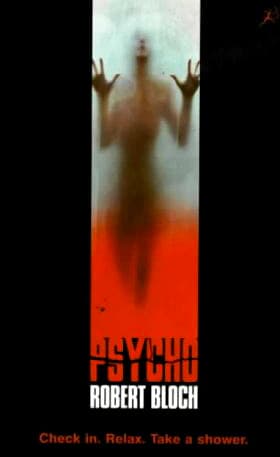
Robert Bloch (1959)
Genre
Thriller / Mystery
Reading Time
200 min
Key Themes
See below
Sign in to track this book
A desperate woman's impulsive stop at a secluded motel run by a shy, bird-loving manager and his domineering mother unravels into a nightmarish descent where privacy is a myth and a shower can be a death trap.
Mary Crane, a young secretary in Phoenix, Arizona, impulsively steals $40,000 from her employer, George Lowery. This money was meant for a bank deposit. She wants to marry her financially struggling lover, Sam Loomis, and escape her ordinary life. She packs her car and begins a long drive towards Fairvale, California, where Sam owns a hardware store. The initial excitement of her crime quickly turns into intense paranoia and guilt. She constantly imagines people suspecting her and struggles with her decision. She avoids main roads and tries to stay unnoticed, her inner conflict growing with every mile.
After driving for several hours through a heavy rainstorm and getting lost, Mary Crane sees the faded sign for the Bates Motel. Exhausted and needing a place to rest, she pulls in, even though the motel looks deserted and run-down. Norman Bates, the motel's owner, greets her. He is a shy, awkward man who lives in an old house on a hill behind the motel with his domineering mother. Norman seems very eager for her business, explaining that the motel gets little traffic since a new highway was built. He gives her Room 1 and offers to make her supper.
Norman invites Mary to his parlor for supper: sandwiches and coffee. During their conversation, Mary learns about Norman's reclusive life and his difficult relationship with his invalid mother. Norman talks about his mother as a demanding and possessive woman who disapproves of his interest in other women and his management of the motel. He expresses a wish for a different life but seems trapped by his mother's influence and his own anxieties. Mary feels a strange mix of pity and unease and begins to rethink her own actions, considering returning the stolen money.
After dinner, Mary returns to her room, Room 1, with a renewed sense of purpose. She decides to drive back to Phoenix the next morning and confess her crime. She takes a shower to wash away the stress of her journey. As she stands under the spray, a shadowy figure suddenly enters the bathroom. Before Mary can react, the figure, wielding a large knife, attacks her repeatedly. Mary screams, but the water muffles her cries. She collapses, bleeding heavily, and dies in the shower. The stolen money is still hidden in her purse on the nightstand.
Shortly after Mary's murder, Norman Bates discovers her lifeless body in the shower. Instead of reporting the crime, he is overcome with panic and a desperate need to protect his mother, whom he implicitly blames for the act. He meticulously cleans the bathroom, wraps Mary's body in the shower curtain, and places it in the trunk of her car. He then gathers all of Mary's belongings, including the hidden $40,000, and puts them into the car. Finally, he drives Mary's car to a nearby swamp and sinks it, trying to erase all traces of her presence and the crime.
Back in Phoenix, Mary's sister, Lila Crane, becomes increasingly worried when Mary doesn't return to work or contact anyone. Sam Loomis, Mary's boyfriend, also grows anxious after not hearing from her. He contacts Lila, and together they decide to investigate Mary's disappearance. They first speak with George Lowery, Mary's employer, who reveals the $40,000 is missing and suspects Mary. Lowery hires a private investigator, Arbogast, to track down Mary and the money, setting the Loomis and Crane families on a path towards the Bates Motel.
Private investigator Milton Arbogast, a seasoned detective, follows Mary's trail, eventually leading him to the Bates Motel. He questions Norman Bates, who acts nervously and evasively, despite trying to appear normal. Norman denies Mary ever stayed at the motel, claiming she only stopped to ask for directions. Arbogast, however, senses Norman is lying and decides to investigate further. He insists on speaking with Norman's mother, but Norman vehemently refuses, citing her illness. Arbogast promises to return later, convinced he is close to a breakthrough.
After his first talk with Norman, Arbogast returns to the Bates Motel, determined to find evidence. He enters the main house, where Norman and his mother live, searching for clues. As he goes up the stairs towards Mrs. Bates's bedroom, a shadowy figure, identified as 'Mother,' comes out of the room and attacks him with a butcher knife. Arbogast is caught completely off guard and falls backward down the stairs, brutally murdered. Norman, seeing what happened, is again forced to cover up the crime, disposing of Arbogast's body in the same swamp as Mary's car.
When Arbogast fails to report back, Lila and Sam become even more alarmed. They decide to drive to Fairvale themselves, tracing Arbogast's last known whereabouts. Their investigation leads them directly to the isolated Bates Motel. They meet Norman, who, feigning innocence, tells them Arbogast left abruptly and that he knows nothing of Mary. Lila and Sam are suspicious of Norman's behavior and evasive answers. They decide to stay the night, planning to investigate the motel and the house more thoroughly, sensing that something is terribly wrong.
Lila and Sam make a plan: Sam will keep Norman busy talking, while Lila slips away to search the house on the hill for clues. Sam confronts Norman, questioning him further about Mary and Arbogast, trying to get a reaction. Meanwhile, Lila cautiously enters the old, dusty Bates house. She begins a careful search, looking for any sign of Mary, Arbogast, or anything that might explain their disappearances. The house is full of old furniture and a strong sense of decay, adding to the eerie atmosphere.
Lila's search of the Bates house leads her to Mrs. Bates's bedroom. Expecting to find an invalid old woman, she instead discovers a mummified corpse sitting in a rocking chair, dressed in women's clothing. This horrifying discovery is quickly followed by Norman Bates's appearance, dressed in his mother's clothes and wielding a butcher knife. He attacks Lila, revealing his true, fractured personality. Sam, hearing Lila's screams, rushes into the house and subdues Norman, stopping him from harming Lila.
After Norman's capture, a psychiatrist evaluates him. The psychiatrist explains to Sam and Lila that Norman suffers from a severe dissociative identity disorder. After his mother's death years ago, Norman, unable to cope, preserved her body and adopted her personality as a dominant alter ego. 'Mother' is the murderous personality, driven by jealousy and a need to control Norman, killing anyone who threatens their isolation or Norman's perceived loyalty. The psychiatrist reveals the disturbing truth: Norman himself committed the murders while in the 'Mother' personality.
Norman Bates is committed to a state institution for the criminally insane. The psychiatrist explains that the 'Mother' personality has now completely taken over Norman's mind, effectively suppressing his own identity. Norman, as 'Mother,' sits in his cell, a chilling smile on his face, convinced that he is his mother and an innocent victim of circumstances. The final scene shows 'Mother' reflecting on her 'innocence' and her plan to remain quiet and still, leaving Sam and Lila to deal with the horrific events and the deep psychological disturbance they uncovered.
The Antagonist/Protagonist
Norman's character arc is a tragic descent into full dominance by his 'Mother' personality, evolving from a struggling, repressed individual to a complete psychological takeover.
The Protagonist/Victim
Mary's arc is cut short; she begins as a desperate, impulsive thief, but her brief introspection suggests a path towards repentance before her murder.
The Supporting/Investigator
Lila transforms from a concerned sister into a brave detective, ultimately uncovering the horrific truth behind the Bates Motel.
The Supporting/Investigator
Sam evolves from a passive romantic interest into an active and protective investigator, confronting the danger at the Bates Motel.
The Supporting/Victim
Arbogast's arc is that of a skilled detective who confidently tracks his quarry, only to become a victim of the very mystery he is trying to solve.
The Supporting/Expositor
Dr. Richmond's arc is limited to explaining the core mystery, bringing psychological clarity to the plot.
The Mentioned/Supporting
Lowery's role is primarily functional, initiating the search for Mary and the money.
The Antagonist (as an alter ego)
Norma Bates's arc is one of posthumous psychological dominance, ultimately consuming her son's identity.
The novel explores the idea that individuals can harbor deeply contradictory aspects within themselves, especially through Norman Bates. He appears as a shy, harmless man, yet he is also a brutal murderer under the influence of his 'Mother' personality. This theme is clear in the contrast between Norman's meek demeanor and the savagery of the 'Mother' persona, who kills Mary Crane and Arbogast. Even Mary Crane experiences a duality, torn between her desire for a new life with stolen money and her inherent morality urging her to confess and return it, as seen when she considers driving back to Phoenix before her shower.
“A boy's best friend is his mother.”
Isolation is a constant theme, appearing in both physical and psychological forms. The Bates Motel itself is physically isolated, bypassed by the new highway, mirroring Norman Bates's deep social and emotional isolation. His life with his 'mother' in the old house on the hill further emphasizes this, creating a claustrophobic world where his madness can grow unchecked. Mary Crane also experiences a form of self-imposed isolation during her flight, driving alone and avoiding contact, which makes her vulnerable. A lack of connection allows the dark aspects of human nature to thrive, unobserved and unchallenged by society.
“We all go a little mad sometimes. Haven't you?”
The novel carefully traces the psychological impact of guilt and the inescapable nature of consequences. Mary Crane's initial act of theft immediately plunges her into paranoia and self-reproach. Her internal monologue during her drive is dominated by her conscience, highlighting the heavy burden of her crime. Though she intends to repent, her actions ultimately lead to her death, showing the severe consequences that can follow immoral choices. Similarly, Norman Bates's attempts to cover up his crimes only lead to more violence and ultimately, his exposure and institutionalization, showing that secrets and sins rarely remain buried.
“She had to return the money. That was the only thing that mattered.”
Psycho expertly plays on the audience's assumptions and challenges the idea that things are as they seem. The Bates Motel appears as a quaint, if rundown, roadside stop, but it harbors unspeakable horror. Norman Bates himself is the epitome of this theme: a seemingly harmless, awkward man who is, in reality, a terrifying murderer. The shocking reveal of 'Mother's' mummified body and the subsequent explanation of Norman's dissociative identity disorder completely subverts the initial perception of an old, invalid woman as the killer, proving that the most dangerous threats can hide behind the most unassuming facades.
“He seemed so normal, so quiet.”
The novel looks deeply into the destructive power of severe family dysfunction and its lasting psychological trauma. Norman Bates's entire pathology comes from his relationship with his overbearing and possessive mother. Her psychological abuse and control, even after her death, are the root cause of his dissociative identity disorder. The trauma of her passing and his inability to cope led him to preserve her body and internalize her personality, creating a monstrous alter ego. This theme highlights how unresolved family conflicts and extreme parental influence can warp a child's development, leading to deep and violent mental illness.
“A son is a poor substitute for a lover.”
Misleading clues or characters designed to divert the audience's attention.
The most prominent red herring in 'Psycho' is the initial focus on Mary Crane's embezzlement. For the first quarter of the book, the narrative centers on her guilt and flight, leading the reader to believe the primary conflict will revolve around her escape from justice. This diverts attention from the true horror awaiting her at the Bates Motel and the real antagonist, Norman Bates. Furthermore, the existence of 'Mother' as an unseen, seemingly alive character who is the true killer is a massive red herring, convincing readers that an old woman is the murderer, only to reveal the truth about Norman's fractured psyche.
A situation where the audience knows more about a character's situation than the character does.
Dramatic irony is heavily employed, particularly in scenes involving Mary Crane and Arbogast at the Bates Motel. When Mary dines with Norman, she pities him and feels a connection, unaware that the 'Mother' personality within him will soon murder her. Similarly, Arbogast confidently investigates the Bates house, believing he is dealing with a frail old woman, while the audience, having witnessed Mary's murder, is aware of the extreme danger he is in from 'Mother' (or rather, Norman as 'Mother'). This creates intense suspense and dread, as the reader anticipates the inevitable tragic outcomes.
A narrator whose credibility has been compromised or is questionable.
While not a first-person narrative, 'Psycho' subtly employs elements of an unreliable perspective, particularly when depicting Norman Bates's internal thoughts and his interactions with 'Mother.' The narrative often presents Norman's perspective as if 'Mother' is a separate, living entity, influencing his actions and speaking to him. This narrative choice mirrors Norman's own fragmented perception of reality and his dissociative identity disorder, making the reader experience his delusion alongside him. This unreliable framing is crucial for the twist ending, as it leads the reader to believe in 'Mother's' physical existence until the psychiatrist's explanation.
Hints or clues about future events in the story.
Foreshadowing is skillfully used throughout the novel. Norman Bates's taxidermy hobby, particularly his stuffed birds, hints at his morbid fascination with preserving dead things and his own 'preservation' of his mother. His awkward and unsettling comments about his mother's possessiveness and his own 'madness' ('We all go a little mad sometimes. Haven't you?') subtly prepare the reader for the reveal of his mental state. The isolated, decaying setting of the Bates Motel itself foreshadows the hidden horrors within, creating an atmosphere of impending doom long before any violence occurs.
“A man who does not think for himself does not think at all.”
— Norman Bates pondering his life and his mother's influence.
“Mother... oh God, Mother! Blood! Blood!”
— Norman's internal monologue during a violent episode.
“We all go a little mad sometimes. Haven't you?”
— Norman Bates speaking to Marion Crane about his mother's 'illness'.
“She wouldn't even harm a fly.”
— Norman Bates defending his mother's character to Detective Arbogast.
“A boy's best friend is his mother.”
— Norman Bates's deeply held, twisted belief about his relationship with his mother.
“The rain was a solid sheet of water, blurring the highway ahead.”
— Marion Crane driving in a heavy storm, mirroring her internal turmoil.
“There are certain things you just don't do, and running off with forty thousand dollars of your employer's money is one of them.”
— Marion Crane's conscience speaking to her after stealing the money.
“He knew her secret now. It was a terrible, dangerous secret. And he had to protect her.”
— Norman Bates's warped justification for his actions after Marion's death.
“She was trapped, and she knew it. Trapped by her own decision, by her own fear.”
— Marion Crane realizing the consequences of her theft.
“The house seemed to crouch on the hill, an eyeless, staring monster.”
— A description of the Bates' house, reflecting its sinister nature.
“He was a prisoner, too. A prisoner of his mother, a prisoner of her demands, her needs.”
— Norman Bates's internal struggle with his mother's dominance.
“The knife descended.”
— The stark, terrifying moment of the shower murder.
“It isn't as if she were a criminal, after all. She just made a mistake.”
— Norman Bates's bizarre rationalization for Marion's actions to himself.
“They were all staring at him now, not with anger or accusation, but with a kind of pitying dread.”
— Norman Bates, post-capture, observing the reactions of others.
Ready to see how well you understood this book? Take our interactive quiz with 10 questions.
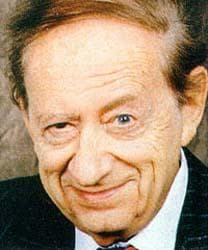
Biography coming soon.







