“The building was on fire, and it wasn't my fault.”
— Harry's opening line, immediately establishing his typical chaotic life.

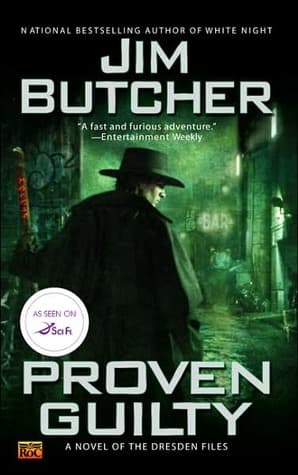
Jim Butcher (2007)
Genre
Fantasy / Mystery
Reading Time
10-12 hours
Key Themes
See below
Sign in to track this book
Drafted into the White Council, Harry Dresden juggles monstrous fear-feeders and a friend's troubled daughter while navigating the treacherous politics of wizardry and the supernatural chaos brewing in Chicago.
Harry Dresden, now a Warden of the White Council, investigates a gruesome attack at the fictional Children's Winter Festival in Chicago's Millennium Park. The victim, Douglas, was found dismembered and drained of blood. His friend, Craig, is the only suspect. Harry senses a powerful, fear-based supernatural entity. Amidst this, Molly Carpenter, daughter of Harry's friend Michael Carpenter, arrives at his office. Molly, now a rebellious teenager, explains her boyfriend, Nelson, has been arrested for a similar attack. She believes Nelson is innocent and asks Harry for help, bringing him into a case that quickly connects with his own investigation.
Harry begins investigating the attacks, focusing on the university students. He learns that the victims and suspects were all involved in a student horror film project and used a specific computer lab. Consulting with Bob, his spirit of intellect, Harry identifies the entities as 'Nagas' or 'Fear-Feeders,' beings that grow stronger by creating terror. He suspects the students, unknowingly, conjured or attracted these entities through their horror film activities. Meanwhile, Molly's involvement grows as she helps Harry navigate the student world, showing her nascent magical abilities. Harry recognizes these as dangerously powerful and uncontrolled, putting her at risk from the White Council's strict laws against black magic.
While investigating the university, Harry discovers Molly has been secretly learning magic from Cowl, a notorious black wizard. He finds a magical focus hidden in her belongings. He confronts her, and Molly confesses she sought out Cowl after her powers manifested uncontrollably, believing Harry was too busy to help her. This deeply troubles Harry, as Cowl is dangerous, and Molly's unsupervised training could lead to her execution by the White Council. The Council, particularly the Blackstaff Ebenezar McCoy and Senior Council member Arthur Langtry, are already suspicious of Harry due to his previous actions and his connection with the controversial Winter Knight, Maeve. Molly's forbidden magic further complicates Harry's already difficult position within the magical community.
Harry's investigation is also complicated by the Winter Court of the Fae. Maeve, the Winter Lady, appears, offering Harry cryptic warnings and subtle manipulations, hinting at a larger game. She reveals the fear-feeders are connected to a ritual that could empower a powerful being. Later, Queen Mab, the formidable ruler of the Winter Court, makes her presence known, subtly reminding Harry of his debt to her and his role as her Winter Knight. Their interactions show the dangerous political landscape Harry navigates, where his duties as a Warden clash with his Fae obligations, and where powerful entities seek to exploit chaos for their own ends. These encounters show the alliances and rivalries that define the supernatural world.
Harry and Molly discover the fear-feeders are not random entities but constructs animated by the students' fear, especially through their horror film, 'The Scarecrow.' The film, originally a student project, has become a way for these entities to appear. Harry realizes the attacks are part of a larger, planned effort to collect fear and empower a more significant entity. He suspects a dark wizard is behind the scheme, manipulating the students and the fear-feeders for their own purposes. This discovery raises the stakes, as the threat is not just isolated supernatural attacks but a calculated magical assault with potentially devastating consequences for Chicago and its people.
The fear-feeder attacks peak at the Children's Winter Festival, where thousands of innocent civilians are gathered. The entities, now powerful from the fear they've collected, launch a full assault, creating terrifying illusions and causing widespread panic. Harry, along with other Wardens, including Luccio and Ancient Mai, are present, having expected a confrontation. A chaotic battle begins, with Harry and the Wardens trying to protect civilians and fight the fear-feeders. The situation is dire, with the entities feeding on the crowd's terror, growing stronger with every scream. Molly, despite her inexperience, uses her growing magic to help, showing her raw power but also its danger.
During the chaotic battle at the festival, the fear-feeders overpower the Wardens, threatening to overwhelm the crowd. In a desperate act, Molly, seeing the danger to children, unleashes a powerful burst of illusion magic, creating a comforting, joyful scene to counteract the fear. While her intentions are good, her magic is beyond her training and dangerously close to mind-tampering, a severe violation of the White Council's Laws of Magic. Her actions, though effective in saving lives, are witnessed by Senior Council members, particularly Ancient Mai, who immediately recognizes the dark nature of her power. This sets the stage for Molly's judgment by the White Council, with Harry caught between protecting his friend and upholding the Council's strict laws.
Following the festival incident, Molly is apprehended by the White Council and put on trial for using black magic, specifically for violating the Third Law of Magic: 'Thou shalt not invade the mind of another.' Harry, despite his own difficult standing, strongly defends her, arguing her actions were out of desperation to save lives and that she was manipulated by Cowl. He exposes Cowl's involvement and Molly's lack of malicious intent. The tribunal is tense, with Ancient Mai pushing for Molly's execution. Harry's passionate defense, coupled with Ebenezar McCoy's subtle support, sways some members, but the outcome remains uncertain, showing the rigid and unforgiving nature of the Council's justice system.
After a long deliberation, the White Council delivers its verdict on Molly Carpenter. While she is found guilty of violating the Laws of Magic, her youth, lack of malicious intent, and Harry's intervention lead to a lighter sentence. Instead of execution, Molly is placed under Harry's direct apprenticeship for ten years. This means Harry is solely responsible for her magical training and for ensuring she never again uses forbidden magic. The decision is a heavy burden for Harry, who already struggles with his own magic and his duties as a Warden. It also puts Molly directly under the Council's watchful eye, with her life depending on Harry's ability to guide her.
After the trial, Harry reflects on the events. He recognizes the fear-feeder attacks were a deliberate act of war by the Black Council, a shadowy organization of dark wizards, to create chaos and test the White Council's defenses. He also understands that Molly's apprenticeship is both a lifeline and a leash, binding them together. The novel ends with Harry thinking about the escalating war with the Red Court vampires and the growing threat of the Black Council. He realizes the incidents in Chicago were merely a skirmish in a much larger conflict, and his new responsibilities, both to the White Council and to Molly, will put him further into the heart of these dangerous struggles. The seeds of future conflicts are clearly planted.
The Protagonist
Harry grapples with his new responsibilities as a Warden and an apprentice master, forcing him to balance duty with compassion and confront the dangers of uncontrolled power.
The Supporting
Molly learns the severe consequences of dabbling in dark magic and accepts a difficult apprenticeship under Harry, beginning her journey toward responsible magical practice.
The Supporting
Michael continues to exemplify unwavering faith and fatherly love, navigating the challenges of his daughter's dangerous magical path.
The Supporting
Bob continues to provide essential magical knowledge and sardonic commentary, demonstrating his loyalty to Harry within his amoral framework.
The Supporting
Ebenezar continues to subtly protect Harry and Molly, using his influence to temper the Council's harsh judgments and guide Harry's path.
The Supporting
Maeve continues to exert her influence over Harry, drawing him deeper into the machinations of the Winter Court and her own hidden agenda.
The Supporting
Mab reinforces her control over Harry, reminding him of his obligations as the Winter Knight and her continued influence over his life.
The Supporting
Ancient Mai maintains her rigid stance on magical law, serving as a primary antagonist to Harry's defense of Molly and representing the harsh justice of the White Council.
The Mentioned
Cowl's unseen influence is exposed, revealing his manipulation of Molly and contributing to the larger threat of the Black Council.
This theme is central to Molly Carpenter's story. Her growing, immense magical talent, especially in illusion and mind magic, is a double-edged sword. Without proper training and moral guidance, it becomes dangerous, leading her to accidentally violate the Laws of Magic. Her actions at the Winter Festival, though meant to save lives, show the destructive potential of untrained power. Harry himself constantly struggles to control his own immense magical abilities, recognizing the fine line between hero and villain, and the corrupting effect of power, especially when fueled by fear or desperation. The White Council's harsh laws are a direct response to this inherent danger, though often applied with little compassion.
“Power is dangerous. It's not a toy, it's not a game. It's a responsibility.”
Harry Dresden often finds himself caught between the rigid, often unfeeling laws of the White Council and his own personal sense of justice and compassion. This is most clear in Molly's trial. While Molly technically violates the Laws of Magic, her intent was to save lives, not to cause harm. Harry argues for the spirit of the law, emphasizing intent and circumstance, while Ancient Mai and others rigidly adhere to the letter of the law. The novel explores whether strict adherence to rules always leads to true justice, especially when lives are at stake. Harry's role as a Warden also forces him to uphold laws he sometimes disagrees with.
“There are things in this world that are right, and things that are wrong. And sometimes, the law is on the side of wrong.”
The main villains of the novel, the fear-feeders, directly show this theme. These entities thrive on fear, growing stronger as they create terror in their victims. The entire plot revolves around a dark wizard's manipulation of fear through a horror film and a public festival to empower these creatures. The novel highlights how fear can be a strong weapon, capable of paralyzing individuals and entire crowds, making them vulnerable to manipulation and attack. It also explores the psychological impact of fear, showing how it can drive people to irrational actions, both in the victims and in those who react to the threat.
“Fear is a weapon. It's the oldest, the most powerful, and the most reliable. It works on everyone.”
Harry's new role as a Warden and, more significantly, as Molly's unwilling mentor, highlights the theme of responsibility. He is responsible not only for upholding the Council's laws but also for guiding Molly, whose life depends on his ability to teach her control and ethical magic. This forces Harry to mature and confront his own past failures and insecurities about mentorship. The burden of responsibility weighs heavily on him, as he recognizes the profound impact his guidance will have on Molly's future, and the potential consequences if he fails. Ebenezar McCoy also shows responsible mentorship, subtly guiding and protecting Harry.
“With great power comes great responsibility. And with great responsibility comes a hell of a lot of headaches.”
Seven fundamental prohibitions enforced by the White Council.
The Laws of Magic serve as the overarching legal and moral framework of the wizarding world. They are absolute prohibitions against certain magical practices, such as killing with magic, invading minds, or raising the dead. Violating these laws typically results in execution by the White Council. In 'Proven Guilty,' the Laws are a central conflict point, as Molly Carpenter unwittingly violates the Third Law (invading the mind of another) while attempting to save lives. This device creates immense dramatic tension, forcing Harry to defend Molly against a system that he himself is now sworn to uphold, highlighting the rigid and unforgiving nature of magical justice.
Harry's magical binding to Queen Mab of the Winter Court.
Harry's oath as the Winter Knight, made in a previous book, is a magical binding that compels him to serve Queen Mab. This device introduces a constant source of external conflict and moral compromise for Harry. It forces him into the political machinations of the Fae courts, often requiring him to perform morally ambiguous tasks or accept aid from dangerous entities like Maeve. In 'Proven Guilty,' Maeve's interventions and Mab's subtle reminders of his debt serve as a recurring pressure, complicating Harry's duties as a Warden and his personal moral code, and foreshadowing future, more demanding obligations to the Winter Court.
Supernatural entities that grow in power by consuming fear.
The fear-feeders are the primary antagonists, serving as a magical manifestation of a human emotion. This device drives the main plot, as their attacks on students and the subsequent assault on the Winter Festival create the central mystery and threat. They are not merely monsters but a reflection of a deeper, more insidious magical plot orchestrated by a dark wizard to harvest power. Their nature allows the story to explore the themes of fear, its manipulation, and its psychological impact on victims, providing a concrete, visible threat that feeds on the very terror it creates in the civilian population.
A shadowy cabal of dark wizards working against the White Council.
The Black Council is a clandestine organization of powerful dark wizards, operating from the shadows to undermine the White Council and pursue their own nefarious agenda. This device serves as the overarching, long-term antagonist of the Dresden Files series. In 'Proven Guilty,' the fear-feeder attacks are revealed to be orchestrated by the Black Council, using the chaos to test the White Council's defenses and sow discord. The Black Council represents a hidden, systemic threat, suggesting a larger, more coordinated war brewing in the magical world, elevating the stakes beyond individual villains and hinting at a grander, more dangerous conspiracy.
“The building was on fire, and it wasn't my fault.”
— Harry's opening line, immediately establishing his typical chaotic life.
“The truth is a powerful thing, and it can be used for good or ill. But it must be known, or it ceases to be truth.”
— Harry reflecting on the importance of uncovering the truth, even when it's difficult.
“Some things, once you've seen them, you can't unsee them. And some things, once you've done them, you can't undo them.”
— Harry contemplating the irreversible nature of certain events and actions.
“Fear is a living thing. It's born in the mind, and it feeds on doubt and uncertainty.”
— Harry's internal monologue about the nature and power of fear.
“I'm a wizard. I solve problems. Usually with fire.”
— Harry's blunt self-assessment of his magical abilities and preferred methods.
“The world doesn't care what you meant to do. It cares what you do.”
— Harry's pragmatic view on intentions versus actions, often a theme in his work.
“Sometimes the only way to save someone is to let them go.”
— Harry facing a difficult decision about protecting someone he cares about.
“Being a hero doesn't mean you're invincible. It just means you're brave enough to stand up and do what's needed.”
— Harry's definition of heroism, emphasizing courage over invulnerability.
“There's a difference between being a victim and acting like one.”
— Harry's tough-love approach to individuals who wallow in self-pity.
“Every choice you make, every path you take, changes the person you are.”
— Harry's reflection on the cumulative effect of life decisions on one's character.
“You can't always choose your battles, but you can always choose how you fight them.”
— Harry contemplating agency in the face of unavoidable conflict.
“Hope is a dangerous thing. It can drive a man to greatness, or it can drive him to madness.”
— Harry's nuanced view on the double-edged sword of hope.
“The greatest trick the devil ever pulled was convincing the world he didn't exist. The second greatest was convincing people that monsters don't exist.”
— Harry's cynical, but experienced, view on the hidden evils in the world.
“Power corrupts, and absolute power corrupts absolutely. But weakness can corrupt too. Weakness can make you betray your friends, your family, even yourself.”
— Harry's insight into the corrupting influence of both power and its absence.
Ready to see how well you understood this book? Take our interactive quiz with 10 questions.

Biography coming soon.







