“The price of freedom is eternal vigilance.”
— A recurring theme about the constant threat to national security.

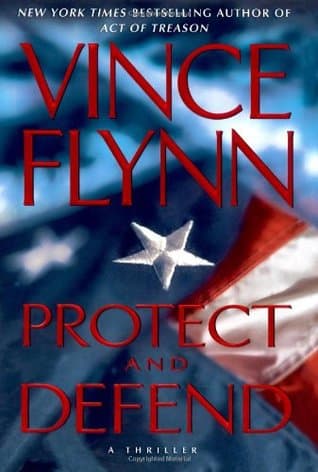
Vince Flynn (2007)
Genre
Thriller / Mystery
Reading Time
8 hours
Key Themes
See below
Sign in to track this book
After Israel's daring strike leaves Iran's nuclear ambitions in ruins, Mitch Rapp races to stop a vengeful terrorist's plot, pushing the Middle East to the brink of war.
The novel begins with an Israeli commando raid on Iran's top-secret nuclear facility in Qom. A skilled team infiltrates the heavily guarded site and detonates a specialized device, turning the facility into a radioactive wasteland. The attack aims to set back Iran's nuclear ambitions by decades, but it also creates an environmental hazard and causes international outcry. The Iranian government, under President Amatullah, immediately blames Israel and the United States for the aggression, vowing severe retaliation and increasing tensions in the Middle East.
After the Qom attack, Iranian President Amatullah publicly condemns the 'act of terrorism' by Israel and the US, demanding international action and reparations. In private, Amatullah meets with his top advisors, including intelligence chief Azad Ashani, to plan a direct and bloody retribution. He tasks Ashani with coordinating a devastating retaliatory strike that will make America and Israel 'pay with blood.' To do this, Amatullah enlists the infamous Hezbollah terrorist Imad Mukhtar, known for his ruthlessness and network, to carry out their plan.
In Washington D.C., the Qom attack creates turmoil in the US intelligence community. While many fear Iranian reprisals, Mitch Rapp, America's elite counterterrorism operative, sees a different path. He argues that the attack has exposed the Iranian regime's weaknesses and created a chance to further destabilize Amatullah's government. Rapp proposes a risky operation to President Josh Alexander, aiming to embarrass Iran and push the country toward internal revolution, rather than just reacting to their threats.
President Alexander, after much thought, approves Rapp's plan, code-named 'Operation Judas Goat.' The strategy involves creating a public, fake defection of a prominent Iranian nuclear scientist, Dr. Rostam Akbari, to the West. The goal is to create distrust within the Iranian regime, expose their intelligence failures, and provoke a desperate reaction that will further isolate President Amatullah and potentially spark an uprising against his rule. The operation relies heavily on deception and psychological warfare.
As part of Operation Judas Goat, CIA Director Irene Kennedy is sent to the Middle East for a secret meeting with Azad Ashani, her Iranian intelligence counterpart. The meeting, arranged through back channels, is supposedly to reduce tensions and discuss the fallout from the Qom attack. However, it also serves as a crucial part of Rapp's plan, aiming to gather intelligence and manipulate the Iranian leadership's perceptions, making them more open to the 'Judas Goat' deception. The stakes are very high for Kennedy, as any mistake could lead to disaster.
While Kennedy is traveling, Imad Mukhtar, following Amatullah's orders, plans his retaliatory strike against American interests. He uses his network to prepare a series of devastating attacks. Meanwhile, Kennedy's secret meeting with Ashani in Beirut goes wrong. The location is compromised, and a team of Iranian Revolutionary Guard Corps (IRGC) operatives, likely tipped off by Mukhtar's network, ambushes the meeting. Kennedy and her security detail are overwhelmed, leading to her capture by Iranian forces. This unexpected event disrupts Rapp's plan and sparks a furious response from Washington.
News of Irene Kennedy's capture shocks the White House. President Alexander is angry and blames Rapp's risky strategy. However, recognizing the seriousness of the situation and Rapp's unique abilities, Alexander gives him an unprecedented mandate: twenty-four hours, no questions asked, to do whatever it takes to rescue Kennedy and prevent Mukhtar's planned terrorist attacks. Rapp, driven by a personal connection to Kennedy and a desire for retribution, immediately mobilizes his resources and begins a desperate race against time.
Using his network and infiltration skills, Mitch Rapp, with a small, elite team, secretly enters Iran. His mission has two parts: gather intelligence on Mukhtar's planned attacks and, more urgently, find Kennedy's location and extract her before she can be interrogated or harmed. Rapp navigates the dangerous Iranian landscape, avoiding detection by the IRGC and local intelligence agencies. He uses advanced technology, brutal efficiency, and calculated risks, leaving chaos in his path as he closes in on Kennedy's captors.
Rapp's pursuit of Kennedy leads him into a direct confrontation with Imad Mukhtar. The two adversaries, representing opposing ideas and methods, clash in a brutal and personal battle. Mukhtar, a master strategist and ruthless killer, tries to outmaneuver Rapp, while Rapp, driven by determination, pushes through every obstacle. The confrontation is a high-stakes fight that will decide their fates and the immediate future of US-Iranian relations and the region's stability.
In a final struggle, Mitch Rapp neutralizes Imad Mukhtar and dismantles his network, narrowly preventing the catastrophic terrorist attacks Mukhtar had planned. Irene Kennedy is rescued, though shaken. While Rapp's actions prevent immediate widespread bloodshed and humiliation for the US, tensions between Iran, Israel, and the United States remain very high. President Amatullah's regime is further destabilized, but the desire for retribution still exists. The novel ends with the immediate crisis resolved, but with the geopolitical landscape still dangerous, hinting at future conflicts.
The Protagonist
Rapp's arc reinforces his role as an indispensable, albeit controversial, asset, demonstrating his ability to turn desperate situations into strategic opportunities while grappling with the personal toll of his work.
The Supporting
Kennedy's arc demonstrates her resilience and unwavering commitment to her country, even when facing personal danger and becoming a pawn in a larger conflict.
The Supporting
Alexander's arc showcases his growth as a wartime president, learning to trust his unconventional assets and make tough calls under extreme duress.
The Antagonist
Mukhtar's arc is one of escalating ambition and ultimate defeat, as his carefully laid plans are systematically dismantled by Rapp.
The Antagonist
Amatullah's arc shows his regime's increasing destabilization and humiliation as a result of his own aggressive policies and Rapp's counter-operations.
The Supporting
Ashani's arc highlights the internal divisions within the Iranian regime, as he tries to balance his loyalty with the practical realities of the situation.
The Mentioned
Akbari's arc serves as a MacGuffin, a fictional entity whose supposed actions drive significant plot developments without him being a direct actor.
The Supporting
Gould's arc demonstrates the vital role of intelligence analysis in supporting covert operations, often under immense pressure.
The novel explores the ethical issues of preemptive strikes in international relations. The Israeli attack on the Iranian nuclear facility, while arguably preventing a greater future threat, is shown with its immediate devastating consequences: environmental disaster and increased global tensions. This makes characters like President Alexander weigh the immediate moral cost against potential long-term security benefits, questioning whether 'protecting and defending' sometimes requires actions that bend international law and provoke retaliation. Rapp's methods often reflect this theme, as he believes in taking decisive, often brutal, action to neutralize threats before they fully appear, regardless of ethical gray areas.
““Sometimes, to prevent the worst, you have to be willing to do the unthinkable.””
A main theme is the cycle of retribution and how it leads to dangerous escalation. The Israeli strike immediately prompts Iran's President Amatullah to seek 'blood for blood,' leading him to activate Imad Mukhtar. This back-and-forth quickly spirals, pushing the US and Iran to the brink of war. The story shows how each act of aggression, regardless of its initial reason, fuels the other side's desire for revenge, making de-escalation difficult. Rapp's mission is not just to stop Mukhtar but to break this cycle, or at least control it, by outmaneuvering the enemy rather than just reacting.
““The game of retribution has no winners, only survivors.””
The novel highlights the power of deception and psychological warfare as tools in international espionage. Mitch Rapp's 'Operation Judas Goat,' centered on the fake defection of Dr. Akbari, is a key example. The goal is not just to gather intelligence but to create paranoia and distrust within the Iranian regime, causing them to make rash decisions. The capture of Irene Kennedy, though a setback, is also partly due to successful Iranian counter-intelligence and Mukhtar's manipulative tactics. The story shows how manipulating perceptions and creating false narratives can be as impactful, if not more so, than direct military action in shaping geopolitical outcomes.
““In this war, the truth is often the first casualty, and deception is your most powerful weapon.””
The immense psychological and moral burden placed on leaders is a recurring theme. President Josh Alexander constantly struggles with decisions that could lead to war, balancing the advice of his advisors. Irene Kennedy, as CIA Director, carries the weight of intelligence failures and the personal risk of her missions, ending in her capture. Even Mitch Rapp, despite his efficiency, faces the personal cost of his brutal work. The novel shows the isolation and responsibility that comes with making life-and-death decisions for a nation, often with incomplete information and against ruthless enemies.
““A president’s greatest burden wasn’t the power, but the responsibility for the lives his decisions touched.””
A plot device that drives the narrative without being central to the main conflict.
Dr. Rostam Akbari, the Iranian nuclear scientist, serves as a classic MacGuffin. His 'defection' is the entire premise of Mitch Rapp's 'Operation Judas Goat,' designed to provoke a reaction from Iran. While the character himself is not directly involved in much of the action, the belief in his existence and the events surrounding his supposed defection are crucial for setting up the strategic deception and forcing the Iranian regime's hand. The pursuit of Akbari drives significant intelligence maneuvers and sets the stage for the later confrontation between Rapp and Mukhtar.
A suspenseful element where characters must complete a task within a limited timeframe.
The ticking clock device is prominently used after Irene Kennedy's capture. President Alexander gives Mitch Rapp an explicit twenty-four-hour deadline to rescue Kennedy and prevent Mukhtar's planned terrorist attacks. This creates immense urgency and heightens the stakes, driving Rapp's relentless pursuit and forcing rapid, high-risk decisions. The limited timeframe compresses the action, making every move critical and amplifying the suspense as the reader, along with Rapp, races against the looming catastrophe.
An operation designed to deceive the public or enemy about the source of an attack.
The initial Israeli strike on the Iranian nuclear facility, while implicitly understood by the US, functions as a form of false flag in terms of public perception. Iran immediately blames both Israel and the US, blurring the lines of responsibility and creating a pretext for their own retaliation. Later, 'Operation Judas Goat' itself is a sophisticated false flag operation, where the US intelligence community actively creates a false narrative (Akbari's defection) to manipulate the Iranian regime. This device underscores the theme of deception and the complex, often dishonest, nature of international espionage.
Characters whose loyalties or intentions are ambiguous, creating tension and unpredictability.
Azad Ashani, the head of Iranian Intelligence, embodies the unreliable ally/enemy. While he is an adversary to the US, his willingness to meet clandestinely with Irene Kennedy suggests a more complex motivation than President Amatullah's outright belligerence. His actions and true intentions are often ambiguous, making it difficult for the US to fully trust or predict his moves. This device adds layers of intrigue, as characters like Kennedy and Rapp must constantly assess who can be trusted, even in the midst of open conflict, and whether diplomatic channels are genuine or simply another form of deception.
“The price of freedom is eternal vigilance.”
— A recurring theme about the constant threat to national security.
“There are no easy answers in this business, only harder choices.”
— Mitch Rapp reflecting on the difficult decisions intelligence operatives face.
“Sometimes you have to break a few eggs to make an omelet.”
— A common saying used to justify extreme measures in the pursuit of a greater good.
“Trust is a luxury few can afford, and even fewer should give.”
— Mitch Rapp's cynical view on trust within the world of espionage.
“The enemy within is often more dangerous than the enemy without.”
— Discussing the threat of internal corruption or betrayal.
“Fear is a powerful motivator, and a dangerous master.”
— Characters grappling with the use of fear as a tactic and its potential drawbacks.
“In this line of work, yesterday's allies can be tomorrow's enemies.”
— Highlighting the fluid and unpredictable nature of international relations and alliances.
“The greatest weapon is an informed mind.”
— Emphasizing the importance of intelligence and knowledge in conflict.
“Justice isn't always fair, but it demands to be served.”
— A character's grim determination to seek retribution, regardless of the cost.
“There are lines you don't cross, even for the greater good.”
— A moral dilemma faced by characters regarding extreme tactics.
“Silence can be more deadly than any bullet.”
— Referring to the power of secrets and withheld information.
“Every mission comes with a cost, some higher than others.”
— Acknowledging the sacrifices and consequences inherent in their dangerous work.
“The world is a far more dangerous place than most people realize.”
— A pervasive sentiment reflecting the hidden threats and constant dangers that intelligence agencies combat.
“You can't save everyone, but you can damn well try.”
— Mitch Rapp's relentless drive to protect the innocent, even when faced with impossible odds.
“The truth is rarely simple, and often inconvenient.”
— Characters uncovering complex conspiracies and uncomfortable realities.
Ready to see how well you understood this book? Take our interactive quiz with 10 questions.

Biography coming soon.







