“I was not a man given to introspection, and I did not think about myself much. I had a job, and I did it.”
— Spenser's general outlook on life and his work.

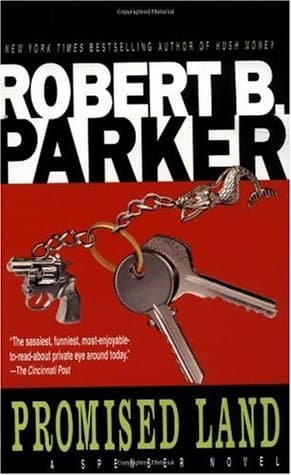
Robert B. Parker (1976)
Genre
Thriller / Mystery
Reading Time
240 min
Key Themes
See below
Sign in to track this book
When a businessman hires Spenser to find his runaway wife, the detective uncovers a world of loan sharks, failing businesses, and a woman's desperate flight from a dangerous life.
Spenser, a private investigator, is in his new Boston office when Harv Shepard, a businessman, walks in. Harv explains that his wife, Pam, has left him and their two children, taking money and their car. He wants to find her, not just for his children, but because he thinks she might be in danger or making a mistake. Spenser takes the case. His first look suggests Pam's leaving was not just rebellion but possibly connected to deeper issues in the Shepard family and Harv's life.
Spenser quickly finds Pam Shepard at a commune in Amherst, Massachusetts, run by radical feminists. Pam, now called 'Christine,' has fully adopted their ideas of female independence and rejecting society. She refuses to return to Harv. While looking into Pam's new life, Spenser also learns more about Harv's money problems, finding that Harv owes a lot of money to Joe Broz, a known loan shark. Broz is dangerous, and his involvement immediately raises the stakes, suggesting Pam's flight might be linked to Harv's financial situation.
Spenser goes to Amherst and confronts Pam at the feminist commune. He tries to talk to her, explaining Harv's distress and the danger he is in, but Pam is firm in her new identity and beliefs. She sees her escape as freedom and Spenser as part of the system she is trying to escape. Her new friends, especially a leader named Sarah, are just as firm, seeing Spenser as an intruder and a threat. The meeting is tense, showing the big difference between Pam's new world and the one Spenser represents.
Back in Boston, Joe Broz puts more pressure on Harv Shepard, sending his men to deliver increasingly violent threats. Harv, scared, finally tells Spenser everything. He reveals that his business, a failing housing development, is about to collapse, and he owes Broz a large sum of money he cannot repay. Harv is desperate, and Spenser realizes that finding Pam is now less important than protecting Harv from Broz's deadly reach. The case takes a darker turn, changing from a family dispute to a fight for life against crime.
Harv Shepard, wanting to save himself, reveals a hidden safe with a lot of money he had been saving to escape his problems. He suggests a plan to Spenser: get the money from the safe, located in an abandoned property, and use it to pay off Broz. Spenser is careful about the plan, seeing the dangers and moral issues, but Harv's fear and the threat from Broz leave him with few other choices. Spenser agrees to help, knowing this will lead him to confront Broz's organization.
Spenser asks his friend, Hawk, to help get the money from Harv's hidden safe. They go to the isolated, broken-down property where the safe is. After opening it and getting the cash, Broz's men ambush them, clearly having been told where they would be. A violent shootout happens. Spenser and Hawk, showing their fighting skills, manage to fight off the attackers, though the fight is brutal and close. They escape with the money, but the incident confirms how serious Broz's intentions are and how far his network reaches.
In a bad turn of events, Broz's men, unable to get the money from Spenser and Hawk, kidnap Pam and her feminist friends from the Amherst commune. They are held hostage in a remote place, used to pressure Harv into paying his debt. This makes Spenser's mission more complicated, as he now has to protect Harv and rescue Pam, whom he first sought to return to Harv. The stakes are much higher, and Spenser knows he must act fast to save the innocent women caught in Broz's web.
With Pam and her friends held hostage, Spenser, with Hawk and his psychologist girlfriend Susan Silverman, plans to rescue them. Susan, though at first not wanting to be involved in such violence, offers important psychological insight and support. They find the hideout where Broz's men are holding the women. The rescue is carefully planned and carried out, with Spenser and Hawk using their fighting skills. It is a dangerous mission, needing precision and a willingness to face extreme violence to save the captives.
After rescuing Pam and her friends, Spenser focuses on Joe Broz. He tracks Broz to his hideout, determined to end the loan shark's control and ensure Broz can no longer threaten Harv or anyone else. The confrontation is tense and violent, ending in a brutal fight between Spenser and Broz. Spenser, though outmatched in resources, uses his intelligence, strength, and strong moral code to defeat Broz, ending the immediate threat from the criminal group.
With Broz gone and Pam and her friends safe, the immediate crisis is over. Harv Shepard is free from his debt and the danger, though his business is still in trouble, and his marriage is broken. Pam, though rescued, still chooses not to return to Harv, keeping her independence and new path. Spenser thinks about the complexities of human relationships, the appeal of radical movements, and the harsh realities of the criminal world. The ending is not neat or happy, but a realistic look at lives changed forever by the events.
The Protagonist
Spenser's arc in this novel reinforces his commitment to justice and his ability to navigate complex moral landscapes, even when the 'good guys' are flawed.
The Supporting
Harv's arc is one of exposure and survival, revealing his flaws but ultimately being saved by Spenser, though his life remains in tatters.
The Supporting
Pam's arc is about seeking independence and a new identity, ultimately finding it, but not without being caught in a violent external conflict.
The Supporting
Hawk's arc is consistent; he remains a steadfast, powerful, and enigmatic ally, reinforcing his role as Spenser's shadow.
The Supporting
Susan's arc sees her reluctantly but bravely step closer to Spenser's dangerous world, demonstrating her commitment to him.
The Antagonist
Broz's arc is one of escalating villainy, culminating in his violent defeat at Spenser's hands.
The Supporting
Sarah remains a steadfast leader of her commune, representing a strong ideological stance in the face of external threats.
This theme is most clear through Pam Shepard's story. Feeling stuck in her traditional marriage, Pam leaves her family to join a feminist commune. She seeks a new identity and freedom from society's expectations. Her change into 'Christine' and her acceptance of the commune's ideas show the desperate steps people sometimes take to redefine themselves. Spenser, while disagreeing with her methods, respects her right to choose. His rescue efforts are not about forcing her back to Harv, but about saving her from a dangerous situation, allowing her to continue her chosen path. This theme questions what personal fulfillment means and the limits of traditional roles.
“''I was a possession, a function, a convenience. I wasn't me.'”
Greed is a main destructive force in the novel, shown by Joe Broz and his loan shark business. Broz's constant desire for money drives him to use vulnerable people like Harv Shepard, using threats and violence to keep his power. Harv himself, though a victim, is also involved due to his own poor money management and the desperate things he does to save money, trying to escape his problems instead of dealing with them. The novel shows how greed not only destroys financial stability but also harms human relationships and leads to extreme violence, demonstrating its wide and destructive impact.
“''Broz didn't care about anything but the money. And the power that came with it.'”
Spenser shows a complex kind of masculinity, mixing physical strength and toughness with intelligence, empathy, and strong morals. He protects others but is not overbearing. He challenges traditional ideas of masculinity through his interactions with Harv, who is weak and unsure, and with the radical feminists, who question old structures. Spenser's commitment to justice, his loyalty to friends like Hawk, and his respectful relationship with Susan Silverman show a more developed understanding of what it means to be a man, one that values integrity and protection over control.
“''I wasn't a knight. I was just a guy trying to do the right thing, in a world that didn't make it easy.'”
The novel looks at the complexities and breakdowns within families. Pam's leaving her family highlights the pressures and unhappiness that can lead to such drastic actions, questioning the ideal image of the nuclear family. Harv's desperation to get her back, despite his own flaws, speaks to the lasting, though complicated, family bonds. Spenser's own chosen 'family' – Hawk and Susan – offers a different model of commitment based on mutual respect and shared values rather than traditional duties. The story suggests that family is not just about blood, but about who you choose to support.
“''Families are messy. They're supposed to be. That's how you know they're real.'”
An initial plot driver that reveals deeper conflicts.
Pam Shepard's disappearance serves as the initial MacGuffin, the object or goal that sets the plot in motion. Spenser is hired to find her, but her actual location and motivations quickly become secondary to the larger, more dangerous conflict involving Harv's debt to Joe Broz. While Pam is eventually found and rescued, her role shifts from being the central mystery to a catalyst for uncovering Harv's deep troubles and for Spenser's confrontation with organized crime. This device effectively draws the reader into the story before revealing its true stakes.
A sudden betrayal or attack that raises the stakes and reveals the antagonist's ruthlessness.
The ambush of Spenser and Hawk when they retrieve the money from Harv's hidden safe is a classic double-cross. It reveals that Broz's network is far-reaching and that Harv's plan was compromised, or that Harv himself was unknowingly (or knowingly) set up. This event significantly raises the stakes, transforming the investigation into a direct, violent confrontation with Broz's organization. It underscores the antagonist's ruthlessness and forces Spenser and Hawk to respond with immediate and decisive action, solidifying the thriller aspect of the narrative.
A tactic used by the antagonist to escalate pressure and endanger innocent lives.
Broz's decision to kidnap Pam and her friends from the commune serves as a critical plot device. It transforms the conflict from a financial dispute and a missing person's case into a life-or-death rescue mission involving innocent parties. This move not only escalates the danger but also broadens the scope of Spenser's moral imperative, compelling him to act not just for his client, but for the safety of others. It also highlights Broz's extreme villainy and forces Spenser and Hawk to coordinate a high-stakes, violent intervention.
“I was not a man given to introspection, and I did not think about myself much. I had a job, and I did it.”
— Spenser's general outlook on life and his work.
“Being a private detective in Boston was a little like being a bullfighter in Kansas. You could do it, but you had to explain it a lot.”
— Spenser reflecting on his profession in his city.
“The thing about justice is that it’s not always about what’s right. Sometimes it’s about what you can get away with.”
— Spenser's cynical view on the practicalities of law and order.
“I don't mind being alone. I just don't like being lonely.”
— Spenser's distinction between solitude and emotional isolation.
“Susan Silverman was a psychologist, and she had a way of looking at things that made them seem both simpler and more complicated at the same time.”
— Spenser's description of Susan's analytical mind.
“Violence is the last resort of the incompetent.”
— Spenser's often-stated belief about the use of force.
“It’s not enough to be tough. You have to be smart, too.”
— Spenser's advice on effective problem-solving.
“I never carry a gun unless I intend to use it. And I almost always intend to use it.”
— Spenser's pragmatic approach to carrying a firearm.
“The truth is a funny thing. Sometimes it’s right there in front of you, and you still can’t see it.”
— Spenser reflecting on the elusiveness of truth in his investigations.
“There are no easy answers, only choices.”
— Spenser's understanding of moral and practical dilemmas.
“You can’t help people who don’t want to be helped.”
— Spenser's realization about the limits of intervention.
“Trust is a fragile thing. Once broken, it’s very hard to put back together.”
— Spenser's thoughts on the importance and vulnerability of trust.
“I don't play fair. I play to win.”
— Spenser's pragmatic and often ruthless approach to achieving his goals.
“The past is never really dead. It's not even past.”
— Spenser's reflection on how past events continue to influence the present.
Ready to see how well you understood this book? Take our interactive quiz with 10 questions.
Biography coming soon.







