“Every day, I wake up and I am reminded of the people I have lost, the people I have failed, and the people I have yet to save.”
— June's internal monologue reflecting on her past and burdens.

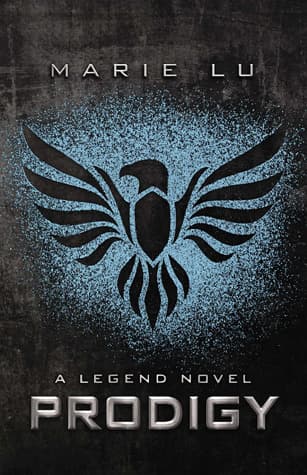
Marie Lu (2013)
Genre
Fantasy / Science Fiction / Young Adult / Romance
Reading Time
7-8 hours
Key Themes
See below
Sign in to track this book
On the run and labeled traitors, June and Day navigate rebel alliances, where the line between help and manipulation blurs, making them question if their fight for freedom is just part of a larger, deadlier game.
Seven days after escaping Los Angeles, June Iparis and Daniel 'Day' Altan Wing, now fugitives, struggle to survive in the rundown areas outside the city. Day is badly hurt from a gunshot wound from their escape, and his condition worsens. They disguise themselves as beggars to avoid Republic patrols. June, using her intelligence, finds food and supplies, but the constant fear of being recognized weighs on them. Day is haunted by his brother Metias, whom he believes the Republic executed, and feels guilty about his family's suffering. Their goal is to find the Patriots, a rebel group, hoping for help and safety.
While looking for a doctor for Day, June and Day meet Tess, Day's old street friend, who recognizes them. Tess, now working with the Patriots, takes them to a hidden underground base in the northern sectors. There, they meet Razor, a high-ranking Patriot leader, and Commander Jameson, June's former superior in the Republic military, who is also secretly a Patriot. Jameson, pretending to be allied with the Republic, offers to help them with medical care for Day and a safe place. June is wary of Jameson, remembering her harsh methods, but Day's critical condition forces them to accept the Patriots' offer, even though their real intentions are unclear.
After Day gets medical treatment, the Patriots reveal their bold plan: to kill Anden, the new Elector Primo, during his upcoming public speech. They believe Anden, despite his promises of reform, is just another leader of the oppressive Republic. The Patriots want June and Day to help with this plot, using June's knowledge of Republic security and Day's fame as a rebel symbol. June is conflicted because she sees potential for change in Anden and is hesitant to commit to an assassination. Day, however, wants revenge against the Republic for his family's deaths and is more willing to agree, seeing it as the only way to dismantle the system that hurt him.
As June and Day train with the Patriots, June's suspicions about their true motives grow. She notices inconsistencies in their stories and particularly distrusts Commander Jameson, whose past actions do not match her current 'Patriot' role. June secretly starts her own investigation, using her analytical skills to gather information. She finds evidence that suggests Jameson might be playing a double game, possibly manipulating both the Patriots and the Republic for her own benefit. June realizes that the Patriots' plan to kill Anden might be part of a larger, more sinister scheme, and that she and Day could be unwilling pawns in a power struggle more complex than they first thought.
During a training exercise, Day has a clear vision, a side effect of his medical treatment, which hints at a hidden truth about his past and family. Meanwhile, June, increasingly sure of Jameson's betrayal, decides she must warn Anden. She secretly contacts Thomas, her former Republic colleague, and arranges a private meeting. At this meeting, June reveals the Patriots' assassination plot and her suspicions about Jameson, effectively betraying the Patriots. This decision is painful for June, as it puts her and Day in more danger, but she believes it is the only way to prevent a wider conflict and possibly save innocent lives, including Anden's.
The day of the Elector Primo's public speech arrives. Anden, speaking to a large crowd, talks about reforms and a new era for the Republic. As he begins his speech, the Patriots start their attack. Explosions shake the plaza, and chaos erupts. June, having warned Anden's security, tries to protect him in the pandemonium. Day, caught in the middle of the Patriot assault, is torn between his loyalty to the rebels and his growing doubts about their methods. The situation becomes a desperate fight for survival, with June trying to navigate the violence and protect the Elector, while Day struggles with the moral implications of the Patriots' actions.
Amid the chaos of the assassination attempt, Commander Jameson reveals her true loyalty. She is not a Patriot but a rogue agent with her own agenda, aiming to destabilize the Republic and take power for herself. She tries to frame June and Day for the attack, making their situation worse. Jameson's betrayal exposes the complex web of lies that has been woven around June and Day, showing how various groups have manipulated them. June, having expected Jameson's treachery, works to expose her to both the Patriots and the Republic, trying to clear her and Day's names while stopping Jameson from achieving her ultimate goal.
During the confrontation, Day learns a shocking truth about his past: he is one of the Republic's most valuable prodigies, a child bred for special abilities, and his brother, Metias, was not executed by the Republic but by Jameson, who was trying to frame Day. This revelation completely changes Day's understanding of his identity and his relationship with the Republic. Overwhelmed by this new information and Jameson's betrayal, Day and June must make a difficult decision. They realize that to truly fight for justice, they must form a new, fragile alliance with Anden, who also wants to reform the Republic and expose the corruption within it.
With Jameson's plot stopped and her betrayal exposed, a temporary peace is made. However, the truths about Day's past weigh heavily on him. He decides he needs to leave the Republic to find answers about his origins and his family, and to understand the full extent of the manipulation he has faced. June, now an advisor to Anden, accepts his decision, though it is heartbreaking for both of them. Their parting is bittersweet, marked by deep understanding and a promise to find each other again. June stays in the Republic, committed to helping Anden bring about real reform, while Day starts a journey of self-discovery, leaving the future of their relationship uncertain.
After Day leaves, June fully accepts her new role as a trusted advisor to Anden. She works hard with him to remove corruption within the Republic's government and military, and to put in place the reforms Anden envisions. June's sharp mind and understanding of both the Republic's inner workings and its citizens' struggles make her very valuable. She remains dedicated to justice and equality, working to create a Republic where tragedies like those that happened to Day's family cannot occur. Despite the pain of Day's absence, June finds purpose in her mission, knowing her efforts contribute to a better future for everyone.
The Protagonist
June transforms from a loyal Republic agent to a key figure in its reform, using her intellect to expose corruption and guide the new Elector.
The Protagonist
Day evolves from a revenge-driven rebel to someone seeking truth about his past, ultimately choosing a path of self-discovery over direct conflict.
The Supporting
Anden solidifies his position as a reform-minded leader, working to dismantle corruption and forge alliances for a better Republic.
The Antagonist
Jameson's true manipulative nature is fully exposed, leading to her downfall and the thwarting of her power grab.
The Supporting
Razor is initially a leader who is manipulated, but eventually comes to understand the true nature of the threats facing the rebellion.
The Supporting
Tess continues to grow in her role within the Patriots, demonstrating her loyalty and growing independence.
The Supporting
Thomas grapples with his past actions and loyalties, ultimately choosing to aid June, hinting at his potential for redemption.
The novel looks at the complexities of rebellion, asking if the end justifies the means. While the Patriots want to overthrow a harsh government, their methods, especially the assassination plot, are morally questionable. June's struggle to accept the Patriots' violent tactics with her own sense of justice, and Day's initial desire for revenge versus his later search for truth, highlight this theme. The story suggests that real justice needs more than just replacing one oppressive government with another; it requires systemic change and a commitment to ethical rules, even when facing tyranny, as shown by Anden's reform agenda.
““Every day, the Republic shows us its ugly face. And every day, we're forced to decide whether to turn away or fight back.””
Both June and Day go on significant journeys of self-discovery. June, first defined by her loyalty to the Republic, must redefine herself as a traitor and then as a force for positive change. Day, long known as the Republic's most wanted criminal, discovers a surprising truth about his origins and his engineered abilities, forcing him to rethink who he is and where he comes from. This theme is central to Day's decision to leave at the end of the book, seeking to understand his true identity beyond the labels others have given him. Their individual journeys show the struggle to make one's own way in a world that tries to define them.
““I am not the Republic's perfect soldier. I am not the Republic's most wanted criminal. I am just... me.””
The story is full of manipulation and deception, showing that trust is rare and often misplaced. Commander Jameson represents this theme, playing different groups against each other for her own gain. The Patriots, while supposedly fighting for freedom, also manipulate others, using June and Day as pawns. June's analytical mind constantly tries to figure out who is truly trustworthy and what hidden plans are at play, making her key to uncovering the complex web of lies. This theme emphasizes the dangerous political games at the heart of the conflict.
““In war, truth is the first casualty. But in a political game, it's the first weapon.””
Amid the political schemes and life-threatening danger, the growing relationship between June and Day is a central emotional anchor. Their love and loyalty to each other are constantly tested by outside pressures, betrayals, and their differing beliefs. Despite their individual paths and the difficult choices they must make, their bond remains a strong driving force. This theme explores how love can last and even grow stronger when facing extreme hardship, offering a glimmer of hope and humanity in a dystopian world. Their commitment to each other often influences their choices, showing the strength of their connection.
““You are my anchor. My reason. My hope.””
The novel examines how power corrupts, both within the established Republic and among those trying to overthrow it. The Elector Primo's government is built on oppression and lies, while Commander Jameson's ambition leads her to ruthless acts. Even within the Patriot ranks, the desire for power can lead to questionable decisions. Anden's struggle to use power fairly and June's efforts to help him reform the system highlight the huge responsibility that comes with authority and the constant temptation to misuse it. The story suggests that real leadership is about serving others, not controlling them.
““Power is a drug. And once you taste it, it's hard to let go.””
The central plot point that drives much of the initial action and conflict.
The Patriots' plan to assassinate the new Elector Primo, Anden, serves as a primary MacGuffin in 'Prodigy.' It is the immediate goal that brings June and Day into the Patriot fold and sets in motion the majority of the plot's events. While the assassination itself is a crucial event, its true purpose is less about the act itself and more about revealing the deeper political machinations, exposing Commander Jameson's true agenda, and forcing June and Day to make difficult moral choices. It's a catalyst that propels the characters into a larger, more complex conspiracy.
A shocking truth about a character's origins that fundamentally alters their understanding of themselves and the world.
Day's revelation about his true identity as a Republic prodigy and the circumstances surrounding his brother's death is a significant plot device. This discovery completely recontextualizes his entire life, his family's suffering, and his relationship with the Republic. It serves to deepen his character, provide a new motivation for his future actions, and explain his extraordinary abilities. This device adds layers of complexity to the narrative, shifting the focus from simple rebellion to a more personal quest for truth and self-discovery, while also exposing further corruption within the Republic.
A character who secretly works for an opposing side, manipulating others for their own gain.
Commander Jameson functions as the primary double agent in the story. Initially appearing as a high-ranking Patriot, she is revealed to be a rogue operative with her own ambitions to seize power, manipulating both the Patriots and the Republic. This device creates significant dramatic tension, as June and Day (and the reader) are constantly unsure of who to trust. It highlights the pervasive nature of deception in the dystopian world and forces the protagonists to rely on their own instincts and intellect to uncover the truth, ultimately leading to a major confrontation and the exposure of her treachery.
Alternating chapters from the viewpoints of June and Day.
While not explicitly stated as a device in the prompt, Marie Lu typically uses alternating first-person perspectives for June and Day. This allows the reader to experience the story from two distinct viewpoints, gaining insight into their individual thoughts, feelings, and motivations. It builds empathy for both characters, highlights their differing approaches to problems, and creates dramatic irony when one character has information the other lacks. This device is crucial for understanding the complexities of their relationship and the moral dilemmas they face, as well as for revealing plot details from different angles.
“Every day, I wake up and I am reminded of the people I have lost, the people I have failed, and the people I have yet to save.”
— June's internal monologue reflecting on her past and burdens.
“You can't make people love you. You can't make people stay. All you can do is love them while they're there, and let them go when they're not.”
— Day giving advice to June about relationships and letting go.
“The Republic can't be fixed by one person. It needs to be broken first.”
— Tess expressing her disillusionment with the Republic.
“Sometimes, the only way to get what you want is to fight for it.”
— June steeling herself for a confrontation.
“There are no easy answers, only harder choices.”
— Commander Jameson reflecting on the complexities of war and leadership.
“We're all just trying to survive, aren't we? In one way or another.”
— Day observing the desperation of people in the Fringe.
“Even in the darkest of times, there is always a flicker of hope.”
— June finding a reason to keep fighting despite overwhelming odds.
“A leader isn't someone who forces others to follow. A leader is someone who inspires them to.”
— Anden explaining his philosophy on leadership.
“The truth is a powerful weapon, but it can also be a dangerous one.”
— June contemplating the implications of revealing secrets.
“We are all products of our environment, but we don't have to be defined by it.”
— Day reflecting on his past and his choices.
“Sometimes, the biggest battles are fought within ourselves.”
— June struggling with her internal conflicts and loyalties.
“Love isn't about possession. It's about appreciation.”
— Day's thoughts on his feelings for June.
“The past can hurt, but you can either run from it, or learn from it.”
— Tess advising Day to confront his past.
“There's a difference between being a hero and being a martyr.”
— Anden cautioning Day about reckless actions.
Ready to see how well you understood this book? Take our interactive quiz with 10 questions.

Biography coming soon.







