Deanna's Solitude Interrupted
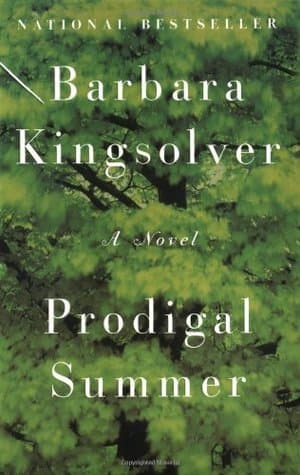
Deanna Wolfe, a wildlife biologist, lives alone in a cabin on Zebulon Mountain in Appalachia. She spends her summer watching a den of coyotes, new to the area. She studies their behavior and diet, seeing their importance in the ecosystem. Her quiet time ends when Eddie Bondo, a young hunter, appears on her land. Eddie, at first seen as an intruder, says he is hunting turkey. He is interested in Deanna's work and independent life. Their first meetings show suspicion and different views on nature and human involvement. Deanna protects her privacy and scientific distance.
Lusa's Unexpected Widowhood and Farm Stewardship
Lusa Maluf Landowski, an entomologist from the city, becomes a widow after her husband, Cole Landowski, dies in a logging accident. She is left to manage his tobacco farm, a world she barely knows, with her two young children, Codi and Lark. Cole's family, especially his sisters, push her to sell the farm and move back to the city, thinking she cannot run it. Lusa, however, feels a strong connection to the land and Cole's past. She learns about farming, dealing with tobacco growing, money problems, and local expectations. She wants to keep the farm for her children and honor Cole's memory.
Hatchet and Garnett's Feud Over Fruit Trees
Near Lusa's farm, two older neighbors, Garnett Walker and Nannie Rawley (called Hatchet), have a long, often difficult, friendship. Their main problem this summer is Garnett's old apple trees, which are sick with disease and insects. Garnett, a religious man and traditional farmer, uses pesticides. He blames the 'fallen' world. Hatchet, an environmentalist and 'pagan,' supports organic methods and ecological balance. She sees the trees as part of a bigger system. Their talks, often heated, cover faith, science, nature, and community.
Deanna and Eddie's Growing Connection
Despite her first resistance, Deanna is drawn to Eddie Bondo's constant presence and real interest. He helps her with tasks around her cabin and shows a surprising understanding of nature, though from a hunter's view. Deanna shares her scientific knowledge of coyotes and the ecosystem. Their talks and time in the wild lead to a close physical and emotional relationship. Deanna, who has kept her personal life separate from her science, finds her strict limits challenged by Eddie's energy and directness. This makes her face her own desires and weaknesses.
Lusa's Struggle for Independence and Understanding
Lusa struggles to understand tobacco farming and the local market. She talks to farm agents, reads books, and asks neighbors, including Hatchet and Garnett, for advice. Her in-laws, especially Cole's sisters, keep pushing her to sell, making her doubt herself. Lusa finds Cole secretly planted chestnut trees, a sign of his hope for the future and a possible new crop. This discovery makes her more determined to keep the farm and try sustainable options, despite the many problems and her ongoing sadness for Cole.
Hatchet and Garnett's Shared History and Future
As summer goes on, Hatchet and Garnett's arguments continue, but their hidden affection and shared past become clearer. They remember their youth, changes in the valley, and their lives. Hatchet keeps pushing for natural pest control and tells Garnett to think about his orchard's long-term health. Garnett, though unwilling, starts to see some sense in Hatchet's ideas as his trees get worse. Their interactions show the conflict between old farming ways and new environmental awareness, and the strong ties of community.
Deanna's Revelation and Eddie's Departure
Deanna learns that Eddie Bondo is not just a casual hunter. He is a professional coyote hunter, hired by local farmers to kill the very animals she studies. This news breaks her trust and makes her rethink their whole relationship. The conflict between their basic views on nature — saving it versus controlling it — cannot be solved. Despite the pain, Deanna confronts Eddie, and he leaves. This experience leaves Deanna heartbroken but also more dedicated to her work and her understanding of nature's complex, often harsh, balance.
Lusa's New Vision for the Farm
Inspired by Cole's hidden chestnut trees and new knowledge, Lusa decides to change the farm from tobacco. She imagines a future with sustainable farming, perhaps growing chestnuts or other native crops. This decision puts her against Cole's family, who see it as a foolish risk. But it strengthens her commitment to the land and her children's future. She starts the hard work of removing tobacco plants and preparing the soil for new projects, showing she is embracing a new life and identity as a farmer.
Hatchet and Garnett's Reconciliation and Legacy
After much discussion, Garnett, influenced by Hatchet's constant arguments and his own observations of his dying trees, agrees to try Hatchet's organic methods. He lets her bring in good insects and ecological management for his orchard. This is a big change for Garnett, showing he is open to a more complete view of nature. Their making up strengthens their bond and ensures the orchard's future health, a shared legacy. This shows that cooperation and change are possible even in old age.
The Interconnected Web of Life
As summer ends, Deanna, though alone again, finds new purpose in her coyote research. She understands that even loss is part of nature's cycle. Lusa, having dealt with grief and uncertainty, feels connected to her farm. She takes on her role as a protector of the land and a provider for her children. Hatchet and Garnett, having overcome their different ideas, continue their shared work on the orchard. This shows that human relationships, like ecosystems, need balance and respect. The three stories come together in their themes, showing how human lives and the natural world in the Appalachian mountains depend on each other.