“I've been here since I was born. I've been here all my life.”
— Tommo reflecting on his childhood home and the impending changes.

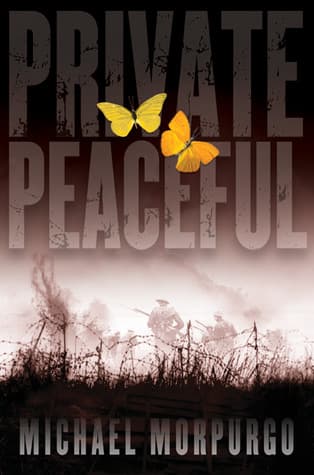
Michael Morpurgo (1962)
Genre
Children's / Historical Fiction / Young Adult
Reading Time
180 min
Key Themes
See below
Sign in to track this book
On the eve of a likely execution for desertion, a young WWI soldier poignantly relives his idyllic English countryside childhood and the unbreakable bond with his brother, now shattered by the brutal realities of war.
The story opens with Private Tommo Peaceful on night watch in the trenches of World War I, reflecting on his life as dawn approaches. He begins to recount his childhood in rural Devon, focusing on his family: his mother, his older brothers Charlie and Big Joe, and Molly, who eventually becomes the love of his life. Tommo’s narrative is structured by the ringing of a church clock, each hour marking a new chapter in his memories. He recalls life in the English countryside, free from the horrors of war. This introductory section establishes Tommo’s reflective state and the dual timeline structure of the novel, setting the stage for his past to unfold.
Tommo recalls his early childhood, dominated by his close bond with his older brother, Charlie, and their intellectually disabled brother, Big Joe. They live in a small cottage, with their father working as a forester for the Colonel. Their father is killed by a falling tree, an accident Tommo blames himself for, having lingered behind to fish. This tragic event leads the family to poverty, forcing their mother to take on cleaning jobs at the Big House and the boys to contribute to the household income. The Colonel, despite benefiting from their labor, shows little compassion, frequently threatening them with eviction.
The Peaceful brothers attend the local village school, where Tommo struggles with academics but shows loyalty and spirit. Here they meet Molly, a bright girl who quickly becomes an inseparable part of their lives. Molly is initially befriended by Charlie, but Tommo also develops a deep affection for her. Their childhood is filled with adventures in the countryside, often involving Big Joe, who is connected to nature and their pet dog, Bertie. The trio's bond strengthens, laying the foundation for the relationships that will define their adult lives, all while under the watchful eye of the village and the Colonel.
As Tommo and Charlie grow older, they leave school to work for the Colonel on his estate to help support their family. They experience the harsh realities of class distinction and the Colonel's authoritarian nature. The Colonel is a cruel man, frequently punishing the boys, particularly Charlie, for minor infractions. Tommo sees Charlie's bravery and defiance in the face of injustice, further solidifying his admiration for his older brother. These experiences give Tommo a sense of resentment towards the class system and the arbitrary power wielded by figures like the Colonel, shaping his views on authority and fairness.
The bond between Charlie, Tommo, and Molly deepens, leading to a romantic relationship between Charlie and Molly. This relationship results in Molly becoming pregnant. When her parents discover her condition, they are outraged and force her out of their home, publicly shaming her. The Peaceful family, defying village gossip and the Colonel's disapproval, takes Molly in. Tommo, despite his own unexpressed love for Molly, supports Charlie and accepts the situation, showing his loyalty to his brother and his family. This event further isolates the Peaceful family from the community but strengthens their internal bonds against external judgment.
The Colonel, angered by Molly's pregnancy and the Peacefuls' defiance, threatens to evict them from their cottage. Charlie, in a moment of defiance, confronts the Colonel, defending Molly and his family's honor. This act of insubordination further enrages the Colonel, who makes good on his threat. Faced with homelessness, Charlie, feeling a sense of responsibility and a desire to provide for Molly and their unborn child, decides to enlist in the army. Tommo, out of loyalty and a desire to stay with his brother, lies about his age and enlists alongside Charlie, despite being underage.
Tommo and Charlie undergo basic training, where Tommo struggles with the discipline but finds solace in Charlie's presence. They are soon deployed to the Western Front in France, a stark contrast to their Devon countryside. The realities of trench warfare immediately confront them, with constant shelling, mud, rats, and the threat of death. Tommo relies heavily on Charlie's strength, pragmatism, and protective nature to cope with the horrors. They meet other soldiers, like Sergeant Hanley, who represents rigid military authority, and reinforce the bond between the two brothers as they face unimaginable conditions together.
Life in the trenches is a cycle of fear, boredom, and sudden violence. Tommo witnesses the deaths of comrades and experiences the psychological toll of war. Charlie, however, is a beacon of strength and courage, often looking out for Tommo and even defying orders to protect him or other soldiers. He shows bravery, such as rescuing an injured comrade from No Man's Land under heavy fire, earning him respect from his peers but also putting him at odds with strict military protocol. Tommo sees Charlie as his hero, a figure of unwavering moral compass amidst the chaos.
A critical incident occurs during an attack when Sergeant Hanley orders Charlie to lead his men over the top into certain death. Charlie, seeing the futility and danger of the order, hesitates and refuses, prioritizing the lives of his men over blind obedience. This act of insubordination leads to his arrest and court-martial. Despite Tommo's pleas and attempts to explain Charlie's actions, military law is unyielding. Charlie is found guilty of cowardice and desertion, a charge that deeply wounds Tommo, knowing his brother's true bravery.
As the final hour of Tommo's night watch approaches, the memories converge with the present. The church clock strikes six, signaling the dawn and the time for Charlie's execution. Tommo, heartbroken, watches as his beloved brother is led out to be shot by a firing squad. He stands by Charlie until the last moment, holding his hand, sharing a final farewell. Charlie faces his death with dignity and courage, still trying to protect Tommo by telling him to look away. The sound of the shots shatters Tommo's world, leaving him alone with his grief and the sense of injustice.
In the immediate aftermath, Tommo is numb with grief and shock. He reflects on the irony of Charlie, a man of bravery and loyalty, being executed for 'cowardice.' The experience leaves a mark on Tommo, shaping his understanding of justice, war, and sacrifice. He is left to carry on fighting, but the spirit that once connected him so deeply to his brother and his past is broken. The novel concludes with Tommo, a solitary figure, facing an uncertain future, forever haunted by the memory of Charlie Peaceful, the brother who was his protector and his hero.
The Protagonist
From a shy, dependent younger brother, Tommo grows into a traumatized survivor, forever marked by the war and the loss of his hero, Charlie.
The Supporting/Deuteragonist
Charlie remains steadfast in his moral code and protective nature, ultimately sacrificing his life due to his principles rather than true cowardice.
The Supporting
Molly matures from a playful child into a resilient young woman, embodying loyalty and enduring love despite societal judgment.
The Supporting
Big Joe remains a constant, unchanging presence, symbolizing innocence and the enduring power of family love.
The Supporting
Mother Peaceful endures relentless hardship and loss, yet remains a steadfast and loving matriarch, holding her family together.
The Antagonist
The Colonel remains a static symbol of unyielding authority and class oppression, never showing empathy or change.
The Antagonist
Sergeant Hanley remains a static character, a symbol of unyielding and often cruel military authority.
The Mentioned
His death serves as a catalyst for the family's struggles and the boys' premature entry into the workforce.
The novel portrays the realities of trench warfare, exposing its violence, psychological toll, and physical degradation. Through Tommo's eyes, readers witness the threat of death, unsanitary conditions, loss of comrades, and moral compromises demanded of soldiers. The narrative questions the glory often associated with war, instead showing its impact on individuals and families. Charlie's execution for 'cowardice' highlights the futility and injustice of a system that sacrifices brave men for rigid adherence to rules, making his death a strong anti-war statement.
“''But there are no heroes in war, Tommo. Only victims.''”
The bond between Tommo and Charlie is the emotional core of the novel. Charlie is Tommo's protector, mentor, and hero from childhood through the trenches. Tommo's decision to enlist, despite being underage, is driven by his desire to stay with Charlie. Their shared experiences, both idyllic and horrific, create a loyalty that transcends all else. This theme is shown by Tommo's presence at Charlie's execution, a love that endures even in the face of tragedy. Their relationship shows the strength found in familial bonds amidst chaos.
“''He was my brother, my protector, my hero, my best friend. And now they were going to kill him.''”
The novel charts Tommo's rapid transition from a sheltered childhood in rural Devon to the realities of the Western Front. His memories of home, family, and first love contrast with the mud, blood, and death of the trenches. The war forces Tommo to confront the loss of innocence, not just his own, but that of his generation. The scenes of his youth show how his world, and his sense of self, has been shattered by the conflict, forcing him into a premature and harsh adulthood.
“''I was a boy when I came here. I'm a man now.''”
Even before the war, the Peaceful family faces social injustice and class inequality from the wealthy Colonel. Their poverty, the Colonel's arbitrary power, and the social stigma surrounding Molly's pregnancy show the realities of their pre-war life. These injustices are mirrored in the military system, where Charlie, a man of courage, is condemned by rigid rules and class-based authority (Sergeant Hanley). The novel critiques how power and privilege can dictate the fate of ordinary people, both in society and in the military, leading to tragic outcomes.
“''We were just the poor folk, the tenant farmers, the ones who had to do what we were told, or starve.''”
The entire narrative is framed by Tommo's memories as he reflects on his life during his final night watch. The church clock striking the hours is a structural device, guiding his reflections from childhood to the present. This reflective structure allows the reader to understand the impact of his past on his present state of mind. Memory is both a comfort and a torment, providing solace through happy recollections but also intensifying the pain of impending loss. It shows how past experiences shape identity and how the trauma of war alters one's perspective.
“''I want tonight to be long, as long as my life . . . I want to remember everything.''”
Alternates between Tommo's present on the battlefield and his past memories.
The novel employs a dual timeline structure, constantly shifting between Tommo's present reality on night watch in the trenches of World War I and his extensive flashbacks to his idyllic childhood in rural Devon. This device allows Morpurgo to build suspense as the reader anticipates the approaching dawn and Charlie's fate, while simultaneously providing deep character development and context for the brothers' bond. The contrast between the two timelines powerfully emphasizes the loss of innocence and the devastating impact of war, making the eventual tragedy more poignant.
Tommo recounts his entire life story from his personal perspective.
The story is told entirely from Tommo Peaceful's first-person perspective, looking back on his life. This narrative choice creates an intimate and subjective account, allowing readers to deeply connect with Tommo's emotions, fears, and unwavering love for his brother. His retrospective gaze, often tinged with nostalgia and impending dread, shapes the reader's understanding of events and characters, making the themes of loss, loyalty, and injustice particularly resonant. His voice carries the weight of memory and the burden of his experiences.
A recurring auditory motif that marks the passage of time and segments Tommo's memories.
The chiming of a church clock, heard by Tommo in the present, serves as a crucial structural and symbolic device. Each hour's chime signals a new 'chapter' in Tommo's life story, guiding the narrative through his memories from childhood up to the eve of Charlie's execution. The clock's relentless progression creates a powerful sense of impending doom, heightening the tension as the narrative moves closer to the inevitable tragic climax. It also symbolizes the finite nature of time and the preciousness of the memories Tommo is trying to preserve.
A children's rhyme sung by Big Joe, symbolizing innocence and home.
The children's rhyme 'Oranges and Lemons' is frequently sung by Big Joe throughout the novel. This song acts as a powerful symbol of innocence, childhood, and the idyllic home life that the Peaceful brothers leave behind. In the context of the war, the simple, playful tune becomes a poignant reminder of what has been lost and what they are fighting for. Big Joe's continued singing of it, even in memories, contrasts sharply with the grim realities of the trenches, highlighting the purity and vulnerability that the war threatens to extinguish.
Symbols of class division and social injustice.
The Big House and its owner, the Colonel, serve as potent symbols of class inequality and social injustice in pre-war England. The Colonel's arbitrary power, his exploitation of the Peaceful family, and his role in their eviction represent the oppressive class system that dictates their lives. This social hierarchy foreshadows the rigid and often unjust military hierarchy that Charlie and Tommo encounter in the army. These elements highlight that the brothers faced a form of 'war' against an unfair system even before enlisting.
“I've been here since I was born. I've been here all my life.”
— Tommo reflecting on his childhood home and the impending changes.
“I remember every minute of it, every second.”
— Tommo recalling a significant event from his past, emphasizing its impact.
“It was a beautiful day, a day for remembering.”
— Describing the weather on a day filled with both joy and foreshadowing.
“There were just the three of us then, three brothers against the world.”
— Tommo reflecting on the close bond between him, Charlie, and Big Joe.
“War changes everything. It changes everyone.”
— A poignant observation on the destructive and transformative nature of conflict.
“He was always there for me, always. My big brother, Charlie.”
— Tommo's deep affection and reliance on his older brother.
“We were all just boys, really. Just boys pretending to be men.”
— Tommo's realization about the youth and inexperience of the soldiers.
“The shelling started again, like a giant hammering at the gates of hell.”
— A vivid and terrifying description of the artillery fire on the front lines.
“You can't do that, Charlie. You can't just leave me.”
— Tommo's desperate plea to Charlie in a moment of extreme danger.
“I will never forget him. Never.”
— Tommo's unwavering commitment to remembering Charlie.
“It was a crime, what they did to him. A crime.”
— Tommo's strong condemnation of the military's treatment of Charlie.
“He died for nothing. Absolutely nothing.”
— Tommo's bitter reflection on the futility of Charlie's sacrifice.
“I'm still here. Still alive. And I remember.”
— Tommo's defiant statement of survival and his role as a witness.
“Every second counts. Every single second.”
— Tommo reflecting on the preciousness of time, especially in the face of imminent danger.
Ready to see how well you understood this book? Take our interactive quiz with 10 questions.

Biography coming soon.

Dan Gemeinhart
4.5
Kate O'Hearn
4.4

Jeanne Birdsall
4.4

Jen Wang
4.4
Wendelin Van Draanen
4.3

John Marsden
4.3

Chris Van Allsburg
4.3
Jennifer A. Nielsen
4.2