“The past is never dead. It's not even past.”
— Reflection on how historical events continue to impact the present in the investigation.


James Patterson (2013)
Genre
Thriller / Mystery
Reading Time
360 min
Key Themes
See below
Sign in to track this book
In Berlin's criminal underworld, an investigator searches for her missing ex-lover and fellow agent, whose cases about billionaires, soccer stars, and the Russian mob have led him into a conspiracy threatening Europe.
The story begins with Chris Schneider, Private Berlin's lead investigator, vanishing. His car is found abandoned and burned, suggesting he was harmed. Mattie Engel, another top agent at Private Berlin and Chris's ex-lover, is assigned to investigate his disappearance. Despite their difficult past, Mattie is determined to find him. Her initial checks show Chris was secretly working on three cases for Private: investigating German billionaire Dieter Zumbrunnen for infidelity, soccer star Julian Harthaus for match-fixing, and nightclub owner Yuri Volkov for ties to the Russian mob. Any of these people could have wanted Chris gone, and Mattie starts to retrace his steps, interviewing those connected to his last investigations.
Mattie and her team, including agent Peter, investigate Chris's three active cases. They find evidence that Dieter Zumbrunnen was having an affair with a young woman named Lena, who then disappears. Julian Harthaus, being watched for throwing games, is uncooperative and seems genuinely upset. Meanwhile, Yuri Volkov's club, the 'Red Star,' is a center for illegal activities, and his connections to the Russian mafia are clear. As Mattie looks deeper, she realizes Chris was not just working on these cases separately; there might be a larger link or conspiracy he found. The danger grows when Mattie herself is attacked, but she escapes, which shows the risk in Chris's last assignments.
As Mattie continues her search, she finds a hidden apartment Chris kept, filled with surveillance gear, maps, and a whiteboard with notes and photos. This discovery shows a side of Chris she never knew, even when they were together. The apartment has detailed files on the three initial suspects, but also hints at a much more complex, long-term investigation Chris was doing, seemingly without Private's official knowledge. She finds a hidden safe with a burner phone and a ledger with coded entries. This new evidence suggests Chris was working alone, pursuing a personal goal or a case beyond his professional duties, adding mystery to his disappearance and raising questions about his true loyalties.
Working with Peter, Mattie deciphers some of Chris's coded notes and finds references to a powerful, secret organization known as the 'Shadow Group' or 'Der Schatten.' This group seems involved in corruption, espionage, and possibly terrorism, with roots in the Cold War. Chris's notes suggest he believed this group caused a series of seemingly unrelated events, including the disappearance of Lena, Zumbrunnen's mistress. Mattie realizes that Chris's first three investigations were just ways into this much larger, more dangerous conspiracy. The Shadow Group appears to be a network of former Stasi agents and powerful figures who manipulate events for their own benefit, and Chris was trying to expose them.
Following a lead from Chris's hidden files, Mattie and her team find and rescue Lena, Dieter Zumbrunnen's missing mistress. Lena is scared but confirms she was kidnapped by men who questioned her about Zumbrunnen's activities and Chris Schneider. She reveals that Zumbrunnen was not just having an affair, but was also involved in illegal financial dealings with members of the Shadow Group. Lena's story confirms Mattie's suspicions about the group's existence and danger. She also describes one of her captors, helping Mattie narrow down suspects within the Shadow Group. Rescuing Lena provides proof of the conspiracy and strengthens Mattie's resolve to find Chris and expose the truth.
Mattie confronts Yuri Volkov at his nightclub, asking for information. At first, Volkov is defiant and denies knowing anything about Chris's disappearance. However, after intense questioning and being shown evidence of his illegal ties, he admits he was pressured by powerful figures to provide resources and hide information for what he thought was a Russian intelligence operation. He confesses he knew Chris was investigating him but claims he had no part in his disappearance. Volkov, terrified, reveals that the 'Shadow Group' is much more dangerous than the Russian mob, and he fears for his life if he speaks further. His fear convinces Mattie that he is a pawn, not the leader, and further shows the threat from the mysterious organization.
Through forensic analysis of Chris's apartment and intercepted communications, Mattie and Peter find the truth behind the Shadow Group's activities. They were not just involved in financial corruption or espionage, but were planning a large biological terror attack using a highly dangerous pathogen. Chris had been tracking the group's acquisition of the weapon and their plan to release it in a major European city, possibly Berlin, to destabilize the continent and create chaos for their own political and financial gain. The three initial cases Chris was investigating were just covers or linked to people who were unknowing participants in the larger plan. The race against time begins as Mattie realizes the scale of the coming disaster.
As Mattie gets closer to the Shadow Group, she finds evidence that Chris is not dead, but has been captured and is being held in a secret location. The group is torturing him, trying to get information about what he knew and who else might know about their plans. Mattie intercepts a garbled message she thinks is from Chris, with faint clues about where he is. This discovery strengthens her determination, turning the investigation from a missing person case into a desperate rescue mission tied to preventing a global disaster. Mattie feels more emotional stress as she realizes Chris's suffering and the urgency of finding him before it's too late.
Using all the information gathered, Mattie, with a small, trusted team from Private and discreet help from German authorities, identifies the Shadow Group's main hideout and where Chris is being held. They launch a raid on the heavily protected compound. A fierce gunfight happens, with Mattie leading. She confronts the leader of the Shadow Group, a ruthless former Stasi operative named Fischer, in a tense face-off. During the chaos, Mattie finds Chris, who is badly injured and barely conscious from the torture, but alive. The rescue works, but the biological weapon's release system has already been activated, and time is running out.
With Chris rescued and the Shadow Group members arrested, the immediate threat seems contained, but the biological weapon is still active. Chris, despite his weak state, tells Mattie important information about the pathogen and how it spreads, which he had been tracking. He reveals a failsafe or a hidden location where the weapon was meant to be used, and how to stop it. Racing against time, Mattie and her team, guided by Chris's fragmented instructions, manage to stop the delivery system or disable the weapon before it can be released, preventing a devastating biological attack that would have caused chaos in Europe. The Shadow Group's plan is foiled, and the world is saved from a disaster.
Afterward, the remaining Shadow Group members are found and arrested, thanks to the evidence Chris and Mattie gathered. The full extent of their network and their dangerous goals is revealed. Chris gets extensive medical treatment and therapy for his physical and mental trauma. Mattie stays by his side, their difficult past becoming a renewed bond formed in shared danger and sacrifice. While the immediate threat is gone, the experience impacts both Chris and Mattie, reminding them that constant watchfulness is needed to protect the world from hidden dangers. Private Berlin, though affected, continues its work, stronger and more aware of the threats that exist.
The Protagonist
From a seemingly vanished agent, Chris is revealed to be a heroic figure operating covertly, ultimately rescued and recovering from his ordeal.
The Protagonist
Mattie transforms from an investigator searching for a missing person to a key figure in preventing a biological terror attack, reconciling her past with Chris in the process.
The Supporting
Remains a steadfast and crucial technical support for Mattie, evolving his skills to meet the extreme demands of the case.
The Supporting
Initially a suspect in an infidelity case, he is exposed as a complicit figure in a much larger criminal enterprise.
The Supporting
A high-profile suspect, he becomes a minor, almost sympathetic figure caught in the periphery of a major conspiracy.
The Supporting
From an initial suspect, he becomes a reluctant informant due to his fear of the Shadow Group.
The Supporting
Initially a missing person, she is rescued and provides vital information that propels the investigation forward.
The Antagonist
Revealed as the mastermind of the terror plot, he is ultimately defeated and his organization dismantled.
The novel has many secrets, from Chris Schneider's hidden apartment and his secret investigation into the 'Shadow Group' to the web of lies told by the antagonists. Mattie's journey is about uncovering layers of deception, showing that even those closest to her, like Chris, kept important secrets. The Shadow Group itself depends on secrecy, operating in the shadows and manipulating events without public knowledge. This theme shows the dangerous results of hidden truths and how hard it is to know what is real.
“"Everyone had secrets, Mattie knew. But Chris's were bigger, darker, and more dangerous than she could have ever imagined."”
Trust is a main, often weak, element. Mattie's trust in Chris is tested as she learns about his secret life and his independent operations. The initial suspects—Zumbrunnen, Harthaus, and Volkov—are all shown to be either betraying others or being betrayed by the Shadow Group. The main conflict comes from the Shadow Group's powerful figures betraying public trust by planning a biological weapon. The theme explores how hard it is to know whom to trust, especially when lives are at risk and loyalties are unclear.
“"She had trusted him once, blindly. Now, she had to choose between that memory and the dangerous man he had become."”
The 'Shadow Group' is made up of former Stasi operatives and powerful figures with roots in the Cold War. This theme explores how past ideological conflicts and intelligence networks still influence and threaten the modern world. The antagonists' methods and reasons are often shaped by their experiences in a divided Berlin, showing that the fall of the Berlin Wall did not remove all the dangers and schemes of that time. The novel suggests that past events can still haunt and threaten the present.
“"The Stasi might be gone, but their methods, their networks, and their ruthlessness had simply found a new master."”
What starts as a missing person's case quickly becomes a race to prevent a biological terror attack. The Shadow Group's plan to unleash a deadly pathogen in a major European city shows the theme of global threats and the potential of modern terrorism. The novel emphasizes the far-reaching results of such an act, showing how vulnerable societies are to well-organized, secret groups. It forces Mattie to face a threat that goes beyond national borders and traditional crime, requiring international cooperation and quick action.
“"This wasn't just about Berlin. This was about Europe, about the world, on the brink of an unimaginable horror."”
Chris Schneider's story involves a form of redemption, as his secret and perhaps reckless independent investigation ultimately saves many lives, despite the personal cost. He risks his safety and endures torture for a greater good. Mattie's persistent search, driven by her professional duty and personal feelings for Chris, also shows sacrifice, as she repeatedly risks her life. The theme explores the idea that even flawed people can find redemption through self-sacrifice and courage when facing great evil.
“"He had walked into hell, alone, to save them all. And now, she would walk into hell to bring him back."”
Chris Schneider's disappearance sets the entire plot in motion.
The novel uses the classic 'missing person' trope as its primary plot device. Chris Schneider's sudden and mysterious vanishing acts as the catalyst for the entire narrative. It forces Mattie Engel, his former lover and colleague, to investigate, drawing her into a complex web of espionage and terror. This device creates immediate suspense and a personal stake for the protagonist, allowing the mystery to unfold gradually as Mattie peels back layers of Chris's secret life and the conspiracy he was uncovering, transforming the search for one man into a mission to save millions.
Chris Schneider's hidden apartment and clandestine investigation.
Chris Schneider's 'secret life' is a crucial plot device. The discovery of his hidden apartment, filled with surveillance gear and cryptic notes, reveals that he was operating a deeply personal and unauthorized investigation parallel to his work at Private. This device adds layers of mystery to his character, challenges Mattie's perception of him, and provides crucial clues that propel the plot forward. It allows for the gradual revelation of the true, larger conspiracy, moving beyond the initial, seemingly disparate cases Chris was officially working on, and establishes him as a lone wolf hero.
The deadly pathogen serves as the ultimate objective for the antagonists and the race against time.
The biological weapon functions as a classic MacGuffin, a plot device that drives the narrative forward without necessarily being the central focus of the story itself, but rather what everyone is striving for or against. While the initial mystery is Chris's disappearance, the ultimate stakes become the prevention of this weapon's release. It provides a clear, urgent objective for Mattie and her team, establishing a ticking clock element and raising the stakes from a personal investigation to a global threat, motivating the characters to act with extreme urgency.
A mysterious, powerful, and historically rooted antagonistic organization.
The 'Shadow Group' (Der Schatten) serves as a formidable and pervasive antagonistic force. Its mysterious nature, coupled with its historical ties to the Stasi and Cold War intelligence, creates a sense of deep-seated menace and widespread influence. This device allows the author to connect seemingly unrelated events and characters, forming a vast conspiracy. The group's anonymity and power amplify the danger, making them a more terrifying and challenging adversary than individual criminals, embodying a systemic threat that requires a dedicated, almost existential, struggle to overcome.
The impending release of the biological weapon creates extreme urgency.
The ticking clock is a prominent plot device, particularly in the latter half of the novel. Once Mattie and her team discover the Shadow Group's plan to deploy a biological weapon, a finite and rapidly diminishing timeframe is established to prevent the catastrophe. This device injects immense tension and urgency into the narrative, forcing the characters to make quick decisions, take greater risks, and accelerate their investigation. It ensures that the climax is not just about confronting the villains, but also about a desperate race against time to avert widespread disaster, keeping readers on the edge of their seats.
“The past is never dead. It's not even past.”
— Reflection on how historical events continue to impact the present in the investigation.
“In Berlin, the ghosts are real.”
— Describing the city's haunted atmosphere and dark history.
“Secrets are like shadows; they follow you everywhere.”
— Character contemplating the inescapable nature of hidden truths.
“Fear is a weapon, and someone is loading the chamber.”
— Observation during a tense moment in the thriller plot.
“The city remembers what its people try to forget.”
— Commentary on Berlin's collective memory and historical trauma.
“Trust is the first casualty in a war of secrets.”
— Character realizing alliances are fragile in the mystery.
“Every lie has a fingerprint.”
— Investigator noting that deception leaves traces.
“Berlin doesn't sleep; it watches.”
— Describing the city's ominous, ever-present nature.
“The truth is a maze with no exit.”
— Character feeling overwhelmed by the complexity of the case.
“In the dark, we are all the same.”
— Moment of vulnerability or moral ambiguity in the story.
“A killer leaves more than bodies; they leave questions.”
— Reflection on the psychological impact of crimes.
“The wall fell, but some barriers remain.”
— Comment on Berlin's lingering divisions post-reunification.
“Courage is not the absence of fear, but the decision to act anyway.”
— Character mustering bravery in a dangerous situation.
“The past is a crime scene waiting to be reopened.”
— Hinting at historical secrets resurfacing in the plot.
Ready to see how well you understood this book? Take our interactive quiz with 10 questions.
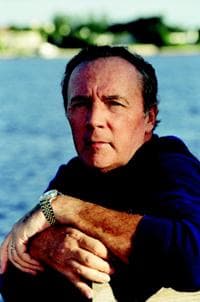
Biography coming soon.







