““I have been a queen since I was eighteen. I have ruled an empire. And I have done it alone.””
— Victoria reflecting on her reign and independence.

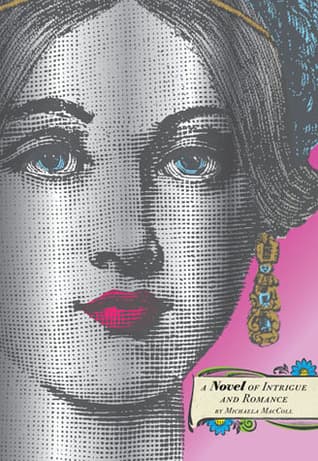
Michaela MacColl (2010)
Genre
Historical Fiction / Mystery / Young Adult / Romance
Reading Time
7-8 hours
Key Themes
See below
Sign in to track this book
In 1838 London, penniless Liza works as a lady's maid to Princess Victoria, uncovering palace intrigues and finding her own way amidst secrets, betrayals, and a romance.
Sixteen-year-old Liza Campbell, a spirited and educated young woman from a respectable, but not wealthy, family, prepares for her society debut in London, 1838. Her dreams of dances and eligible bachelors end when her parents die in a carriage accident. Orphaned and penniless, Liza has no prospects. She accepts a position as a lady's maid to Princess Victoria, a role she dislikes, as it means a drastic drop in social standing and a life of servitude. She leaves her home, her maid Sarah, and her old life to enter the rigid world of Kensington Palace.
At Kensington Palace, Liza immediately faces the realities of her new life. She works in Princess Victoria's household under Baroness Lehzen, Victoria's strict German governess. Liza quickly learns that the palace is full of gossip, rivalry, and political maneuvering, even among servants. She struggles with the demanding physical labor, constant scrutiny, and lack of personal freedom. Her first interactions with other maids are tense; her refined manners and education set her apart, often causing suspicion and resentment. She quickly learns that discretion and obedience are essential for survival in the palace.
Liza is one of Princess Victoria's personal maids, responsible for her clothing, hair, and general well-being. Initially, Victoria is reserved and demanding, but Liza's intelligence, quick wit, and kindness gradually break through Victoria's isolation. They begin to share confidences, and Liza discovers Victoria's loneliness and her wish for real connection beyond her 'Kensington System.' Liza also meets Prince Albert of Saxe-Coburg and Gotha during his visit. She is struck by his intelligence, serious nature, and handsome looks. A mutual, unspoken attraction starts between them, creating a complex dynamic given her position as a servant.
Princess Victoria starts having alarming, unexplained illnesses: severe stomach pains, weakness, and dizziness. Sir John Conroy, the Comptroller of the Household, and Victoria's mother, the Duchess of Kent, dismiss these as 'nervousness' or hypochondria, symptoms they believe will make her unfit to rule. However, Liza, watching Victoria closely, suspects these illnesses are not natural. She remembers stories of poisons and political intrigue. The suspicious behavior of some household members, especially Conroy and his allies, who seem to gain from Victoria's perceived weakness, further fuels her suspicions.
Loyal to Victoria and feeling a sense of injustice, Liza quietly investigates the source of the Princess's illnesses. She watches what Victoria eats and drinks, the people around her, and any unusual events. Her investigation leads her to focus on Sir John Conroy, a man with much influence over the Duchess of Kent and a strong desire to keep power after Victoria becomes queen. Liza also notices the strange behavior of some servants, particularly a scullery maid named Agnes, who seems to be acting under someone else's direction. Liza's sharp observation skills and intelligence, from her education, help her piece together subtle clues.
Despite the constant threat and their social differences, Liza and Prince Albert find ways to interact. Albert, intelligent and compassionate, sees Liza's sharp mind and kind heart, looking past her maid's uniform. Their conversations often focus on books, politics, and their shared concern for Victoria. These stolen moments of connection deepen their mutual admiration and affection. Albert's visits to Kensington Palace comfort and stimulate Liza, offering a brief escape from the drudgery and danger of her daily life, even as their growing closeness risks discovery and scandal.
Liza realizes her suspicions are not enough; she needs evidence to expose the plot against Victoria. She enlists the help of Mr. Dashwood, the palace librarian, a kind and knowledgeable man. Together, they research common poisons and their effects, trying to match them with Victoria's symptoms. Liza also tries to collect samples of Victoria's food or drink after an episode, hoping to have them analyzed. This task is dangerous, as she must avoid detection from Conroy's watchful eyes and other palace staff who might report her. Her determination grows with each new illness Victoria suffers.
King William IV dies, and Victoria is informed she is now Queen. This moment changes the power dynamics in the palace. With Victoria as sovereign, Conroy's influence lessens, though his plans are not over. Liza, encouraged by Victoria's new authority, works harder. She finally gathers crucial evidence, perhaps a tainted food item or a confession from a coerced servant, which proves a deliberate attempt to sicken and perhaps incapacitate Victoria. The revelation confirms Liza's worst fears and exposes the depth of the conspiracy.
With the evidence, Liza tells Victoria, who, as Queen, can act. Victoria, supported by trusted advisors and new strength, confronts Sir John Conroy and his co-conspirators. The plot to undermine her health and control her reign is exposed, leading to Conroy's dismissal and banishment from court. The Duchess of Kent is also marginalized, and Victoria asserts her independence, showing her ability to rule. Liza's bravery and loyalty are recognized; she helps secure Victoria's position on the throne, ensuring the monarchy's future.
With the palace intrigue resolved, Liza faces decisions about her own future. Queen Victoria, grateful for Liza's loyalty and courage, offers her an honored and secure position in her household, acknowledging Liza's intelligence and integrity. However, Liza has grown through her experiences, no longer content to merely serve. Her bond with Prince Albert has grown into true love, but the social divide remains. Liza must decide whether to pursue a life of service, albeit in a more elevated role, or to make her own path, possibly with Albert, navigating the complexities and challenges of their forbidden affection in a world with strict social rules.
The Protagonist
Liza transforms from a sheltered debutante-in-waiting to a courageous and independent woman who defies social expectations to protect her queen and determine her own fate.
The Supporting
Victoria evolves from a vulnerable, controlled princess to a strong, decisive queen who takes command of her own life and reign.
The Supporting
Albert's character is largely consistent, serving as a beacon of reason and integrity, and a catalyst for Liza's emotional growth.
The Antagonist
Conroy's arc demonstrates his rise and ultimate fall from power as his schemes are exposed and Victoria asserts her authority.
The Supporting
Lehzen remains a steadfast, if sometimes unyielding, protector of Victoria, her loyalty unwavering.
The Supporting
Her arc involves a gradual realization, or forced acceptance, of Conroy's true nature and her subsequent marginalization from Victoria's inner circle.
The Supporting
Dashwood provides consistent support and intellectual aid to Liza, remaining a steadfast, if minor, ally.
The Mentioned
Agnes's role is primarily functional, representing a piece of the larger conspiracy that Liza must uncover.
The novel explores power, especially the struggle to control Princess Victoria, both before and after she becomes queen. Sir John Conroy's efforts to manipulate Victoria and her mother, the Duchess of Kent, through the 'Kensington System' and poisoning attempts, show how ambition can corrupt. This theme also appears in Victoria's personal struggle for autonomy and Liza's defiance of social norms to control her own life. It contrasts the palace's rigid hierarchy with individual will. The story shows how power dynamics shape relationships and actions in the palace, ending with Victoria asserting her sovereign power.
“'They want to make me weak, Liza. They want to prove I'm not fit to rule.'”
Nineteenth-century Britain's rigid social structure is a central theme, especially as Liza falls from a respectable gentlewoman to a lady's maid. Her initial dislike for her new position and the challenges she faces adapting to servitude show the stark class divisions. However, the story also explores potential for social mobility or influence through merit and intelligence, as Liza's wit and bravery let her go beyond her assigned role. Her forbidden romance with Prince Albert highlights class constraints and tensions, suggesting that genuine connection can sometimes defy societal boundaries, even if it cannot erase them. The novel asks whether true worth comes from birth or character.
“'You may wear a maid's uniform, Liza Campbell, but you have the heart of a queen.'”
Both Liza and Princess Victoria deal with the conflict between personal desires and duties imposed by their circumstances. Victoria's duty to the throne often clashes with her desire for freedom, love, and a normal life. Similarly, Liza's duty as a maid and her loyalty to Victoria are tested by her growing feelings for Prince Albert and her wish for a life of her own. The theme explores the sacrifices people make for their obligations, but also when integrity and love can make them defy expectations. The resolution often involves aligning duty with personal fulfillment, or making difficult choices that prioritize one over the other.
“'My duty is to the Princess, Mr. Dashwood. But my heart... that is another matter entirely.'”
The palace is full of secrets, rumors, and lies, making the search for truth a key part of the plot. Liza's role as an investigator focuses on uncovering the deception around Victoria's illnesses and exposing the hidden motives of Sir John Conroy and his allies. The theme shows how appearances can deceive, and how those in power manipulate information to stay in control. Liza's journey involves sifting through gossip and veiled threats to find facts, emphasizing the importance of observation and courage in seeking truth, even when it is dangerous. The exposure of the poisoning plot shows truth triumphing over calculated deception.
“'In this palace, Mr. Dashwood, what is said is rarely what is meant, and what is seen is often a carefully constructed lie.'”
A set of strict rules designed to isolate and control Princess Victoria.
The 'Kensington System' is a real historical plot device employed by Sir John Conroy and the Duchess of Kent to keep Princess Victoria in a state of perpetual childhood and dependence. In the novel, it serves to highlight Victoria's isolation and vulnerability, making her an easier target for manipulation and poisoning. It restricts her contact, limits her education, and fosters an environment of distrust, which Liza must navigate. This system is crucial in establishing the oppressive atmosphere of the palace and the high stakes of Victoria's struggle for independence.
The use of subtle poison to weaken and discredit Princess Victoria.
The recurring mysterious illnesses suffered by Princess Victoria serve as the central mystery and a key plot device. The gradual, non-fatal nature of the poison (likely arsenic, historically rumored) allows for prolonged suspense and gives Liza time to investigate. It is a subtle yet insidious weapon, designed not to kill outright but to undermine Victoria's health and mental stability, making her appear unfit to rule. This device creates a constant sense of danger and urgency, driving Liza's detective work and raising the stakes for Victoria's future.
The developing romantic feelings between Liza, a maid, and Prince Albert.
The forbidden romance between Liza and Prince Albert adds a layer of personal stakes and emotional complexity to the political intrigue. Their connection, born of shared intelligence and compassion, defies the rigid social hierarchy of the time. This device provides a contrasting element to the dangers of the palace, offering moments of tenderness and hope. It also serves to highlight Liza's personal growth and her struggle between duty and desire, as well as underscoring the limitations imposed by class, even for someone as forward-thinking as Albert.
The contrasting lives and intrigues of the palace servants and the royal family.
The novel vividly portrays the stark contrast between the lives of the palace's upper echelons and the bustling, gossipy world of the servants 'below stairs.' This device allows for a comprehensive view of the palace's inner workings and the interconnectedness of its inhabitants. Liza's unique position, moving from a genteel background to a maid's role, provides a bridge between these two worlds. The understairs world becomes a source of both information and danger, as servants are often privy to secrets but also susceptible to manipulation, reflecting the broader themes of power, class, and deception.
““I have been a queen since I was eighteen. I have ruled an empire. And I have done it alone.””
— Victoria reflecting on her reign and independence.
““The weight of the crown is not in its gold, but in the decisions it demands.””
— Victoria pondering the responsibilities of monarchy.
““One must always be prepared, for the unexpected is often the most certain.””
— A general life lesson learned by Victoria's lady-in-waiting, Henrietta.
““Even in a palace, one can be a prisoner.””
— The overarching theme of the book, spoken by Henrietta regarding Victoria's gilded cage.
““Secrets are like shadows; they grow longer in the dark.””
— Henrietta contemplating the mysteries she uncovers.
““Duty is a hard master, but a necessary one.””
— Victoria's internal struggle between personal desires and royal obligations.
““A woman's mind is not a plaything, but a weapon.””
— Henrietta's feminist perspective on intelligence and agency.
““Trust is a fragile thing, easily broken, hard to mend.””
— Henrietta's thoughts on betrayal and loyalty within the court.
““Sometimes, the greatest strength is found in admitting one's fears.””
— A moment of vulnerability between characters.
““The truth, like a persistent whisper, will eventually be heard.””
— Henrietta's determination to uncover the hidden facts.
““Power does not always reside in the one who wears the crown.””
— Henrietta realizing the influence of those behind the scenes.
““Love, like a wild rose, can bloom in the most unexpected places.””
— A reflection on the burgeoning romance amidst the palace intrigue.
““History is not just dates and names, but the beating hearts of those who lived it.””
— Henrietta's appreciation for the human element of historical events.
““The greatest prison is often the one we build for ourselves.””
— A philosophical observation on self-imposed limitations.
Ready to see how well you understood this book? Take our interactive quiz with 10 questions.







