“The glass slippers were not comfortable, but they were beautiful.”
— Poppy reflecting on the practicalities and aesthetics of her magical shoes.

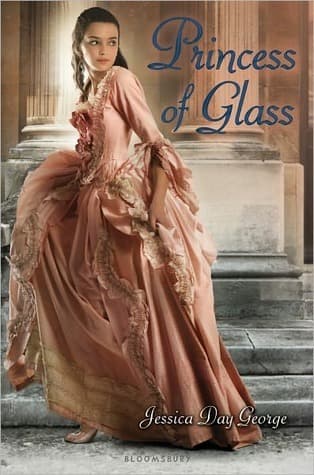
Jessica Day George (2010)
Genre
Fantasy / Young Adult / Romance
Reading Time
266 min
Key Themes
See below
Sign in to track this book
A princess wants to escape her duties, and a servant is tricked by a fairy godmother. They become rivals in a royal exchange program, where magic slippers and political deals lead to a quest for love.
Princess Poppy from the Kingdom of the West is urged by her parents, Queen Lilian and King Theodore, to join a royal exchange program. Her kingdom faces a severe magical blight, and a good marriage alliance is important. Poppy reluctantly agrees to travel to the wealthy Kingdom of the North, ruled by Queen Maude, to meet eligible princes. Her lady-in-waiting, Beatrice, and loyal guard, Stefan, go with her. Poppy feels the heavy responsibility of her kingdom's future, making her anxious about the journey and finding a husband.
In the Kingdom of the North, Eleanor works as a scullery maid for her cruel stepmother, Lady Charlotte, and her two equally cruel stepsisters, Lucinda and Henrietta. Eleanor dreams of a better life, beyond scrubbing floors and constant insults. She is kind and clever, finding comfort in stories and the help of other servants, especially the stable boy, Thomas. Unknown to her, a powerful fairy godmother, Madame Severine, has noticed Eleanor's troubles, seeing her as a tool in a plan for revenge against the royal family.
Madame Severine, a fairy godmother with a grudge against Queen Maude and the royal family for past offenses, approaches Eleanor. Severine offers Eleanor a chance to attend the upcoming royal balls, giving her beautiful gowns, magic slippers, and a carriage, but with strict orders to return before midnight. Eleanor, at first hesitant, is swayed by the promise of escaping her hard life, even if only for a few hours. Severine's real goal is to humiliate the royal family and disrupt the royal exchange by making Eleanor more appealing than the visiting princesses.
Eleanor, transformed by Madame Severine's magic, attends the first royal ball. She is stunning and immediately catches the eye of Prince Christian, Queen Maude's oldest son and the most eligible bachelor. Christian is charmed by her wit, kindness, and mysterious air. Poppy struggles to connect with anyone. Her practical nature and the problems of her kingdom make her seem less lively than the other princesses. She notices Christian's interest in the mysterious girl, feeling a pang of jealousy and inadequacy, which adds to her worries about her mission.
After the first ball, Poppy, with her sharp observation skills, notices odd details about the mysterious girl who caught Christian's attention. The girl's sudden appearance, her beautiful but simple gowns, and her disappearance exactly at midnight make Poppy suspicious. She tells Stefan and Beatrice that she believes magic is involved. Poppy, unlike others, does not dismiss the girl as an enigma; she starts to investigate, feeling that something is wrong and that this girl's presence is more than a coincidence.
Eleanor, still under Madame Severine's spell, continues to attend the balls, captivating Prince Christian. However, she also meets Poppy outside the ballroom. Unaware of each other's identities—Eleanor as the mysterious maiden and Poppy as the rival princess—they become genuine friends. They talk about their worries and hopes, finding common ground in feeling out of place. This growing friendship creates a complex emotional conflict, as both girls unknowingly compete for the same prince under different circumstances, all while confiding in each other.
At the last ball, Madame Severine's magic starts to weaken. As midnight approaches, Eleanor, rushing to leave, loses one of her magic glass slippers on the palace stairs. Poppy sees the slipper change back into an ordinary shoe and realizes the truth about Eleanor and the magical deception. The revelation shocks her, but it also confirms her earlier suspicions. Poppy picks up the slipper, understanding it is a key piece of evidence to uncover the mystery and expose Madame Severine's manipulation.
With the glass slipper, Poppy confronts Eleanor. Eleanor is initially scared and defensive, fearing exposure and Madame Severine's anger. However, Poppy's calm and understanding manner, along with her genuine concern, convinces Eleanor to confess everything: her stepfamily's cruelty, Madame Severine's offer, and the strict conditions of the magic. Eleanor reveals her fear of the fairy godmother and her true desire for a life of her own, not one controlled by magic. This confession strengthens their bond, turning their rivalry into a shared challenge.
When Madame Severine learns that Eleanor has told Poppy her secrets, she becomes furious. Her plan to humiliate the royal family and disrupt alliances has been jeopardized. She unleashes her magical wrath, targeting Eleanor and anyone who opposes her. Severine's magic grows more malevolent and dangerous, threatening Eleanor and potentially the entire Kingdom of the North. Her actions raise the stakes, turning the romantic competition into a dangerous fight against a powerful and vengeful magical entity.
Poppy, Prince Christian, and Eleanor, now united, know they must work together to defeat Madame Severine. Christian, having learned the truth about Eleanor and Severine's schemes, is determined to protect her and his kingdom. Poppy, using her knowledge of magic from her own kingdom and her strategic thinking, helps plan. They combine their strengths: Christian's royal authority, Poppy's magical insight, and Eleanor's knowledge of Severine's magic and limits. Their plan involves confronting Severine directly and breaking her control over Eleanor.
The group confronts Madame Severine in a tense, magically charged showdown. Severine uses her full power, creating illusions and obstacles to stop them. Poppy uses her understanding of magic to counter Severine's spells, while Christian bravely defends Eleanor. Eleanor, empowered by her new courage and her friends' support, plays a key role in breaking Severine's enchantments. The confrontation tests their combined will and magical skill against a powerful and deeply rooted magical enemy.
Through their combined efforts, Madame Severine is defeated. Her magic weakens, and her influence over Eleanor breaks. With the threat gone, the characters' true affections surface. Prince Christian realizes his genuine love for Eleanor, seeing past the enchantment to her true self. Poppy, free from the immediate pressure of her kingdom, finds a surprising connection with Stefan, her loyal guard, realizing their deep respect and affection. The story ends with both women finding love and happiness, not through forced alliances, but through real connection and courage.
With Madame Severine's defeat, peace returns to the Kingdom of the North. Prince Christian and Eleanor announce their engagement, a union based on true love and mutual respect, which strengthens the alliance between the North and Eleanor's now-liberated household. Poppy, having chosen Stefan, secures a more personal and heartfelt alliance for her own kingdom, as Stefan's loyalty and strength prove valuable. Both women, having navigated complex magical and political situations, emerge stronger and more confident, ready to lead their lives and contribute to their kingdoms with integrity and love.
The Protagonist
Poppy transforms from a duty-bound princess to a confident leader who finds love on her own terms, embracing both her responsibilities and her heart's desires.
The Protagonist/Foil to Poppy
Eleanor evolves from a timid victim of circumstance to a courageous woman who stands up for herself and finds true love and a place in the world.
The Love Interest
Christian learns to look beyond superficial appearances and societal expectations to find true love with Eleanor.
The Antagonist
Severine remains largely static in her vengeful motivations, ultimately being defeated and stripped of her power, failing to achieve her malicious aims.
The Supporting
Stefan's quiet loyalty to Poppy blossoms into a reciprocated love, revealing his emotional depth.
The Supporting
Beatrice remains a steadfast and supportive friend, witnessing Poppy's growth and eventual happiness.
The Supporting
Queen Maude learns the importance of looking beyond superficial alliances and embracing true love for her son's happiness.
The Mentioned
Lady Charlotte remains a static antagonist, serving as a catalyst for Eleanor's plight.
This theme explores the clash between what society expects and what a person truly desires in love. Poppy initially feels she must marry for political reasons, seeing marriage as a tool. Eleanor, under magic's influence, seeks freedom and kindness. Both eventually learn that true love goes beyond status and duty. Christian chooses Eleanor for her real character over more 'suitable' princesses, and Poppy finds love with Stefan, her loyal guard, instead of a prince. This shows that real connection is more valuable than forced alliances. Poppy's internal struggle during the balls and Christian's choice of Eleanor show this.
““Perhaps a kingdom could be saved by a brave heart, not just a royal one.””
The story highlights how outward appearances can mislead, especially with magic involved. Eleanor, transformed by Madame Severine's magic, appears as a dazzling, mysterious princess, captivating Christian. However, her true self, the kind and humble scullery maid, is what wins his heart. Conversely, Poppy, a true princess, struggles to impress because of her practical nature. The magic gowns and slippers hide Eleanor's real life. Only when the magic breaks do characters, especially Christian and Poppy, see past the illusion to the true person. The broken glass slipper symbolizes this theme.
““Magic could transform a gown, but it could not change a heart.””
Both Poppy and Eleanor experience significant personal growth. Eleanor, at first a victim of her situation and Madame Severine's manipulation, learns to speak up and choose her own path instead of being a pawn. Poppy, initially burdened by duty and feeling inadequate, discovers her inner strength, intelligence, and leadership skills beyond typical princess roles. Her investigation into the magical events and her strategic thinking demonstrate her growth. Their individual development allows them to make choices that lead to their happiness and help their kingdoms.
““She had learned that courage wasn’t the absence of fear, but the refusal to let it win.””
Madame Severine's character shows the destructive power of revenge. Her entire plan comes from a desire to get back at Queen Maude, manipulating Eleanor for her own selfish and harmful goals. Her actions show how bitterness and a need for retribution can hurt innocent people and disrupt order. The story shows that such manipulation ultimately fails, as the protagonists' genuine connections and good intentions overcome Severine's dark magic. Her defeat emphasizes that kindness and honesty win over malice.
““Revenge, like any poison, consumed the one who held it.””
A political and romantic competition for eligible royals.
This program serves as the primary setting and catalyst for the plot. It brings together various princesses, including Poppy, to compete for the hand of Prince Christian, creating a high-stakes environment for political alliances and potential marriages. It sets up the initial conflict for Poppy and provides the stage for Eleanor's magical intervention, as Madame Severine uses the program's competitive nature to further her own agenda of disrupting the royal family and its alliances.
Magical transformation and strict conditions for Eleanor.
This enchantment is the central magical plot device, transforming Eleanor from a scullery maid into a dazzling, mysterious maiden for the royal balls. The strict midnight curfew and the magical slippers are classic Cinderella tropes, creating suspense and driving the plot forward. The enchantment is not benevolent; it's a tool of manipulation and revenge, highlighting the dangers of magic when wielded by a malevolent force. Its eventual breaking is crucial to the resolution.
A magical artifact that reveals and connects characters.
The lost glass slipper, transformed back into an ordinary shoe, is a pivotal plot device. It serves as the undeniable proof of Eleanor's magical deception and her true identity. Poppy's discovery and analysis of the slipper allow her to connect the dots and confront Eleanor, breaking the enchantment's hold and uniting the two protagonists. It moves beyond a simple identification tool to become a symbol of truth revealed and a catalyst for alliance.
A looming threat to Poppy's kingdom, driving her motivations.
The magical blight affecting Poppy's Kingdom of the West is a significant background plot device. It provides Poppy with a strong external motivation for participating in the royal exchange program, emphasizing the high stakes of her mission. This threat underscores her sense of duty and adds a layer of seriousness to her character, differentiating her from other princesses who might simply be seeking a husband. It makes her eventual choice of Stefan more impactful.
“The glass slippers were not comfortable, but they were beautiful.”
— Poppy reflecting on the practicalities and aesthetics of her magical shoes.
“Sometimes you have to dance with the monsters to get what you want.”
— Poppy's internal thought about dealing with the underground princes.
“A princess's duty is not always to be beautiful, but to be strong.”
— Poppy realizing the true nature of her responsibilities.
“Even a curse can have its own kind of beauty, if you look at it right.”
— Poppy contemplating the strange allure of the magical realm.
“Love is not about being swept off your feet, but about finding someone who will stand with you.”
— Poppy's developing understanding of her relationship with Christian.
“The most dangerous traps are the ones you set for yourself.”
— Poppy considering her own choices and their consequences.
“There are worse things than a broken slipper. There are broken hearts.”
— Poppy comparing material loss to emotional pain.
“Sometimes the only way out is through, no matter how dark the path.”
— Poppy's determination to face the challenges of the curse.
“Magic always has a price, and it's rarely paid in gold.”
— A common theme in the book regarding the magical bargains.
“It's not about being fearless, it's about acting despite your fear.”
— Poppy finding her bravery in difficult situations.
“A secret shared is a burden halved.”
— Poppy learning the importance of confiding in others.
“The true measure of a person isn't how they handle success, but how they handle failure.”
— Poppy reflecting on her own setbacks and growth.
“Even in the darkest places, there can be a glimmer of hope, if you only look for it.”
— Poppy's enduring optimism amidst the dangers of the underground kingdom.
Ready to see how well you understood this book? Take our interactive quiz with 10 questions.

Biography coming soon.







