“"I mean, it's not like I'm going to be a princess or anything."”
— Mia's initial disbelief and denial about her royal heritage.

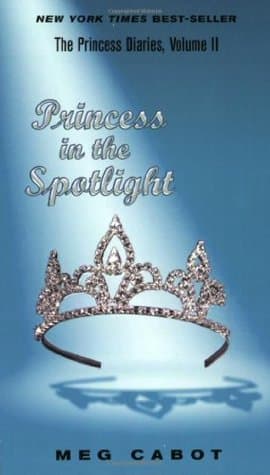
Meg Cabot (2007)
Genre
Children's / Young Adult / Romance
Reading Time
250 min
Key Themes
See below
Sign in to track this book
Princess Mia must navigate an unexpected royal interview, her mother's shocking announcement, and the mystery of an intriguing secret admirer, all while trying to keep her tiara on straight.
The story begins with Mia Thermopolis, a fifteen-year-old princess-in-training, dealing with a shocking announcement. Her mother, Helen Thermopolis, says she is pregnant with her algebra teacher, Mr. Gianini's, baby. This news completely changes Mia's already difficult life, as she tries to process her mother's unexpected pregnancy and the fact that her mom is marrying her teacher. Mia, who has always been very protective of her mother, worries about how this will affect their lives and her own public image as the Crown Princess of Genovia. The announcement adds more stress to her already busy life, which includes high school, princess lessons, and her growing relationship with Michael Moscovitz.
To counter negative press about Helen's pregnancy and to improve Mia's public image as Genovia's future ruler, Grandmère, Dowager Princess of Genovia, decides to arrange a prime-time national television interview for Mia. Mia is very upset about this, fearing public embarrassment and being unable to present herself as a calm and clear princess. She dreads the extensive preparation and media training, knowing her natural awkwardness and tendency to speak her mind will likely lead to problems. Grandmère, always good at getting her way, insists this is important for Genovia's image and Mia's royal duties, giving Mia no choice.
Amidst the chaos of her mother's pregnancy and Grandmère's TV interview plans, Mia starts getting a series of interesting and romantic anonymous letters. These letters are full of compliments and poetic statements, making Mia curious about who sent them. She first suspects her boyfriend, Michael Moscovitz, but his reactions make her doubt it. The letters offer a welcome distraction from her royal worries and create excitement and mystery in her life. She tells her best friend, Lilly Moscovitz, about the letters, and they start to guess about possible senders.
As the anonymous letters keep coming, Mia's boyfriend, Michael Moscovitz, becomes more uneasy and jealous. Mia tries to involve him in the mystery, hoping he might be the sender, but his discomfort and evasiveness suggest otherwise. Michael's reactions make Mia question their relationship and his feelings for her. He struggles with Mia being the focus of another's affection, especially when the letters are so personal and romantic. This creates a distance between them, adding more emotional trouble for Mia as she tries to balance her royal duties with her personal life and her relationship with Michael.
Lilly Moscovitz, Mia's best friend, finds a fan website about Mia, called 'The Princess Diaries.' While first flattered, Mia quickly becomes disturbed by the site's content. It has paparazzi photos, private information, and even parts of her personal diary, which Mia realizes must have been stolen. The site's creator, 'JP,' seems to know an alarming amount about her life, leading Mia to believe she has a stalker. The existence of this site and the invasion of her privacy scare Mia, making her feel more vulnerable and paranoid, especially with the upcoming TV interview.
Worried by 'The Princess Diaries' fan site and the stolen diary entries, Mia, Lilly, and Michael begin an investigation to find out who the mysterious 'JP' is. They carefully analyze clues from the website and the anonymous letters, trying to connect the information. Mia suspects several classmates, including Josh Richter, her ex-crush, and even Kenny Showalter. The investigation has many false leads and growing suspicion among Mia's friends. This search for the stalker's identity adds an exciting, but scary, element to Mia's already complicated life, making her question everyone around her.
The anticipated national television interview finally happens. Despite Grandmère's thorough training, Mia's natural awkwardness and tendency to speak her mind get the better of her. Under the intense pressure of live television, Mia fumbles her answers, makes several mistakes, and appears far from the calm, clear princess Grandmère had imagined. She accidentally reveals personal details and struggles to act like a royal, confirming her worst fears about public speaking. The interview is a disaster in her eyes, leaving her feeling embarrassed and sure she's a failure as a princess. This public mistake further complicates her image and Genovia's view of its future ruler.
Through a series of deductions and confrontations, Mia finally discovers who her secret admirer is and who created 'The Princess Diaries' fan site: her classmate, JP (John Paul Reynolds). It turns out JP had stolen her diary during a school trip, using its contents to write the romantic letters and fill his invasive website. The revelation is a shock, as Mia had never thought JP was a serious suspect. This discovery brings a mix of relief and betrayal, as the romantic idea of the secret admirer breaks into the uncomfortable reality of a stalker who violated her privacy. Mia confronts JP, demanding answers and the return of her diary.
Mia confronts JP about the stolen diary and the fan site. JP, caught doing it, admits his actions, explaining his crush on Mia and his misguided attempts to get her attention. He returns her diary, but the damage to Mia's trust and sense of security is deep. This confrontation makes Mia rethink her relationships and the dangers of her public life. The incident also strains her friendship with Lilly, who had first defended JP, and her relationship with Michael, who feels he should have protected her better. Mia learns a hard lesson about privacy and the difficulties of fame.
After the dramatic events, Mia and Michael make up. Michael apologizes for his jealousy and shows his strong support for Mia, confirming their relationship. Mia also starts to accept her mother's pregnancy and her upcoming marriage to Mr. Gianini. While still a bit nervous, she begins to accept the idea of a new sibling and a new stepfather, understanding that her mother's happiness is important. The novel ends with Mia feeling a renewed sense of stability in her personal life, despite the ongoing challenges of being a princess. She is stronger and more resilient, ready to face future royal duties and personal problems.
The Protagonist
Mia learns to confront betrayal and stands up for her privacy, growing slightly more resilient in her role as princess.
The Supporting
Her character remains largely consistent, serving as a catalyst for Mia's public challenges and growth.
The Supporting
Michael learns to trust Mia more and confronts his own jealousy, strengthening his commitment to their relationship.
The Supporting
Lilly learns to be more critical of information and to trust Mia's instincts more readily.
The Supporting
Helen embraces her new family and motherhood, finding happiness despite public scrutiny.
The Supporting
His character provides a stable, loving presence for Helen and a new family dynamic for Mia.
The Antagonist
JP is exposed as a stalker, highlighting the dangers of celebrity and privacy invasion.
The Mentioned
His character serves as a past romantic interest and a brief red herring.
Mia constantly struggles with the lack of privacy that comes with being a princess. Her diary, a private space for her thoughts, is stolen and published online, showing a clear violation of her personal boundaries. The national TV interview, arranged by Grandmère, forces Mia into a spotlight she dislikes, exposing her awkwardness and personal life to millions. This theme explores the psychological cost of constant observation and the conflict between a teenager's wish for a normal life and the demands of royalty.
“''It's not like I asked to be a princess. It's not like I asked to have my entire life be public property.''”
Mia's main conflict is between who she truly is – an awkward, diary-writing teenager – and who she is expected to be – a calm, elegant Crown Princess. Grandmère's strict princess lessons and the demand for a perfect public image clash with Mia's real self. Her bad TV interview is a direct result of this internal struggle, as she fails to meet the royal ideal. This theme highlights the pressure to conform to social or family expectations and the difficulty of keeping one's true identity under such scrutiny, especially during the teenage years.
“''I mean, how am I supposed to be a princess when I can't even get through an interview without wanting to throw up?''”
The anonymous letters from a secret admirer create significant tension in Mia's relationship with Michael. While Mia is flattered and curious, Michael becomes more jealous and insecure, leading to a break between them. This storyline explores how outside pressures and romantic rivals can test the trust and strength of a relationship. The eventual reveal of JP as both the admirer and the stalker forces Mia and Michael to deal with issues of honesty, communication, and the limits of their affection, ultimately making their bond stronger after initial conflict.
“''Why would anyone send me love letters if they weren't Michael? And if they were Michael, why was he acting so weird about it?''”
Mia's family life is unusual, and this book makes it more complicated with her mother's unexpected pregnancy and upcoming marriage to Mr. Gianini. Mia struggles to accept this new family dynamic, fearing how it will affect her mother's happiness and her own sense of stability. The tension between Helen and Grandmère over Mia's upbringing and Helen's choices also shows generational differences and different views on what makes a 'proper' family. Ultimately, Mia begins to accept the changing nature of her family, recognizing that love and support can come in many forms.
“''I mean, my mom is marrying my algebra teacher. And she's pregnant. It's not exactly the Brady Bunch, is it?''”
The story is told entirely through Mia's personal diary entries.
This device provides direct access to Mia's unfiltered thoughts, anxieties, and humorous observations. It allows readers to experience her internal monologue, making her relatable despite her royal status. The diary format also enhances the theme of privacy, as the stolen entries become a crucial plot point, highlighting the violation of her most personal space. It creates a sense of intimacy and immediacy, drawing the reader into Mia's chaotic world and showcasing her unique voice and wit. The entries often include lists, doodles, and footnotes, further emphasizing Mia's teenage personality.
Anonymous romantic letters that create mystery and test Mia's relationship.
The anonymous letters serve as a classic romantic trope that quickly turns into a source of suspense and conflict. Initially, they flatter Mia and make her question her feelings for Michael. However, their true purpose is revealed to be part of JP's stalking, transforming them from a charming mystery into a disturbing invasion. This device effectively drives the plot, fuels Mia's detective work, and creates tension in her romantic relationship, ultimately exposing the darker side of infatuation and celebrity obsession.
An online platform exposing Mia's private life, revealing a stalker.
This modern plot device immediately establishes a tangible threat to Mia's privacy. The fan site, created by JP, demonstrates the dangers of online obsession and the ease with which personal information can be exploited in the digital age. It provides concrete evidence of a stalker and directly leads to the revelation of Mia's stolen diary entries. The site acts as a catalyst for Mia and her friends to actively investigate and unmask the antagonist, propelling the mystery forward and intensifying Mia's feelings of vulnerability and paranoia.
A high-stakes public event that showcases Mia's anxieties and awkwardness.
The national TV interview functions as a dramatic climax for Mia's struggles with public speaking and her royal image. It serves as an external pressure point, forcing her to confront her fears in a very public way. The disastrous outcome highlights the conflict between her authentic, awkward self and the polished persona Grandmère tries to cultivate. This device creates significant comedic and empathetic moments, further endearing Mia to the reader while underscoring the immense burden of her royal duties and the difficulty of navigating public scrutiny.
“"I mean, it's not like I'm going to be a princess or anything."”
— Mia's initial disbelief and denial about her royal heritage.
“"But I don't want to be a princess! I just want to be Mia!"”
— Mia's internal struggle and desire for a normal life.
“"It's just that Grandmère is so...Grandmère."”
— Mia's exasperation with her formidable grandmother, Clarisse.
“"I'm a princess. A real live princess. Me. Mia Thermopolis."”
— Mia's reluctant acceptance of her new reality.
“"Sometimes I think I'm going to burst from all the drama."”
— Mia reflecting on the chaos of her life.
“"Just because I'm a princess doesn't mean I have to like everything about it."”
— Mia expressing her independence and critical thinking.
“"Lilly Moscovitz is my best friend. She knows everything about me. Well, almost everything."”
— Mia's thoughts on her best friend, Lilly, before revealing the princess secret.
“"My mom is dating my algebra teacher. My algebra teacher!"”
— Mia's horror at her mother's romantic life.
“"I think the hardest part is pretending I'm normal when I'm anything but."”
— Mia's struggle to maintain a facade at school.
“"Grandmère says a princess should never slouch. Or wear Birkenstocks."”
— Mia recounting Grandmère's strict royal etiquette lessons.
“"I just want to be invisible sometimes. Like, really, truly invisible."”
— Mia's desire to escape the spotlight.
“"Maybe being a princess won't be so bad. Maybe I can make a difference."”
— Mia beginning to see the potential positive aspects of her new role.
“"You can't just run away from who you are, Mia. No matter how much you want to."”
— A moment of wisdom from a supporting character, possibly her mother or Lilly.
“"It's not every day you find out you're royalty. Or that you have to take princess lessons."”
— Mia's ironic reflection on the absurdity of her situation.
Ready to see how well you understood this book? Take our interactive quiz with 10 questions.

Biography coming soon.

Dan Gemeinhart
4.5

Kate O'Hearn
4.4

Jeanne Birdsall
4.4

Jen Wang
4.4
Wendelin Van Draanen
4.3

John Marsden
4.3

Chris Van Allsburg
4.3
Jennifer A. Nielsen
4.2