“The world changes, we change, and God's purpose remains a mystery.”
— Lestat reflecting on the passage of time and divine will.

Anne Rice (2014)
Genre
Fantasy
Reading Time
9-12 hours
Key Themes
See below
Sign in to track this book
An ancient Voice commands the burning of young vampires worldwide, forcing Lestat to unite the Children of Darkness against a centuries-old threat.
The vampire world is in chaos. A powerful 'Voice' is telling ancient vampires, including Marius and the Twins, Mekare and Maharet, to burn young vampires in cities around the world. These massacres are new, causing fear among the Undead. Many vampires are driven mad or destroyed by the Voice or the burnings. Lestat de Lioncourt, living alone, knows about the chaos but at first avoids it. The events are told from different vampires' viewpoints, showing the widespread panic and the urgent search for answers about the Voice.
During this global chaos, various powerful vampires, including Marius, Louis de Pointe du Lac, and David Talbot of the Talamasca, contact Lestat. They believe he is the only one strong and charming enough to unite the divided vampire race and face the Voice. Lestat, at first unwilling and still dealing with his past, cannot ignore their pleas. He starts to talk with other vampires through a new psychic network, sharing his thoughts and hearing their desperate calls for leadership. His return signals a change from his private life, as he begins to accept the great responsibility placed on him.
Responding to the call for unity, Lestat decides to host a large meeting of the oldest and most powerful vampires at his chateau in France. Invitations go to Mekare and Maharet, Marius, Armand, Louis, Pandora, Flavius, Eric, and many others. This meeting is new in vampire history, bringing together beings with thousands of years of history and different views. The goal is to understand the Voice, plan how to stop the burnings, and perhaps create a new order for their kind. The vampires' journey to the chateau is filled with personal thoughts and anticipation of the important talks to come.
At the chateau, the vampires have intense discussions, sharing their experiences with the Voice and their ideas. During these talks, Mekare and Maharet, the oldest and most knowledgeable, reveal the truth: the Voice is Amel, the ancient spirit that gave them their vampiric nature. Amel, a preternatural blood-spirit, has been inside Mekare since she first consumed it long ago. Now, with more vampires and Mekare's control weakening, Amel is appearing outside of her, causing the burnings as it tries to experience the world and find a new host. This news shocks and frightens the Undead, as it means their lives are tied to this unpredictable entity.
With Amel's truth revealed, Mekare, acting as a link, tells the council Amel's wishes. Amel is tired of its current life and wants a new, powerful host who can give it a different experience of the world and a more stable existence. The spirit chooses Lestat, seeing his strength, charm, and unique connection to all vampires through his various gifts. The plan is for Lestat to become Amel's new body, freeing Mekare and possibly ending the burnings. This idea causes fear, hope, and doubt among the vampires, as it would change Lestat and their future.
After much thought, inner struggle, and talks with his closest friends like Louis and Marius, Lestat decides to accept Amel into himself. He sees it as his fate and the only way to save his kind from the ongoing chaos. The transfer of Amel from Mekare to Lestat is a powerful event, witnessed by the vampires. After receiving Amel, Lestat changes greatly, becoming much more powerful and connected to every vampire through the blood. He declares himself the Prince of the Undead, creating a new order and promising stability for the vampire world under his leadership.
As the new Prince, Lestat, now with Amel inside him, immediately starts creating a new order. He declares that all vampires are part of a 'Great Family' and that creating new vampires is forbidden without his direct permission or an established ancient's permission. He emphasizes communication and support, using his stronger psychic abilities to connect with vampires globally. He also describes a future where vampires can live more peacefully and secretly with humans, guided by a shared goal. The burnings stop, and a fragile peace begins in the vampire world, though challenges remain.
Despite the initial relief and acceptance, Lestat's new rule has challenges. Some rogue vampires, especially those who like chaos or dislike authority, resist his rules. Others, like the ancient Rhoshamandes, have their own plans. Lestat must show his authority, sometimes by force, but more often through his charisma and Amel's power within him. He also faces the inner struggle of combining Amel's mind with his own, learning to use its vast power responsibly. The novel explores the delicate balance of power and the ongoing efforts to unite a diverse and often rebellious species under one leader.
With Amel now inside him, Lestat begins to understand the entity more deeply. He experiences Amel's ancient memories, its cosmic origins, and its basic desire for sensation. He learns that Amel is not evil but a primal force that can cause destruction when unchecked. Lestat's conversations with Amel, both internal and external through his stronger psychic connection, show a complex, almost childlike mind seeking meaning and connection. This exploration helps Lestat control Amel's power and make it part of his own being, giving him a unique view of vampirism itself.
By the end of the novel, Lestat is firmly established as the Prince of the Undead. He continues to communicate with the Great Family, settling disputes, offering advice, and ensuring the new rules are followed. The initial crisis of the burnings is over, replaced by cautious hope and adjustment. Lestat, now stronger and wiser, accepts his role as the reluctant leader, knowing his fate is tied to all vampires. The book ends with a sense of a new beginning for the Children of Darkness, under their charming and powerful Prince Lestat, with the promise of more adventures and challenges.
The Protagonist
From a reclusive exile, Lestat accepts his destiny, absorbing Amel and becoming the Prince of the Undead, embracing a leadership role he initially resisted.
The Antagonist/Plot Device
Amel transitions from an uncontrolled, destructive force residing in Mekare to an integrated consciousness within Lestat, finding a new, stable existence.
The Supporting
Relieved of the burden of hosting Amel, Mekare finds peace and continues her role as a wise elder.
The Supporting
Maharet continues her role as a guardian of knowledge and a pillar of the ancient vampire community.
The Supporting
Marius continues to be a wise counsel and supporter of Lestat's new order.
The Supporting
Louis provides unwavering support to Lestat, reaffirming their bond and his place within the new vampire family.
The Supporting
Armand finds renewed purpose and connection within the unified vampire family under Lestat's leadership.
The Supporting
David continues to serve as a crucial liaison and advisor, adapting to his vampiric nature while maintaining his intellectual curiosity.
The Supporting
Pandora remains a steadfast companion to Marius and a contributing member of the new vampire order.
The novel shows the difficulties of leadership, especially when given to someone like Lestat who initially avoids it. The Voice crisis makes the vampire world look for a leader, and Lestat, despite his past, is chosen because of his power, charisma, and connection to his kind. His journey from private individual to Prince of the Undead highlights that true leadership often involves great personal sacrifice and the need to unite different groups. This is clear in his decision to accept Amel, understanding the great responsibility it holds for his kind's survival and future.
““I am Prince Lestat. I am the Prince of the Undead. And I have heard your pleas. I have heard your cries. And I have come to you.””
Identity is a main theme, for individual characters and for the vampire species. Lestat deals with his identity as a celebrity, a rebel, and now a possible savior. The core of this theme is the change he goes through when he accepts Amel, altering his being and purpose. For the entire vampire race, the crisis makes them rethink their group identity – are they just scattered predators, or can they form a united 'Great Family'? The novel suggests that identity changes and develops, especially when facing threats and integrating new, powerful forces.
““I was Lestat, yes, but I was also Amel, and Amel was Lestat. We were one, inextricably bound, and the world was changing.””
Despite their often solitary nature, vampires are brought together by 'family' ties – both blood relatives (like Mekare and Maharet) and those created through the bloodline. The crisis from the Voice makes them confront their isolation and realize the need for community. Lestat's idea of the 'Great Family' emphasizes this theme, highlighting mutual support, communication, and a shared purpose. The gathering of the ancients at Lestat's chateau shows this desire for connection and group action, proving that even immortal beings want belonging and a shared future.
““We are a family. We are the Great Family. And we must stand together, or we will fall apart.””
The novel explores the ideas of immortality and life itself. Through Amel, the source of vampirism, the story looks at a primal consciousness seeking experience and meaning over thousands of years. Ancient vampires think about their long lives, the changes they have seen, and the possibility of endless boredom. The burning of young vampires raises questions about the value of vampire life and their reason for being. Lestat's connection with Amel offers a new view on what it means to be alive, to have great power, and to be connected to the universe, moving beyond just survival to a search for understanding.
““To live forever is to know everything, to feel everything, to suffer everything. And to learn nothing new, unless you seek it out.””
The story constantly examines power – who has it, how it is gained, and what happens when it is misused or uncontrolled. The 'Voice' (Amel) represents an uncontrolled, ancient power causing chaos. The ancient vampires have great individual power, but as a group they lack direction. Lestat's rise is about centralizing this power and controlling the species. The challenge is using this power responsibly, balancing individual freedom with the need for order. The fear of Amel's destructive potential shows the dangers of uncontrolled power, while Lestat's integration of it is an attempt to use and direct it for the common good.
““Power is a burden, Lestat. A terrible, beautiful burden.””
A mysterious, disembodied command driving ancient vampires to destroy fledglings.
The Voice serves as the primary inciting incident and antagonist for much of the novel. Its enigmatic nature creates suspense and drives the plot forward as vampires seek its origin and purpose. Later revealed to be Amel, the blood-spirit itself, it becomes a crucial plot point for Lestat's transformation. It forces the scattered vampire community to unite, providing the catalyst for the grand council and Lestat's eventual acceptance of leadership. Without the Voice, the vampires would likely remain in their isolated existences.
An emergent telepathic connection among vampires, allowing widespread communication.
The increasing psychic connection among vampires, particularly the ancients, is a vital plot device. It allows for the rapid spread of news about the burnings, the sharing of theories about the Voice, and ultimately, the coordination of the grand council. It facilitates Lestat's communication with the wider vampire world, enabling him to rally support and eventually establish his authority as Prince. This device modernizes the vampire world, allowing for global communication and a sense of collective consciousness previously impossible.
A historic gathering of the most ancient and powerful vampires at Lestat's chateau.
The Grand Council is a pivotal plot device that brings together the vast and diverse cast of characters from the Vampire Chronicles. It serves as the forum for the revelation of Amel's true nature, the debate over Lestat's role, and his eventual ascension to Prince. This gathering allows for exposition of ancient lore, character interactions, and the collective decision-making process that shapes the future of the vampire world. It signifies a shift from individual narratives to a more collective, political one.
The story is primarily told from Lestat's first-person perspective, interspersed with other POVs.
While not exclusively Lestat's story, his narrative voice is the anchor of the novel. His unique blend of introspection, arrogance, and philosophical musings shapes the reader's understanding of the events. Interspersed with third-person perspectives or other characters' first-person accounts, it provides a panoramic view of the vampire world while keeping Lestat at its emotional and thematic core. This allows for deep dives into his internal struggles and his evolving relationship with his identity and destiny.
“The world changes, we change, and God's purpose remains a mystery.”
— Lestat reflecting on the passage of time and divine will.
“There are no goodbyes for us. Wherever you are, you will always be in my heart.”
— Lestat expressing his eternal bond with his loved ones.
“To be a vampire is to live with an insatiable hunger, not just for blood, but for experience, for knowledge, for life itself.”
— Lestat describing the nature of vampirism beyond mere sustenance.
“We are the monsters, yes, but we are also the dreamers, the poets, the artists of the night.”
— Lestat embracing the duality of vampire existence.
“The greatest gift of immortality is not endless time, but endless opportunity to learn, to grow, to love.”
— Lestat pondering the true value of his eternal life.
“Every soul carries its own unique music, and sometimes, if you listen closely enough, you can hear it.”
— Lestat's poetic observation about the individuality of beings.
“To be alone forever is the true horror, not death.”
— Lestat reflecting on the fear of eternal solitude.
“The past is a living thing, always with us, always shaping what we are and what we will become.”
— Lestat considering the enduring influence of history.
“There is a purity to rage, a terrible, beautiful clarity that cuts through all pretense.”
— Lestat observing the raw power of anger.
“We are all bound by invisible threads, connected in ways we can barely comprehend.”
— Lestat's musing on the interconnectedness of all beings.
“The greatest battles are not fought with swords or fangs, but within the confines of one's own heart.”
— Lestat reflecting on internal struggles.
“Don't ever let anyone tell you that you cannot be both a creature of darkness and a bringer of light.”
— Lestat encouraging the embracing of one's full nature.
“Sometimes, the only way to find yourself is to get utterly, irrevocably lost.”
— Lestat's paradoxical view on self-discovery.
“The music of the spheres, the hum of the universe, it is all within us, if only we learn to listen.”
— Lestat's spiritual reflection on the inner self and cosmos.
Ready to see how well you understood this book? Take our interactive quiz with 10 questions.
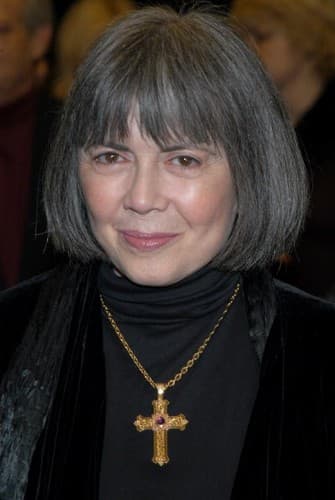
Anne Rice was an American author of gothic fiction, erotic literature, and Christian literature. She was best known for her series of novels The Vampire Chronicles. The first book became the subject of a film adaptation—Interview with the Vampire (1994).







