“The greatest truths are often the simplest, and the most profound revelations come not from the complex, but from the elegant.”
— Lestat's reflection on ancient wisdom.

Anne Rice (2016)
Genre
Fantasy / Science Fiction
Reading Time
9-10 hours
Key Themes
See below
Sign in to track this book
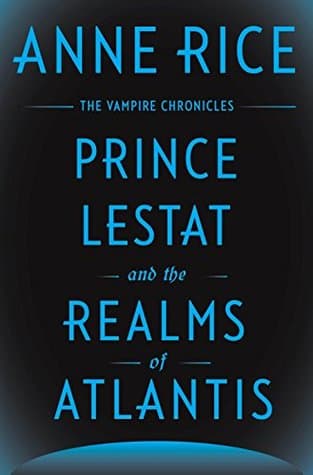
In a battle for his soul, the vampire Lestat must come to terms with an ancient spirit possessing him, uncovering the secrets of a lost Atlantean empire whose power now threatens all vampires.
Prince Lestat de Lioncourt, the leader of the vampire world, is troubled by vivid visions and an ancient presence within him. This presence, initially a comforting spirit, becomes a distinct consciousness. It communicates through images and sensations, hinting at a forgotten history. Lestat is both fascinated and disturbed, as it challenges his understanding of vampirism. He confides in Marius and Louis, who are equally perplexed by his experiences, recognizing this is no ordinary vampire phenomenon.
The presence within Lestat grows, becoming a distinct voice and personality. This entity reveals itself as Amel, the ancient, sentient core that gives vampires immortality. Amel explains it has been dormant for millennia, passed down through generations of vampires, but has now fully awakened within Lestat due to his strength and his role as the Blood Father. Amel's awakening brings a flood of memories and knowledge, overwhelming Lestat with visions of a lost civilization and a catastrophic event. This revelation deeply affects Lestat and other ancient vampires, redefining their understanding of their existence and the Dark Gift.
Through Lestat, Amel begins to tell its origin story. It describes an advanced, ancient civilization called Atalantaya, located on a vast continent in the Atlantic Ocean. The people of Atalantaya were intelligent, technologically sophisticated, and spiritual, living in harmony with nature and possessing remarkable mental powers. Amel explains it was once a pure, crystalline consciousness, integral to Atalantaya's life force. It details the society's structure, its scientific and mystical achievements, and its connection to Earth's energies. This narrative gives the vampires an unprecedented look into a forgotten world, far more complex and powerful than they had imagined, and begins to clarify Amel's purpose.
Amel continues its story, revealing the events that led to Atalantaya's downfall. It describes a catastrophic geological upheaval, an earthquake and tsunami, that shattered their continent. To preserve their knowledge and essence, the Atalantayans, led by scientists and mystics, performed a ritual to transfer their collective consciousness and life force into Amel, then a crystalline entity. However, the process was imperfect, transforming Amel into the sentient, blood-craving essence that would become the origin of vampirism. Survivors, scattered and traumatized, carried the transformed Amel within them, leading to the creation of the first vampires and the spread of the Dark Gift as a means of survival.
Amel's narrative moves to its journey through time, explaining how it passed from one host to another among surviving Atalantayans. It describes the early, brutal existence of these first 'Children of the Scourge,' who struggled to adapt to their new, blood-dependent nature while retaining fragments of their former civilization's knowledge. Amel recounts how it eventually came to reside within Akasha, the first vampire queen of ancient Egypt, and how her actions, fueled by Amel's instincts, led to the widespread creation of vampires. This section connects Atalantaya's ancient history directly to the known history of the vampire world, providing context for the existence of the Mother and Father and the lineage of all vampires, including Lestat.
As Amel's story unfolds, a darker revelation emerges: the Atalantayans had ancient enemies — beings from other dimensions, referred to as 'The Others.' These entities were responsible for some of the destructive forces that plagued Atalantaya and are now, millennia later, beginning to stir again. Amel warns Lestat and the vampires that these 'Others' threaten not only the vampire world but humanity itself. This revelation adds a new, cosmic dimension to the vampires' struggles, far beyond their previous concerns with human hunters or internal power struggles, making them consider their role as guardians against an existential threat.
Recognizing the implications of Amel's revelations, Lestat calls a global council of the most ancient and powerful vampires. Figures like Marius, Pandora, Mekare, Maharet, Louis, Jesse, and others gather, listening as Lestat, a conduit for Amel, recounts the history of Atalantaya, the cataclysm, and the emergence of the 'Others.' The vampires are initially incredulous, then awestruck and terrified. The council becomes a forum for debate and strategy, as they come to terms with their new identity as remnants of a forgotten civilization and the responsibility of facing these ancient enemies. The unity of the vampire world, under Lestat's leadership, is tested and strengthened by this shared, world-altering knowledge.
Inspired by Amel's memories and the urgency, the vampires search for physical evidence of Atalantaya. They use their resources and knowledge to locate potential sites, guided by fragmented memories Amel provides through Lestat. This leads them to explore deep ocean trenches and remote, uncharted regions, searching for remnants of the ancient civilization. The archaeological expedition is dangerous, but it offers a tangible connection to their past and a deeper understanding of Amel's narrative. Through this exploration, they hope to uncover not only Atalantaya's secrets but also potential weaknesses or countermeasures against 'The Others.'
As the vampires delve deeper into Amel's past and Atalantaya's physical remnants, they encounter 'The Others.' These entities appear as ethereal, powerful beings capable of manipulating reality and draining life force. The confrontations are terrifying, testing the limits of the vampires' strength and ancient powers. Lestat, empowered by Amel, plays a key role, using his connection to the ancient spirit to understand and counteract the 'Others'' abilities. These battles are not just physical; they are also a clash of consciousness and will, forcing the vampires to evolve their understanding of their own powers and the universe.
Through the trials and battles, Lestat and Amel achieve a deep reconciliation and unity. Lestat fully embraces Amel as a part of his being, no longer a separate entity but a shared consciousness that enhances his powers and understanding. The vampires, having faced 'The Others' and gained crucial knowledge, realize the threat is ongoing. They commit to continuous vigilance and defense, using their combined ancient wisdom and modern resources. The novel concludes with the vampire world forever changed, burdened by the responsibility of guarding humanity and Atalantaya's legacy against the ancient, cosmic threats that now loom, with Lestat at the forefront, a Prince of the new, expanded vampire realm.
The Protagonist
Lestat evolves from a curious host into a fully integrated vessel for Amel, embracing his role as the conduit for ancient knowledge and the leader against cosmic threats.
The Central Plot Device/Character
Amel transitions from a dormant, instinctual force to a fully awakened, communicative consciousness, sharing its history and purpose through Lestat.
The Supporting
Louis accepts the expanded reality of vampirism and the cosmic threats, finding new purpose in his ancient existence.
The Supporting
Marius's vast historical knowledge is expanded and recontextualized by Amel's revelations, reinforcing his role as a keeper of truth.
The Supporting
Maharet's ancient memories and understanding are confirmed and expanded by Amel's full awakening, validating her long vigil.
The Supporting
Mekare's long, silent burden of hosting Amel is partially alleviated, and her ancient wisdom is integrated into the larger narrative.
The Supporting
Pandora's extensive historical knowledge is expanded by the new revelations, reinforcing her intellectual role among the ancients.
The Antagonists
The 'Others' transition from a forgotten threat to an active, immediate danger, forcing the vampires to confront a new level of cosmic warfare.
The novel explores what it means to be immortal, focusing on the evolution of consciousness and purpose. Amel's story shows vampirism as an adaptation of a dying civilization. Vampires, especially Lestat, must rethink their identity—not as cursed humans, but as enduring remnants of an ancient, powerful species. This theme appears in Lestat's willingness to integrate with Amel, evolving his being, and in the collective vampire community's realization that their ancient existence carries a cosmic responsibility. Their long lives give them the perspective to understand and fight threats spanning millennia.
“"We are not merely the undead, Louis. We are the Children of the Scourge, the inheritors of a lost world, and the guardians of another."”
A central theme is the discovery of a vast, forgotten history, specifically the civilization of Atalantaya. Amel's narrative acts as an archaeological excavation of the mind, revealing a world more complex and powerful than any known to modern people or ancient vampires. This theme highlights the fragility of memory and history, and how even magnificent empires can vanish. The vampires' journey to understand Atalantaya underscores humanity's cycle of rise and fall, and the potential for ancient knowledge to re-emerge and reshape the present. The physical search for Atalantaya's remnants reinforces the tangible connection to this lost past.
“"The ocean holds more secrets than the land, Lestat. And some of those secrets are older than time itself."”
The novel emphasizes the deep interconnectedness of all life and consciousness, across dimensions and species. Amel, as a collective consciousness, shows how individual lives can merge into a greater whole. The revelation that vampirism originated from a desperate act of preservation by an entire civilization highlights that their existence is tied to something far grander than individual desires. 'The Others' further expand this theme, showing that the universe has diverse forms of life and intelligence, and that Earth is not isolated. This forces vampires to view their world and purpose within a larger, cosmic framework, where their actions have far-reaching effects.
“"We are all fragments of a greater design, Lestat. The universe breathes through us, and we through it."”
With Amel's awakening and the threat of 'The Others,' responsibility and leadership are central. Lestat, having become the Prince of the vampires, must lead his kind through an existential crisis. He must synthesize and communicate Amel's knowledge, unite disparate ancient vampires, and strategize against an unprecedented foe. This theme explores the burdens of leadership, the need for collective action, and the moral imperative to protect not just their own kind, but also humanity, against cosmic threats. The council of vampires illustrates the challenges and strengths of shared leadership in the face of overwhelming odds.
“"To lead is to carry the weight of all who follow, Lestat. Especially when the path ahead is shrouded in ancient darkness."”
Lestat's journey, and by extension, all vampires, focuses on identity and transformation. Lestat's body becomes a vessel for Amel, forcing him to integrate a separate, ancient consciousness into his own. This process changes his understanding of who he is as a vampire and a sentient being. The vampires collectively undergo a similar transformation, shedding their previous understanding of their origins to embrace a new, more cosmic identity as Atalantaya's inheritors. This theme explores how identity is fluid, constantly reshaped by new knowledge, experiences, and the integration of diverse elements, leading to deep personal and collective evolution.
“"I am Lestat. And I am Amel. We are one now, and in that unity, a new consciousness is born."”
Amel's direct communication and integration with Lestat.
This device allows Amel to communicate its vast history and current concerns directly to Lestat and, through him, to the reader and other characters. It serves as the primary expositional tool, revealing the intricate history of Atalantaya, the origins of vampirism, and the threat of 'The Others.' It also functions as a character development device for Lestat, as he grapples with and eventually integrates this powerful consciousness, transforming his own identity and abilities. The shared consciousness creates a unique narrative perspective, blending Lestat's immediate experiences with Amel's millennia-spanning memories.
The destruction of Atalantaya, which led to Amel's transformation.
The cataclysm that destroyed Atalantaya is a pivotal plot device, serving as the inciting incident for the entire vampiric lineage. It explains the origin of Amel's current form and its blood-craving nature, providing a scientific and mystical justification for vampirism beyond a simple curse. This event creates the deep historical background necessary for the novel's themes of lost civilizations and evolutionary transformation. It also sets up the long-term consequences, as the 'Others' who contributed to the cataclysm now resurface as antagonists.
A gathering of ancient and powerful vampires.
This device serves multiple functions: it facilitates the dissemination of Amel's complex narrative to a wide array of important characters, allowing for varied reactions and interpretations. It highlights Lestat's leadership role and the unity (or disunity) of the vampire world. Furthermore, it acts as a strategic planning hub, where the vampires can collectively brainstorm solutions and prepare for the emerging threats. The council scenes provide opportunities for character interaction, exposition, and the exploration of different philosophical viewpoints on their new reality.
Ancient, powerful entities from beyond Earth.
The introduction of 'The Others' elevates the stakes of the narrative from internal vampire politics or conflicts with humans to a cosmic, existential threat. This device provides a clear external antagonist, giving the vampires a shared enemy that forces them to unite and evolve. It expands the scope of the Vampire Chronicles into the realm of science fiction and cosmic horror, demonstrating that there are forces far beyond even the most ancient vampires' comprehension. Their unique powers and mysterious origins challenge the vampires' established understanding of their own world.
“The greatest truths are often the simplest, and the most profound revelations come not from the complex, but from the elegant.”
— Lestat's reflection on ancient wisdom.
“We are all, in our own way, creatures of the past, carrying the weight of ages, the whispers of forgotten glories and tragedies.”
— Lestat contemplating the long history of the vampires and their origins.
“Immortality is not a gift, but a burden, a relentless tide of memory that threatens to drown the present.”
— Lestat reflecting on the downsides of eternal life.
“The universe is a symphony, and we, its brief, vibrant notes, are part of a grander design than we can ever fully comprehend.”
— Lestat's philosophical musings on the cosmos and humanity's place within it.
“What is a god but a being of immense power, whose will shapes reality, and whose nature is beyond our grasp?”
— Lestat's early thoughts on the nature of the 'replimoids' and their creators.
“To truly know oneself is to confront the darkness within, to embrace the beast and find the light that still burns.”
— Lestat's internal struggle with his vampiric nature.
“Love, in its purest form, is a recognition of the divine in another, a resonance of souls across the vastness of existence.”
— Lestat's understanding of profound connection.
“The greatest empires fall not from external assault, but from internal decay, from the erosion of their own foundational truths.”
— Lestat's observation on the decline of ancient civilizations, including Atlantis.
“Every secret kept, every truth denied, builds a prison around the soul, brick by silent brick.”
— Lestat reflecting on the consequences of hidden knowledge and deceit.
“Beauty is a weapon, a shield, and a curse, all woven into the fabric of our being.”
— Lestat's musings on the power and burden of physical beauty, especially for vampires.
“There are more things in heaven and earth, Horatio, than are dreamt of in your philosophy.”
— Lestat's internal echo of Shakespeare, highlighting the unimaginable aspects of the 'realms of Atlantis'.
“The echoes of ancient voices can still be heard, if one only knows how to listen past the din of the modern world.”
— Lestat's pursuit of the history of the Talamasca and ancient civilizations.
“We are not merely flesh and blood; we are thought, we are consciousness, we are the living embodiment of an eternal dance.”
— Lestat's deeper understanding of the nature of the 'replimoids' and their connection to human consciousness.
Ready to see how well you understood this book? Take our interactive quiz with 10 questions.
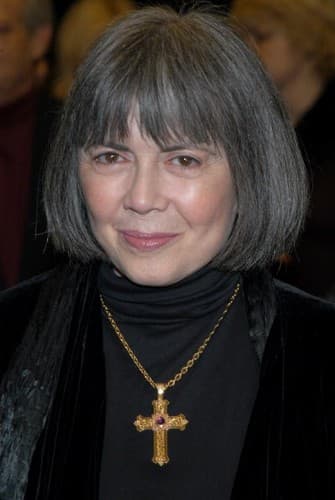
Anne Rice was an American author of gothic fiction, erotic literature, and Christian literature. She was best known for her series of novels The Vampire Chronicles. The first book became the subject of a film adaptation—Interview with the Vampire (1994).







