“It is a truth universally acknowledged, that a single man in possession of a good fortune, must be in want of a wife.”
— Opening line of the novel, setting the social theme.

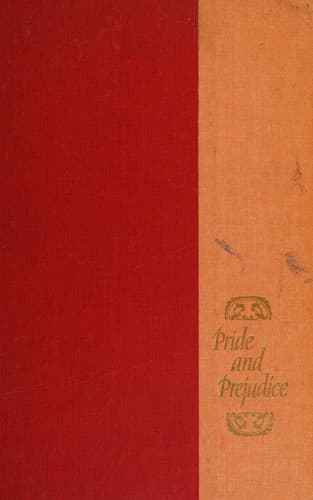
Jane Austen (2013)
Genre
Historical Fiction / Romance
Reading Time
9-10 hours
Key Themes
See below
Sign in to track this book
In a society focused on status and money, Elizabeth Bennet navigates love and pride, challenging Mr. Darcy and social expectations to find true affection.
The village of Longbourn hears that the wealthy Mr. Charles Bingley has rented Netherfield Park. Mrs. Bennet, who wants to marry off her five daughters, sees this as a chance. At the Meryton ball, Mr. Bingley likes the oldest Bennet daughter, Jane, and they begin to form a connection. However, his proud friend, Mr. Fitzwilliam Darcy, offends Elizabeth Bennet, the second oldest, by insulting her appearance. This first meeting creates Elizabeth's strong dislike of Darcy, and his pride in his social standing is clear.
Jane Bennet is invited to Netherfield by Miss Caroline Bingley, Mr. Bingley's sister. Mrs. Bennet wants the visit to last, so she makes sure Jane travels on horseback, which causes Jane to catch a cold and have to stay at Netherfield to recover. Elizabeth walks several miles through mud to visit her sister. The snobbish Miss Bingley and Mrs. Hurst consider this uncouth. During her stay, Elizabeth has witty conversations with Mr. Darcy, which makes her dislike of him stronger. Darcy, despite himself, becomes interested in her intelligence, much to Miss Bingley's annoyance.
Mr. William Collins, a pompous clergyman who will inherit the Bennet estate, arrives in Longbourn looking for a wife among the Bennet daughters. He first proposes to Jane, but when he learns she likes Mr. Bingley, he quickly turns his attention to Elizabeth. Meanwhile, the militia comes to Meryton, and Elizabeth meets the handsome Mr. George Wickham. Wickham, learning Darcy is there, invents a story about Darcy cruelly taking away an inheritance promised by Darcy's late father. This further increases Elizabeth's dislike of Darcy.
Mr. Collins, sure of his success, proposes to Elizabeth Bennet. Elizabeth, finding him unbearable, firmly rejects him, to her mother's dismay and father's amusement. Mrs. Bennet is angry, fearing Elizabeth has ruined her chances. Soon after, to everyone's surprise, Mr. Collins proposes to Elizabeth's sensible friend, Charlotte Lucas, who accepts him. She sees it as a practical way to get a comfortable home and financial security, even without loving him. This decision shocks Elizabeth, who struggles to understand her friend's choice.
Mr. Bingley and his sisters suddenly leave Netherfield for London, with no clear plan to return. Jane Bennet is heartbroken by this sudden departure, receiving only a cold letter from Caroline Bingley suggesting that Mr. Bingley is now interested in Darcy's sister, Georgiana. Elizabeth suspects that Miss Bingley and Mr. Darcy are behind Mr. Bingley's sudden departure, believing they want to separate Bingley from Jane because of the Bennets' lower social standing. This deepens her resentment towards Darcy.
Elizabeth visits Charlotte and Mr. Collins at their parsonage in Hunsford, Kent, which is near Rosings Park, the estate of Lady Catherine de Bourgh, Mr. Darcy's wealthy aunt. Darcy and his cousin, Colonel Fitzwilliam, are also visiting Rosings. During this time, Darcy often visits the parsonage, seemingly looking for Elizabeth. To Elizabeth's surprise, Darcy proposes marriage, but he does so in a way that emphasizes her inferior connections and family's behavior. Elizabeth, angry at his arrogance and still believing Wickham's story, strongly rejects him, accusing him of ruining both Jane's happiness and Wickham's prospects.
After Elizabeth's harsh rejection, Mr. Darcy gives her a letter explaining his actions. He clarifies his interference with Bingley and Jane, saying he believed Jane was not interested in Bingley and that the Bennet family's lack of proper behavior was a serious concern. More importantly, he reveals the truth about Mr. Wickham: Wickham had wasted his inheritance, tried to run off with Darcy's fifteen-year-old sister, Georgiana, for her money, and was a gambler. This letter greatly shocks Elizabeth, making her confront her own bias and realize she had been blind in her judgments of both men.
After returning home, Elizabeth learns that her youngest sister, Lydia, has run off with Mr. Wickham. This scandalous act brings great shame upon the Bennet family, threatening to ruin the reputations of all the Bennet sisters and making their chances of marrying well almost impossible. Mr. Bennet and Mr. Gardiner frantically search for the couple, but cannot find them. The family is in despair, believing Wickham will never marry Lydia, further increasing their shame. Elizabeth feels especially guilty, regretting not having exposed Wickham's true character earlier.
To the family's great relief and surprise, Lydia and Wickham are found, and Wickham agrees to marry Lydia for a large sum of money. Lydia later carelessly reveals that Mr. Darcy was at their wedding. Elizabeth, through her aunt, Mrs. Gardiner, eventually learns the full truth: Mr. Darcy found Lydia and Wickham, paid Wickham's large debts, and bribed him to marry Lydia, all to protect the Bennet family's honor and, indirectly, Elizabeth's. This selfless act greatly changes Elizabeth's view of Darcy, strengthening her growing affection.
Mr. Bingley returns to Netherfield, with Mr. Darcy. This time, his affection for Jane is clear. After more time together, during which Elizabeth observes Darcy's changed behavior and her family's improved conduct (especially her mother's), Mr. Bingley proposes to Jane. Jane, who has always loved him, happily accepts, bringing great happiness and relief to the Bennet family, especially Mrs. Bennet, who is thrilled to have one daughter married.
Lady Catherine de Bourgh, having heard rumors of an engagement between Elizabeth and Darcy, makes an unexpected visit to Longbourn. She imperiously demands that Elizabeth promise not to marry Darcy, as she wants Darcy to marry her own daughter, Anne. Elizabeth, though surprised by Lady Catherine's arrogance, stands firm and refuses to make any such promise, asserting her independence and right to choose. This confrontation, ironically, gives Darcy hope, as he sees Elizabeth's refusal to deny him as a sign of her changed feelings.
Mr. Darcy, encouraged by Elizabeth's firm stand against Lady Catherine, proposes to Elizabeth a second time. This time, his proposal is humble, sincere, and full of affection, admitting his past pride and expressing his admiration for her. Elizabeth, her prejudice completely gone because of his noble actions regarding Lydia and his genuine love, happily accepts. The novel ends with Jane and Bingley, and Elizabeth and Darcy marrying, as they look forward to a future together, having both learned to overcome their initial pride and prejudice.
The Protagonist
Elizabeth evolves from a woman quick to judge and hold onto her initial impressions (prejudice) to one who recognizes her own fallibility and learns to see beyond superficial appearances and societal pressures to true character.
The Protagonist/Romantic Interest
Darcy transforms from an overly proud and class-conscious man who struggles to articulate his feelings, to a humbled, compassionate, and openly affectionate individual, realizing that true worth lies beyond social status.
The Supporting
Jane remains largely consistent in her gentle nature, but experiences heartbreak and uncertainty before ultimately finding happiness and security in her marriage.
The Supporting
Bingley learns to assert his own feelings and judgment, overcoming the interference of his friends and family to pursue his love for Jane.
The Supporting
Mr. Bennet's character remains largely static, but he experiences profound anxiety and regret over Lydia's elopement, realizing the consequences of his past inaction.
The Supporting
Mrs. Bennet remains largely unchanged throughout the novel, consistently driven by her singular ambition to marry off her daughters, achieving her goal by the end.
The Antagonist
Wickham's true character is gradually revealed, exposing him as a manipulative villain rather than the wronged victim he initially portrays himself to be.
The Supporting
Lydia's reckless actions lead to a crisis for her family, but she herself shows little to no personal growth, remaining frivolous and self-absorbed even after her marriage.
The Supporting
Mr. Collins remains a static, comedic character, consistently displaying his characteristic vanity and sycophancy.
The Supporting
Charlotte makes a practical decision early in the novel that secures her future but restricts her emotional freedom, remaining content with her choice despite its limitations.
The Supporting
Lady Catherine remains a static, formidable, and ultimately ineffectual antagonist, whose attempts to control others are thwarted by Elizabeth's independence.
The main theme, shown in the characters. Mr. Darcy's initial pride comes from his social standing and wealth, leading him to look down on those he considers beneath him, including Elizabeth and her family. Elizabeth's prejudice against Darcy is formed by his rude behavior and fueled by Wickham's lies, making her unable to see his true character. The novel explores how these two flaws prevent them from understanding each other and finding happiness, ultimately showing how they must overcome them to find love. Darcy's first proposal and Elizabeth's rejection are important in forcing both to confront and ultimately let go of their pride and prejudice.
““I have been a selfish being all my life, in practice, though not in principle. As a child I was taught what was right, but not taught to correct my temper. I was given good principles, but left to follow them in pride and conceit.””
The novel carefully examines the strict social hierarchy of Regency England and its effect on marriage, status, and individual behavior. Characters like Lady Catherine de Bourgh and Miss Bingley show the snobbery and importance placed on inherited wealth and connections. The Bennets' uncertain social standing due to their lack of money and Mrs. Bennet's behavior is a constant worry and a barrier to their daughters' marriage prospects. Lydia's elopement shows how a damaged reputation could ruin an entire family, highlighting the severe results of social misbehavior in this era.
““It is a truth universally acknowledged, that a single man in possession of a good fortune, must be in want of a wife.””
Austen explores different reasons for marriage: love (Elizabeth and Darcy, Jane and Bingley), practical convenience and security (Charlotte and Mr. Collins), and pure infatuation (Lydia and Wickham). The novel supports the idea of marriage based on mutual affection, respect, and shared interests, rather than purely economic or social reasons. Elizabeth's refusal of Mr. Collins and her initial rejection of Darcy show her belief in marrying for love, a new idea for her time. This ultimately proves that true happiness in marriage needs more than just wealth or status.
““You are too generous to trifle with me. If your feelings are still what they were last April, tell me so at once. My affections and wishes are unchanged; but one word from you will silence me on this subject for ever.””
The Bennet family shows societal pressures and individual responsibilities. Mrs. Bennet's obsession with marriage comes from her duty to secure her daughters' futures in a society where women had few options. Mr. Bennet's lack of attention to his younger daughters, especially Lydia, has serious results, demonstrating the importance of parental guidance. Elizabeth's deep concern for her family's reputation after Lydia's elopement shows her strong sense of family duty, even when she finds her family embarrassing. Darcy's help to save Lydia, partly motivated by his affection for Elizabeth, shows a broader sense of duty and honor.
““The death of your father, or the marriage of your mother, might have been formerly a sensible thing to you, but now, the death of your father, or the marriage of your mother, must be a very serious thing to you.””
Elizabeth Bennet often challenges social expectations and norms, especially regarding the role of women and marriage. She refuses to marry for convenience or status, valuing her independence and genuine affection. Her spirited conversations and rejection of Lady Catherine de Bourgh show her refusal to be intimidated by social superiors. While the novel recognizes the power of social pressures, it celebrates the individual who, through integrity and self-awareness, can navigate and even go beyond these limits to find personal happiness.
““I am determined that only the deepest love will induce me into matrimony.””
The immediate judgments made by characters, often misleading and leading to conflict.
The title 'Pride and Prejudice' itself points to this device. The entire plot hinges on Elizabeth's initial prejudice against Darcy based on his perceived arrogance, and Darcy's initial pride leading him to dismiss Elizabeth's social standing. These first impressions are consistently shown to be unreliable and require significant events and revelations to be overturned. Wickham's charming first impression, for example, completely misleads Elizabeth, while Darcy's reserved demeanor hides his true character. The novel meticulously deconstructs these initial judgments, forcing characters and readers to look beyond superficial appearances.
Crucial documents that reveal hidden truths and advance the plot.
Letters serve as vital plot devices, especially Darcy's letter to Elizabeth after his first proposal. This letter is the turning point of the novel, revealing the truth about Wickham and clarifying Darcy's interference with Jane and Bingley, thereby dismantling Elizabeth's prejudice. Other letters, like those from Caroline Bingley to Jane, or Mr. Gardiner's letters during Lydia's elopement, also convey critical information, create suspense, and expose characters' true intentions. They allow for exposition and character development that might not be possible through direct dialogue or narrative alone.
Settings for character introductions, interactions, and the display of social dynamics.
Balls, assemblies, and dinners are not merely social events but crucial arenas for character interaction, plot progression, and the display of social hierarchy and manners. The Meryton assembly ball, for instance, introduces the main characters and establishes the initial conflict between Elizabeth and Darcy. Subsequent gatherings at Netherfield and Rosings allow for extended conversations, observations, and the development of relationships, both romantic and antagonistic. They highlight the importance of reputation and decorum, and provide opportunities for characters to make either good or bad impressions.
Situations where the audience knows more than the characters, creating tension and humor.
Austen frequently employs dramatic irony, particularly concerning Elizabeth's judgment of Darcy and Wickham. The reader often perceives Darcy's underlying goodness and Wickham's deceit before Elizabeth does, creating suspense and highlighting Elizabeth's 'prejudice.' For example, when Elizabeth is charmed by Wickham's story, the astute reader, having already seen Darcy's integrity, might suspect Wickham's lies. This device also adds humor, especially in scenes involving Mrs. Bennet's social blunders or Mr. Collins's pomposity, where the reader understands the absurdity of the situation more fully than the characters involved.
“It is a truth universally acknowledged, that a single man in possession of a good fortune, must be in want of a wife.”
— Opening line of the novel, setting the social theme.
“I could easily forgive his pride, if he had not mortified mine.”
— Elizabeth Bennet reflecting on Mr. Darcy's behavior at the Meryton ball.
“You must allow me to tell you how ardently I admire and love you.”
— Mr. Darcy's first, awkward proposal to Elizabeth at Hunsford.
“Till this moment I never knew myself.”
— Elizabeth after reading Mr. Darcy's letter explaining his actions.
“Happiness in marriage is entirely a matter of chance.”
— Charlotte Lucas explaining her pragmatic view on marriage to Elizabeth.
“For what do we live, but to make sport for our neighbors, and laugh at them in our turn?”
— Mr. Bennet's cynical remark about social life.
“There is a stubbornness about me that never can bear to be frightened at the will of others. My courage always rises at every attempt to intimidate me.”
— Elizabeth asserting her independence to Lady Catherine de Bourgh.
“A lady's imagination is very rapid; it jumps from admiration to love, from love to matrimony in a moment.”
— Mr. Darcy commenting on Jane Bennet's feelings for Mr. Bingley.
“I have been a selfish being all my life, in practice, though not in principle.”
— Mr. Darcy confessing his flaws to Elizabeth during his second proposal.
“Vanity and pride are different things, though the words are often used synonymously.”
— Mary Bennet's philosophical observation during a family discussion.
“Think only of the past as its remembrance gives you pleasure.”
— Elizabeth advising Mr. Darcy to let go of painful memories.
“We are all fools in love.”
— Charlotte Lucas commenting on romantic behavior.
“My good opinion once lost is lost forever.”
— Mr. Darcy describing his stubborn nature to Elizabeth.
“Angry people are not always wise.”
— Jane Bennet cautioning Elizabeth about her quick judgments.
Ready to see how well you understood this book? Take our interactive quiz with 10 questions.
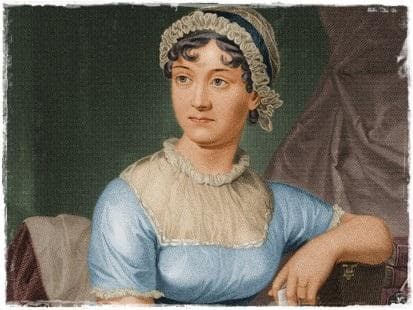
Jane Austen was an English novelist known primarily for her six major novels, which implicitly interpret, critique, and comment upon the British landed gentry at the end of the 18th century. Austen's plots often explore the dependence of women on marriage for the pursuit of favourable social standing and economic security. Her works are an implicit critique of the novels of sensibility of the second half of the 18th century and are part of the transition to 19th-century literary realism. Her deft use of social commentary, realism and biting irony have earned her acclaim among critics and scholars.







