“It is a truth universally acknowledged, that a zombie in possession of brains, must be in want of more brains.”
— The very first line of the book, a twist on the original.

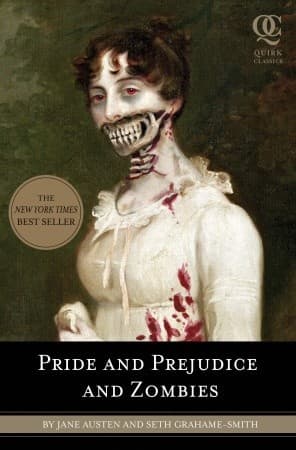
Seth Grahame-Smith (2009)
Genre
Fantasy / Historical Fiction / Romance
Reading Time
320 min
Key Themes
See below
Sign in to track this book
In Regency England, Elizabeth Bennet navigates society and beheads zombies, all while dealing with Mr. Darcy.
The five Bennet sisters, trained in combat, attend the Meryton Assembly Ball. Mrs. Bennet hopes to find husbands for her daughters. The arrival of Mr. Bingley and Mr. Darcy disrupts the evening. Darcy immediately offends Elizabeth Bennet, judging her looks and family. He does not recognize her fighting skills. A surprise zombie attack complicates the assembly, but the Bennet sisters, especially Elizabeth and Jane, easily defeat them, showing their unique upbringing in a world with the 'Prejudice' plague.
Jane Bennet is invited to Netherfield by the Bingley sisters. On her way, she gets caught in a rainstorm and becomes ill with a fever. Mrs. Bennet worries she might turn into a zombie. Elizabeth goes to Netherfield to care for Jane. During her stay, Elizabeth endures Miss Bingley's snobbery and continues to argue with Mr. Darcy. Their arguments reveal a mutual respect for each other's intelligence and fighting skills, even as Darcy struggles with Elizabeth's family's manners and his own social biases.
Mr. Collins, a pompous clergyman and heir to Longbourn, proposes to Elizabeth. He stresses the need for a wife to manage his home and help with zombie defense. Elizabeth rejects him, to her mother's dismay. Soon after, Charlotte Lucas, Elizabeth's practical friend, accepts Mr. Collins's proposal, choosing security over love in a dangerous world. Elizabeth later learns that Lady Catherine de Bourgh, Mr. Darcy's aunt, is a famous zombie hunter and martial arts master who trained her own army. This adds to the complex social hierarchy and the constant threat of the undead.
The Netherfield Ball takes place. Elizabeth, despite her earlier promise, dances with Mr. Darcy. Their dance is tense but shows a hidden attraction. During the ball, George Wickham, a charming officer, tells Elizabeth a false story. He claims Darcy cheated him out of his inheritance. Wickham portrays Darcy as cruel, strengthening Elizabeth's negative view of him. Small fights with the undead happen throughout the night, which the guests are used to handling.
The Bingley family suddenly leaves Netherfield, leaving Jane heartbroken. Elizabeth suspects Darcy and Miss Bingley interfered. Later, Elizabeth visits Charlotte and Mr. Collins at Hunsford, near Rosings Park, Lady Catherine de Bourgh's estate. Lady Catherine, a known zombie hunter and martial arts master, often questions Elizabeth's manners and combat training, comparing her to Darcy. During these visits, Elizabeth often encounters Darcy, leading to more awkward, but interesting, interactions.
While Elizabeth visits Rosings, Mr. Darcy unexpectedly proposes marriage. His proposal is arrogant, highlighting her family's lower status. Elizabeth, angry at his condescension and believing Wickham's lies, rejects him. She accuses him of mistreating Wickham and separating Jane and Bingley. The next day, Darcy sends a letter explaining his actions: Wickham tried to elope with Darcy's fifteen-year-old sister, Georgiana, for her money. Darcy also believed Jane's feelings for Bingley were not strong enough for society's pressures and the zombie threat.
Darcy's letter makes Elizabeth rethink her biases. She realizes Wickham lied and starts to see Darcy's character differently, recognizing his honesty and concern for his sister. Later, while touring Derbyshire with her aunt and uncle, the Gardiners, Elizabeth visits Pemberley, Darcy's estate. She is impressed by its size and his servants' respect for him. Darcy unexpectedly returns early and meets Elizabeth. Their interaction is now more civil and shows mutual respect, as he demonstrates his own zombie-hunting skills.
A scandal hits the Bennet family: Lydia, the youngest sister, has run off with George Wickham. This act, given Wickham's true nature and the constant danger, threatens to ruin the family's reputation. Elizabeth is upset, believing her family's honor is lost. Mr. Bennet and Mr. Gardiner search for Lydia and Wickham, fearing social disgrace and Lydia falling victim to Wickham or the zombies.
To Elizabeth's surprise, Mr. Darcy finds Wickham and Lydia. He uses his resources to make Wickham marry Lydia, paying his debts and getting him a military position in the North. Darcy keeps his help a secret, wanting no credit. This saves the Bennet family from disgrace and ensures Lydia's respectability, though in difficult circumstances. Elizabeth learns of Darcy's actions from Mrs. Gardiner, further changing her view of him.
Mr. Bingley, informed by Darcy of Jane's true feelings, returns to Netherfield. He quickly proposes to Jane, who accepts. Their engagement brings relief and happiness to the Bennet family, especially Mrs. Bennet. Jane's marriage to a wealthy, kind man brings stability and hope amid social worries and the zombie threat, showing that love can overcome both social hurdles and the walking dead.
Lady Catherine de Bourgh hears rumors of an engagement between Elizabeth and her nephew, Mr. Darcy. She makes a furious visit to Longbourn. She confronts Elizabeth, demanding she promise never to marry Darcy, citing Elizabeth's lower connections. Lady Catherine, a skilled fighter, even challenges Elizabeth to a duel, which Elizabeth defiantly refuses. Elizabeth bravely refuses to make such a promise, asserting her independence and right to choose, showing her spirit and resolve.
Inspired by Elizabeth's stand against Lady Catherine, and having overcome his own pride and biases, Mr. Darcy proposes to Elizabeth a second time. This time, his proposal is humble and sincere, admitting his past mistakes and expressing his love and admiration for her strength. Elizabeth, having realized her love for him and his true character, accepts. Their engagement concludes their difficult courtship, uniting two strong individuals who can handle both society and a zombie-filled world, finding happiness and a powerful partnership.
The Protagonist
Elizabeth overcomes her initial prejudices to recognize true character and finds love with Mr. Darcy, embracing both her strength and her heart.
The Protagonist/Love Interest
Darcy learns to humble his pride, overcome societal prejudices, and openly express his affection, earning Elizabeth's love and respect.
The Supporting
Jane finds happiness and stability through her love for Mr. Bingley, overcoming her reserved nature to secure her future.
The Supporting
Bingley learns to assert his own judgment and pursue his heart's desire, leading to his marriage with Jane Bennet.
The Supporting
Mr. Bennet remains largely static, providing a witty, observational counterpoint to the family's struggles.
The Supporting
Mrs. Bennet remains largely static, driven by her singular focus on marrying off her daughters.
The Antagonist
Wickham's true villainous nature is exposed, leading to his forced marriage and banishment, confirming his role as a foil to Darcy's honor.
The Supporting
Lady Catherine remains an unyielding force, serving as a final obstacle to Elizabeth and Darcy's union, embodying extreme social prejudice.
The Supporting
Lydia's impulsiveness leads to a scandalous elopement, forcing her into an undesirable marriage, but she remains largely unchanged.
The Supporting
Charlotte makes a pragmatic decision for security, demonstrating a contrasting view on marriage to Elizabeth's idealistic one.
The novel blends Jane Austen's social class critique with the constant danger of zombies. Strict social rules, wealth, and the pressure to marry well are all increased because 'unmentionables' could appear at any time. While characters like Mrs. Bennet focus on social climbing, the Bennet sisters' combat skills, developed out of necessity, often ignore class differences, showing survival skills as the true equalizer. Darcy's initial pride comes from his high social standing, but Elizabeth's fighting ability eventually earns his respect. This shows that true worth goes beyond birth in this changed world.
“It is a truth universally acknowledged, that a zombie in possession of brains, must be in want of more brains.”
The main theme of prejudice, from the original novel, gains a new aspect. Elizabeth's initial prejudice against Mr. Darcy comes from his haughty manner and Wickham's false stories, which are more believable due to the chaos and distrust in a zombie-infested world. Darcy's prejudice against Elizabeth's family comes from their perceived lack of manners and lower social standing, which he believes makes them unprepared for danger. Both characters must overcome their fixed ideas through direct experience and a willingness to face the truth, often during dramatic zombie encounters that reveal true character.
“I had not known you a month before I felt that you were the last man in the world whom I could ever be prevailed on to marry.”
In this reimagined world, women's traditional roles change a lot. While marriage and social standing remain important, the Bennet sisters are also skilled warriors, good with swords and martial arts. This dual role challenges old ideas of femininity. Women like Elizabeth and Jane are both elegant ladies and fierce protectors. Their combat skills are not just a novelty; they are essential for survival and a source of personal power and respect. This allows them to have a more active role than women in the original story. Lady Catherine de Bourgh also shows this, being a powerful noblewoman and a strong zombie hunter.
“A lady's accomplishments, beyond the usual needlework and music, must now include a proficiency with the blade and a keen eye for the unmentionables.”
The search for love and marriage is complicated by the constant threat of death. Relationships are tested not only by social rules but also by the need for a partner who can protect and survive. Elizabeth and Darcy's love story is built on mutual respect for each other's fighting skills and intelligence. They recognize that a strong partnership is vital in a dangerous world. The novel explores if love can thrive amid such peril, concluding that true affection and a shared commitment to survival can overcome even gruesome obstacles. Marriage becomes not just a social contract, but a bond forged in shared battles against the undead.
“I could not have been happy with him, had his character been ever so amiable, unless I could have also esteemed him as a formidable slayer of the undead.”
The pervasive zombie outbreak that reshapes Georgian England.
The zombie apocalypse, referred to as the 'Prejudice' plague, is the central plot device that transforms Austen's world. It provides constant external conflict, forcing characters to develop combat skills and altering societal norms. The threat of the undead introduces urgency, violence, and a darker humor, impacting everything from travel to social gatherings. It acts as a catalyst for character development, revealing true courage and villainy, and often serves as a backdrop for the romantic and social conflicts to play out, making the stakes of every decision much higher.
The specialized combat skills possessed by the Bennet sisters and other characters.
The martial arts training, particularly the 'deadly arts' learned by the Bennet sisters in China, is a crucial plot device. It elevates the female characters beyond their traditional roles, making them active agents in their own survival and protection. This training provides opportunities for action sequences, showcases their strength and independence, and challenges gender stereotypes. It also serves as a point of connection and respect between characters like Elizabeth and Darcy, who recognize each other's formidable abilities, ultimately contributing to their mutual admiration and love.
Euphemisms for the zombies, highlighting societal discomfort and fear.
The use of euphemisms like 'unmentionables' or 'dreadfuls' for zombies is a stylistic plot device that maintains a veneer of polite society even in the face of horror. It reflects the Georgian era's emphasis on decorum, even when discussing the grotesque. This linguistic choice adds a layer of dark comedy and highlights the absurdity of clinging to social niceties when facing literal flesh-eating monsters. It also subtly reinforces the 'prejudice' theme, as characters often try to ignore or downplay the gruesome reality of their world, much as they might ignore social discomforts.
Darcy's explanatory letter to Elizabeth, revealing truths and shifting perspectives.
Darcy's letter, a direct lift and alteration from the original novel, is a pivotal plot device. It serves to clarify misunderstandings, expose Wickham's true character, and explain Darcy's actions regarding Jane and Bingley. In this version, it might also detail specific zombie encounters or defensive strategies. The letter forces Elizabeth to re-evaluate her strong prejudices and consider Darcy's perspective, initiating a significant shift in her feelings towards him. It's a moment of quiet revelation amidst the chaos, allowing for intellectual and emotional transformation.
“It is a truth universally acknowledged, that a zombie in possession of brains, must be in want of more brains.”
— The very first line of the book, a twist on the original.
“My courage always rises at every attempt to intimidate me.”
— Elizabeth Bennet's defiant response to Lady Catherine de Bourgh.
“A lady's imagination is very rapid; it jumps from admiration to love, from love to matrimony in a moment. I, however, have been trained to kill the undead, so my imagination is far more concerned with decapitation and disembowelment.”
— Elizabeth Bennet's internal monologue, contrasting her thoughts with traditional female concerns.
“You are mistaken, Mr. Darcy, if you suppose that the mode of your declaration affected me in any other way, than as it proved your arrogance, your conceit, and your selfish disdain of my feelings. Your character was unfolded in every word.”
— Elizabeth's rejection of Darcy's first proposal, maintaining the original's intensity.
“What are men to rocks and mountains? Or, for that matter, to the undead hordes that now roam the English countryside?”
— Elizabeth's musings during a walk, adding zombies to her appreciation of nature.
“She had a lively, playful disposition, which delighted in anything ridiculous. Especially when that ridiculous thing was a severed zombie head rolling down a hill.”
— Describing Elizabeth's personality and her enjoyment of the macabre.
“I could easily forgive his pride, if he had not mortified mine. But to insult my family, and then to attack my fighting skills? Unpardonable!”
— Elizabeth's thoughts on Darcy's behavior, with an added martial arts offense.
“Bingley was sure of being loved by the whole family, and Jane was certain of a zombie attack before the end of the week.”
— Contrasting Bingley's optimism with Jane's more pragmatic, dangerous reality.
“To be fond of dancing was a certain step towards falling in love; and very often the first symptom of zombie contagion.”
— A humorous warning about the dangers of social gatherings in a zombie-infested world.
“My dear, I have been fighting the undead since before you were a twinkle in your father's eye. I know a zombie when I see one. And that, my dear, is not one.”
— Mr. Bennet reassuring his daughters, showing his experience with the plague.
“There is a stubbornness about me that never can bear to be frightened at the will of others. My courage always rises at every attempt to intimidate me. And it rises even higher when facing down a shambling horde of the undead.”
— Elizabeth's internal monologue, reinforcing her bravery with a zombie twist.
“Lady Catherine was a woman of formidable presence. Her voice, when raised in anger, could curdle milk and stop a zombie in its tracks.”
— Describing Lady Catherine de Bourgh's intimidating nature, with a humorous supernatural effect.
“He was the proudest, most disagreeable man in the world, and Elizabeth was determined to hate him, even if he did save her from a zombie ambush.”
— Elizabeth's initial feelings about Darcy, complicated by an act of heroism.
“A single man in possession of a good fortune, must be in want of a wife. Or, at the very least, a well-fortified estate and a trained militia to protect him from the unmentionables.”
— Another twist on the opening line, reflecting the practicalities of the zombie apocalypse.
Ready to see how well you understood this book? Take our interactive quiz with 10 questions.

Biography coming soon.







