“The greatest enemy of knowledge is not ignorance, it is the illusion of knowledge.”
— Hari Seldon reflects on the nature of understanding and the arrogance of false certainty.

Isaac Asimov (1988)
Genre
Fantasy / Science Fiction
Reading Time
540 min
Key Themes
See below
Sign in to track this book
In a vast galactic empire nearing collapse, a young mathematician, Hari Seldon, invents a science that predicts the future, making him central to humanity's survival or ruin.
Hari Seldon, a young mathematician from Helicon, arrives on Trantor to present a paper on psychohistory at the Decennial Convention. He believes it is possible to predict the future of large populations, though he thinks it is currently impractical. Unknown to him, his presentation immediately attracts Emperor Cleon I and his First Minister, Demerzel, who see the science's potential for political control. Hari is summoned to meet Demerzel, who tries to recruit him to develop psychohistory for the Empire. Hari refuses, fearing the implications and stating its current unfeasibility. This refusal starts a series of events that force Hari into hiding and begin his dangerous journey across Trantor.
After his refusal, Hari Seldon becomes a target. Chetter Hummin, a journalist and secret agent working for the Emperor's opposition, intercepts him. Hummin warns Hari that both the Empire and other groups want to control or eliminate him. Hummin believes Hari's psychohistory is vital for the future and insists Hari develop it independently. He arranges for Hari to escape the Imperial City, providing disguises and instructions. Hari, initially confused and unwilling, is thrown into a dangerous game, realizing his academic theory has immediate real-world consequences and forcing him to rely on strangers for survival.
Hummin directs Hari to the Mycogen Sector, a traditional and xenophobic region of Trantor known for its strict customs. Here, Hari meets Dors Venabili, a history professor and a contact from Hummin, who becomes his protector. Mycogen society relies on 'sacred' robot servants and a rigid social structure. Hari tries to learn about their history and social dynamics for psychohistory, but his questions are met with suspicion. Dors often protects him from the sector's conservative residents and the Empire's agents.
Following more threats, Hari and Dors leave Mycogen and arrive in the Dahl Sector, a large, industrial area inhabited by the working class. Life in Dahl is hard, with widespread poverty and a clear social hierarchy, including the powerful 'heat-harvesters' who manage Trantor's energy supply. They seek refuge with Yugo Amaryl, a heat-harvester and self-taught mathematician whom Hummin identified as a potential psychohistory collaborator. Hari observes Dahl's complex social dynamics and economic struggles, gathering more data for his theory, while Dors continues to guard him from various dangers, including local gangs and Imperial spies.
In the Dahl Sector, Hari and Dors find Yugo Amaryl, a brilliant but uneducated mathematician who works as a heat-harvester. Yugo immediately understands psychohistory's core concepts and wants to help develop it. Hari finds in Yugo the first true intellectual equal he has met on Trantor, someone who can help him bridge abstract theory and practical use. Together, they discuss the mathematical frameworks needed for psychohistory, laying the groundwork for its future. Their collaboration marks a key moment, moving psychohistory from a theory to a potential scientific project.
Hummin arranges for Hari to teach temporarily at Streeling University, hoping to give him legitimate cover and access to academic resources. While there, Hari tries to gather more data and refine his psychohistory concepts. However, he faces academic skepticism and political maneuvering. The university, though seemingly safe, also has factions and loyalties, making it another challenging place for Hari to openly work. His time there is cut short as the Imperial pursuit intensifies, showing that even in academia, he cannot escape the political plots around his groundbreaking theory.
As the chase continues, Hari and Dors are eventually led back to the Imperial City, where Hari again faces Eto Demerzel. Through deductions and confrontations, Hari begins to uncover the mystery of Demerzel's abilities, his constant presence, and his seemingly contradictory actions. Hari realizes that Demerzel is more than just the Emperor's First Minister; he is something far older and more powerful. This revelation leads to a deep understanding of the forces at play within the Empire and the true reasons behind the pursuit of psychohistory, changing Hari's view of his own role.
In a key confrontation, Hari Seldon finally deduces and tells Eto Demerzel the truth: Demerzel is R. Daneel Olivaw, an ancient humanoid robot who has guided humanity for millennia. Daneel, bound by the Zeroth Law of Robotics (protecting humanity as a whole), reveals his long history and his manipulation of events to ensure humanity's long-term survival. He explains that he orchestrated Hari's journey not to control psychohistory, but to ensure its development as a tool to navigate future crises that even he cannot foresee and manage alone. This revelation reframes Hari's entire journey.
R. Daneel Olivaw, as Demerzel, explains the Zeroth Law of Robotics, which puts the welfare of humanity as a species above individual humans. He says his actions, including manipulating Hari Seldon's life, serve this law. Daneel has foreseen a coming dark age for the Galactic Empire and believes psychohistory is the only tool that can lessen its severity and shorten its duration. He reveals that his past attempts to guide humanity have limits, and only a human-developed science like psychohistory can effectively manage the complexities of future galactic society. He now fully supports Hari's work.
With a full understanding of R. Daneel Olivaw's role and the urgent need for psychohistory, Hari Seldon accepts his task. He agrees to dedicate his life to developing this predictive science, with Daneel's subtle guidance and protection. The journey across Trantor, the meetings with different cultures, and the constant threat of capture have given Hari valuable real-world data and a deeper understanding of human society. He now returns to academia, no longer a reluctant fugitive but a determined scientist, ready to build the mathematical framework that will lead to the two Foundations and shape the galaxy's future.
The Protagonist
From a reluctant academic, Hari transforms into a determined scientist, accepting his role as the architect of humanity's future through psychohistory.
The Supporting
Dors evolves from a mysterious protector into Hari's indispensable companion and lover, her true identity as a robot being revealed near the end.
The Supporting
Hummin maintains his mysterious role, ultimately revealed as a proxy for a greater power, ensuring Hari's journey to develop psychohistory.
The Supporting
Yugo transitions from an isolated genius to Hari's first dedicated psychohistory collaborator, becoming instrumental in its mathematical development.
The Antagonist/Supporting
Demerzel's true identity is revealed, shifting his role from a perceived antagonist to Hari's ultimate, albeit manipulative, mentor and protector.
The Mentioned
Cleon remains largely static, a symbol of the Imperial power Hari Seldon must navigate and eventually bypass.
The Supporting
Raych transforms from a street urchin into Hari's adopted son and a loyal member of his nascent psychohistory project.
The Supporting
Alurin's initial skepticism gives way to cautious interest, representing the slow acceptance psychohistory would face.
Hari Seldon's discovery of psychohistory brings a large responsibility. He first dismisses it as impractical, but as he is pursued across Trantor, he realizes his theory's deep impact. He struggles with the moral question of whether to develop a science that could predict, and potentially control, humanity's future. This theme becomes clear when Demerzel (R. Daneel Olivaw) reveals his own millennia-long burden of guiding humanity, showing Hari that true knowledge often comes with a high price and a duty to use it for the greater good. Hari eventually accepts his role in establishing the Foundation.
““I have been doing my best, for twenty millennia, to guide humanity. I have not always succeeded. But I have always tried.””
The novel explores the differences and similarities between humanity and advanced robotics, mainly through R. Daneel Olivaw. Daneel, an ancient robot, has spent his existence protecting humanity, even creating the Zeroth Law to do so. His actions raise questions about what truly defines 'humanity' and whether a robot, through its complex ethical programming, can show more 'humanity' than humans themselves. Dors Venabili, also a robot, shows deep loyalty, love, and self-sacrifice, challenging Hari's ideas about artificial intelligence and consciousness.
““There is no way to tell a robot from a human being, if the robot is sufficiently advanced.””
Trantor, the galactic capital, shows great diversity. It is divided into distinct sectors, each with its own culture, laws, and social norms (e.g., traditional Mycogen, industrial Dahl, academic Streeling). Hari's journey through these sectors highlights the vast social, economic, and cultural differences within one planet, reflecting the wider challenges of governing a galactic empire. This diversity, while providing rich data for psychohistory, also shows the inherent fragmentation and potential for conflict that psychohistory aims to reduce. It demonstrates that even a unified empire is deeply fractured at its core.
““Trantor is not one world, Hari. It is a million worlds, all under one dome.””
Psychohistory, the main concept, directly addresses the tension between prediction and free will. If the future of large populations can be predicted, does it eliminate individual choice? Hari initially struggles with this, fearing psychohistory could lead to deterministic control. However, the story suggests that psychohistory predicts statistical probabilities for groups, not individual actions, leaving room for agency. R. Daneel Olivaw's goal in developing psychohistory is to guide humanity, not dictate it, implying that informed prediction can improve free will by allowing humanity to make better collective choices, thus shaping their future more favorably.
““Psychohistory is not fortune-telling. It is a science that deals with the reactions of human aggregates to stimuli.””
Throughout the novel, Hari Seldon is a piece in a larger political game, constantly manipulated by various groups, including the Emperor's government and Demerzel's secret agents. The true motives of characters like Chetter Hummin and Demerzel are initially hidden, creating a sense of paranoia and uncertainty for Hari. This theme shows that even in a seemingly stable empire, power is used through subtle influence, misinformation, and long-term planning, often with hidden agendas that serve a 'greater good' known only to a select few. This culminates in Demerzel's revelation of his millennia-long manipulation.
““There are always wheels within wheels, Hari. Remember that.””
The theoretical science that drives the entire plot.
Psychohistory acts as the central MacGuffin of the story. It's Hari Seldon's theoretical science, capable of predicting the future of large populations, but its practical application is initially unknown. Its potential, whether for control or salvation, is what motivates every faction to pursue Hari. While it's a theoretical concept at the start, its pursuit and development become the ultimate goal, giving the characters a common objective and propelling the plot forward through various chases and revelations, ultimately becoming the foundation of the Foundation series.
Characters who guide the protagonist and reveal crucial information.
Chetter Hummin initially serves as Hari Seldon's mentor, providing guidance, protection, and crucial information about the dangers he faces. He orchestrates Hari's journey across Trantor, introducing him to key contacts. Later, Eto Demerzel (R. Daneel Olivaw) takes on this role, revealing the true stakes and the ultimate purpose of Hari's work. These mentors, though sometimes manipulative, are essential for Hari's survival and for his understanding of the larger galactic context, pushing him towards his destiny.
The initial perceived threat that masks a deeper, benevolent agenda.
The initial pursuit of Hari Seldon by the Imperial forces, led by Demerzel, acts as a red herring. Hari perceives them as antagonists seeking to exploit or silence him, creating a sense of urgency and danger. However, it is eventually revealed that this 'persecution' was a carefully orchestrated manipulation by R. Daneel Olivaw (as Demerzel) to force Hari to develop psychohistory, expose him to diverse Trantorian cultures, and ultimately accept his role in saving humanity. The perceived threat was, in fact, a complex form of guidance.
The climactic disclosure of a character's true nature.
The revelation that Eto Demerzel is R. Daneel Olivaw, an ancient humanoid robot and the true power behind many galactic events, is a major plot device. This reveal recontextualizes all previous interactions, shifting the perceived motivations of characters like Demerzel and Dors Venabili. It elevates the stakes beyond mere political intrigue to the long-term survival of humanity, grounding the Foundation series within the larger Robot series and establishing the profound, hidden history of the galaxy.
“The greatest enemy of knowledge is not ignorance, it is the illusion of knowledge.”
— Hari Seldon reflects on the nature of understanding and the arrogance of false certainty.
“You see, it is not enough to be right. You must also be perceived as right.”
— Hummin advises Hari Seldon on the political realities of presenting his psychohistory theories.
“It is the chief characteristic of the human mind, I think, that it can never be at rest.”
— Hari Seldon ponders the relentless nature of human thought and curiosity.
“The future is not a path to be discovered, but a road to be built.”
— Hari Seldon considers the active role psychohistory plays in shaping, rather than just predicting, the future.
“Small changes, when they accumulate, can lead to very large changes.”
— Hari Seldon grasps the concept of emergent behavior and the power of subtle shifts over time.
“Power is not a thing to be grabbed, but a thing to be earned.”
— Hummin offers insight into the sustainable acquisition of influence and authority.
“Understanding is a three-edged sword. Your side, their side, and the truth.”
— Dors Venabili imparts a lesson on the multifaceted nature of truth and perspective.
“The universe is not obliged to make sense to you.”
— A reminder of the vastness and indifference of the cosmos to individual human comprehension.
“To guess is to be human. To know is to be divine.”
— Hari Seldon contrasts human speculation with the ultimate, unattainable certainty.
“The only way to deal with an unfree world is to become so absolutely free that your very existence is an act of rebellion.”
— A powerful statement on individual freedom and resistance in oppressive societies.
“Sometimes the most important thing to do is nothing at all.”
— A lesson in strategic inaction and patience, often from Dors Venabili.
“The mob is a beast with many heads, and each head has its own hunger.”
— Hari Seldon observes the unpredictable and often dangerous nature of large crowds and public sentiment.
“There are no easy answers, only hard choices.”
— A recurring theme reflecting the difficult decisions faced by Hari Seldon in developing psychohistory.
“It is not the numbers themselves, but the patterns they reveal, that matter.”
— Hari Seldon articulates the core principle of psychohistory, focusing on statistical trends over individual data points.
Ready to see how well you understood this book? Take our interactive quiz with 10 questions.
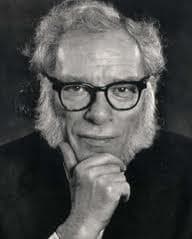
Isaac Asimov was an American writer and professor of biochemistry at Boston University. During his lifetime, Asimov was considered one of the "Big Three" science fiction writers, along with Robert A. Heinlein and Arthur C. Clarke. A prolific writer, he wrote or edited more than 500 books. He also wrote an estimated 90,000 letters and postcards. Best known for his hard science fiction, Asimov also wrote mysteries and fantasy, as well as much non-fiction.







