
Biography coming soon.

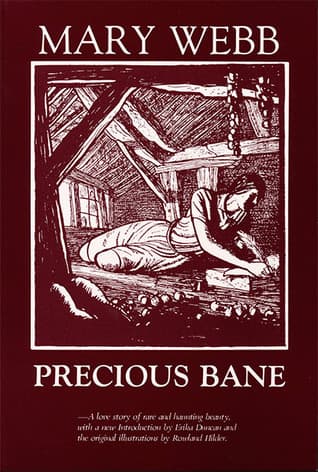
Mary Webb (1998)
Genre
Historical Fiction / Romance
Reading Time
12 Minutes
Key Themes
See below
Sign in to track this book
In 19th-century Shropshire, a disfigured woman with a luminous spirit navigates poverty, ambition, and suspicion to find love and true beauty.
Prue Sarn tells of her birth with a hare-lip, a mark that makes her an outcast and an object of fear in her Shropshire village. Her mother, gentle but submissive, struggles with farm life and her husband's harshness. Prue's older brother, Gideon, is ambitious and controlling, set on escaping poverty. He sees Prue's disfigurement as a curse but also as something that will keep her focused on work. The family lives a hard, isolated life. Prue finds comfort in nature and quietly observes the world, often feeling the sting of others' cruelty and suspicion.
Gideon Sarn, driven to gain wealth and become a 'gentleman farmer,' makes a deal with Prue. He promises that if she does not marry and dedicates her life to working on the farm, he will leave her a large inheritance. Prue, wanting acceptance and a place in the world, agrees. She sees this as her only path to security and a way to make up for her perceived flaw. This agreement solidifies her role as a worker, a silent partner in Gideon's pursuit of riches, while also creating a deep, if complex, bond between the siblings.
Kester Woodseaves, a skilled weaver and sensitive man, arrives in the community. Unlike others, he sees past Prue's hare-lip, recognizing her inner kindness and her connection to nature. He treats her with respect, sparking a forbidden hope in Prue's heart. Their meetings are brief but meaningful, often involving shared moments of appreciating nature. Kester's presence creates a major conflict for Prue. His gentle affection challenges her promise to Gideon and her acceptance of a loveless life, making her question her sacrifice.
Gideon becomes engaged to Jency Beguildy, a beautiful but flighty girl from a wealthier family. His ambition grows, and he becomes more ruthless in his pursuit of money, often resorting to dishonest dealings and exploiting his workers. His treatment of Prue becomes harsher; he sees her as a tool for his gain and resents any distraction from her duties. He forbids her from seeing Kester, fearing it will jeopardize his plans. Jency, at first charmed by Gideon, begins to see his cruel nature, especially in how he treats Prue, causing her to doubt their future.
The local community is very superstitious, especially about the 'water-bane,' a belief that a drowned person's spirit can bring bad luck. When a local man drowns, fear grows, and Prue, with her disfigurement and quiet manner, becomes an easy target for accusations of witchcraft. This fear further isolates her, strengthening her feeling of being an outsider. Gideon, though not superstitious, uses the community's fear to his advantage, further controlling Prue and ensuring her dedication to his plans, as she has no other refuge.
Jency Beguildy grows increasingly unhappy with Gideon's possessive and cruel nature. He treats her not as a loved one but as another possession, a way to raise his social standing. He is abusive and controlling, demanding her complete obedience. Jency discovers Gideon's dishonesty and his true character, realizing his deep greed and the emptiness of his promises. Her disillusionment leads her to seek comfort elsewhere, eventually confiding in others and revealing Gideon's true nature, which sets the stage for their engagement's tragic end.
At a local fair, Prue meets Kester Woodseaves. Amidst the crowd, Kester boldly declares his love for her, seeing her goodness and beauty despite her physical flaw. He wants to marry her and build a life together, offering her a future free from Gideon's control and the village's scorn. This declaration is a turning point for Prue, breaking her acceptance of a loveless life and igniting a strong conflict between her vow to Gideon and her own desire for love and happiness. It also exposes her to Gideon's anger.
When Gideon learns of Kester's proposal and Prue's growing affection for him, he is filled with rage. He sees Prue's possible marriage as a betrayal of their pact and a direct threat to his financial goals. He abuses her physically and emotionally, trying to force her back into submission. However, Prue, made brave by Kester's love and her own desire for freedom, finds the courage to defy him. This confrontation marks a turning point in their relationship, as Prue sheds her passive acceptance and begins to assert her own will, challenging Gideon's absolute control.
Overwhelmed by Gideon's cruelty and the public shame of their broken engagement, Jency Beguildy, unable to bear her sorrow, takes her own life by drowning herself in the mere. Her death shocks the community, and suspicion immediately falls on Gideon. This tragic event shows the full extent of Gideon's ruthless and selfish character, revealing the devastating results of his actions. It also increases the community's animosity towards him and further isolates him, bringing him closer to his downfall.
Angered by Jency's death and Gideon's long history of exploitation and cruelty, the villagers form an angry mob. They believe Gideon is responsible for Jency's death. Fueled by superstition and a desire for justice, they pursue him with violent intent. Gideon, cornered, meets a brutal end at their hands, drowned in the same mere where Jency died. This dramatic climax is a stark punishment for his sins, showing the destructive power of unchecked greed and the community's refusal to tolerate such malice.
With Gideon's death, Prue is finally free from her brother's control and their binding vow. She inherits the farm, but more importantly, she gains the freedom to choose her own path. Kester Woodseaves, steadfast in his love, remains by her side. He reaffirms his commitment to her, seeing her not for her disfigurement but for the resilient woman she is. Their love, forged in hardship, promises a future of peace, acceptance, and true connection, allowing Prue to finally embrace happiness and her true self.
Prue and Kester begin their life together, making the farm a place of harmony and kindness, a stark contrast to Gideon's greedy rule. Prue, no longer burdened by shame or obligation, finds her voice and her place. Kester's love provides a sanctuary where her spirit can grow. Their union symbolizes the triumph of love, compassion, and natural beauty over human cruelty. They build a life rooted in respect for nature and each other, embodying quiet strength and lasting hope for the future.
The Protagonist
Prue transforms from a silent, subjugated figure to a woman who defiantly claims her own happiness and freedom, embracing love despite her perceived flaws.
The Antagonist
Gideon's relentless pursuit of wealth and power escalates into extreme cruelty and dishonesty, ultimately leading to his violent demise at the hands of the community he exploited.
The Supporting
Kester remains consistently kind and loving, serving as a catalyst for Prue's growth and eventual freedom, ultimately building a life of peace and compassion with her.
The Supporting
Jency's initial hope and attraction to Gideon devolve into despair and ultimately lead to her tragic suicide, exposing Gideon's true cruelty.
The Supporting
Mrs. Sarn remains a static character, embodying the quiet suffering and resignation of many women of her time, unable to escape her circumstances.
The Supporting
Beguildy moves from cautious acceptance of Gideon to bitter grief and a thirst for vengeance after his daughter's tragic death.
The Supporting
The Old Woman remains a static character, serving as a repository of local wisdom and superstition, reflecting the community's traditional beliefs.
The Supporting
The villagers' collective attitude shifts from initial suspicion and fear towards Prue to admiration for Gideon's ambition, then to a vengeful mob enacting justice against him.
The novel explores the difference between physical appearance and inner worth. Prue's hare-lip makes her 'ugly' to society, leading to ostracism and suspicion, yet she has deep inner kindness and spiritual depth. In contrast, Gideon, though physically attractive, has an inner ugliness shown through his greed and cruelty. Kester Woodseaves is the only one who sees past the surface, recognizing Prue's inherent beauty. The theme challenges judgments based on looks and champions the beauty of character and spirit.
“For my face was a-blighted, and the folk held it for a sign of evil, and I was feared of them, and they of me.”
Gideon Sarn's greed for money and land drives the story, showing how materialism can corrupt and destroy. His ambition leads him to exploit his family, cheat his neighbors, and commit cruel acts that result in tragedy and his own violent death. The novel shows greed not just as a moral failing but as a force that separates people from humanity and nature, stripping them of empathy and leading to their downfall. It contrasts Gideon's destructive pursuit with Prue's quiet appreciation for natural wealth.
“For money was his god, and he worshipped it with a cruel heart.”
The isolated Shropshire community is full of old superstitions, especially about disfigurements, witchcraft, and 'water-bane.' This theme shows how fear and irrational belief shape social interactions and personal fates. Prue's hare-lip makes her a target of superstitious fear, while Jency's drowning is immediately blamed on a curse, leading to mob violence against Gideon. The novel contrasts this with Kester's more rational and empathetic view of the world, suggesting that compassion and understanding are better than blind adherence to old fears.
“The folk held it for a sign of evil, and I was feared of them, and they of me.”
Nature is a powerful force in 'Precious Bane,' acting as both a setting and a presence. The Shropshire landscape, with its mere, fields, and forests, reflects the moods and fates of the characters, often mirroring their kindness or violence. For Prue, nature is a source of comfort, spiritual connection, and beauty, a refuge from human cruelty. For Gideon, the land is only a resource to be used for profit. The novel emphasizes humanity's deep connection to the natural world and the consequences of either honoring or abusing it.
“The mere was a living thing to me, with all its secrets and its memories.”
While not about traditional religious redemption, the novel explores overcoming past suffering and finding peace. Prue's journey is one of self-acceptance and freedom from her disfigurement and Gideon's control. Kester's steady love offers her a form of redemption, allowing her to forgive herself and embrace a future free from shame. Gideon, however, finds no redemption; his actions lead only to destruction. The theme suggests that true redemption comes through love, kindness, and breaking free from oppressive forces, rather than through material gain.
“But Kester... he did not mind my hare-lip, but said it was a mark of my being special, and that he loved me for it.”
Told through Prue's unique and introspective voice.
The story is narrated entirely from Prue Sarn's perspective, using her distinctive, archaic dialect. This allows the reader deep insight into her thoughts, feelings, and the profound impact of her disfigurement and the surrounding superstitions. Her voice provides a subjective, intimate, and often poetic portrayal of the harsh realities of her life, her observations of nature, and her slow awakening to love and self-worth. This narrative choice fosters empathy and grounds the fantastical elements in a human, relatable experience.
Prue's disfigurement as a multifaceted symbol.
Prue's hare-lip is a powerful symbol throughout the novel. Initially, it represents her curse, her 'bane,' and the mark of an outcast in a superstitious society. It symbolizes societal prejudice and the superficiality of judging by appearance. However, as the story progresses, it transforms. For Kester, it becomes a unique mark of her specialness, symbolizing the beauty found beyond conventional standards. Ultimately, it represents her journey of overcoming adversity and finding self-acceptance, turning a perceived flaw into a testament to her resilience and the depth of her character.
The lake as a mirror of fate and a place of both beauty and death.
Lullingford Mere is a significant symbolic setting. It is a place of natural beauty and solace for Prue, representing peace and reflection. However, it also embodies the darker, more mysterious aspects of nature and fate. It is associated with the 'water-bane' superstition and ultimately becomes the site of Jency's suicide and Gideon's violent death, serving as a silent witness to tragedy and retribution. The mere reflects the duality of life and death, beauty and danger, and the inescapable forces of nature and human consequence.
The binding agreement between Prue and Gideon.
The pact between Prue and Gideon, where Prue promises to forgo marriage and work for him in exchange for an inheritance, is a crucial plot device. It establishes Gideon's control over Prue and sets up the central conflict of her loyalty versus her desire for love. This vow represents the societal and familial pressures that limit women's choices and the oppressive power of ambition. Prue's eventual breaking of this pact signifies her liberation and journey towards self-determination, making her defiance against Gideon even more powerful.
Ready to see how well you understood this book? Take our interactive quiz with 10 questions.
Biography coming soon.







