“The real power isn't in the superpowers, it's in the friendship.”
— Daniel learns the true strength of the group.

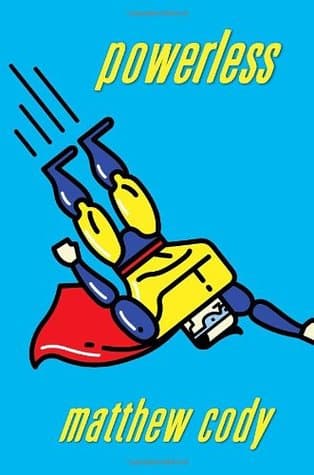
Matthew Cody (2009)
Genre
Fantasy / Children's / Mystery / Science Fiction / Young Adult
Reading Time
277 min
Key Themes
See below
Sign in to track this book
In a town where children secretly wield extraordinary powers that vanish on their thirteenth birthday, a new kid named Daniel might be the key to unraveling a mystery tied to a WWII comic book and a memory-stealing villain.
Twelve-year-old Daniel Corrigan moves to the seemingly ordinary town of Noble's Green with his mother, who is studying the local meteor shower. He quickly encounters strange occurrences: a girl, Molly, who seems to fly, and another boy, Eric, who vanishes and reappears. Daniel soon learns the truth from his new friends: Noble's Green is filled with children who develop superpowers, like Kenji (electricity), Molly (flight), and Eric (invisibility). However, there's a dark secret: on their thirteenth birthday, these powers disappear, along with all memory of ever having them. This phenomenon has left a trail of former superkids who now live mundane lives, unaware of their pasts, including Molly's older brother, Kyle.
Daniel, the only 'powerless' kid who knows the secret, becomes an asset to the superkids. They want to find out why their powers vanish and how to stop it. Their investigation leads them to a rare, World War II-era comic book called 'Fantastic Futures,' featuring the first superhero, Johnny Noble, who was also from Noble's Green. The comic seems to hold clues to their situation, particularly regarding a green-flamed substance called 'Witch Fire' and a hidden 'Shroud cave.' The superkids believe Johnny Noble might have faced a similar challenge or held the key to understanding their powers.
Following clues from the comic book and local legends, the children venture into the woods, eventually finding a hidden cave—the Shroud cave. Inside, they encounter the 'Shroud,' a shadowy, energy-absorbing entity that feeds on the children's powers and memories, causing their abilities to disappear on their thirteenth birthday. The Shroud is powered by the 'Witch Fire,' a mysterious green energy source from a fragment of the meteor that struck Noble's Green decades ago. The Shroud tries to drain their powers, but the children manage to escape, realizing the danger they face.
As the superkids continue their investigation, Daniel begins to feel strange connections to the town's history and the meteor. He realizes he has a unique ability: he can temporarily 'borrow' other kids' powers by touching them, though this ability also causes him intense pain. This revelation makes him question his own identity and his role in Noble's Green. The superkids deduce that the meteor strike in 1941 not only brought the Witch Fire but also created a strange energy field that grants powers to children born nearby, with Daniel being a rare exception who can interact with these energies differently.
Through further investigation, the superkids learn that Johnny Noble, the original superhero, was not just a comic book character but a real person—a boy named Jonathan Noble. They discover that the Shroud is actually Jonathan's younger brother, Walter, who was exposed to the Witch Fire and transformed into the energy-absorbing entity. Walter, as the Shroud, has been inadvertently protecting himself by draining the memories and powers of other superkids, a subconscious act of self-preservation fueled by the Witch Fire and his own loneliness. Johnny Noble had tried to stop him but failed.
Realizing the Shroud is Walter, the children understand that simply destroying him might not be the answer, especially if there's a way to save his humanity and the lost memories. They develop a plan: Daniel, with his unique ability to absorb and channel powers, will act as a conduit, while the other superkids will combine their abilities to create a focused burst of energy. Their goal is to overload the Shroud's absorption capacity, hoping to separate Walter from the Witch Fire's influence and restore his original self, thereby stopping the memory drain on other superkids.
The superkids return to the Shroud cave for a final confrontation. Daniel, enduring immense pain, channels the combined powers of Molly (flight), Kenji (electricity), Eric (invisibility), and other superkids. He directs this concentrated energy towards the Shroud. The battle is fierce, with the Shroud attempting to drain Daniel's borrowed powers and the memories of the other children. The Witch Fire flares dangerously, threatening to consume them all. Daniel pushes past his limits, using his unique connection to the powers to create a powerful surge.
The combined power channeled through Daniel proves too much for the Shroud. The entity is overwhelmed, and the Witch Fire within it is contained. Walter, the boy who became the Shroud, is separated from the parasitic energy, returning to his human form, though weakened and disoriented. The children realize that the meteor's energy is not inherently evil; it simply transforms those it touches, and Walter's transformation was an accident. The memory-loss effect is reversed for those who haven't yet turned thirteen, and the full scope of Noble's Green's history, including Johnny Noble's attempts to save his brother, becomes clear.
With Walter freed and the Witch Fire contained, the immediate threat is over. The superkids' powers no longer vanish on their thirteenth birthday, and they retain their memories. Walter, though still recovering, begins to heal. Daniel, having played an important role, realizes his 'powerlessness' was actually a unique ability to understand and bridge the gap between the powered and unpowered worlds. He becomes a leader among the superkids, using his empathy and strategic thinking to guide them. The town of Noble's Green, though still holding its secrets, is now a safer place for its extraordinary children.
The Protagonist
Daniel transforms from a curious outsider to a vital leader, embracing his unique 'powerless' ability as a strength.
The Supporting
Molly struggles with the fear of losing her powers but ultimately finds strength in unity and hope for the future.
The Supporting
Kenji learns to focus his impulsive energy for the greater good, becoming a more disciplined hero.
The Supporting
Eric gains confidence in his unique abilities and finds his voice within the group.
The Antagonist
Walter is transformed from a monstrous entity back into a human, finding redemption and a chance for recovery.
The Mentioned
Jonathan's story is primarily historical, serving as a guide for the current generation of superkids.
The Supporting
Kyle's arc is largely symbolic, representing the loss that the superkids fear.
The Supporting
Her arc is static, her role primarily to facilitate Daniel's presence in Noble's Green.
The novel explores how powers, or the lack thereof, shape a child's identity. The superkids define themselves by their abilities, leading to a crisis of self when they face losing them. Daniel, initially 'powerless,' struggles to find his place but ultimately discovers a unique identity linked to his ability to channel others' powers. The tragic story of Walter Noble, who loses his human identity to become the Shroud, further shows this theme. The children's journey is about accepting who they are, with or without powers, and understanding that heroism comes from within.
“He was the only one who didn’t have a power, and yet, he was the only one who could truly understand all of them.”
A central theme is the loss of powers and, more significantly, the memories associated with them. The superkids live under the constant dread of their thirteenth birthday, which erases their past. This theme is seen in Kyle, Molly's older brother, who has no recollection of his time as a superkid. The children's quest is driven by the desire to prevent this memory loss, showing the importance of personal history and the fear of losing a fundamental part of oneself. The Shroud, Walter, is also a victim of a different kind of memory loss, trapped by his transformation.
“It wasn't just losing the power. It was losing everything that went with it. Every memory. Every moment.”
The book examines what it means to be a hero. The superkids initially use their powers for secret good deeds, but their heroism is tested when they face a genuine threat that requires self-sacrifice and teamwork. Daniel, despite being 'powerless,' proves to be the most heroic, using his intellect and unique channeling ability to save his friends. The narrative questions the idea that heroism is solely about powers, emphasizing courage, empathy, and the responsibility that comes with extraordinary abilities. Johnny Noble's past actions also inform the children's understanding of heroic duty.
“Maybe being powerless wasn't about being weak. Maybe it was about being strong enough to carry everyone else's.”
The novel explores power in various forms: the abilities of the superkids, the destructive potential of the Witch Fire, and Daniel's unique channeling skill. It questions whether power is a gift or a curse, and how it can corrupt or empower. The Shroud's existence shows how power, when uncontrolled or misunderstood, can lead to isolation and unintended harm. The superkids learn that true power is not just in their abilities, but in their unity, intelligence, and willingness to cooperate, ultimately redefining what 'power' means in Noble's Green.
“The meteor hadn't just given them gifts; it had left a monster, too.”
The bonds of friendship among Daniel, Molly, Kenji, and Eric are important to their success. Their shared secret and common goal create a strong sense of community and loyalty. Daniel, as the outsider, is welcomed into this group, and their combined strengths and support enable them to face the Shroud. The theme shows the importance of collaboration over individual prowess, demonstrating that even the most extraordinary challenges can be overcome when friends trust and rely on each other. The children's collective effort to save their memories reinforces the value of their shared experiences.
“They were a team, more than just friends. They were the only ones who knew.”
A vintage comic book providing crucial historical clues to the town's secrets.
The 'Fantastic Futures' comic book, featuring the original superhero Johnny Noble, serves as a vital plot device. It acts as an in-world artifact that provides historical context and critical clues about the origins of the powers, the Witch Fire, and the Shroud. The children's interpretation of its pages guides their investigation, allowing them to piece together the town's hidden history and understand the true nature of Walter Noble. It bridges the past and present, making an old story relevant to the children's current predicament.
A ticking clock that creates urgency and raises the stakes for the superkids.
The impending thirteenth birthday, which marks the loss of powers and memories, functions as a powerful ticking clock. This deadline creates immense urgency and high stakes for the superkids, forcing them to act quickly and decisively to find a solution. It fuels their fear and desperation but also their determination, making their quest deeply personal. The deadline ensures constant tension and propels the narrative forward, emphasizing the preciousness of their remaining time with their abilities and memories.
A narrative inversion that makes the protagonist's perceived weakness his greatest strength.
Daniel's initial 'powerlessness' is a clever narrative inversion. Instead of having a traditional superpower, his unique ability to absorb and channel others' powers (albeit painfully) makes him an indispensable conduit. This device highlights that heroism isn't just about flashy abilities but about understanding, connection, and self-sacrifice. His 'powerless' status also allows him to serve as the audience's entry point into the superkid world, making the fantastical elements more relatable. It ultimately defines his unique role as a leader and a bridge between worlds.
The supernatural energy source and its physical manifestation, driving the plot's conflict.
The Witch Fire, a mysterious green-flamed energy, and its source, a fragment of the meteor that struck Noble's Green, are central plot devices. They are the origin of all the powers in the town, but also the catalyst for Walter's transformation into the Shroud. This device introduces both the extraordinary and the dangerous elements of Noble's Green. The children's attempts to understand and control the Witch Fire are crucial to their mission, as it holds the key to both their abilities and the Shroud's power, directly driving the main conflict.
“The real power isn't in the superpowers, it's in the friendship.”
— Daniel learns the true strength of the group.
“Sometimes the most ordinary people are the ones who do the most extraordinary things.”
— Reflecting on the children's hidden abilities.
“We're not just a bunch of kids with powers. We're a team.”
— Molly emphasizes unity among the superpowered children.
“The past has a way of catching up with you, no matter how fast you run.”
— Daniel uncovers secrets about the town's history.
“Fear is the real enemy, not the shadows.”
— Facing the mysterious threat in Noble's Green.
“You don't need superpowers to be a hero.”
— Daniel, without powers, proves his bravery.
“Every secret has a price, and we're about to pay it.”
— The children confront the consequences of their hidden abilities.
“In a town of superheroes, the powerless boy might be the most powerful of all.”
— Daniel's role in solving the mystery.
“Friendship is the one power that never fades.”
— Highlighting the enduring bond among the children.
“The truth is like a puzzle; you have to find all the pieces.”
— Daniel pieces together clues about the disappearances.
“We have to trust each other, or we'll lose everything.”
— The group faces a critical moment of decision.
“Sometimes the bravest thing you can do is ask for help.”
— A character learns to rely on others.
“The shadows aren't just in the woods; they're in our memories.”
— Exploring the psychological aspects of the threat.
“Power isn't about what you can do; it's about what you choose to do with it.”
— A moral lesson about using abilities responsibly.
Ready to see how well you understood this book? Take our interactive quiz with 10 questions.







