“It began not with a bang but a whimper, and then it got worse.”
— Opening line, setting the tone for the protagonist's life and the narrative.

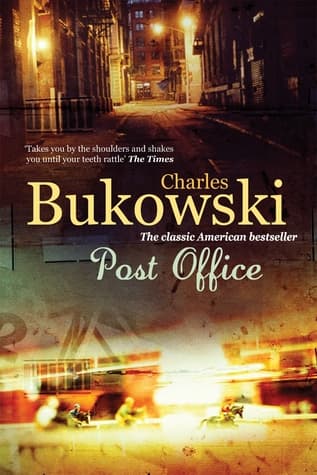
Charles Bukowski (1974)
Genre
Thriller / Mystery
Reading Time
240 min
Key Themes
See below
Sign in to track this book
A hungover poet works twelve years as a mailman, dealing with drudgery, sadistic bosses, and vicious dogs, finding comfort only in women, booze, and the racetrack.
Henry Chinaski, always an outsider and a drinker in Los Angeles, tells how he got a job at the U.S. Post Office by chance. Needing money after being unemployed and drinking a lot, he applies for a temporary mail carrier job, expecting to be turned down. To his surprise, he is hired. His initial training is disorganized and disappointing, with unskilled instructors and confusing bureaucracy. Chinaski quickly sees that the job is exhausting, physically demanding and mentally draining, but he keeps at it because he has to, fueled by cheap wine and the small hope of earning enough to live and support his love for horse racing.
Chinaski's daily life as a mail carrier is a series of bad experiences and shames. He fights aggressive dogs, walks on difficult ground, and deals with bad weather, all while carrying heavy mailbags. His routes are often poorly planned, leading to long hours and tiredness. He often argues with his supervisors, especially the cruel Mr. Stone, who seems to enjoy making Chinaski's life hard. Chinaski's defiance and dislike for authority often get him into trouble, but he finds comfort in his after-work routines of drinking and gambling, which offer a temporary escape from the dullness. He sees his coworkers slowly decline, many stuck in the same boring routine.
Chinaski meets many strange people at the Post Office. He sees the different ways his fellow carriers and clerks cope with madness and giving up. There is the always angry Mr. Stone, the overly eager Mr. Jaffe, and others who either accept the system or are slowly destroyed by it. Chinaski stays distant and cynical, finding most of his colleagues either sad or annoying. He often argues with supervisors, which often leads to punishments or threats of being fired. His only real connection seems to be the shared misery and dark humor that sometimes appear among the more rebellious employees.
Chinaski meets Joyce, a woman who also likes alcohol and dislikes typical life. Their relationship is passionate and unstable, marked by heavy drinking, frequent arguments, and moments of gentle, if chaotic, understanding. Joyce is as unconventional as Chinaski, and their shared experiences of poverty and being outsiders connect them. They commit small crimes, like shoplifting, to get more money and add excitement to their otherwise bleak lives. Despite the disorder, Joyce gives Chinaski a temporary feeling of companionship and shared rebellion against the ordinary world, offering a brief break from the loneliness of his postal life.
After years as a mail carrier, Chinaski moves to a clerk position, hoping for an easier time. However, the clerk's job, mostly working the night shift, is just as exhausting. He sorts mail endlessly, dealing with different sets of unskilled supervisors and equally unhappy coworkers. The indoor environment offers no escape from the boredom, and the repeated nature of the work makes him more hopeless. He continues his heavy drinking and gambling, using them to cope. The change in roles only confirms his belief that the Post Office is a trap, a symbol of human waste and inefficiency.
Throughout his postal career, Chinaski's life outside of work centers on three main things: women, booze, and horse racing. He has various relationships, some short and some more important, like his time with Joyce. Alcohol is always with him, dulling the pain of his life and fueling his short moments of happiness or sadness. The racetrack is his safe place, where he can dream of a big win that might free him from the Post Office. These habits are not just pleasures but necessary ways to survive, giving him temporary relief and a sense of purpose beyond the postal routine.
After leaving the Post Office for a while, Chinaski cannot find other work and has to go back, again as a clerk. This second time is even harder than the first. The years of abuse, from the job and his lifestyle, start to hurt his mental and physical health. He gets worse headaches, anxiety, and a deep feeling of hopelessness. The repeated work and the oppressive atmosphere push him close to a nervous breakdown. He becomes more cynical and rebellious, but his defiance now has real suffering in it.
Chinaski's health keeps getting worse, with constant headaches, dizziness, and a general feeling of being unwell. He knows he cannot stand another day at the Post Office. One morning, getting ready for work, he simply decides he cannot go in. He calls in sick, then packs a small bag, and drives away, leaving the Post Office and his twelve years of service behind him forever. This final act of defiance is not a victory but a desperate escape from a life that was slowly killing him. He does not know what he will do next, but the feeling is one of great relief and freedom, even if it is into an unknown future.
The Protagonist
Chinaski begins as a reluctant, resentful postal worker and ends as a physically and mentally broken man who finally escapes the institution, finding a fragile sense of freedom.
The Supporting
Joyce remains a consistent character throughout her appearances, serving as a mirror and companion to Chinaski's lifestyle.
The Antagonist
Mr. Stone remains a constant, oppressive force, never changing in his antagonism towards Chinaski.
The Supporting
Jaffe serves as a static character, representing a particular type of bureaucratic personality.
The Supporting
Betty appears for a short period, serving to illustrate Chinaski's romantic life outside of the Post Office.
The Supporting
Henderson's character is static, serving as an example of the long-term effects of postal work.
The Mentioned
The mailbags' symbolic weight remains constant, representing the unchanging burden of Chinaski's job.
The novel explores the theme of alienation through Henry Chinaski's experience in the U.S. Postal Service. Chinaski feels deeply separated from his coworkers, supervisors, and the social norms that value work and conformity. He sees the Post Office as a dehumanizing machine, and his job as meaningless, leading to a deep sense of disappointment with life and work. This alienation is a main part of his character, driving him to rely on alcohol and gambling as ways to escape a world he feels no part of.
“It began as a mistake.”
A main theme is the exhausting and dehumanizing effect of repetitive, unsatisfying work. Bukowski clearly shows the Post Office as a bureaucratic hell where people are reduced to parts of a machine, their identities removed by the monotonous tasks and oppressive supervision. Chinaski's physical exhaustion, mental breakdown, and his colleagues' various forms of madness show how the work drains life and spirit, leaving little room for personal satisfaction or dignity. The Post Office is a symbol for the larger system that uses and discards its workers.
“The post office was a cross between a slave ship and a lunatic asylum.”
Chinaski's life is about his efforts to escape the dullness of his job through alcohol, gambling, and women. These habits, while offering temporary comfort, also lead to self-destruction. His heavy drinking and careless behavior are both a rebellion against his situation and a way to numb the pain. The racetrack, with its promise of a big win, represents a dream of freedom from his postal prison. This theme shows the ways people cope when stuck in bad situations, even if those ways are ultimately harmful.
“I was born to drink and gamble. And I could do both well.”
Chinaski often rebels against authority figures, especially his Post Office supervisors. His defiance, whether through sarcastic comments, disobedience, or simply refusing to follow rules, is a core part of his character. This rebellion is not always effective, often leading to punishment, but it is important to his sense of self and his refusal to be completely broken by the system. It is a useless yet constant struggle against the oppressive power structures that try to control and lessen him, representing a small act of personal freedom.
“They were trying to break me. They had been trying to break me for twelve years.”
Underneath Chinaski's struggles is a deep sense of the absurd. The Post Office itself, with its illogical rules, unskilled management, and pointless tasks, becomes a symbol of life's inherent lack of meaning. Chinaski often reacts to the ridiculousness around him with dark, cynical humor, seeing the inherent silliness in human efforts. This theme suggests that life, especially a life limited by social expectations and ordinary labor, is ultimately without inherent purpose, and one must find meaning or simply endure the absurdity.
“It was like working in a morgue. Except the bodies were still walking around.”
Provides direct access to Chinaski's cynical inner world
The entire novel is narrated from Henry Chinaski's first-person perspective. This device is crucial for immersing the reader in his raw, unfiltered thoughts, observations, and cynical worldview. It allows for a direct, intimate connection with his struggles, frustrations, and dark humor, making his experiences feel immediate and authentic. The reader experiences the dehumanizing aspects of the Post Office directly through his eyes, fostering empathy and understanding for his unique form of rebellion and despair.
Used to highlight the absurdity and dehumanization of the Post Office
Bukowski employs satire and dark humor to critique the bureaucratic inefficiencies and the soul-crushing nature of the U.S. Postal Service. Chinaski's sarcastic commentary, his observations of his bizarre coworkers, and the ridiculous situations he finds himself in are often presented with a cynical wit. This humor serves not to lighten the mood entirely, but to underscore the absurdity and tragicomedy of his existence, making the grim realities of his job more palatable while simultaneously emphasizing their inherent meaninglessness.
Represents the physical and psychological burden of labor
The heavy, cumbersome, and often waterlogged mailbags carried by Chinaski are a potent symbol throughout the novel. They represent the physical toll of his labor, the weight of his responsibilities, and the crushing burden of his unfulfilling job. His constant struggle with the mailbags mirrors his broader struggle against the oppressive system of the Post Office and the weight of his own existence. They are a tangible manifestation of the drudgery and the inescapable nature of his work.
Mirrors the repetitive nature of Chinaski's work and life
The narrative style often uses repetition to reflect the monotonous and cyclical nature of Chinaski's job. Descriptions of endless mail sorting, repetitive routes, and the daily grind of waking up with a hangover only to face another day at the Post Office reinforce the theme of dehumanizing labor. This stylistic choice immerses the reader in Chinaski's experience, making them feel the oppressive tedium and the lack of change in his life, which ultimately contributes to his breakdown and final escape.
“It began not with a bang but a whimper, and then it got worse.”
— Opening line, setting the tone for the protagonist's life and the narrative.
“That's the problem with the world, it's full of people who are too busy doing things they don't want to do, and not enough people doing things they do want to do.”
— Chinaski reflecting on the general human condition and his own dissatisfaction.
“The post office was a great equalizer. There was no escaping it. It was like life itself.”
— Chinaski's observation about the universality of the Post Office's grind and its reflection of broader existence.
“I was a man who had met life on its own terms, and it had been a son of a bitch.”
— Chinaski's self-assessment of his struggles and his confrontational relationship with life.
“The world was full of people who were doing things they hated, and I was one of them.”
— Chinaski's internal monologue about his job at the Post Office and his shared misery with others.
“Sometimes you just have to pee in the sink.”
— A crude but pragmatic statement, reflecting Chinaski's defiance of convention and his raw survival instincts.
“I was just another bum in the world, a postal clerk who couldn't keep his mouth shut.”
— Chinaski's humble self-description, highlighting his low social status and his rebellious nature.
“The only thing worse than not having a job was having a job.”
— A cynical observation on the futility of work and the trap of employment.
“It was a mistake to be born.”
— A stark and pessimistic statement, expressing a deep sense of nihilism and regret.
“You could have a million dollars and still be lonely.”
— Chinaski reflecting on the superficiality of wealth and the enduring human condition of loneliness.
“I hated the job, but I had to eat, and that was the terrible part.”
— A simple, brutal explanation of the economic necessity that traps him in his hated job.
“Some people never go crazy, what truly horrible lives they must lead.”
— A darkly humorous and provocative statement on the nature of sanity and the pressures of life.
“There are worse things than being alone. Sometimes it takes a long time to realize this, and most of the time when you do, it's too late.”
— Chinaski's reflection on the pain of bad relationships versus the solitude he often experiences.
“My life was a constant struggle between my desire to be a writer and my desire to eat.”
— A direct summary of the central conflict in Chinaski's life, echoing Bukowski's own struggles.
Ready to see how well you understood this book? Take our interactive quiz with 10 questions.
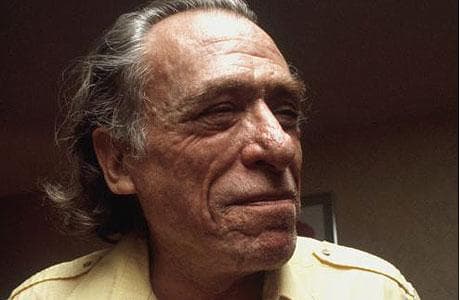
Charles Bukowski was a prolific German-American poet and novelist, often celebrated for his raw, autobiographical style. His notable works include 'Notes of a Dirty Old Man,' 'Factotum,' and 'Ham on Rye,' which vividly depict the gritty realities of working-class life and his own struggles with alcohol and poverty. Bukowski's unflinching prose and anti-establishment themes have cemented his status as a counter-culture icon.







