“There are some wounds that can never be healed, only endured.”
— Gabriel reflects on the enduring pain of loss.

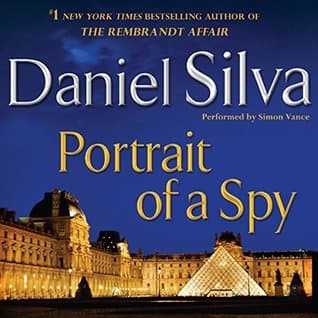
Daniel Silva (2011)
Genre
Thriller / Creativity / Mystery
Reading Time
900 min
Key Themes
See below
Sign in to track this book
Haunted by past failures, art restorer and spy Gabriel Allon must recruit the elusive daughter of an old enemy to infiltrate a global terror network, navigating the difficult intersection of art, espionage, and radical Islam.
The novel opens with a suicide bombing in London's West End, killing dozens, including a young girl Gabriel Allon had briefly seen. Gabriel, an Israeli art restorer and spy, is haunted by his inability to prevent the attack. He had received a vague warning from an old contact, but it was not enough. Overcome with guilt, Gabriel retreats to his quiet life in Venice with his wife, Chiara, focusing on restoring a Bellini altarpiece. He believes his days as an active field agent are behind him, wanting a peaceful existence away from the shadows and violence. However, the world has other plans for him as the perpetrators of the London attack remain at large, and a new threat begins to emerge.
Despite wanting retirement, Gabriel is summoned to Washington D.C. by Adrian Carter, the new Director of the CIA's Counterterrorism Center. Carter reveals that the London bombing is linked to a new terror network led by a charismatic, American-born Yemeni cleric named Sheikh Khalid al-Husseini, a former CIA asset gone rogue. Carter, along with Graham Seymour of MI6, convinces Gabriel that his skills are needed to fight this new threat. Gabriel initially resists, still grappling with the trauma of London, but the scale and audacity of Khalid's network, which operates with secrecy and reach, eventually compel him to accept the mission. He realizes that this is not just another assignment but a personal reckoning with global terror.
Gabriel, along with his team, including Ari Shamron's former aide Uzi Navot and Israeli intelligence operatives, begins to plan a strategy. They learn that Khalid al-Husseini has a fascination with art, especially antiquities, which he uses to fund his operations and project an image of legitimacy. The plan involves using a prominent art dealer as bait to draw out Khalid's financial network and eventually, Khalid himself. They aim to exploit Khalid's vanity and his love for beautiful objects, believing it to be a flaw in an otherwise guarded individual. The initial target for their infiltration is a high-profile auction in London, where a valuable piece of art will serve as the lure.
To execute their plan, Gabriel needs someone with credentials and access to the international art market. He turns to Sarah Bancroft, a reclusive heiress, art collector, and dealer with a past. Sarah is the daughter of Jean-Luc Martel, a French art forger and arms dealer who was once a target of Gabriel's. Gabriel approaches Sarah, who initially resists, wary of her family's history and the dangers of intelligence work. However, after Gabriel appeals to her sense of justice and her unique position, she agrees to become their asset, using her connections and expertise to penetrate Khalid's financial network. Her role is important, as she is the only one who can move between the worlds of high art and clandestine operations.
Sarah Bancroft, under Gabriel's guidance, begins to establish herself as an attractive and knowledgeable dealer of high-value antiquities. In London, she attends a prestigious auction, subtly signaling her availability to those who might be interested in illicit transactions. Her reputation and carefully constructed cover story quickly draw the attention of Khalid's network. She makes initial contact with a financier associated with Khalid, laying the groundwork for a larger deal. The operation then shifts to New York, where Sarah continues to cultivate relationships with individuals suspected of laundering money for Khalid's organization, moving deeper into the world of black market art and terror financing. Gabriel and his team monitor her every move, providing support and analysis from the shadows.
As Sarah goes deeper, she uncovers a link to Saudi Arabia, specifically to a powerful and secretive Saudi prince, and a woman named Layla, who manages Khalid's art acquisitions and financial dealings. Layla, an intelligent and ruthless operative, becomes Sarah's primary contact. The operation escalates in risk when Sarah is invited to a secluded compound in the Saudi desert to negotiate a major art deal directly with Layla, and potentially with Khalid himself. Gabriel, recognizing the danger, prepares his team for an extraction, should things go wrong. The stakes are high, as Sarah is now deep within enemy territory, with only her wits and Gabriel's distant support to protect her.
In the remote Saudi desert compound, Sarah Bancroft finally meets Sheikh Khalid al-Husseini. Khalid, a charismatic yet chilling figure, probes Sarah, testing her knowledge and resolve. Their conversation is a dangerous dance of wits, with Sarah maintaining her cover as a shrewd art dealer while secretly gathering intelligence. She offers him a rare and valuable artifact, a piece carefully selected by Gabriel to appeal to Khalid's specific tastes. The tension is palpable as Khalid expresses his disdain for Western culture while simultaneously indulging in its artistic treasures. Gabriel and his team, monitoring from a distance, are on high alert, ready to intervene. Sarah manages to secure a deal, but her escape from the compound is difficult, narrowly avoiding detection by Khalid's security detail.
Following her experience in the desert, Sarah returns with important intelligence. The information she gathered, combined with other intercepts, allows Gabriel and his team to piece together Khalid's next target: a major financial institution in Washington D.C., intended to be an act of economic terrorism. The attack is planned to be even more devastating than the London bombing, aiming to cripple the global financial system and cause widespread panic. The urgency intensifies, as Gabriel realizes they have a limited time to prevent the catastrophe. Pressure mounts on Gabriel, Carter, and Seymour to act swiftly, using all available resources to thwart the imminent threat and dismantle Khalid's network.
With the target identified, Gabriel orchestrates a multi-agency operation involving Israeli intelligence, the CIA, and MI6. They track Khalid's operatives, identify the specific methods of the planned attack, and mobilize to neutralize the threat. The climax is a tense race against time as Gabriel's team intercepts the terrorists before they can execute their plan. The operation is coordinated, requiring split-second decisions and precise execution. Gabriel, always at the forefront, leads the charge, demonstrating his tactical prowess. The confrontation is violent and dangerous, but the attack is averted, saving countless lives and preventing a global financial catastrophe. The success shows the collaboration and courage of the intelligence community.
While the immediate threat is neutralized and Khalid's network is crippled, Sheikh Khalid al-Husseini himself manages to evade capture, slipping back into the shadows. His escape leaves a sense of unease and the understanding that the fight against terror is never truly over. Sarah Bancroft, having played a dangerous role, retreats from the intelligence world, changed by her experiences. Gabriel Allon, though successful in preventing the attack, is again left contemplating his future. The mission has reaffirmed his unique role, but also the personal cost of his life in the shadows. He returns to Venice, to Chiara and his art, but the peace he seeks remains elusive, knowing that the world will likely call upon him again.
The Protagonist
Gabriel initially seeks retirement and peace but is compelled by duty and guilt to confront a new global threat, ultimately reaffirming his indispensable role in the fight against terror.
The Supporting
From a reclusive art dealer, she transforms into a courageous and indispensable asset, facing extreme danger and emerging forever changed by her experiences.
The Antagonist
He rises from a former CIA asset to a powerful and elusive global terror mastermind, narrowly escaping capture but seeing his network dismantled.
The Supporting
He takes on the immense responsibility of his new role, successfully leading the charge against a major terror threat through strategic collaboration.
The Supporting
He effectively collaborates with international partners to counter a significant terror threat, demonstrating steadfast leadership.
The Supporting
She remains Gabriel's steadfast emotional anchor, providing him with solace and a reason to seek a life beyond espionage.
The Supporting
He continues to be Gabriel's indispensable and loyal right-hand man, executing complex operational tasks with precision.
The Supporting
She serves as a crucial link in Khalid's financial and logistical network, facilitating his terror operations until the network is disrupted.
The Mentioned
Though largely off-stage, his legacy and mentorship continue to influence Gabriel's decisions and the broader strategies of Israeli intelligence.
Dual identity is central, especially for Gabriel Allon, who constantly shifts between his persona as a quiet art restorer and a spy. This internal conflict is a source of both his strength and his torment. Sarah Bancroft also deals with this, moving between her privileged life as an heiress and her dangerous undercover role. The novel explores how these individuals reconcile their public and private selves, and the psychological toll of leading a life of deception. Khalid al-Husseini, an American-born cleric, also embodies a dual identity, bridging the cultural divide he ultimately seeks to destroy.
“He was a ghost in a world of flesh and blood, a man who lived in the shadows and walked among the living, unseen.”
Art is a motif, representing both beauty and a way for illicit activities. Gabriel, as an art restorer, mends broken masterpieces, reflecting his desire to fix a fractured world. However, art also becomes a tool for deception and a way to fund terror. Sheikh Khalid's fascination with antiquities, despite his anti-Western ideology, shows the universal appeal of beauty and its susceptibility to corruption. The novel uses the art world—its auctions, collectors, and dealers—as a glamorous facade behind which dangerous transactions and espionage take place, blurring the lines between creation and destruction.
“Art was truth, Gabriel always said. But truth could be twisted, distorted, and used for the most unholy of purposes.”
A core conflict for Gabriel Allon is the struggle between his desire for a peaceful, normal life with Chiara and his sense of duty to protect the innocent. Haunted by past failures, particularly the London bombing, he feels a moral obligation to confront evil, even when it means sacrificing his personal tranquility. This theme explores the burden of heroism and the relentless nature of the fight against terror, suggesting that for some, retirement is an impossible luxury. The novel questions whether true peace can ever be achieved when such threats persist.
“The silence of Venice was a balm, but the screams of London still echoed in his mind.”
The novel addresses the changing nature of terrorism, moving beyond state-sponsored acts to a more decentralized, ideologically driven, and globally networked threat. Sheikh Khalid al-Husseini represents this new face, an American-born, media-savvy cleric who uses modern technology and finance to build his network. The narrative shows the challenges intelligence agencies face in combating such a diffused and adaptable enemy, emphasizing the need for innovative strategies and international cooperation. It shows that terror is no longer geographically confined but can strike anywhere, at any time.
“This wasn't the old terror, confined to borders and backed by regimes. This was a virus, airborne and invisible.”
Espionage is depicted as a profession that takes a heavy personal toll on its practitioners. Gabriel's constant internal struggle, his inability to fully escape his past, and the risks he and his loved ones face show this theme. Sarah Bancroft's transformation from a sheltered heiress to a traumatized operative further illustrates the psychological scars left by life in the shadows. The novel portrays the loneliness, the deception, and the constant danger inherent in the world of intelligence, showing that even when missions succeed, the agents themselves are often left changed and broken.
“He lived in the shadows so others could live in the light, but the shadows were slowly consuming him.”
The glamorous art world provides a perfect cover for espionage and a means for illicit financing.
The high-stakes international art market serves as a crucial plot device. Its inherent secrecy, the vast sums of money involved, and the transient nature of its participants make it an ideal environment for clandestine operations and money laundering. Gabriel uses his legitimate profession as an art restorer as a cover, while Sarah Bancroft leverages her expertise as an art dealer to infiltrate Khalid's network. The trade in valuable antiquities and masterpieces becomes the currency through which terror is funded, allowing the narrative to explore the intersection of beauty, wealth, and corruption. The art world provides both the lure and the entry point for the entire operation.
The act of 'portrayal' or 'painting' is used metaphorically for understanding and exposing the enemy.
The title itself, 'Portrait of a Spy,' and the recurring motif of painting and portraiture, serve as a significant device. Gabriel, as an art restorer, is an expert at revealing the true nature beneath layers of paint and grime. This mirrors his work as a spy, where he must strip away deception to reveal the true 'portrait' of his enemies and their plans. The act of creating a 'portrait' of Sheikh Khalid involves meticulously gathering intelligence to understand his motives, methods, and vulnerabilities. The novel suggests that understanding the enemy, like understanding a painting, requires careful observation, analysis, and an appreciation for the hidden depths and intentions.
Gabriel's past failures and traumas drive his present actions and motivations.
Gabriel Allon is a deeply haunted protagonist, a common device in thriller fiction. His past failures, particularly the death of his first family and his inability to prevent the London bombing, serve as powerful motivators. This constant internal torment fuels his relentless pursuit of justice and his willingness to take extreme risks. The device of the 'haunted hero' adds psychological depth, explaining his reluctance to return to the field while simultaneously making his eventual commitment more compelling. It connects his personal suffering to the larger geopolitical conflicts, making the fight against terror a deeply personal crusade for him.
The collaboration between diverse intelligence agencies and an unlikely civilian asset.
The formation of an unlikely alliance is a key plot device. Gabriel, an Israeli agent, works closely with the American CIA (Adrian Carter) and British MI6 (Graham Seymour), transcending national boundaries and political complexities to combat a common enemy. Furthermore, the recruitment of Sarah Bancroft, a civilian with no intelligence background, into such a high-stakes operation is central. This device highlights the necessity of international cooperation and unconventional methods in modern counterterrorism. It also creates dramatic tension as these disparate characters, with their different loyalties and skill sets, must learn to trust and rely on each other to succeed.
“There are some wounds that can never be healed, only endured.”
— Gabriel reflects on the enduring pain of loss.
“The greatest weapon in the war on terror is not a drone or a bomb, but a well-placed source.”
— Gabriel discusses intelligence gathering strategy.
“Sometimes, the only way to find the truth is to create a lie.”
— Gabriel contemplates the necessity of deception in his work.
“Every secret comes with a price, and the longer you keep it, the higher the cost.”
— A character reflects on the burden of hidden information.
“Art is a lie that makes us realize truth, at least the truth that is given us to understand.”
— Gabriel, an art restorer, often connects art and reality.
“The past is never truly dead. It isn't even past.”
— A character grapples with lingering historical impacts.
“Vengeance is a dish best served cold, but justice, sometimes, requires a warmer touch.”
— Gabriel considers the difference between revenge and justice.
“The world is full of monsters, and some of them wear very good suits.”
— Gabriel observes the hidden evil in society.
“Creativity is not just about making something new, but about seeing the old in a new way.”
— Gabriel reflects on his dual roles as artist and spy.
“Fear is a powerful motivator, but hope is stronger.”
— A character confronts a desperate situation.
“The greatest deceptions are often built upon the smallest truths.”
— Gabriel explains the art of constructing a convincing lie.
“There are no easy answers in our line of work, only difficult choices.”
— Gabriel discusses the moral complexities of intelligence operations.
“Silence can be more eloquent than any words, especially when it hides a secret.”
— A character interprets unspoken cues.
“A good painting, like a good operation, requires meticulous planning and flawless execution.”
— Gabriel draws a parallel between his artistic and professional skills.
Ready to see how well you understood this book? Take our interactive quiz with 10 questions.

Daniel Silva is a globally acclaimed author celebrated for his thrilling espionage novels. He is best known for his Gabriel Allon series, which includes international bestsellers like "Portrait of a Spy," "The English Assassin," and "The Unlikely Spy." Silva's meticulous research and complex plots have cemented his reputation as a master of the spy thriller genre.







