“There are some things you cannot learn from a book. You have to feel them.”
— Joan reflects on experiential knowledge versus academic learning.

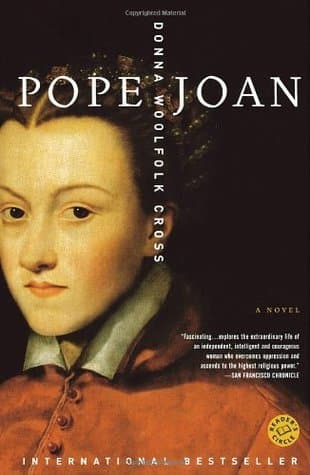
Donna Woolfolk Cross (1996)
Genre
Historical Fiction / Spirituality
Reading Time
1055 min
Key Themes
See below
Sign in to track this book
A brilliant ninth-century woman defies medieval rules, assumes a male identity, and becomes the most powerful person in Christendom: Pope Joan.
Joan is born in 814 A.D. in Ingelheim, a village in the Carolingian Empire, to an English priest, Father Gerold, and a Saxon mother, Gudrun. Her father, a strict and cruel man, believes women should be subservient and uneducated. But Joan shows great curiosity and intelligence from a young age. Despite his rules, she secretly learns to read and write, first by watching and later with help from her older brother, Matthew. Her younger brother, John, is her only true friend; he shares her desire for knowledge and often protects her from their father. The local bishop, a more open-minded man, sees Joan's intelligence. Against her father's wishes, he lets her study basic Latin texts with her brothers, a rare chance for a girl then. This early learning fuels her ambition and sets her apart from other girls.
A Viking raid on Ingelheim leads to the murder of Joan's younger brother, John, and the destruction of their home. In the chaos, Joan's family is separated. Overwhelmed by grief, but also seeing a way to escape the limited life of a woman, Joan makes a big decision. Remembering John's dream of being a scholar, she cuts her hair short, puts on his clothes, and pretends to be 'Brother John Anglicus.' She goes to the monastery of Fulda, where she had met a kind scholar, Brother Odo. Her disguise, at first a way to survive and honor her brother, becomes her ticket to an education and a life of intellectual pursuit, a path completely closed to her as a woman.
As Brother John Anglicus, Joan quickly stands out among the monks at Fulda. Her sharp mind, memory, and desire for learning let her master Latin, Greek, theology, and philosophy quickly. She becomes known for her debates and her ability to recall complex texts. Beyond academics, she also gains a reputation as a skilled healer, using herbal remedies and medical knowledge she learned from her mother and local women. Her kind nature and effective treatments earn her respect, including from the abbot. Despite constant fear of being discovered, Joan thrives in this male world, finding a freedom and purpose she could never have as a woman, all while keeping her secret carefully.
At Fulda, Joan meets Count Gerold, a powerful nobleman. Gerold is immediately drawn to Brother John's intelligence and kindness, and they become close friends. For Joan, this friendship has an unspoken romantic tension. However, a jealous monk, Father Adrian, resents Brother John's popularity and intelligence. Adrian starts to suspect Joan's true identity, noticing subtle feminine traits and inconsistencies. Fearing exposure, which would mean certain death, Gerold helps Joan escape Fulda. They travel together, at first seeking safety, but their time deepens their bond. Joan finds herself more and more conflicted by her growing feelings for Gerold, which she must hide to keep her disguise.
Joan, still disguised as Brother John, eventually goes to Rome, the center of Christendom. Her reputation as a brilliant scholar and skilled doctor goes before her, and she quickly gains favor in the Papal Court. She becomes a respected teacher, a sought-after medical advisor, and a trusted counsel to various cardinals and even the Pope. Her intellect and wisdom are valuable in navigating the complex political and religious world of Rome. Joan sees the corruption, power struggles, and hypocrisy within the Church, but also its potential for good. Her rise is fast and seems unstoppable, driven by her real desire to serve God and humanity, despite the constant struggle of living a lie and hiding her true identity and desires.
Count Gerold, after being away for some time, also arrives in Rome and is reunited with 'Brother John.' Their friendship, already strong, turns into undeniable love. Gerold, at first confused by his strong feelings for a man, is eventually overcome by his emotions. Joan, unable to deny her own love for him, and burdened by her secret, finally tells him her true identity as a woman. Gerold is shocked but accepts and embraces her, their love deepening with this confession. They begin a secret affair, a dangerous relationship that risks everything Joan has achieved and her life, but offers her the only true intimacy and fulfillment she has known outside her intellectual pursuits. This relationship becomes a main conflict for Joan, balancing her public role with her private desires.
After the sudden death of the Pope, a power vacuum occurs. The cardinals, impressed by 'Brother John's' intellect, piety, and diplomatic skills, and unaware of her true gender, elect her as the new Pope. She chooses the name Pope John VIII. Joan's time as Pope is known for wisdom, compassion, and a real commitment to reform. She helps the poor, promotes education, and works to solve conflicts between groups. She becomes a loved and respected leader, bringing peace and stability to the Church. However, the immense pressure of her position, along with the constant threat of exposure and her secret affair with Gerold, takes a toll on her, making her reign a delicate balance between public duty and private life.
Despite extreme care, Joan discovers she is pregnant with Gerold's child. This development causes her panic and despair. A papal pregnancy is an unimaginable scandal, an act that would cost her the papacy and her life, and forever damage the Church. She tries desperately to hide her condition, using loose robes and avoiding public appearances. Gerold, equally terrified for her and their child, tries to plan their escape. The secret pregnancy becomes a ticking time bomb, threatening to expose the deception and shatter the world Joan has built, putting her and her unborn child in danger.
During a traditional Easter procession through the streets of Rome, Joan, weakened and in advanced labor, is suddenly overcome by contractions. In front of cheering crowds, surrounded by cardinals and clergy, she collapses and gives birth to her child in full view of the horrified people. The revelation of a female Pope, and a mother, shocks Rome. The crowd, at first stunned, turns into an angry mob, feeling betrayed. Gerold, trying to protect her, is killed in the chaos. Joan's reign, built on deception, comes to a tragic and violent end, as the truth of her identity is exposed in a devastating way.
After the traumatic public birth and Gerold's death, Joan herself dies shortly after, either from childbirth complications or at the hands of the mob. The Church, desperate to hide the scandal and keep its authority, immediately works to erase all traces of Pope Joan from history. Her name is removed from records, and the route of the procession where she gave birth is forever avoided. Despite these efforts, the legend of Pope Joan continues through whispers and folk tales for centuries. Her story shows her great intellect and resilience, a tragic symbol of a woman who dared to defy the rules of her time and reached the highest power, only to be undone by the very nature she tried to hide.
The Protagonist
Joan transforms from an oppressed girl into a revered scholar and then the most powerful figure in Christendom, ultimately finding love and motherhood before her secret is revealed, leading to her downfall.
The Supporting
Gerold evolves from a respected nobleman to Joan's devoted confidant and lover, ultimately sacrificing his life to protect her.
The Antagonist
Father Gerold remains a static character, representing the unyielding patriarchal forces Joan rebels against throughout her life.
The Supporting
Gudrun remains a consistent source of maternal love and practical wisdom for Joan.
The Supporting
John's character serves as a catalyst for Joan's transformation; his death allows her to assume his identity and pursue a scholarly life.
The Supporting
Matthew's role is primarily to facilitate Joan's early education before he largely disappears from her story.
The Supporting
Brother Odo provides crucial intellectual and spiritual guidance to Joan at Fulda.
The Antagonist
Father Adrian's suspicion and jealousy drive Joan to leave Fulda, thus advancing the plot.
The novel explores the limits placed on women in the 9th century and how far an intelligent woman must go to achieve her potential. Joan's adoption of a male identity is not just a disguise but a full immersion into a different way of being, giving her access to education, power, and respect. Her internal struggle between her female nature and her male persona shows how society constructs gender and the personal cost of denying one's true self. The eventual public revelation of her gender highlights how impossible it is to truly escape societal expectations and the harsh consequences for those who break them, as seen when she gives birth during the procession.
“She was not a woman. She was not a man. She was a scholar. And that was all she wanted to be.”
A main theme is the conflict between seeking knowledge and the strict beliefs of the medieval Church. Joan's great curiosity and brilliant mind often clash with the restrictive, often misogynistic, rules enforced by figures like her father. Her journey through monasteries and the Papal Court reveals both the Church's ability to learn and its resistance to new ideas, especially those that challenge established power structures. Joan's medical practices, based on observation, often go against common superstitions, showing the tension between understanding and blind faith. Her ultimate success as Pope is partly due to her intellect, but her downfall is due to the Church's inability to accept her as a woman.
“Knowledge was a dangerous thing for a woman. But for Joan, it was the air she breathed.”
The novel shows the political schemes, corruption, and power struggles within the medieval Church and secular leadership. From local bishoprics to the Papal Court in Rome, ambition, bribery, and violence are common ways to gain influence. Joan, as 'Brother John' and later Pope, navigates this dangerous world, often using her intellect and moral integrity to rise. However, she also sees the dangers of power, how it can corrupt even those with good intentions. Her own position as Pope, while letting her make positive changes, is built on a lie, showing the compromises often needed to use power within a corrupt system, and how vulnerable even the most powerful are to political plots.
“Rome was a city of God, but also a city of men, and the sins of men were everywhere to be found.”
The book looks at the complexities of faith in a world where religious institutions often have hypocrisy. Joan herself has a deep, real spirituality, finding comfort and guidance in her belief in God. However, she constantly sees the clear difference between the Church's stated ideals and the often-unholy actions of its leaders and members. Priests like her father preach piety while being cruel, and cardinals engage in political intrigue under the guise of divine will. Joan's own life as a 'male' Pope is a profound act of hypocrisy, yet it also comes from a real desire to serve God in a way she could not as a woman. This theme questions the nature of true faith versus organized religion.
“It was not God she questioned, but the men who claimed to speak for Him.”
Joan's adoption of a male identity to access forbidden education and power.
The central plot device is Joan's disguise as 'Brother John Anglicus.' This allows her to transcend the severe gender restrictions of the 9th century, gaining access to education, scholarly pursuits, and ultimately, the highest office in Christendom. The disguise creates constant tension, as Joan lives in perpetual fear of exposure, which would mean immediate death. It also forces her to suppress her true emotions, desires, and even her physical body, creating profound internal conflict. The device highlights the societal barriers faced by women and serves as the engine for all major plot developments, from her entry into Fulda to her eventual papacy and tragic downfall.
Hints and clues throughout the narrative that predict future events or revelations.
The novel employs foreshadowing, particularly regarding the eventual revelation of Joan's gender. Early on, Joan's physical changes during puberty and her internal struggles with her developing body subtly hint at the challenges she will face in maintaining her disguise. The constant fear of exposure, expressed through her internal monologues and observations by other characters (like Father Adrian), builds suspense. The legend of Pope Joan itself, known to the reader, acts as a meta-foreshadowing device, creating an anticipation of how the historical account will unfold within the fictional narrative. This device heightens the dramatic tension and prepares the reader for the inevitable tragic climax.
The contrast between expectation and reality, particularly concerning Joan's gender and role.
Irony is a pervasive device in the novel, most notably situational irony. The greatest irony lies in a woman, disguised as a man, becoming the Pope – the head of the patriarchal Catholic Church. This contrasts sharply with the societal and religious doctrines that strictly forbid women from holding any position of authority, let alone the highest. Further irony arises from 'Brother John's' reputation for wisdom and piety, while secretly living a life of deception and eventually engaging in a forbidden love affair and pregnancy. The fact that the Church, so concerned with purity and truth, is unwittingly led by a woman, underscores the hypocrisy and blind spots within the institution. This device serves to highlight the absurdities and injustices of the era's gender roles.
A specific event that triggers a major turning point in the protagonist's journey.
The Viking raid on Ingelheim, resulting in the death of Joan's younger brother John, serves as the primary catalyst. This traumatic event shatters Joan's existing life and provides her with both the impetus and the opportunity to assume John's identity. Without this tragedy, Joan would likely have remained trapped in the limited life of a medieval woman. The raid propels her onto a completely different path, enabling her to pursue an education and ultimately ascend to power. It is the pivotal moment that transforms her from a girl yearning for knowledge into 'Brother John Anglicus,' setting the entire plot in motion.
“There are some things you cannot learn from a book. You have to feel them.”
— Joan reflects on experiential knowledge versus academic learning.
“God does not make mistakes. He makes women.”
— A defiant thought from Joan, challenging patriarchal interpretations of scripture.
“The greatest prison people live in is the fear of what other people think.”
— Joan's internal monologue about societal expectations and her desire for freedom.
“Ignorance is not innocence, but sin.”
— Joan's early belief in the importance of learning and enlightenment.
“To be a woman in the eyes of God is not a curse, but a blessing.”
— Challenging the prevailing view of women's inferiority in the Church.
“The truth is a river that carves its own path.”
— Joan's contemplation on how truth eventually reveals itself, despite suppression.
“One cannot serve God by denying the mind He gave us.”
— Joan's argument for intellectual inquiry within a spiritual framework.
“Power is a strange beast. It consumes those who wield it and those who are subject to it.”
— Joan's observations on the corrupting nature of power as she rises in the Church.
“The world is not what it seems to be. It is what we make of it.”
— Joan's realization about agency and shaping one's own destiny.
“A mind unfettered by dogma is a mind truly free.”
— Joan's internal struggle with the rigid doctrines of the Church.
“Love, like faith, is a leap into the unknown.”
— Joan's personal reflections on her relationships and her spiritual journey.
“Sometimes, the greatest heresy is to speak the truth.”
— Joan's understanding of the danger in challenging established beliefs.
“The light of knowledge can dispel the darkest shadows of superstition.”
— Joan's dedication to education and combating the ignorance of her era.
“To be truly free, one must first be free within oneself.”
— Joan's ultimate journey towards self-acceptance and inner liberation.
Ready to see how well you understood this book? Take our interactive quiz with 10 questions.
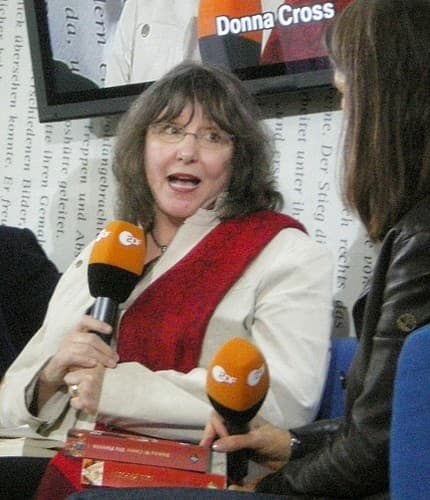
Donna Woolfolk Cross is a critically acclaimed author known for her meticulously researched historical fiction. Her most famous novel, "Pope Joan," is an international bestseller that explores the legend of a woman who allegedly disguised herself as a man to become pope. Cross's work is celebrated for its compelling narratives and deep dives into historical periods.







