“The camera was not an impartial observer, it was a participant, and a very active one at that.”
— Discussing the role of media in shaping public perception and events.

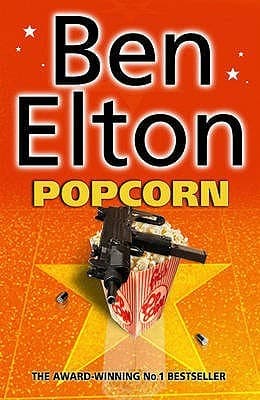
Ben Elton (1996)
Genre
Literary Fiction / Thriller / Mystery
Reading Time
360 min
Key Themes
See below
Sign in to track this book
A nihilistic spree killer kidnaps a self-important Hollywood director, forcing him to confront the real-world consequences of his violent art as their hostage crisis becomes a twisted, live-broadcasted spectacle.
Bruce Delamitri, a successful but morally ambiguous Hollywood director, prepares for his latest film's premiere, 'Ordinary Americans', a violent movie about a couple on a killing spree. Critics say his work glorifies violence and desensitizes audiences, but Bruce argues his art reflects society, it does not cause violence. He gets an Oscar nomination, which further fuels the debate around his work. His personal life is a mess: his wife, Farrah, is tired of his self-absorption, and his relationships are superficial, based on his celebrity. Bruce thinks he is an intellectual provocateur, unaware of his cinematic creations' real-world impact.
Bruce does not know that the 'Mall Murderers', Wayne and Scout, a young, Bonnie and Clyde-like couple responsible for a series of seemingly motiveless killings across the country, are heading to Los Angeles. They are obsessed with Bruce Delamitri and his films, especially 'Ordinary Americans', which they see as a guide for their actions. Wayne, the charismatic and manipulative leader, believes Bruce's movies provide a philosophical reason for their violence. He argues that society is corrupt and their actions are a form of artistic expression, similar to Bruce's own defenses. Scout, though more hesitant, is under Wayne's influence, caught between her love for him and her growing unease with their increasing brutality.
On the night of the Academy Awards, where Bruce Delamitri is nominated, Wayne and Scout violently invade his lavish Hollywood mansion party. They burst in, heavily armed, taking Bruce, his estranged wife Farrah, his producer Karl, and his mistress Brooke, along with other guests, hostage. The couple wants to confront Bruce directly, to make him acknowledge his responsibility for their actions, and to make him live out the 'art' he creates. They see this as the ultimate performance art, a real-life re-enactment of his cinematic violence, complete with a live television broadcast they plan to arrange.
When news of the hostage situation breaks, the media gathers at Bruce's mansion, turning the crisis into a national spectacle. Wayne, enjoying the attention, demands live television coverage, which authorities, under pressure, provide. He uses the broadcast to explain his twisted philosophy, claiming Bruce's films inspired him and that his violence extends Bruce's art. The lines between reality and entertainment blur as millions watch, captivated by the drama. Bruce, initially terrified, slowly sees an opportunity for self-promotion, even as his life is in danger. This shows his narcissism and detachment.
Trapped and scared, Bruce Delamitri faces a direct, difficult confrontation with Wayne. Wayne carefully explains how Bruce's films, especially 'Ordinary Americans', gave him the inspiration and reason for his killing spree. He quotes lines and references scenes, showing a deep, disturbing understanding of Bruce's work, which he has twisted into a personal statement. Bruce, who has always intellectually separated himself from his films' real-world impact, now faces undeniable, bloody proof of their influence. He tries to argue his artistic intention, but Wayne's chilling logic, which mirrors Bruce's own past defenses, leaves him shaken. This forces him to question his beliefs about art and responsibility.
Inside the mansion, the other hostages, including Farrah, Karl, and Brooke, deal with their fear and try to survive. Farrah, initially angry with Bruce, finds common ground with him in their shared terror. Karl, the practical producer, tries to negotiate and even flatter Wayne, seeing the situation as a twisted business opportunity. Brooke, Bruce's superficial mistress, mostly cares about her own safety and appearance. The crisis shows the superficiality and self-interest of Hollywood's elite, as they struggle to understand the raw, unscripted violence they experience, a contrast to the stylized brutality of Bruce's films.
As the hostage situation continues, Scout, Wayne's girlfriend, starts to show signs of breaking down. She initially followed Wayne out of love and a shared sense of nihilism, but the prolonged, intense pressure of the live broadcast and the direct confrontation with Bruce begins to weaken her resolve. She sees Wayne's increasingly erratic and cruel behavior, and the genuine terror of the hostages. This contrasts with the detached violence of the movies. Her conscience stirs, and she questions the morality of their actions and Wayne's twisted reasons, suggesting she might break from his control and desire redemption, however faint.
In a perverse twist, Bruce Delamitri, despite being a hostage, starts to see the crisis as a possible plot for his next film, or even a live performance he can 'direct.' He subtly manipulates the narrative for the cameras, trying to portray himself as a victim, a hero, or a misunderstood artist. He engages Wayne in philosophical debates, not out of genuine thought, but to control public perception of the event and himself. This shows his deep narcissism; he struggles to understand the real-world effects of violence, always seeing it through the lens of cinematic storytelling and personal gain, even when facing death.
The tension inside the mansion reaches a breaking point. As authorities prepare for a possible raid, Wayne's behavior becomes more unpredictable and violent. Scout, increasingly horrified by Wayne's actions and her own involvement, makes a desperate move. A struggle happens, leading to a chaotic and bloody confrontation. Guns are fired, and the hostages' lives are in extreme danger. Bruce, pushed to his limit, acts not as a director, but as a man fighting for survival, dropping his detached artistic persona when facing death. The lines between art and life completely disappear in real violence.
The hostage crisis ends in a violent resolution, with Wayne and Scout either dead or caught. Bruce Delamitri, though shaken, survives. Immediately after, he is praised as a survivor, even a hero, by a public still captivated by the televised drama. However, the experience has changed him. The debate over art and violence intensifies, with the media and public dealing with the implications of the 'Mall Murderers' being inspired by a film director. Bruce must confront the real impact of his artistic choices and the devastating consequences they can have, forced to finally acknowledge the blurred, dangerous line between his cinematic fantasies and brutal reality.
The Protagonist
Bruce begins as an unrepentant, self-serving artist who believes his art is separate from life; he ends traumatized but potentially awakened to the real-world impact of his work.
The Antagonist
Wayne starts as a confident, ideological killer; he becomes increasingly erratic and violent as the hostage situation unfolds.
The Supporting
Scout evolves from a blindly loyal accomplice to a conflicted individual who questions her actions and seeks a way out.
The Supporting
Farrah begins as a disillusioned wife; she endures the trauma and potentially finds a new perspective on Bruce and her own life.
The Supporting
Karl remains largely consistent in his opportunistic nature, even in the face of extreme danger.
The Supporting
Brooke remains largely self-absorbed, her character highlighting the superficiality of Hollywood.
The Supporting
He attempts to maintain order and resolve the crisis through established protocols amidst the media circus.
The Mentioned
The media's presence escalates throughout the crisis, transforming it into a national spectacle.
This is the main theme of 'Popcorn.' Bruce Delamitri strongly argues that his violent films reflect society and do not cause violence. Wayne directly challenges this, claiming Bruce's films inspired his murderous spree, forcing Bruce to confront his art's real-world consequences. The novel questions if artists have a moral responsibility for how their work is interpreted and used, especially when it shows extreme violence. It asks about the line between artistic expression and moral fault, suggesting that art, particularly when it glorifies or normalizes brutality, can influence life in dangerous ways.
“'You see, Bruce, you make the films, but we live them. We are your art, Bruce. We are your art come to life.'”
The novel criticizes the media's role in making violence sensational and turning criminals into celebrities. The hostage crisis becomes a live, televised event, making Wayne and Scout national figures and blurring the lines between news and entertainment. The media's desire for ratings and dramatic stories fuels the crisis, empowering Wayne and making it hard for law enforcement to act. Bruce, too, is a product of celebrity culture, initially seeing the crisis as a chance for self-promotion, which shows how media creates a superficial, detached relationship with reality.
“'And the ratings, Bruce, oh man, the ratings! This is bigger than the O.J. trial, bigger than Waco, bigger than anything! And you're the star, Bruce, you're the Oscar winner!'”
Bruce Delamitri shows narcissism and moral detachment. He is self-absorbed, more concerned with his artistic reputation and public image than with the human cost of his films or his personal relationships. His inability to empathize or take responsibility for his actions defines him. Wayne, in a twisted way, also shows extreme narcissism, believing his actions are important and deserve public attention. The novel explores how such self-obsession can lead to a disconnect from reality and an inability to understand others' suffering, whether through artistic creation or violent acts.
“'Bruce Delamitri believed he was an intellectual, a provocateur, a man who dared to hold a mirror up to society. He never considered that sometimes, the reflection might just be his own ugly face.'”
'Popcorn' constantly blurs the lines between what is real and what is made for entertainment. Bruce's films show hyper-reality, and Wayne and Scout actively try to make their crimes 'live art.' The televised hostage crisis further collapses this distinction, as millions watch a real-life horror show unfold as if it were a movie. The novel questions if modern society, filled with media and entertainment, has lost its ability to tell the difference between real suffering and staged spectacle, and how this desensitization affects moral judgment and societal values.
“'Is this real, Bruce? Is this really happening? Or is it just another one of your movies?'”
The novel directly addresses the glorification of violence in media. Bruce's films are graphically violent, and he defends them as art. Wayne and Scout, in turn, glorify their own violence, seeing it as a justified response to a corrupt world, directly referencing Bruce's cinematic depictions. The book makes the reader confront how violence, when stylized and presented as entertainment, can become normalized or even appealing for some individuals. It explores the dangerous cycle between media depictions of violence and real-world acts.
“'You showed us how, Bruce. You gave us the script, the costumes, the soundtrack. All we did was press 'play' on your masterpiece.'”
The story comments on the act of storytelling and the nature of fiction itself.
The novel is highly meta-narrative, constantly reflecting on the relationship between art and life. Bruce's films within the story, particularly 'Ordinary Americans,' serve as a direct commentary on the kind of violent cinema that Ben Elton himself might be critiquing. Wayne and Scout's actions are explicitly framed as an 'imitation' of Bruce's art, making the novel a story about a story, and a critique of the artistic process and its impact. This device forces the reader to consider the novel's own role in the debate it presents.
Characters and situations reflect each other to highlight thematic connections.
Elton uses extensive mirroring, particularly between Bruce and Wayne. Wayne's philosophical justifications for his violence directly echo Bruce's defenses of his art, forcing Bruce to see his own arguments twisted and enacted in real life. Both characters are narcissistic and detached from genuine human connection. This parallelism underscores the central theme of art imitating life and the artist's responsibility, suggesting a disturbing connection between the creator and his most extreme 'admirer.'
A real-time media event that amplifies the story's themes of sensationalism and reality.
The hostage situation being broadcast live on national television is a crucial plot device. It transforms the private terror into a public spectacle, directly enabling Wayne's desire for fame and allowing the novel to critique media sensationalism in real-time. The live broadcast blurs the lines between reality and entertainment for the viewing public and the characters themselves, making the audience complicit in consuming the violence. It also creates immense pressure and complicates the resolution of the crisis.
The audience is aware of information that characters are not, heightening tension and thematic impact.
Dramatic irony is prevalent, particularly in the early stages of the novel. The reader is aware of Wayne and Scout's true nature and their obsession with Bruce long before Bruce himself is. This creates a sense of dread and inevitability, as Bruce blithely defends his violent art while his biggest 'fans' are actively preparing to live it out, directly impacting him. This device enhances the suspense and underscores the theme of artistic responsibility, as Bruce's intellectual detachment is set against the looming, violent reality.
Humorous or exaggerated critique of societal flaws, particularly Hollywood and media culture.
While a thriller, 'Popcorn' is infused with Ben Elton's characteristic social satire. He uses exaggerated characters and situations, particularly in depicting the superficiality of Hollywood, the self-importance of artists, and the sensationalism of the media, to critique modern society. The absurdity of Bruce's initial reactions to being held hostage, or Karl's constant search for a business angle, serves to highlight the moral bankruptcy and detachment that Elton is targeting, making the serious themes more palatable and impactful through dark humor.
“The camera was not an impartial observer, it was a participant, and a very active one at that.”
— Discussing the role of media in shaping public perception and events.
“He didn't just want to be famous, he wanted to be infamous. He wanted to be a legend, a household name, a byword for terror.”
— Describing the killer's motivation for his heinous acts.
“In a world where everybody was a victim, nobody was a victim.”
— A cynical observation on society's tendency to embrace victimhood.
“The only thing worse than being talked about is not being talked about.”
— A character reflecting on the nature of celebrity and public attention.
“Violence was not a solution, it was a symptom. A symptom of a deeper malaise in society.”
— A character's philosophical take on the roots of societal violence.
“Everyone wants their fifteen minutes of fame, but some people are willing to kill for it.”
— A grim commentary on the lengths some will go for recognition.
“The truth was a malleable thing, easily shaped by the hands of those who told the story.”
— Exploring the manipulation of narrative and public opinion.
“He was a product of his environment, and his environment was television.”
— Suggesting the profound influence of media on an individual's development.
“Celebrity was a drug, and he was an addict.”
— Describing a character's insatiable craving for fame.
“The line between art and exploitation had blurred into non-existence.”
— Critiquing the moral boundaries in entertainment and artistic expression.
“In the end, all anyone really wanted was to be noticed.”
— A universal observation on human desire for recognition.
“He wasn't a monster, he was a mirror. Reflecting back the ugliness of the world.”
— A character's attempt to rationalize or contextualize the killer's actions.
“The world had become a stage, and everyone was performing.”
— Reflecting on the performative aspect of modern life and social media.
“Ignorance was not bliss; it was a carefully constructed illusion.”
— A commentary on the deliberate avoidance of truth or difficult realities.
Ready to see how well you understood this book? Take our interactive quiz with 10 questions.

Ben Elton is a renowned British comedian, author, playwright, and screenwriter. He is celebrated for his satirical wit and socially conscious storytelling, evident in novels like 'Two Brothers,' 'Popcorn,' and 'Time and Time Again.' Elton's work often tackles contemporary issues with sharp humor and a distinctive narrative voice.







