“The future is a thing of the past. It’s been replaced by the present. And the present is just a series of moments that keep disappearing.”
— Richard Elster reflecting on time and the contemporary condition.

Don DeLillo (2010)
Genre
Literary Fiction
Reading Time
120 min
Key Themes
See below
Sign in to track this book
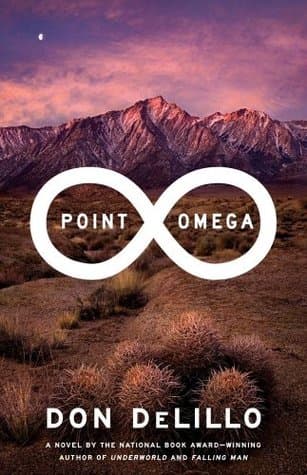
A reclusive defense intellectual, haunted by his role in America's war machine, confronts the vast emptiness of the desert and the lingering human mysteries of his past when a filmmaker and his enigmatic daughter disrupt his solitary retreat.
The novel opens with filmmaker Jim Finley at a gallery installation in New York, observing a continuous, slowed-down projection of Alfred Hitchcock's film 'Psycho'. This '24-Hour Psycho' by Douglas Gordon stretches the original film's runtime to an entire day, making individual frames almost imperceptible. Finley is absorbed by the installation, reflecting on the nature of time, observation, and looking. This experience sets a contemplative tone for the narrative, hinting at Finley's own artistic pursuits and his desire to capture extended moments in his filmmaking. He sees this art piece as a statement on how we perceive and process reality, which directly influences his subsequent artistic project.
Jim Finley travels to the remote Sonoran Desert, where Richard Elster, a reclusive former 'defense intellectual,' has retreated. Finley wants to convince Elster to participate in a minimalist film project: a single-shot, unedited film of Elster simply standing against a wall. Elster, a scholar who advised the Pentagon on the Iraq War, has sought solitude and the vastness of geologic time in the desert, attempting to shed his past and the weight of his involvement in war. Finley's arrival is an intrusion into Elster's isolation, initiating a complex dynamic between the artist seeking truth and the subject grappling with his own.
Upon Finley's arrival, Elster, initially hesitant, begins to engage in lengthy, often rambling monologues. These discussions cover his experiences as a defense intellectual, his attempts to apply abstract thought to the realities of war, and his subsequent disillusionment. He speaks of the 'point omega' — a philosophical concept relating to the ultimate end of time and consciousness — and his interest in deep time, geological formations, and the vast, indifferent desert landscape. Elster reflects on the intellectual's detachment from the human cost of conflict and his personal quest for meaning, revealing a man burdened by his past yet seeking a transcendental understanding.
Jim Finley formally presents his film concept to Richard Elster: a single, uninterrupted take of Elster standing against a wall, unmoving and silent. Finley believes this extreme minimalism will capture a raw, unadorned truth about Elster's being and his relationship to the vast, empty space around him. He sees it as an antithesis to the fast-paced, fragmented nature of modern media and a way to confront the viewer with the pure presence of a man. Elster, intrigued by the radical simplicity and the challenge it poses to conventional narrative, eventually agrees, seeing it potentially as a form of penance or a final act of self-exposure.
Richard Elster's daughter, Jessica, arrives unexpectedly at the desert retreat. Her presence immediately shifts the dynamic between Elster and Finley. Jessica is described as ethereal and somewhat detached, yet she brings a distinct energy and a connection to the outside world that the two men have largely forsaken. She observes their interactions, sometimes interjecting with her own quiet insights, and becomes an integral, if enigmatic, part of their isolated household. Her arrival introduces a new emotional layer, creating a semblance of an unconventional family unit in the desolate landscape, and subtly challenging the intellectual fortress Elster has built around himself.
The three characters — Elster, Finley, and Jessica — often engage in the shared ritual of looking through binoculars at the vast desert landscape. This act is a central motif, symbolizing their collective and individual attempts to perceive, understand, and perhaps escape their immediate realities. They scan the horizon for signs of life, geological formations, or simply the immensity of space and time. This shared observation creates a peculiar intimacy among them, a silent communion facilitated by focusing on distant, often indistinct, phenomena. It highlights themes of perception, the subjective nature of reality, and the human desire to impose meaning on the formless.
Over time, an odd and fragile intimacy develops between Elster, Finley, and Jessica. Despite generational gaps, differing motivations, and the underlying tension of Elster's past, they form a makeshift family unit in the isolation of the desert. They share meals, conversations, and the quiet contemplation of their surroundings. Finley observes the tender moments between Elster and Jessica, glimpses into a complex father-daughter relationship. This unexpected bond provides a counterpoint to the intellectual discussions and the starkness of the desert, suggesting that even in extreme circumstances, human connection and a sense of belonging can emerge, however transient.
The fragile peace of the desert retreat is shattered by a devastating event: Jessica's sudden and inexplicable disappearance. One morning, she is simply gone. There are no clear signs of a struggle, no notes, only her absence. This event throws Elster and Finley into a state of shock and confusion. The vast, indifferent desert, which once offered solace, now feels menacing and complicit in her vanishing. Her disappearance is a gaping void, an ultimate unknowable, challenging their intellectual frameworks and forcing them to confront the limits of their understanding and control. The quiet intimacy they had cultivated is replaced by a desperate, agonizing search.
Following Jessica's disappearance, Elster and Finley embark on a frantic search, combing the desolate desert landscape. Their efforts are futile, yielding no clues or explanations. The event plunges Elster into deep despair and a renewed confrontation with his own culpability and the chaos of the world. Finley, too, is deeply affected, his artistic project now overshadowed by the human tragedy. The search becomes a metaphor for their struggle to comprehend the inexplicable, to find meaning in an event that defies logic and narrative. The mystery of Jessica's fate lingers, a haunting presence that irrevocably alters their lives and perceptions.
The novel concludes with Jim Finley back in New York, once again observing the '24-Hour Psycho' installation. His return to this scene is imbued with the weight of his desert experience and Jessica's disappearance. The slowed-down film now resonates with new meaning, reflecting the stretched, agonizing time of waiting and searching, and the elusive nature of truth. Finley's perspective has been irrevocably altered; the detached observation of art is now infused with the raw pain of a personal tragedy. The cyclical structure of the narrative suggests that while some mysteries remain unsolved, the act of looking and processing, however painful, continues.
The Protagonist
Elster attempts to escape his past and find meaning in the desert, but Jessica's disappearance shatters his intellectual detachment, forcing him to confront the limits of his understanding and control.
The Protagonist/Narrator
Finley begins as a detached artist observing a subject, but he becomes a participant in a profound human tragedy, which reshapes his understanding of art, life, and the limits of observation.
The Supporting/Catalyst
Jessica's arrival creates an unexpected intimacy, and her disappearance serves as the pivotal, unresolved mystery that shatters the characters' perceptions and drives the plot's emotional core.
The Mentioned
Not applicable as a character.
The novel is deeply concerned with different conceptions of time. Elster is obsessed with 'deep time'—geological time, the vast stretches of existence before and beyond human consciousness, as a way to contextualize or diminish the significance of human conflict. Finley's '24-Hour Psycho' project also stretches time, forcing an unnatural, prolonged observation. Jessica's disappearance, however, introduces a different kind of time: the agonizing, suspended time of waiting and searching, where minutes feel like hours. This contrast highlights the human struggle to reconcile personal experience with cosmic indifference.
“He wanted the desert to strip him bare, to take him down to the absolute rock of himself, to geological time. He wanted the vastness of it, the sand, the rock, the sun, to burn away the human residue.”
The act of looking and perceiving is central. Finley's film project, the '24-Hour Psycho,' and the repeated use of binoculars by the characters all emphasize the subjective and often incomplete nature of observation. Finley seeks to capture 'truth' through unadorned looking, but the novel demonstrates how perception is always mediated—by the lens of a camera, the glass of binoculars, or the filters of individual consciousness. Jessica's disappearance is the ultimate challenge to observation, an event that cannot be seen or fully comprehended, leaving only a void where sight once promised understanding.
“What did you see when you saw nothing? What did you know when you knew nothing?”
Richard Elster embodies the theme of intellectual complicity. As a 'defense intellectual,' he applied abstract ideas to the realities of war, believing he could bring order and principle to chaos. His retreat to the desert is an attempt to grapple with the moral implications of this involvement, to shed the 'human residue' of his past. The novel questions the ethics of intellectual detachment from the consequences of one's ideas, suggesting that even abstract thought can be deeply implicated in violence and suffering. Elster's struggle is to reconcile his intellectual past with a newfound desire for pure, unmediated existence.
“He was the man who thought about war, who thought about the deployment of forces, the strategy of battle, the meaning of victory and defeat, and he believed, in his own way, he was a warrior.”
Throughout the novel, characters search for meaning—Elster in deep time and philosophical pronouncements, Finley in his minimalist art. However, the narrative consistently undermines the possibility of finding definitive answers. Elster's monologues are often circuitous, and Finley's attempts to capture unvarnished truth are challenged by the inherent subjectivity of art and the ultimate unknowability of certain events. Jessica's disappearance is the ultimate manifestation of this theme: an event without explanation, leaving a void of meaning that cannot be filled by intellectual frameworks or artistic endeavors. The novel suggests that some truths remain forever beyond human grasp.
“There was no story. There was only the disappearance, the thing that happened, and the silence.”
A slowed-down, continuous projection of Hitchcock's 'Psycho' that frames the narrative.
This art installation by Douglas Gordon functions as both a literal setting and a powerful symbolic device. It acts as a prologue and epilogue, grounding Finley's philosophical musings on time, observation, and the nature of film. By stretching a short film to an entire day, it forces a hyper-focus on individual frames, mirroring the novel's own slow, contemplative pace and its emphasis on minute details. Symbolically, it represents the endless loop of human obsession, the stretching of time in moments of crisis, and the elusive nature of narrative truth when stripped of conventional pacing.
A vast, desolate landscape that serves as both a refuge and a metaphor.
The Sonoran Desert is more than just a backdrop; it is a character in itself. For Elster, it is a place of retreat, purification, and an embodiment of 'deep time' – a vast, indifferent space where human concerns dwindle. Its desolation reflects his internal state and his desire to shed the complexities of his past. However, the desert also becomes a menacing, inscrutable force during Jessica's disappearance, transforming from a sanctuary into a symbol of the ultimate unknowable and the indifferent vastness that can consume human life without a trace. It provides both solace and a terrifying emptiness.
A recurring object symbolizing observation, distance, and the attempt to perceive hidden realities.
The binoculars are frequently used by Elster, Finley, and Jessica to observe the distant desert landscape. This device literalizes the act of looking and the attempt to bring distant, often indistinct, phenomena into focus. They represent both the human desire to understand and control what is beyond immediate reach, and the inherent limitations of that gaze. Through binoculars, characters seek patterns, life, or simply a sense of scale, highlighting the subjective nature of perception and the constant human effort to impose meaning on the vast, often meaningless, world around them. After Jessica's disappearance, the binoculars become tools of desperate, futile searching.
Lengthy, philosophical speeches by Elster that delve into war, time, and human consciousness.
Elster's extensive monologues are a primary vehicle for exploring the novel's intellectual themes. They serve to articulate his complex thoughts on his past role as a defense intellectual, his fascination with 'deep time,' the nature of war, and his quest for meaning in the desert. These monologues often lack clear narrative progression, mirroring the fragmented nature of his internal struggle and DeLillo's characteristic style. While they provide insight into Elster's mind, they also highlight the limitations of purely intellectual understanding when confronted with raw human experience and inexplicable events like Jessica's disappearance.
“The future is a thing of the past. It’s been replaced by the present. And the present is just a series of moments that keep disappearing.”
— Richard Elster reflecting on time and the contemporary condition.
“The world is in us, and we are in the world. Every moment that we live, every breath that we take, every thought that we think, it's all part of the same thing.”
— Elster discussing the interconnectedness of existence.
“He wanted to know what it was like to be a human being at the point of omega, the end of all things, the final moment of consciousness.”
— Jim Finley's fascination with Elster's project and the concept of 'point omega'.
“There's a point where information becomes noise, and noise becomes information.”
— Elster musing on the overwhelming nature of data and media.
“The deeper we go into ourselves, the more we find the world. The more we find the world, the deeper we go into ourselves.”
— A thought from Elster on introspection and its relation to external reality.
“We live in a time when people are afraid to be alone, afraid to be silent, afraid to think.”
— Elster commenting on contemporary society's aversion to solitude.
“Every secret is a kind of death.”
— A profound statement on the nature of hidden truths.
“The past is a foreign country. They do things differently there.”
— A classic literary allusion used to frame discussions about memory and history.
“He felt the deep, cold, empty space of the future, waiting to be filled with whatever came next.”
— A character's sense of anticipation and uncertainty about what lies ahead.
“The world is full of people who are waiting for something to happen, but nothing ever does.”
— A reflection on human passivity and the lack of significant events.
“The mind is a battlefield, and we are all soldiers in the war against ourselves.”
— An internal struggle described metaphorically.
“He watched the world disappear, one moment at a time, until there was nothing left but the silence.”
— Describing a process of observation leading to a profound sense of emptiness.
“The greatest mystery is not that we are here, but that we are here at all.”
— A pondering on the very fact of existence.
“Every word is a choice. Every silence is a choice.”
— Elster's consideration of language and its deliberate nature.
Ready to see how well you understood this book? Take our interactive quiz with 10 questions.
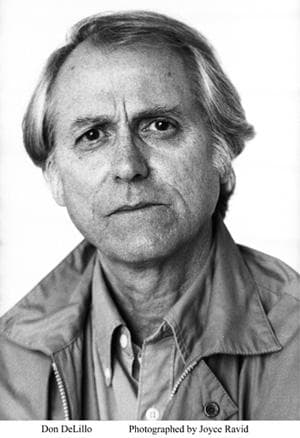
Donald Richard DeLillo is an American novelist, short story writer, playwright, screenwriter and essayist. His works have covered subjects as diverse as television, nuclear war, the complexities of language, art, mathematics, politics, economics, and baseball.







