“The secret of happiness and virtue is to like what you've got.”
— Spoken by Philip Quarles, reflecting on contentment.

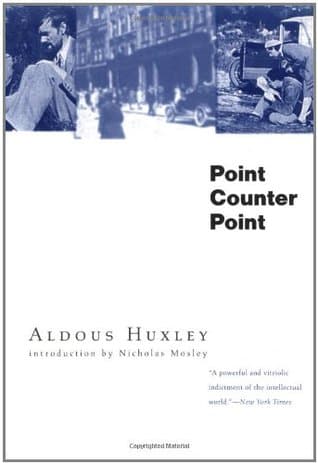
Aldous Huxley (1642)
Genre
Literary Fiction / Philosophy
Reading Time
12-15 hours
Key Themes
See below
Sign in to track this book
Aldous Huxley's novel dissects the intellectual elite of the 1920s, showing the comedy and tragedy that comes from their ideals clashing with their messy lives.
The novel begins at a dinner party given by Maurice Spandrell, a cynical intellectual who enjoys philosophical discussions and stirring things up. Guests include Philip Quarles, a novelist working on his own book and watching others for ideas; his wife Elinor; Denis Burlap, an important literary critic and editor; and Lord Edward Tantamount, a respected but somewhat distant biologist. The conversation covers art, philosophy, morality, and politics, immediately showing the novel's many voices. Spandrell, in particular, questions common morality and wants intense, even destructive, experiences. This sets a tone of intellectual and moral questioning that lasts throughout the story. Philip, always observing, notices the different 'tunes' each person plays, hinting at his own artistic method.
Philip Quarles is busy developing his idea of 'musicalizing fiction,' where characters and themes are woven together like musical motifs, showing many views at once. He carefully watches his friends and family, including his wife Elinor, and his young son, Little Phil, as possible material for his novel. Elinor, meanwhile, feels more and more unhappy with Philip's emotional distance and intellectual focus. Their home life, though stable on the surface, has a quiet tension. Elinor wants a deeper connection that Philip, caught up in his art, seems unable to give. Philip's notes for his novel mirror Huxley's own writing style, making him a commentary on the book itself.
Walter Bidlake, a young, passionate, and somewhat careless musician, is in a complex love triangle. He is having an affair with Lucy Tantamount, Lord Edward's daughter, who loves him deeply. He is also drawn to Marjorie Carling, a more traditional and moral woman. Walter's inability to commit and his changing affections cause Lucy great emotional pain. Her despair grows when she finds out Walter is interested in Marjorie again, leading her to feel abandoned and hopeless. This emotional trouble shows how destructive unrestrained passion can be and the pain of unrequited love, setting a tragic path for Lucy.
Maurice Spandrell, driven by nihilism and a desire to experience life to its fullest, actively tries to provoke and challenge those around him. He is fascinated by evil and breaking social rules, believing that only through such acts can one truly understand existence. He tries to pull his friend Mark Rampion, an artist and philosopher who supports a balanced way of life, into his destructive worldview. Spandrell's past, marked by a difficult relationship with his mother and strong dislike for his stepfather, fuels his cynical view and his search for a 'pure' act of malevolence, which he believes will give his life meaning.
Denis Burlap, a well-known literary critic and editor of 'The Weekly Review,' creates a public image of deep spirituality, artistic sensitivity, and moral uprightness. He often writes about love, compassion, and 'higher things,' attracting many followers, especially women. However, his private life is very different. He is manipulative and self-serving, using his position and influence for personal gain and having morally questionable relationships. His hypocrisy is clear in how he treats Mary Thriplow, a young writer he seduces and then leaves, showing the emptiness behind his carefully built public image.
Philip and Elinor's young son, Little Phil, becomes seriously ill with meningitis. This crisis forces Elinor to face the emotional distance that has grown between her and Philip. While she is filled with worry and grief for her child, Philip stays mostly detached, observing the situation like a novelist, even taking notes on their suffering. Elinor is horrified by his coldness and his intellectual way of handling their shared tragedy. The coming loss of their son brings Elinor to a breaking point, making her realize her relationship with Philip is not enough and she is very lonely in their marriage. This event changes Elinor's emotional journey.
Despite the doctors' efforts, Little Phil dies. His death puts Elinor into an even deeper state of grief and despair. Philip's reaction, though outwardly sorrowful, still has a degree of intellectual detachment, pushing Elinor further away. She sees him try to explain the tragedy and process it through art, which she sees as a deep betrayal of their shared humanity. The death of their son completely shatters any remaining illusions Elinor had about their marriage, leaving her feeling completely isolated and angry. This great loss leads to Elinor's later actions and her search for real connection.
Driven by his nihilistic philosophy and a desire to commit a 'pure' act of evil, Maurice Spandrell murders Webley, a journalist and political figure he dislikes for his perceived ordinariness. Spandrell expects this act to give him a deep, almost spiritual, experience of evil and meaning. However, right after the murder, he feels only emptiness and disappointment. He realizes the act did not bring him the understanding he wanted. He confesses his crime to Rampion, who, despite his own unconventional views, is horrified by Spandrell's actions and condemns his destructive path, stressing the importance of affirming life.
After Little Phil's death and her growing unhappiness with Philip, Elinor looks for emotional and physical intimacy elsewhere. She starts an affair with Walter Bidlake, drawn to his passion and emotional responsiveness, which contrasts sharply with Philip's coldness. For Elinor, this affair is not just about physical pleasure. It is a desperate attempt to feel alive and connected after her great loss and emotional neglect. However, Walter's own inconsistencies and emotional immaturity mean that even this relationship has complications and does not offer the lasting comfort she truly wants. This shows her continued search for real connection.
Spandrell, troubled by his murder of Webley and his inability to find meaning in it, looks for his former lover, the manipulative and cruel Hypolita, who represents the kind of pure evil he once admired. He confesses his crime to her, hoping for some validation or understanding, but she only mocks him. Feeling completely lost and without purpose, Spandrell then confronts the police, almost causing his own death. He is shot and killed. This end, like his life, is marked by futility and a lack of ultimate meaning, showing the tragic results of his extreme nihilism and rejection of common morality.
As the novel ends, many characters' lives are still unresolved. Walter Bidlake continues his pattern of unstable relationships, Lucy Tantamount remains emotionally fragile, and Denis Burlap's hypocrisy goes on. Elinor Quarles, though she found comfort in an affair, is still looking for true connection and happiness; her future with Philip is uncertain. Philip Quarles, however, finds a unique kind of resolution in his artistic method. He continues to observe and analyze, turning the chaotic experiences of life into the structured, polyphonic form of his novel. He sees the 'musicalization of fiction' as a way to bring order and meaning to a disordered world, even if his personal life remains emotionally empty. The novel closes with Philip thinking about the many 'tunes' of human existence, a commentary on the novel's own structure and philosophical inquiry.
The Protagonist/Observer
Philip remains largely static in his emotional detachment but evolves his artistic theory, finding a kind of resolution in his intellectual pursuit despite personal tragedy.
The Protagonist/Seeking Connection
Elinor transforms from a resigned wife into a woman actively seeking emotional and physical fulfillment outside her marriage, driven by grief and neglect.
The Antagonist/Nihilist
Spandrell descends further into nihilism, culminating in a violent act that ultimately leaves him disillusioned and leads to his demise.
The Supporting/Philosopher
Rampion consistently articulates his philosophy of wholeness, remaining steadfast in his beliefs despite the chaos around him.
The Antagonist/Hypocrite
Burlap remains a static character, continuing his pattern of hypocrisy and manipulation, largely unchallenged by the narrative's end.
The Supporting/Emotional Drifter
Walter remains largely unchanged, continuing his pattern of passionate but irresponsible romantic pursuits, causing pain to himself and others.
The Supporting/Tragic Lover
Lucy descends into a state of profound despair and emotional fragility due to Walter's unfaithfulness.
The Supporting/Detached Scientist
Lord Edward remains consistently detached and focused on scientific observation, largely untouched by the emotional turmoil around him.
The Mentioned/Catalyst
Little Phil's brief life and tragic death serve as a pivotal event, profoundly impacting his parents' lives and relationship.
This is the main contrast explored throughout the novel. Characters like Philip Quarles and Lord Edward Tantamount represent extreme reason and intellectual distance, often at the cost of emotional connection and physical experience. In contrast, characters like Walter Bidlake and Lucy Tantamount show unrestrained passion, which, though intense, often leads to chaos and suffering. Mark Rampion offers a third option, supporting a balanced mix of mind and body, reason and instinct, as the way to a 'whole' human existence. The novel criticizes the modern tendency to over-intellectualize and suppress natural human urges, showing the destructive results of both extremes.
“One day, I swear, I shall get out of this zoo, this cage, this laboratory where I'm always observing and experimenting and recording. I shall get out and be human.”
Huxley sharply satirizes the hypocrisy common in intellectual and social circles of his time. Denis Burlap is the best example, showing a public image of spirituality and moral uprightness while privately being manipulative and self-serving. Spandrell's nihilism and his search for 'pure evil' also show a moral emptiness. The novel suggests that beneath a surface of sophistication and high-minded ideals, many characters are driven by selfish desires, emotional immaturity, or no moral compass at all. This theme highlights Huxley's criticism of a society that has lost its ethical direction.
“He was a man who, in his own estimation, lived by the spirit; but he lived, in fact, by the spirit of his own reputation.”
Philip Quarles's goal to write a 'musicalized novel' comments on Huxley's own writing style. The novel explores the artist's role as an observer and creator, and whether artistic distance is necessary or harmful to human experience. Philip's intellectual approach to his art contrasts with Rampion's more visceral, life-affirming artistic philosophy. The theme asks whether art should mainly analyze, represent, or actively engage with life, and if art can provide meaning or simply show the chaos of existence.
“The musicalization of fiction. Not in the sense of singing, of course; but in the sense of the counterpoint of characters and ideas.”
Many characters in 'Point Counter Point' feel deeply alone, from intellectual distance, emotional repression, or failed relationships. Elinor Quarles's story is a central example, as she feels more and more isolated from Philip and desperately looks for real connection after her son's death. Spandrell's nihilism also comes from a deep sense of loneliness, leading him to destructive acts in a misguided search for meaning. The novel shows a society where people struggle to connect genuinely, often turning to superficial interactions or destructive behaviors in their loneliness.
“She felt herself to be utterly alone, an island in an ocean of indifference.”
The novel criticizes the dangers of holding extreme ideas, whether it be Spandrell's nihilism, Philip's pure intellectualism, or even Burlap's showy spirituality. Spandrell's pursuit of evil leads only to emptiness and his death, while Philip's emotional distance leaves his personal life barren despite his intellectual achievements. Rampion's philosophy, though shown more sympathetically, is also viewed with some irony, suggesting that even a 'whole' philosophy can be rigid if not truly lived. Huxley argues for a more nuanced, balanced way to live, warning against the problems of any single, all-encompassing belief system.
“The secret of happiness, you see, is not found in seeking more, but in developing the capacity to enjoy less.”
A narrative technique mirroring musical counterpoint, weaving multiple perspectives and themes.
This is the primary structural device, explicitly discussed by Philip Quarles within the novel and employed by Huxley himself. It involves presenting multiple storylines, characters, and philosophical viewpoints simultaneously, often juxtaposed or interwoven, rather than a single linear narrative. Like musical counterpoint, themes and characters are introduced, developed, repeated with variations, and played off against each other. This allows Huxley to explore the central dichotomy of passion and reason from diverse angles, demonstrating how different lives and ideas 'harmonize' or 'dissonate' within the same social fabric, creating a rich, polyphonic vision of society.
A narrator who shifts between characters' thoughts and provides authorial commentary.
Huxley employs an omniscient narrator who not only describes external events and dialogue but also delves deeply into the interior thoughts and motivations of various characters. This allows for a comprehensive exploration of their philosophies, emotional states, and hypocrisies. Crucially, the narrator often interjects with direct authorial commentary, philosophical reflections, and satirical observations, blurring the line between objective storytelling and essayistic discourse. This technique enables Huxley to present his critiques and ideas directly while still advancing the plot through the characters' inner lives.
Characters who highlight or contrast specific traits or philosophies.
Huxley frequently uses character doubles and foils to emphasize the novel's central themes. Philip Quarles and Mark Rampion, for instance, represent contrasting approaches to art and life – intellectual detachment versus holistic engagement. Maurice Spandrell's nihilism is a dark mirror to Rampion's life-affirmation. Walter Bidlake's unbridled passion contrasts with Lord Edward Tantamount's pure reason. These pairings allow Huxley to explore the nuances and extremes of his thematic concerns, demonstrating the different manifestations and consequences of passion, reason, and morality within the same social context.
The use of humor, exaggeration, and sarcasm to critique societal flaws.
Huxley employs sharp satire and irony throughout the novel, particularly in his portrayal of the intellectual and social elite of 1920s England. Characters like Denis Burlap, with his performative spirituality and underlying hypocrisy, are targets of scathing irony. The intellectual posturing of many characters, their detached observation of suffering, and their inability to connect authentically are often presented with a dry, critical wit. This device allows Huxley to expose the absurdities, moral failings, and self-deceptions of his characters and, by extension, the society they inhabit, without resorting to overt moralizing.
A novel that self-consciously refers to its own fictional nature and construction.
The concept of Philip Quarles writing a novel structured on 'musical counterpoint' is a clear metafictional device. Philip's notes on his novel, his observations on how to construct a narrative, and his reflections on the relationship between art and life directly mirror Huxley's own process and the very structure of 'Point Counter Point.' This allows Huxley to comment on the art of novel writing, the challenges of representing reality, and the philosophical implications of narrative choices, making the novel a self-aware exploration of its own form and purpose.
“The secret of happiness and virtue is to like what you've got.”
— Spoken by Philip Quarles, reflecting on contentment.
“Words can be like X-rays if you use them properly - they'll go through anything. You read and you're pierced.”
— Mark Rampion discussing the power and impact of literature.
“Most people don't want to be free. They just want to be told what to do.”
— Spoken by Mark Rampion, critiquing societal conformity.
“That's the great secret of the universe. Nobody knows anything.”
— Lord Edward Tantamount making an observation about human knowledge.
“One of the pleasantest things about modern life is the way it gives us such a lot of things to worry about.”
— A cynical observation on the complexities of contemporary existence.
“The more you know, the more you know you don't know.”
— Philip Quarles reflecting on the nature of understanding.
“Facts are like cattle. If you keep them all in one place, they get fat. If you let them wander, they get lean.”
— Spoken by Philip Quarles, discussing the organization of ideas.
“We are all of us, in our own lives, dramatic personae.”
— A reflection on the performative aspect of human existence.
“The essence of being human is that one does not seek perfection, that one is prepared to be what one is.”
— Mark Rampion's view on self-acceptance and authenticity.
“Every man has a right to his own ideas; but not to his own facts.”
— A subtle distinction made in a discussion about truth and opinion.
“The world is full of things that need to be put right.”
— A character's observation on the state of society and the desire for improvement.
“Life is a mystery, not a problem to be solved.”
— Mark Rampion's philosophical stance on the nature of existence.
“Art is a method of understanding.”
— Philip Quarles's view on the purpose and function of artistic creation.
“It's a poor sort of man who can't see the funny side of his own funeral.”
— A darkly humorous comment on perspective and mortality.
Ready to see how well you understood this book? Take our interactive quiz with 10 questions.
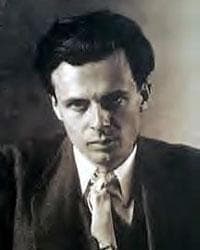
Aldous Leonard Huxley was an English writer and philosopher. His bibliography spans nearly 50 books, including novels and non-fiction works, as well as essays, narratives, and poems.







