“Sometimes the right path is not the easiest one.”
— Grandmother Willow's wisdom to Pocahontas about her feelings for John Smith.

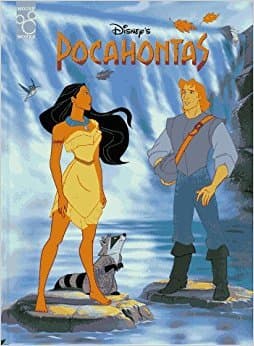
Walt Disney Company (1994)
Genre
Fantasy / Children's / Historical Fiction
Reading Time
30 min
Key Themes
See below
Sign in to track this book
A spirited Powhatan princess finds her world turned upside down by the arrival of English settlers, forcing her to choose between loyalty to her people and a forbidden love that could bridge two clashing cultures.
In 1607, a ship carrying English settlers, led by Governor Ratcliffe and Captain John Smith, sets sail from England. Their mission, sanctioned by King James, is to establish a colony in the 'New World' and find gold. Ratcliffe, a greedy man, envisions immense wealth and glory, while Smith, an adventurous explorer, dreams of discovery. During the perilous voyage, a storm threatens the ship, and John Smith saves a young, inexperienced sailor named Thomas from drowning. This act establishes Smith's leadership and bravery among the crew, setting the stage for their arrival in a land they believe to be untamed and ready for conquest, unaware of the indigenous society that already thrives there.
Meanwhile, in the Powhatan village, Princess Pocahontas experiences a recurring dream of a spinning arrow. Her father, Chief Powhatan, a wise leader, expects her to marry Kocoum, a brave warrior from their tribe, but Pocahontas feels a deeper calling. She seeks guidance from Grandmother Willow, an ancient, talking willow tree who is a spiritual mentor. Grandmother Willow interprets the dream as a sign that change is coming and that Pocahontas must listen with her heart to understand its meaning. This spiritual counsel prepares Pocahontas for the arrival of the English settlers, urging her to look beyond initial appearances and embrace the unknown.
The English ship reaches the shores of what they name Virginia. Governor Ratcliffe immediately orders his men to begin digging for gold, convinced it lies beneath the ground. John Smith, however, is more interested in exploring the land and understanding its inhabitants. While scouting, he encounters Pocahontas, who has been observing the newcomers from a distance. Their initial meeting is cautious but filled with mutual curiosity, overcoming the language barrier. This encounter is the first direct interaction between the two cultures, a moment that will shape the destiny of both communities, as Pocahontas and Smith are drawn to each other despite their vastly different worlds.
Pocahontas introduces John Smith to the beauty and spirit of her land, teaching him to see beyond its material resources. Through the song 'Colors of the Wind,' she explains the interconnectedness of all living things and the rich culture of her people, challenging his preconceived notions of 'savages.' Smith, in turn, shares stories of England and his own adventurous life. Their secret meetings become more frequent, building a deep understanding and romantic connection. Meanwhile, the English settlers continue their fruitless search for gold, growing increasingly frustrated and suspicious of the native inhabitants, while the Powhatan warriors, led by Kocoum, become more vigilant and wary of the encroaching strangers, fearing for their land and way of life.
Governor Ratcliffe, finding no gold, becomes convinced that the Powhatan people are hiding it. He instigates fear and hatred among his men, inciting them to build a fort and prepare for battle. Chief Powhatan, observing the English fortifying their position and encroaching on their land, also prepares his warriors for war, believing the settlers intend to steal their territory and destroy their way of life. Kocoum and Nakoma, Pocahontas's best friend, grow concerned about Pocahontas's secret meetings with Smith, fearing for her safety and loyalty to her tribe. The delicate balance between the two cultures rapidly deteriorates, pushing both sides towards an inevitable and tragic confrontation fueled by ignorance and mistrust.
Pocahontas and John Smith meet secretly once more, planning to bring their two peoples together peacefully. Kocoum, having been told by Nakoma about Pocahontas's meetings, follows her and discovers them. In a fit of jealous rage, Kocoum attacks John Smith. Thomas, a young English soldier sent to spy on Smith by Ratcliffe, witnesses the struggle and, in a panic, shoots Kocoum, killing him. The Powhatan warriors, alerted by the commotion, capture John Smith, believing him responsible for Kocoum's death. This tragic event ignites full-scale war between the English settlers and the Powhatan tribe, with Chief Powhatan vowing to execute Smith at sunrise, cementing the cycle of violence and revenge.
Devastated by Kocoum's death and fearing for John Smith's life, Pocahontas tries to reason with her father, Chief Powhatan. She argues that executing Smith will only lead to more bloodshed and will not bring Kocoum back. She explains that Smith is not like the other Englishmen and that he genuinely seeks peace and understanding. However, Powhatan, consumed by grief and the desire for justice for his fallen warrior, refuses to listen, adhering to the tribe's law of retribution. He sees Smith as a symbol of the English invasion and a threat to his people, leaving Pocahontas feeling helpless and desperate to prevent the impending war and save the man she loves.
At sunrise, John Smith is brought to a clearing for his execution. Chief Powhatan raises his war club, ready to strike. Just as he is about to deliver the fatal blow, Pocahontas throws herself over Smith, shielding him with her own body. She bravely pleads with her father, reminding him of the path of peace and challenging the cycle of hatred. Her act of courage and love moves Chief Powhatan, who, seeing the depth of her conviction and the potential for a different future, lowers his club. He declares that the execution will not happen, choosing peace over revenge, a decision that momentarily halts the impending war and changes the course of history for both communities.
Following Pocahontas's intervention, Chief Powhatan releases John Smith, and a fragile truce is established. Powhatan expresses his hope for peace between their peoples, and Smith reciprocates, acknowledging the need for understanding. However, Governor Ratcliffe, enraged by the missed opportunity for war and the perceived loss of control, attempts to shoot Chief Powhatan. John Smith selflessly shoves Powhatan out of the way, taking the bullet himself. This act of sacrifice further solidifies the bond between Smith and the Powhatan people, while exposing Ratcliffe's true malicious intentions to his own men, who finally turn against him and arrest him for treason and attempted murder.
John Smith is gravely wounded by Ratcliffe's bullet and requires immediate medical attention that only England can provide. With a heavy heart, he prepares to leave Virginia. Pocahontas, though heartbroken, understands that his survival is paramount. They share a tender farewell, promising to always be with each other in spirit. Pocahontas chooses to stay with her people, recognizing her vital role in guiding them through the challenging times ahead and fostering the fragile peace. As the English ship sails away, Pocahontas stands on the cliff, watching it go, her heart filled with both sorrow and hope for a future where her two worlds might one day truly coexist in harmony, embodying the spirit of understanding she championed.
The Protagonist
Pocahontas evolves from a curious maiden seeking her path to a courageous leader who bravely stands for peace and understanding, ultimately choosing her people over personal love.
The Protagonist
John Smith transforms from an explorer with colonial biases to an advocate for peace and understanding, willing to sacrifice himself for others.
The Supporting
Chief Powhatan moves from a position of fierce protection and retribution to one of cautious peace, influenced by his daughter's bravery and the realization of common humanity.
The Antagonist
Ratcliffe remains a static character, driven by greed and prejudice, ultimately leading to his downfall and arrest by his own men.
The Supporting
Grandmother Willow serves as a consistent source of wisdom and spiritual guidance, helping Pocahontas on her journey.
The Supporting
Kocoum remains steadfast in his loyalty and traditions, leading to his tragic death as a symbol of the conflict.
The Supporting
Nakoma remains a loyal friend, initially fearful of Pocahontas's choices but ultimately standing by her.
The Supporting
Thomas develops from an inexperienced and fearful soldier to one who understands the true maliciousness of Ratcliffe and supports Smith.
The central theme explores the devastating consequences of cultural misunderstanding and the potential for peace through empathy. The English colonists arrive with preconceived notions of 'savages' and a singular focus on gold, while the Powhatan people view the newcomers as invaders. Pocahontas and John Smith's relationship is a bridge between these two worlds, showing that genuine connection requires listening, learning, and challenging one's own biases. The film highlights how fear and ignorance fuel conflict, exemplified by Ratcliffe's warmongering and Chief Powhatan's initial desire for revenge, but ultimately advocates for finding common ground.
“You think the only people who are people, are the people who look and think like you. But if you walk the footsteps of a stranger, you'll learn things you never knew, you never knew.”
This theme contrasts the English settlers' materialistic pursuit of gold with the Powhatan people's deep spiritual connection to nature. Governor Ratcliffe's greed drives him to destroy the land and exploit its resources, viewing it merely as property to be plundered. In contrast, Pocahontas and Grandmother Willow articulate a worldview where all living things are interconnected and sacred. The film criticizes the colonial mindset that values material wealth over ecological harmony and spiritual well-being, suggesting that true richness lies in respecting and living in balance with the natural world, rather than conquering it.
“You can own the Earth and still, all you'll own is Earth until you can paint with all the colors of the wind.”
The romantic love between Pocahontas and John Smith is a powerful force that transcends cultural barriers, but it also demands significant sacrifice. Their love is not merely a personal bond but a catalyst for peace, pushing them to risk their lives for each other and for the greater good. Pocahontas's act of throwing herself over Smith to prevent his execution is the most poignant example of this. The theme also extends to the sacrifice of personal desires for the benefit of one's community, as Pocahontas ultimately chooses to stay with her people to guide them towards peace, even though it means parting with John Smith.
“No matter what happens, I'll always be with you, forever.”
The film addresses the theme of prejudice through the eyes of both cultures, but predominantly from the English perspective. Governor Ratcliffe embodies extreme prejudice, labeling the Powhatan people as 'savages' and 'heathens' to justify violence and theft. Many of the English soldiers initially share these views. Pocahontas, however, actively challenges Smith's initial prejudices, teaching him to see the humanity and beauty in her people. The narrative argues for the importance of tolerance and open-mindedness, showing how prejudice leads to fear, hatred, and conflict, while understanding can foster respect and coexistence, even if difficult to achieve.
“If you don't know me, you don't know who I am.”
A magical, sentient willow tree who provides spiritual guidance.
Grandmother Willow functions as a wise mentor and a magical realism element in the story. She represents the spiritual connection of the Powhatan people to nature and serves as Pocahontas's primary source of counsel. Her ability to talk and offer cryptic yet profound advice helps Pocahontas interpret her dreams, understand her destiny, and navigate the complex challenges of cultural conflict. She embodies the ancient wisdom of the land and guides Pocahontas to listen to her heart, pushing her towards a path of peace and understanding.
Pocahontas's recurring prophetic dream that foreshadows change.
The spinning arrow dream is a recurring motif and a significant plot device for Pocahontas. It serves as a form of foreshadowing, indicating that major changes are coming to her life and her people. Grandmother Willow interprets it, urging Pocahontas to listen to her heart to understand its true meaning. The dream motivates Pocahontas to be open to the unknown and to seek understanding rather than fear, preparing her for the arrival of the English and her role as a bridge between the two cultures. It symbolizes her journey of self-discovery and her destiny.
The initial inability of the English and Powhatan people to understand each other's speech.
The language barrier is a crucial plot device that initially highlights the profound separation and misunderstanding between the English and Powhatan people. It creates initial tension and confusion. However, it is magically overcome for Pocahontas and John Smith through the spiritual power of the land (implied by Grandmother Willow's teachings and their connection). This magical translation allows their relationship to blossom, symbolizing their unique ability to bridge cultural divides. For the rest of their respective communities, the barrier remains, emphasizing the difficulty of communication and the reliance on interpreters or shared experiences to convey meaning.
John Smith's compass, representing exploration and the unknown.
John Smith's compass serves as a symbolic plot device. Initially, it represents the English desire for exploration, discovery, and navigation of the unknown 'New World.' However, when Pocahontas finds it and is intrigued by it, Smith explains its function, and she later uses it to guide him to Grandmother Willow. This exchange symbolizes the blending of two different ways of navigating the world – the European reliance on tools and the indigenous reliance on spiritual guidance and connection to nature. It becomes a small token of their shared journey and mutual learning.
“Sometimes the right path is not the easiest one.”
— Grandmother Willow's wisdom to Pocahontas about her feelings for John Smith.
“You think the only people who are people, are the people who look and think like you. But if you walk the footsteps of a stranger, you'll learn things you never knew, you never knew.”
— Pocahontas singing 'Colors of the Wind' to John Smith, challenging his preconceptions.
“We're all connected to each other, in a circle, in a hoop that never ends.”
— Pocahontas explaining the interconnectedness of nature and life to John Smith.
“What I love most about rivers is you can't step in the same river twice. The water's always changing, always flowing. But people, I guess, can't live that way. We all try to hold onto things... try to stay the same.”
— Grandmother Willow's reflection on change and human nature.
“My daughter speaks of a spinning arrow. A message from the spirits. She says it points to a stranger. A white cloud. A storm.”
— Chief Powhatan discussing Pocahontas's vision with Kocoum.
“I'd rather die tomorrow than live a hundred years without knowing you.”
— John Smith's declaration of love to Pocahontas.
“If you don't own the land, how can you own another man?”
— Pocahontas's retort to John Smith about the concept of land ownership.
“I don't know what to do. I have to do something.”
— Pocahontas feeling the weight of the conflict between her people and the settlers.
“It's not gold, not yet. But it will be. And it's all ours!”
— Governor Ratcliffe's greedy proclamation to his men upon arriving in the New World.
“You can't step in the same river twice, dear one. All you can do is let it flow.”
— Grandmother Willow advising Pocahontas about letting go of what cannot be changed.
“My father says I should marry Kocoum. He is the finest warrior in our tribe.”
— Pocahontas expressing her internal conflict about her pre-arranged marriage.
“My dream is to find a world where everything is mine!”
— Governor Ratcliffe revealing his selfish motivations for the expedition.
“He's not like the others. He's good.”
— Pocahontas defending John Smith to her tribe, seeing past the conflict.
“If I listen with my heart, I will understand.”
— Pocahontas's mantra as she seeks guidance from Grandmother Willow.
Ready to see how well you understood this book? Take our interactive quiz with 10 questions.

Biography coming soon.







