“The truth about lies is that they can get you into a lot of trouble, but they can also get you out of a lot of trouble.”
— Ashmol reflects on the nature of truth and lies, a central theme of the story.

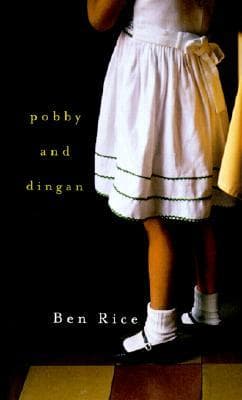
Ben Rice (2000)
Genre
Children's / Young Adult
Reading Time
120 min
Key Themes
See below
Sign in to track this book
When his sister's imaginary friends vanish, a cynical boy must learn to believe in the unbelievable to save her from a heartbreak only he can mend.
Ashmol Williamson, a young boy in the opal mining town of Lightning Ridge, tells the story of his family. There is his father, an opal miner, his mother, and his younger sister, Kellyanne. Kellyanne is a unique child with two invisible best friends, Pobby and Dingan. She talks to them, takes them everywhere, and sets places for them at dinner. Ashmol, being older, finds their presence annoying and embarrassing. He often makes fun of Kellyanne. Their mother encourages Kellyanne's imagination, while their father mostly ignores it, focusing on his mining.
One day, the family goes to a community event at the opal fields. Kellyanne, as usual, brings Pobby and Dingan. Her father tries to get her to act more appropriately, but Kellyanne insists Pobby and Dingan need to see the opals. This causes a small disruption when Kellyanne talks to her invisible friends. Ashmol is embarrassed and wishes she would grow up. The incident shows the growing tension between Kellyanne's imaginative world and their harsh environment.
After a difficult day at the opal fields, where Kellyanne had taken Pobby and Dingan on an 'expedition' to find opals, Pobby and Dingan disappear. Kellyanne is very sad, convinced they are lost or stolen. She searches everywhere, her grief clear. Ashmol at first thinks it is just a phase, but Kellyanne's real sadness and physical decline show this is not a normal childhood fantasy. Her health gets worse as she wastes away from sorrow, unable to eat or sleep, consumed by her friends' absence.
Kellyanne's condition quickly worsens. She becomes pale, weak, and refuses to talk to anyone, always looking for her lost friends. Doctors are confused, saying she has a mysterious illness that seems to be entirely psychosomatic. Ashmol, at first uncaring, begins to feel guilty and worried as he sees his sister's suffering. He sees how much the disappearance of Pobby and Dingan has affected her, and he starts to doubt his own disbelief. He realizes that for Kellyanne, Pobby and Dingan are real, and their absence is causing her real physical and emotional pain.
Seeing Kellyanne's rapid decline, their father, Rex Williamson, who is often busy with opal mining, gets very worried. He can no longer ignore the situation and, driven by love for his daughter, decides to act. He asks Ashmol about Pobby and Dingan, trying to understand. Together, they decide they must 'find' Pobby and Dingan to save Kellyanne. This shows a big change in the father's character; he moves from ignoring to actively joining his daughter's imaginative world, understanding that her well-being depends on it. He begins by asking Kellyanne where she last saw them.
Ashmol, though still a bit skeptical, agrees to help his father search. They go back to the opal fields, following Kellyanne's steps. Other opal miners in Lightning Ridge laugh at them, seeing the Williamsons as strange and Kellyanne's 'friends' as a childish fantasy. Ashmol finds this embarrassing but keeps helping his father, driven by a growing sense of responsibility for his sister. He starts to understand that for Kellyanne, believing in Pobby and Dingan is not just imagination, but a vital part of her life, and her life depends on their 'return'.
As Kellyanne's condition gets worse, her father and Ashmol decide to tell the public about their search. They put up 'Missing' posters around Lightning Ridge, describing Pobby and Dingan as Kellyanne has described them. This public announcement for invisible beings causes talk in the small community. Most people are confused or amused, but a few, moved by Kellyanne's situation or just curious, start to pay attention. Ashmol, at first embarrassed by the public display, slowly starts to accept how strange the situation is, understanding that their belief, even if pretended, is the only way to Kellyanne's recovery.
The 'Missing' campaign, along with Kellyanne's visible decline, starts to soften some townspeople's hearts. People begin to offer condolences or share their own childhood imagination stories. The town, seeing Kellyanne fading, decides to hold a 'funeral' for Pobby and Dingan. This shared act of recognition and grief is a deep show of support for Kellyanne. Ashmol is moved by the town's unexpected kindness, realizing that belief and empathy can go beyond logic, becoming a strong force for healing.
At the 'funeral', surrounded by townspeople who have chosen to believe in Pobby and Dingan for her sake, Kellyanne finds peace. She describes seeing Pobby and Dingan, happy and together, before she dies peacefully. Her death, though sad, is shown as a release, the end of her imaginative life. Ashmol, though heartbroken, has been changed by the experience. He has learned about empathy, imagination, and community strength. Lightning Ridge remembers Kellyanne and her invisible friends, a reminder of the delicate nature of belief.
After Kellyanne's death, Ashmol carries her memory and the lessons he learned. He no longer dismisses imagination, understanding its importance. He continues to live in Lightning Ridge, always affected by his sister's unique way of seeing the world. The story ends with Ashmol thinking about how Kellyanne, through her strong belief in Pobby and Dingan, taught him and the town about compassion, reality, and the lasting power of love. He understands that Pobby and Dingan were real because Kellyanne believed them to be, and that belief had a real effect on the world around her.
The Protagonist/Narrator
Ashmol transforms from a skeptical, embarrassed brother into a compassionate advocate for his sister's imagination, learning the profound power of belief and empathy.
The Central Figure/Catalyst
Kellyanne remains steadfast in her imaginative world until her peaceful passing, ultimately teaching her family and town about the power of belief and love.
The Supporting
From a dismissive, practical father, he transforms into a loving parent who champions his daughter's imaginative world to save her.
The Supporting
She remains a consistent source of maternal love and support, adapting to the family's unique challenges with grace.
The Mentioned/Symbolic
They remain constant, unwavering figures in Kellyanne's world, eventually becoming a shared belief for the town, symbolizing the power of imagination.
The Supporting
From a skeptical observer, he becomes a participant in the town's collective act of empathy for Kellyanne.
The Supporting
He serves as a point of reference for the medical community's inability to comprehend Kellyanne's condition, highlighting the story's themes of imagination over logic.
The Supporting/Collective
From a dismissive and skeptical collective, they transform into a compassionate community that embraces Kellyanne's imaginative reality.
This theme is central to the story. Kellyanne's strong belief in Pobby and Dingan makes them real to her, so much so that their 'disappearance' causes her to get sick. Ashmol's journey from doubt to belief shows how imagination, even if not physically 'real', can have real effects and be important for emotional health. The town's participation in the 'funeral' for Pobby and Dingan represents the power of shared belief and empathy, showing that what we believe can shape our reality and connect us.
““If you believe in something, it exists. If you don’t, it doesn’t.””
The story shows the growth of empathy, especially in Ashmol and the community. At first, Ashmol is embarrassed by Kellyanne, not understanding her world. But as he sees her suffer, his compassion grows, leading him to help 'search'. The townspeople, too, move from laughing to a deep act of shared empathy when they hold a funeral for Pobby and Dingan. This theme suggests that true understanding often means seeing things from another's perspective, however unusual, and that compassion can bridge the gap between logic and imagination.
““It was funny how the people of Lightning Ridge, so used to seeing what wasn’t there, still found it hard to believe in something they couldn’t see.””
The book questions usual ideas of reality. For Kellyanne, Pobby and Dingan are as real as her family, and their absence causes a real, life-threatening illness. Ashmol and the adults at first believe only in 'visible' reality, but Kellyanne's condition makes them face a reality where imagination holds power. The story suggests that reality is personal and can be shaped by belief, emotion, and one's inner world, especially in childhood. Ignoring such realities can have sad results.
““Pobby and Dingan are real,” she said, “they’re just not solid.””
The story captures the innocence of childhood imagination through Kellyanne. Her world is bright and free from adult doubt, but this innocence also makes her vulnerable to the 'loss' of her imaginary friends. The story explores the pain of childhood grief, not just for a loved one, but for the end of a cherished imaginative world. Kellyanne's death can be seen as the sad loss of this pure innocence, leaving a strong mark on those who saw it.
““She was fading, like a photograph left too long in the sun.””
Despite showing a somewhat isolated and skeptical community at first, Lightning Ridge eventually comes together to support the Williamson family. The townspeople's decision to participate in the 'funeral' for Pobby and Dingan, even if they do not truly believe, shows a shared act of care and unity. This theme highlights how, in a crisis, a community can overcome differences and accept a shared, if unusual, reality to support one of its own, creating a sense of belonging for those who might otherwise feel left out.
““They might not have believed in Pobby and Dingan, but they believed in Kellyanne.””
Provides a child's perspective, evolving from skepticism to understanding.
The story is narrated by Ashmol, Kellyanne's older brother. This device is crucial as it allows the reader to experience the events through the eyes of someone initially resistant to the central premise (invisible friends). Ashmol's evolving perspective, from embarrassment and disbelief to profound empathy and belief, mirrors the reader's potential journey. His grounded, sometimes cynical voice provides a realistic counterpoint to Kellyanne's pure imagination, making her story all the more impactful as he gradually comes to accept its truth.
Represent the power of imagination, innocence, and the subjective nature of reality.
Pobby and Dingan are more than just imaginary friends; they symbolize the essence of childhood imagination, the comfort of companionship, and the idea that belief can create its own reality. Their 'disappearance' symbolizes the threat to innocence and the fragility of an imaginative world in the face of a harsh, pragmatic one. Their eventual 'funeral' becomes a symbol of communal empathy and the acceptance of a reality beyond the tangible, highlighting the importance of imagination in human experience.
An isolated, dusty opal mining town that contrasts with Kellyanne's vibrant inner world.
The setting of Lightning Ridge, a remote and dusty opal mining town, serves as a stark backdrop to Kellyanne's vibrant inner world. The town's inhabitants are typically pragmatic and focused on tangible wealth (opals), which creates a natural conflict with Kellyanne's invisible friends. This contrast amplifies the theme of imagination versus reality. The isolation of the town also emphasizes the close-knit, yet often skeptical, community that eventually comes to embrace Kellyanne's unique reality, highlighting the transformative power of empathy in a seemingly hard-nosed environment.
A tangible manifestation of an intangible problem, forcing public acknowledgment.
The 'Missing' posters for Pobby and Dingan are a key plot device. They serve as a physical, public declaration of an entirely internal, imaginative problem. This act forces the community to confront the 'reality' of Pobby and Dingan, moving the family's private grief into the public sphere. The posters spark curiosity, ridicule, and eventually, empathy, demonstrating how a simple, tangible object can be used to bridge the gap between imagination and the shared, collective reality of a community, ultimately leading to a communal act of belief.
“The truth about lies is that they can get you into a lot of trouble, but they can also get you out of a lot of trouble.”
— Ashmol reflects on the nature of truth and lies, a central theme of the story.
“Mam said people always believe what they want to believe, even when it's not true.”
— Ashmol's mother explains human nature regarding belief and self-deception.
“Opal mining is a lot like life. You dig and dig and dig, and sometimes you find something beautiful, and sometimes you find nothing at all.”
— A miner's philosophical observation about the unpredictable nature of their work and existence.
“Pobby and Dingan were real. I knew it. But how do you make someone else know something that you know in your heart?”
— Ashmol struggles to convince others of the reality of his sister's imaginary friends.
“Sometimes the things you can't see are the most important things of all.”
— A subtle hint at the value of imagination and unseen connections.
“The desert was a place that could make you believe anything, or nothing.”
— Description of the Australian outback's influence on perception and belief.
“It's hard to be a grown-up when you still believe in magic.”
— Ashmol's internal conflict between childhood belief and the adult world.
“Lies are like a fire. They start small, but if you don't put them out, they can burn down everything.”
— A cautionary metaphor about the destructive power of lies.
“Some secrets are too big for one person to carry.”
— Ashmol feels the burden of his sister's secret about Pobby and Dingan.
“People laughed at us, but I didn't care. As long as we had each other, that's all that mattered.”
— Ashmol expresses loyalty and love for his family in the face of ridicule.
“You can't lose something that was never really there, can you?”
— A poignant question about the nature of loss when dealing with imaginary entities.
“My sister was crazy, but she was my crazy sister.”
— Ashmol's affectionate and protective stance towards Kellyanne.
“The world is full of things you can't see, but that doesn't mean they aren't real.”
— A broader philosophical statement supporting the validity of unseen realities.
“Hope is a funny thing. It can make you do stupid things, but it can also keep you going when everything else wants you to stop.”
— Ashmol reflects on the dual nature of hope.
Ready to see how well you understood this book? Take our interactive quiz with 10 questions.

Ben Rice is an Australian author known for his debut novel, "Pobby and Dingan." The book, a coming-of-age story set in outback Australia, garnered significant critical attention and was shortlisted for the Miles Franklin Award. Rice's writing is often praised for its evocative prose and poignant exploration of childhood and family dynamics.
Dan Gemeinhart
4.5
Kate O'Hearn
4.4

Jeanne Birdsall
4.4

Jen Wang
4.4
Wendelin Van Draanen
4.3

John Marsden
4.3

Chris Van Allsburg
4.3
Jennifer A. Nielsen
4.2