“The only thing more dangerous than a poacher is a poacher who thinks he's smarter than everyone else.”
— Teddy Fitzroy reflecting on the criminal mindset during his investigation.

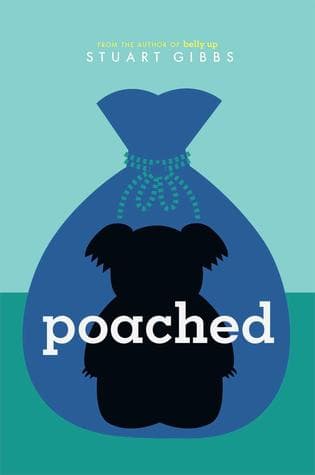
Stuart Gibbs (2014)
Genre
Children's / Mystery
Reading Time
240 min
Key Themes
See below
Sign in to track this book
Accused of koala-napping after a prank goes awry, Teddy Fitzroy must clear his name and find the real culprit before he's locked up for a crime he didn't commit at the world's most unusual zoo.
Teddy Fitzroy, a kid detective at FunJungle, is forced by school bully Vance Jessup to help with a prank using a stink bomb in the hippo exhibit. Vance threatens to tell about Teddy's past mistakes if he doesn't help. After the prank, Teddy hides in the koala exhibit to avoid being caught. While he is there, someone else enters and leaves the exhibit shortly after him. The next morning, the zoo finds that Kazoo, a valuable koala, has been stolen. Security footage shows only Teddy entering and leaving the exhibit at the important time, making him the main suspect. Chief Inspector Fontana, who already distrusts Teddy because of past events, immediately blames him for the crime, threatening him with juvie.
Believing he is being framed, Teddy starts his own investigation to clear his name. He immediately suspects Vance Jessup, given Vance's history of causing trouble and his part in the prank. However, Vance says he did not steal the koala. Teddy also thinks a professional animal smuggler might be involved, as Kazoo is a rare and valuable animal. His friends, Summer and J.J., offer to help. They start by interviewing zoo staff and looking for things that don't make sense. Teddy learns that Kazoo was part of a controversial breeding program and that his disappearance could have big financial effects for FunJungle, giving several people reasons to steal him.
Teddy looks into Kazoo's past. He finds out the koala was a gift from the Australian government and was important for FunJungle's koala breeding program. He learns about Dr. Vance Jessup Sr., Vance's father, who is a famous geneticist and runs the breeding program. Dr. Jessup Sr. has a strong personal and work interest in Kazoo's well-being. Teddy also interviews other zoo employees, including the koala keepers, who show real sadness about Kazoo's disappearance. He finds out there was some disagreement about the breeding program's methods and money, suggesting possible saboteurs inside the zoo.
As Teddy continues his investigation, he finds that the original security footage from the koala exhibit, which might show more than just his entry and exit, has been deleted or changed. This makes him more suspicious, suggesting someone inside the zoo did it. While searching the exhibit for clues, Teddy finds a small, unusual feather that does not belong to any of the koalas. He realizes it is from a rare bird, which leads him to look into the bird exhibits and their keepers. This discovery moves his focus away from just Vance and towards other zoo employees who might have access to both the koalas and the rare birds, and possibly the security system.
Teddy learns about Agnes Periwinkle, an animal rights activist who has publicly criticized FunJungle's breeding programs, especially the koala one, as exploitative. Agnes believes animals should not be kept in zoos and has protested at zoos before. Her strong beliefs and past actions make her a main suspect for Teddy, as she would have a clear reason to 'free' Kazoo. Teddy tries to quietly investigate Agnes, but she is hard to find and strongly protects her beliefs, making it difficult to get a direct answer from her. Her presence adds another complex layer to the case, suggesting a non-financial reason for the theft.
Teddy confronts Vance Jessup, asking him for more details about the prank and his father. Under pressure, Vance eventually tells him that his father, Dr. Vance Jessup Sr., had been subtly controlling him for years, always pushing him to succeed and criticizing his failures. Vance admits that his father had been especially stressed about the koala breeding program and the possible loss of money if Kazoo did not have babies. This confession makes Teddy suspect Dr. Jessup Sr., realizing the geneticist had a much deeper, more complex reason than first thought, possibly related to the koala's genes or the program's success.
Following the feather trail and connecting it to a rare bird kept by a specific zoo employee, Teddy and Summer find that the employee, a bird keeper named Mr. Higgins, also worked in the koala exhibit. They question him, and he reluctantly reveals a terrible secret: Kazoo was terminally ill with a rare genetic disease and would likely not live much longer, let alone breed. This information was being kept secret by Dr. Jessup Sr. to protect the zoo's reputation and the breeding program's funding. The discovery completely changes the reason for Kazoo's disappearance, suggesting a cover-up instead of a simple theft.
With the knowledge of Kazoo's terminal illness, Teddy confronts Dr. Vance Jessup Sr. Dr. Jessup Sr., trapped, admits to the whole plan. He had faked Kazoo's 'disappearance' to hide the koala's illness and stop the public and the Australian government from finding out the truth. This would have ruined his career and the breeding program. He had planned to replace Kazoo with a genetically similar, healthy koala from a private collector, hoping to gain time and keep up the appearance of success. He manipulated Vance into the prank, knowing it would create a distraction and make Teddy an easy scapegoat, taking attention away from his own actions.
Dr. Jessup Sr. tells them where Kazoo is: a secret, isolated place within the zoo where he was being kept alive while the replacement plan was prepared. Teddy, Summer, and J.J. rush to the location, with Chief Inspector Fontana, who now believes Teddy is innocent. They find Kazoo, weak but alive. Dr. Jessup Sr. is arrested for fraud and animal endangerment. The truth about Kazoo's illness and Dr. Jessup Sr.'s deception is made public. Teddy is officially cleared of all charges, and while the koala breeding program is examined, FunJungle promises to use more ethical practices. Vance, though still a troublemaker, starts to show some regret and understanding about his father's actions.
The Protagonist
Teddy learns to trust his instincts more and navigate complex adult motives, ultimately proving his innocence and exposing a larger conspiracy.
The Supporting
Summer grows in confidence as an investigator, contributing significantly to solving the case.
The Supporting
J.J. gains a better understanding of the complexities of adult motives and the seriousness of crime.
The Antagonist (initially), Supporting (later)
Fontana's perception of Teddy shifts from a troublesome kid to a surprisingly capable young detective, leading to a grudging respect.
The Supporting
Vance slowly realizes the extent of his father's manipulation and begins to grasp the consequences of his own actions and his father's.
The Antagonist
Dr. Jessup Sr.'s carefully constructed facade of scientific integrity unravels, exposing him as a desperate and manipulative fraud.
The Mentioned
Kazoo's true condition is revealed, shifting the mystery from a simple theft to a complex cover-up.
The Supporting
Agnes serves as a red herring, diverting Teddy's investigation and introducing an alternative perspective on animal captivity.
The Supporting
Mr. Higgins overcomes his fear to reveal critical information, helping to expose the truth.
Teddy's determined search for truth and justice to clear his name is the main theme. Even though he is framed and adults like Chief Fontana doubt him, Teddy wants to find out what really happened to Kazoo. His detailed investigations, interviews with suspects, and finally exposing Dr. Jessup Sr.'s cover-up show this theme. It shows that things are not always what they seem and that real justice means looking beyond the obvious.
“"He was pretty sure that if he didn't solve this himself, he was going to end up in juvie, and he was even more sure that he didn't belong there."”
This theme looks at how far people and organizations will go to keep a good public image, even if it means being dishonest. Dr. Vance Jessup Sr. fakes the koala's disappearance to protect his reputation and the money for his breeding program, hiding Kazoo's terminal illness. FunJungle itself cares about its image as a modern facility. The story shows how a carefully built facade can fall apart when faced with uncomfortable truths, revealing the often harsh realities underneath.
“"The truth, he realized, was often much stranger and more complicated than any simple theft."”
Manipulation and deception drive the plot. Vance Jessup tricks Teddy into the initial prank, but Dr. Vance Jessup Sr. creates a much bigger scheme, manipulating his own son and framing Teddy to hide Kazoo's illness. This theme shows how power and fear of failure can make people deceive others, using them to reach their own goals. Teddy's challenge is to untangle these lies to find the real truth.
“"It was clear now that Dr. Jessup Sr. wasn't just a brilliant geneticist; he was also a master manipulator."”
The book touches on the ethical problems in zoos and animal conservation. The koala breeding program, presented as conservation, is also linked to money and reputation. Agnes Periwinkle, the animal rights activist, directly questions if animals should be kept in zoos at all. Kazoo's illness and Dr. Jessup Sr.'s cover-up make these ethics more complex. They show how human ambition can sometimes be more important than the animals' well-being.
“"Agnes Periwinkle believed that keeping animals in cages, even really nice, big cages, was wrong."”
This theme is clear in Vance Jessup, who is always pressured by his father, Dr. Jessup Sr., to succeed. Vance's bullying and participation in the prank can be seen as a result of his stress and insecurity from these high expectations. Dr. Jessup Sr. himself is driven by the need to keep his professional reputation and the koala breeding program successful, leading him to desperate actions when facing failure. The story shows how the weight of expectations can lead to harmful behavior.
“"Vance had always been trying to live up to his father's impossibly high standards."”
Misleading clues or suspects designed to divert the protagonist and reader.
The novel utilizes several red herrings to deepen the mystery and keep Teddy (and the reader) guessing. Vance Jessup is an obvious initial suspect due to his history and involvement in the prank, but he is not the koala thief. Agnes Periwinkle, the animal rights activist, also serves as a strong red herring with a clear motive to 'liberate' Kazoo. These diversions make Teddy's investigation more challenging and highlight his detective skills in sifting through false leads to find the actual culprit.
A narrative structure where the protagonist is wrongly accused, creating urgency for the investigation.
The entire plot is framed by Teddy's unjust accusation of koala-napping. The security footage showing only him entering and exiting the exhibit during the critical time immediately puts him in a precarious position with Chief Fontana and the threat of juvie. This framing device creates a strong personal stake for Teddy, making his investigation not just about solving a crime, but about clearing his own name and future. It adds an element of personal urgency and suspense to the mystery.
An adult figure who obstructs the protagonist's investigation due to skepticism or incompetence.
Chief Inspector Fontana embodies the incompetent authority figure. He is quick to assume Teddy's guilt based on past incidents and superficial evidence, failing to conduct a thorough, unbiased investigation himself. His skepticism and antagonism towards Teddy force the young detective to work independently and often in secret. This device highlights Teddy's capabilities and resourcefulness, making his eventual success more satisfying as he outsmarts the adults who doubt him.
The true reason behind the crime is revealed to be more complex and surprising than initially thought.
Initially, the motive for Kazoo's disappearance seems to be theft for financial gain or animal liberation. However, as Teddy delves deeper, the true motive is revealed to be a desperate cover-up by Dr. Vance Jessup Sr. to hide Kazoo's terminal illness and protect his reputation and career. This unexpected motive shifts the narrative from a simple 'who stole it?' to a more complex 'why was it hidden?', adding layers of ethical and moral conflict to the story.
“The only thing more dangerous than a poacher is a poacher who thinks he's smarter than everyone else.”
— Teddy Fitzroy reflecting on the criminal mindset during his investigation.
“In the animal kingdom, sometimes the most innocent-looking creatures are the deadliest.”
— Teddy observing wildlife at FunJungle, drawing parallels to human behavior.
“A mystery isn't solved by looking for clues; it's solved by asking the right questions.”
— Teddy explaining his detective approach to his friend Summer.
“Trust is a fragile thing, especially when you're surrounded by secrets.”
— Teddy contemplating the challenges of navigating relationships at FunJungle.
“Sometimes the truth is hiding in plain sight, disguised as something ordinary.”
— Teddy realizing a key piece of evidence he had overlooked.
“Animals don't lie. They don't pretend to be something they're not. That's more than I can say for some people.”
— Teddy comparing animal honesty to human duplicity during a zoo visit.
“Fear can make people do terrible things, but so can greed.”
— Teddy analyzing motives behind the poaching crimes.
“Every creature has a story, if you're willing to listen.”
— Teddy's thought while observing the endangered animals at FunJungle.
“The line between right and wrong isn't always as clear as we'd like it to be.”
— Teddy grappling with moral dilemmas during his investigation.
“Courage isn't about not being afraid; it's about doing what's right despite the fear.”
— Teddy encouraging himself to confront a dangerous situation.
“A single act of kindness can change everything, even in the darkest of times.”
— Teddy reflecting on a small gesture that helped solve the case.
“The world is full of puzzles waiting to be solved, if you just pay attention.”
— Teddy's closing thought about staying observant and curious.
Ready to see how well you understood this book? Take our interactive quiz with 10 questions.
Biography coming soon.

Dan Gemeinhart
4.5

Kate O'Hearn
4.4

Jeanne Birdsall
4.4

Jen Wang
4.4

Wendelin Van Draanen
4.3

John Marsden
4.3

Chris Van Allsburg
4.3

Jennifer A. Nielsen
4.2