“The only important thing in life is to love someone, and to have someone love you.”
— A general observation on human connection.


Vladimir Nabokov (2012)
Genre
Literary Fiction
Reading Time
240 min
Key Themes
See below
Sign in to track this book
A bumbling Russian émigré professor navigates the absurdities of American academia, from dental problems to lost trains and linguistic errors, all while keeping his old-world charm.
Professor Timofey Pnin, a Russian émigré and Russian professor at Waindell College, travels to Cremona Women's College to give a guest lecture. He prepares carefully, memorizing the speech on 'The Problem of the Emigré Writer' in English. However, because he is absentminded and has trouble with American train schedules, he boards the wrong train. He realizes his mistake after a significant delay and takes a taxi the rest of the way, arriving late and flustered. Despite the problem, he delivers a somewhat improvised, but passionate, lecture to an appreciative audience, though he knows his English is not perfect.
Pnin must move out of his current lodgings because the landlady's son needs the room. This eviction starts a frantic search for a new place to live, a process with many miscommunications and cultural misunderstandings. He views several unsuitable rooms, including one with an overly curious landlady and another that is too small and dark. His struggles show his general displacement and difficulty adapting to practical American life. Eventually, he finds a temporary, awkward arrangement in a spare room at the house of a colleague, Professor Boyd.
Pnin has a bad toothache. He tries various home remedies before seeking professional help. His visit to the dentist, Dr. Shapiro, causes much anxiety and discomfort, both from the pain and his general unease in medical settings. The painful extraction of several teeth and the fitting of new dentures are important events, showing his physical vulnerability and his struggle to keep his dignity. He first resists the dentures, finding them strange, but eventually, they become a part of him, though they cause minor irritation.
The narrative shows Pnin's daily life at Waindell College, including his interactions with colleagues, students, and the campus. He is often seen as an eccentric figure, both liked and gently made fun of by his peers. His lectures are passionate, but sometimes grammatically flawed. He finds comfort in the college library, researching and preparing his lessons. His office, a former lumber-room, is a personal sanctuary, filled with his books and mementos. It represents his intellectual world amidst his personal chaos. He navigates faculty meetings and social gatherings with earnestness and bewilderment.
Pnin's ex-wife, Liza Wind, a manipulative and self-absorbed poet and psychologist, visits. Her presence immediately causes Pnin much anxiety, as she has often exploited his good nature and emotional vulnerability. She has always used him for financial support and emotional validation, despite having left him years ago for another man. Her visit is supposedly to discuss their son, Victor, but she also seeks Pnin's help with her own financial troubles. Pnin, despite his resentment, remains attached to the memory of their past and is easily swayed by her appeals, which often leave him feeling drained and used.
Liza brings their son, Victor, to stay with Pnin for a few days before Victor goes to summer camp. Although Victor is not Pnin's biological son, Pnin cares for him deeply, treating him with much affection and generosity. He takes Victor on outings, buys him gifts, and tries to teach him, especially about Russian culture. Victor, a talented and somewhat detached young artist, appreciates Pnin's kindness but also notices his eccentricities. Their time together is a rare period of genuine happiness and warmth for Pnin, showing his longing for family and his capacity for selfless love, despite the complicated relationship with Liza.
Pnin finds and rents his own house, a charming, though slightly run-down, residence. He carefully prepares for a housewarming party, inviting several colleagues and friends. He is proud of his new home and looks forward to entertaining. The party begins with Pnin serving a delicious punch, which makes him happy. However, minor mishaps and miscommunications occur, typical of Pnin's life. The party is a moment of fleeting domestic bliss, showing his desire for stability and belonging, but it is soon overshadowed by upcoming changes.
Later in the book, the anonymous narrator, who has been observing Pnin, gradually reveals his identity and his past connection to Pnin and Liza. He admits to having known Pnin in Russia and, more importantly, to having had an affair with Liza after Pnin. This revelation sheds new light on Pnin's character, suggesting a deeper understanding of his vulnerabilities and past traumas, especially regarding Liza's betrayals. The narrator's presence also explains some of the more intimate details and subjective interpretations of Pnin's life, as he is not just an observer but a participant in Pnin's history.
Pnin learns that a new, younger Russian literature professor, a protégé of the narrator, is being hired by Waindell College. This news is unsettling, as it suggests Pnin's position as head of the Russian department, or even his continued employment, is in danger. The new professor is rumored to be a more 'modern' and 'distinguished' scholar, adding to Pnin's anxieties about his place in the academic world and his inability to fully grasp American academic politics. This threat to his professional stability is a significant blow, coinciding with other personal setbacks.
Facing the arrival of the new professor, and feeling increasingly out of place, Pnin decides to leave Waindell College. The narrative ends with Pnin packing his belongings into his old car, a symbol of his independence and his struggles. He drives away from the college and his rented house, leaving behind the life he tried to build. His departure is poignant, as he drives off into the morning mist, with his dog, a stray he adopted, by his side. The narrator observes his departure, reflecting on Pnin's resilience and his enduring dignity.
The Protagonist
Pnin endures numerous humiliations and displacements but ultimately maintains his inherent dignity and resilience, choosing to leave Waindell on his own terms rather than be replaced.
The Supporting/Antagonist
Liza remains consistently self-serving, demonstrating no significant change in her exploitative behavior towards Pnin.
The Supporting
Victor remains a steady, appreciative presence in Pnin's life during his brief appearances, acting as a catalyst for Pnin's paternal warmth.
The Supporting/Minor Antagonist
The narrator transitions from an omniscient observer to a revealed participant in Pnin's past and future, ultimately becoming the agent of Pnin's displacement.
The Supporting
Dr. Hagen remains a well-intentioned but ultimately ineffectual figure in protecting Pnin from institutional changes.
The Supporting
Dr. Boyd serves as a minor, benevolent figure in Pnin's search for accommodation, without a significant arc of his own.
The Supporting
Dr. Shapiro's role is confined to the specific plot point of Pnin's dental ordeal, without a personal arc.
The Mentioned
Mrs. Thayer's role is limited to being the catalyst for Pnin's housing search.
The novel explores exile through Timofey Pnin, a Russian émigré struggling to adapt to American culture, language, and daily life. Pnin is always out of place, whether boarding the wrong train, misinterpreting social cues, or feeling threatened in his academic position. His internal world, rich with memories of Russia, contrasts sharply with his external clumsiness in America. This shows the sense of loss and alienation in exile. His search for a stable home and his inability to fully integrate symbolize this constant displacement.
“Pnin was not the stuff of which first-class émigrés are made. He could not, for instance, take a train without a certain amount of inner panic.”
Despite constant mishaps, humiliations, and manipulation from others, Pnin always keeps a quiet dignity and an unconquerable spirit. He endures dental pain, academic insecurity, and emotional exploitation with a stoicism that, while sometimes funny, is deeply moving. His resilience is clear in his continued efforts to teach, find a home, and care for Victor, even when life seems against him. His final departure from Waindell, though forced, is an act of asserting his own agency and keeping his self-respect.
“And the Pninian principle of never letting a new environment get the better of him, of never succumbing to the melancholy of adaptation, was being tested to its limits.”
Pnin's inner life is shaped by his memories of Russia, his deceased first love, Mira, and his complicated relationship with Liza. These memories, often idealized or tinged with nostalgia and pain, provide a refuge from his current problems. The past is not just a backdrop but an active force shaping Pnin's character and perceptions. The narrator's own memories and past connection to Pnin and Liza further complicate this theme, suggesting that memory itself is subjective and can be a source of both comfort and betrayal.
“He had a way of remembering things that made them seem more real than the present.”
Pnin's struggles with the English language are a central funny and sad part of the novel. His malapropisms, grammatical errors, and difficulty understanding American idioms show the barrier between him and his new environment. This language struggle is not just about words; it reflects a deeper inability to fully connect with American culture and people. It also serves as a metaphor for his broader miscommunications and misunderstandings, isolating him even among well-meaning colleagues. His passionate but flawed lectures embody this theme.
“He still spoke English with a strong accent, often mispronouncing words and struggling with idiomatic expressions, a source of constant embarrassment and frustration.”
The narrator's subjective perspective and personal involvement shape the story
Initially appearing as an omniscient, detached observer, the narrator gradually reveals his personal connection to Pnin and Liza, including having been Liza's lover and being Pnin's replacement. This revelation retroactively casts doubt on the objectivity of the narrative, suggesting that Pnin's story is filtered through a biased and potentially self-serving lens. The narrator's tone, often wry and subtly mocking, contributes to the reader's understanding that Pnin is being presented by someone with a complex and not entirely benevolent relationship to him.
Blending humor and pathos to depict Pnin's struggles
Nabokov masterfully employs tragicomedy throughout 'Pnin.' Pnin's numerous mishaps – taking the wrong train, struggling with dentures, misinterpreting social cues – are often presented in a humorous light, eliciting laughter. However, beneath the surface of these comical situations lies a deep vein of pathos, revealing Pnin's loneliness, his vulnerability, and the quiet dignity with which he endures his struggles. The humor serves not to diminish Pnin, but to highlight the bittersweet reality of his exile and his enduring human spirit.
Everyday items and locations reflect Pnin's internal state and external struggles
Various objects and places in the novel take on symbolic meaning. Pnin's dentures symbolize his physical vulnerability and the indignities of aging and adaptation. His 'lumber-room' office represents his intellectual sanctuary amidst the chaos of his life. The succession of temporary lodgings he occupies underscores his constant displacement. His old car, packed with his belongings, signifies his independence and his journey into an uncertain future. These elements contribute to a deeper understanding of Pnin's character and his predicament.
Non-linear narrative incorporating Pnin's past experiences
The narrative frequently delves into Pnin's past through flashbacks, revealing his life in Russia, his first love Mira, and his marriage to Liza. These memories are not presented chronologically but emerge as Pnin reflects or as the narrator provides background. This non-linear structure enriches Pnin's character, providing context for his present behavior and emotions, and emphasizing the profound impact of his past on his current exiled existence. It allows the reader to understand the depth of his internal world beyond his external clumsiness.
“The only important thing in life is to love someone, and to have someone love you.”
— A general observation on human connection.
“The Pninian world was not exactly a square, but it had four corners, and at each corner stood a Pnin.”
— A description of Pnin's self-contained and somewhat isolated existence.
“One likes to remember the good times, and to forget the bad. But sometimes the bad times are more memorable.”
— Pnin reflecting on his past experiences.
“His English was a matter of constant improvisation, and often, in his mind, he would rephrase a sentence several times before uttering it.”
— Describing Pnin's struggle and meticulousness with the English language.
“A good book, thought Pnin, is a book that you want to read again.”
— Pnin's simple yet profound definition of literary quality.
“The past was a country of which he was an exile, and he visited it often in his dreams.”
— Pnin's longing for his homeland and past life.
“Happiness, after all, is a kind of oblivion, a state of mind in which one forgets oneself and one's troubles.”
— A philosophical musing on the nature of happiness.
“He was a man of routines, and his routines were his armor against the chaos of the world.”
— Explaining Pnin's reliance on his habits for stability.
“The very air was a dictionary of invisible words.”
— A poetic observation, perhaps reflecting Pnin's perception of his new environment.
“To be different is to be lonely.”
— Pnin's unspoken understanding of his own unique position.
“Life, in general, is a series of misunderstandings.”
— A somewhat resigned and humorous observation on human interaction.
“He carried his past with him like a hump, but it was a hump that contained treasures.”
— A metaphor for Pnin's burdened yet rich personal history.
“The future was a dark tunnel, and he was walking into it, bravely, with his umbrella.”
— Pnin facing an uncertain future with his characteristic blend of vulnerability and resilience.
Ready to see how well you understood this book? Take our interactive quiz with 10 questions.
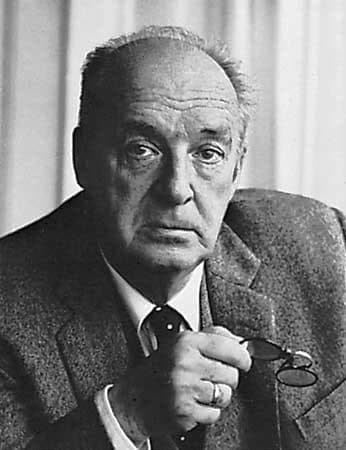
Vladimir Vladimirovich Nabokov, also known by the pen name Vladimir Sirin, was an expatriate Russian and Russian-American novelist, poet, translator, and entomologist. Born in Imperial Russia in 1899, Nabokov wrote his first nine novels in Russian (1926–1938) while living in Berlin, where he met his wife. He achieved international acclaim and prominence after moving to the United States, where he began writing in English. Nabokov became an American citizen in 1945 and lived mostly on the East Coast before returning to Europe in 1961, where he settled in Montreux, Switzerland.







